

Global Sustainable Tourism Council Now Requires Hotels to Make 30% of Meals Plant-Based

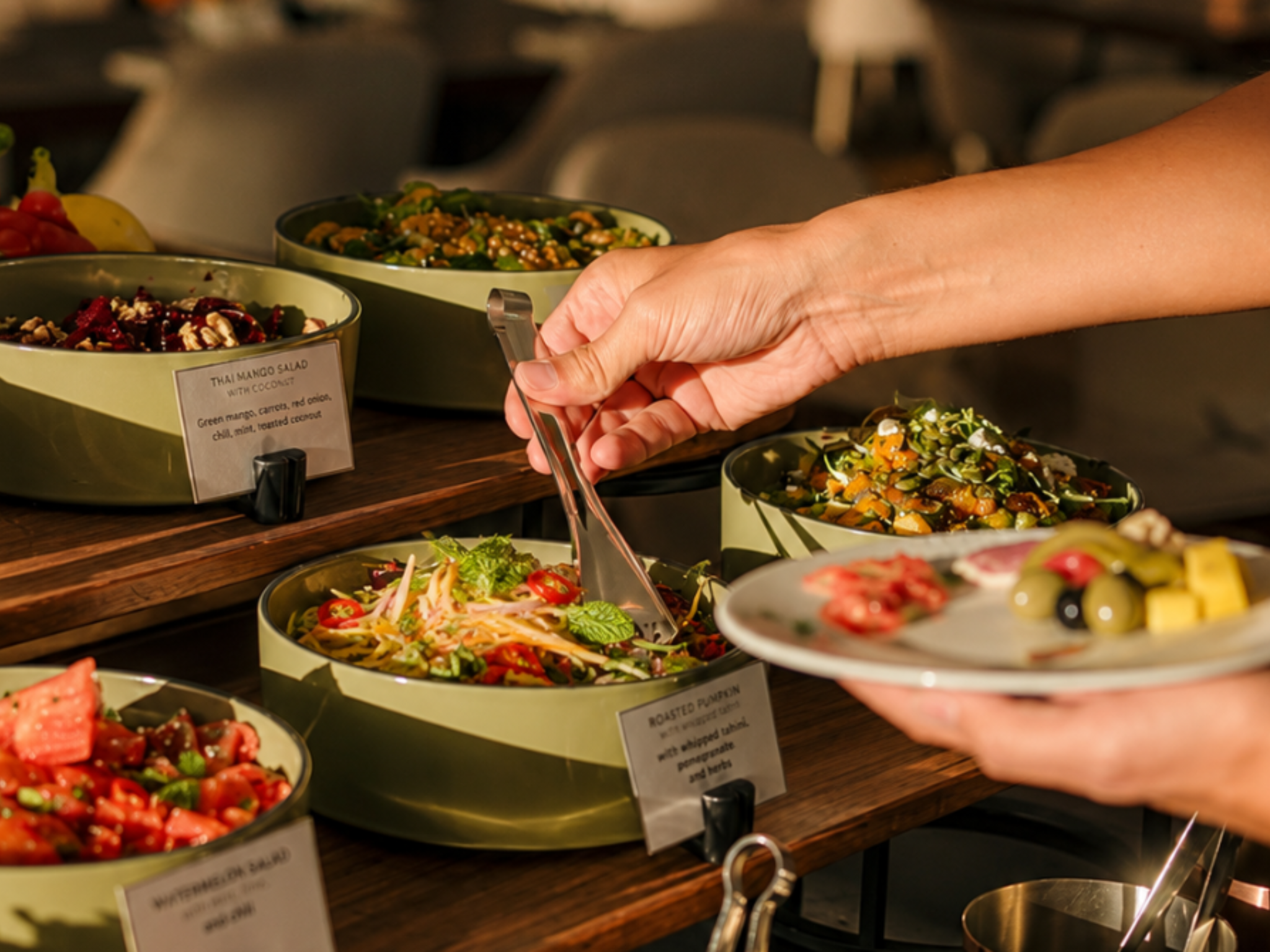
The Global Sustainable Tourism Council has released a new food and beverage standard that directs certified hotels and restaurants to make at least 30% of their menus plant-based.
With hospitality and tourism seen as a key lever for dietary change, the industry’s leading sustainability organisation has now set a new benchmark to ensure more climate-friendly menus.
The Global Sustainable Tourism Council (GSTC) has published its first food and beverage standard, which requires certified hotels, restaurants and tour operators to make at least 30% of their food offerings plant-based or “predominantly” plant-based.
The latter includes dishes with small amounts of animal products (like dairy, eggs, animal fats or minor seasoning components) that neither constitute the primary protein component nor exceed 5% of the total weight.
This is a big deal. GSTC was founded in 2007 with the backing of the UN Environment Programme and World Tourism Organization, and accredits independent certification bodies that audit hotels, tour operators, and destinations against its global standards. There are currently more than 2,000 GSTC-certified hotels across dozens of countries.
“As with any new standard GSTC issues, certified hotels are typically given a transition period to bring their operations into line before it’s strictly enforced. That said, the new standard is now in effect,” a spokesperson for sustainability non-profit Lever Foundation, which works with hospitality operators to decarbonise menus with plant-based foods, told Green Queen.
“Going forward, this requirement becomes part of what independent auditing bodies assess when reviewing a hotel for GSTC certification or recertification, meaning any hotel newly certifying, or coming up for renewal, will need to demonstrate compliance.
“We don’t have an exact figure for how many properties are up for review in the near term, but with more than 2,000 GSTC-certified hotels worldwide, this will progressively touch a significant share of that base over the coming certification cycles.”
How the GSTC plant-based standard will apply to different hospitality setups

If the hotel industry were a country, it would be in the top 25% of the biggest polluters. Scope 3 emissions account for over 90% of its carbon footprint, with food procurement one of the most significant contributors. Research shows that food sourcing is responsible for 62% of a hotel’s food-related emissions, far more than energy use or food waste management.
In fact, a typical hotel meal produces three times higher emissions than a home-cooked counterpart. And animal-derived ingredients alone contribute to 70% of these food sourcing emissions in this sector. That makes protein diversification crucial.
Under the GSTC’s new standard, à la carte and buffet-style restaurants can comply with the requirement by ensuring that no less than 30% of core food offerings are vegan or predominantly plant-based. Drinks, condiments, garnishes, and minor sides are excluded. Where menus are based on shared plates or culturally specific meal structures, assessment can be based on a typical guest meal.
Speaking of which, in culturally specific food traditions, hospitality companies can consider the entire meal composition rather than the main protein alone. For instance, where meals are customarily served with plant-based side dishes, mezzes, salads, grains or vegetables, these may be taken into account when assessing if the overall offering meaningfully reflects a plant-forward balance.
For single-dish concepts, tasting menus, street food vendors, or very small operations where menu structure limits the ability to adjust proportions, GSTC presents alternative approaches to demonstrate compliance, like reformulating dishes to increase the share of plant-based ingredients, adjusting portion balance so animal protein plays a smaller role within the overall dish, or offering optional plant-rich variations of the core dish.
Establishments where none of these approaches can reasonably achieve a menu-based threshold are expected to demonstrate a documented transition pathway to reduce animal protein use per guest meal over time. This can be done by reformulating recipes, shifting purchasing practices, or adjusting portions.
GSTC says all organisations should be able to clearly and credibly explain how their chosen approach reflects their concept, cultural context and operational reality, while still contributing to reduced climate impacts.
How will hotels meet the 30% plant-based standard?

“The food and beverage service sector is everywhere in the tourism value chain, and the development of the GSTC food and beverage standard marks another meaningful step in expanding the application of global sustainability standards across the tourism industry,” said GSTC CEO Randy Durband.
“This progress reflects the valuable collaboration and commitment of the many contributors involved and reinforces GSTC’s continued dedication to advancing sustainability throughout the sector, which now includes six sets of GSTC Standards,” he added.
Does the new standard’s “predominantly plant-based” provision give restaurants and hotels leeway to offer menus with no fully animal-free options, which would end up excluding many consumers anyway?
“That’s technically possible, but we wouldn’t call it a loophole – it reflects what this specific provision is designed to do,” the Lever Foundation representative said. “The goal here isn’t to guarantee a fully vegan option on every menu (GSTC’s Standard has a separate provision that addresses that).”
They added: “This provision aims to reduce the use of animal-based ingredients and increase the use of plant-based ingredients across a hotel’s menu. Whether that 30% is made up entirely of 100% plant-based dishes, entirely of 95%+ plant-based dishes, or some mix of both, the practical effect on animal protein sourcing is nearly the same – a meaningful reduction either way.
“In practice, we’d expect many hotels to land somewhere on that spectrum, and some to exceed 30% with fully plant-based dishes. Setting the bar this way also makes the requirement more achievable in the near term, which we think will drive faster, broader adoption than a stricter all-or-nothing vegan threshold would.”
The GSTC’s new standard follows the World Sustainable Hospitality Alliance’s partnership with US non-profit Vegan Hospitality last year to help its member hotels expand plant-based dining solutions and meet evolving sustainability goals.
The alliance spans 35 leading chains and over 66,000 properties, and has recommended the hotel industry cut emissions by 30% by the end of the decade, down from the 185 million tonnes of CO2e it generates every year.
A growing number of hotel groups have already made commitments in favour of plant-rich menus across the globe. IHG Hotels & Resorts, for instance, has pledged to make 30% of its menus in the Philippines plant-based, spanning brands like Crowne Plaza and Holiday Inn. And Accor, the parent company of Novotel, Raffles, Pullman, and Ibis, has pledged to turn half its menu meatless globally by 2030.
In China, too, at least a dozen leading hotels have made similar pledges to increase the share of plant-based proteins. That includes giants like Accor Hotels, Langham (both of which are aiming to turn 50% of their menu vegan by 2030), Orange Hotel, OctaveHotels (each promising 70% by the end of 2025), IHG, Marriott, and Dossen Group (30% by 2025), among others.