

Ginkgo Partners with Acies Bio to Expand Access to Microbial Strains for Protein Production

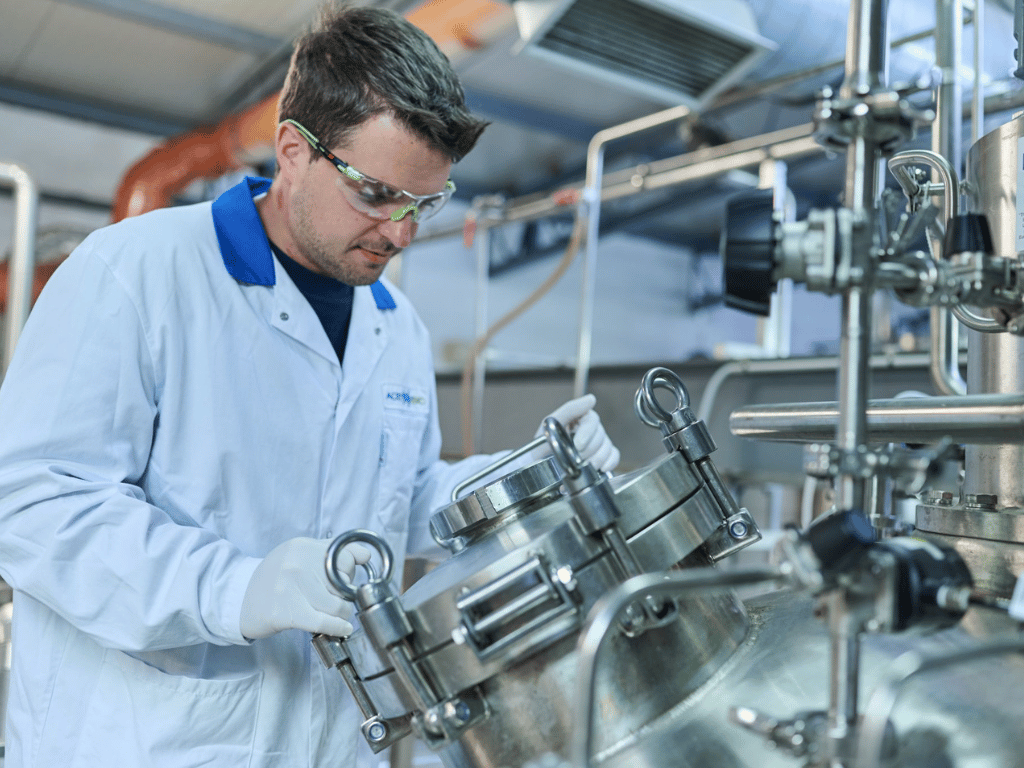
Boston-based Ginkgo Bioworks has teamed up with Slovenia’s Acies Bio to scale up production of enhanced Aspergillus niger strains for use in industrial-scale protein solutions.
Ginkgo Bioworks is ramping up industry access to its “high-performance” fungal strains for next-gen protein production through a licensing partnership with Slovenian startup Acies Bio.
The collaboration combines the former’s engineered fungal chassis strains with the latter’s end-to-end strain development, bioprocess scale-up and manufacturing platform to give manufacturers a turnkey path from strain to scaled bioprocess.
The fungal strain in question is a specially engineered form of Aspergillus niger, a food-safe mould that the industry has used for decades.
“By pairing these chassis strains with Acies Bio’s development and manufacturing expertise, we can put a proven starting point in the hands of customers who want to move quickly from concept to scaled production,” said Jill Bradshaw, general manager of Ginkgo’s microbial solutions unit.
How Ginkgo fine-tuned its Aspergillus niger strains
When Aspergillus niger is fed sugar, it produces proteins and enzymes that end up in a wide array of industrial and consumer products, from edible ingredients and dietary supplements to laundry detergents, healthier animal feed, and next-gen sustainable foods.
Ginkgo has fine-tuned this fungus by making it easier and cheaper to grow in large tanks and ensuring a “cleaner” process that no longer produces unwanted byproducts. These adjustments can translate into higher yields, lower manufacturing costs, and a safer, more consistent product.
“Our Aspergillus niger platform strains were built to take friction out of industrial protein production – low viscosity, low protease activity, and inactivated mycotoxin pathways from the start,” said Bradshaw.
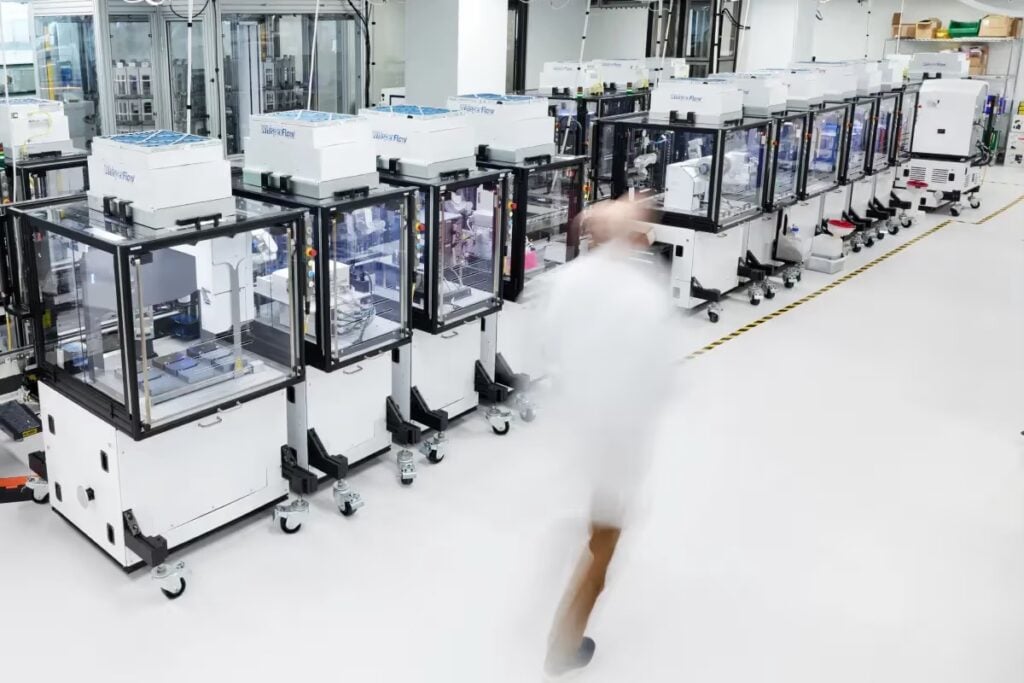
Such microbes are the product of the NYSE-listed company’s engineering platform, and are powered by its autonomous lab, which it says is the largest of its kind in the world.
That level of scale and automation allows the synbio firm to test large numbers of genetic variations of microbes in parallel, more so than what a traditional lab bench could manage, and narrow in on the combinations of traits that optimise manufacturing.
Acies Bio streamlines development path for companies
Acies Bio specialises in developing innovative, complete solutions across microbial biotech, synbio, and precision fermentation, with its SmartoRoute platform offering end-to-end R&D capabilities via scale-up bioprocesses, proprietary chassis strains, and efficient project management.
By incorporating SmartRoute into Ginkgo’s process, Acies Bio brings the complementary capabilities required to rapidly translate its microbial chassis strains into customer-specific production systems.
It can introduce and optimise target protein expression, develop downstream and upstream processes, validate performance, and scale production from lab development to industrial manufacturing inside its own biomanufacturing facility, with up to 30 cubic metres of fermentation volumes.
That gives clients a single development path, instead of having to coordinate strain access, process development, and scale-up separately. “Ginkgo’s chassis strains are an excellent foundation, and our team with 20 years of experience in industrial strain and process development knows how to turn a strong starting strain into a robust, scalable bioprocess,” said Acies Bio director Štefan Fujs.
“This collaboration lets us offer customers a complete path, from strain access through process development and manufacturing, without needing to build fungal engineering capabilities in-house.”
The partnership comes as several companies introduce platforms using artificial intelligence (AI) to optimise bioprocesses and help food manufacturers scale up, including New Wave Biotech and MOA Foodtech.