

Prefer & Ajinomoto Expand Bean-Free Coffee Collab, Sign Product Development Deal with JTB

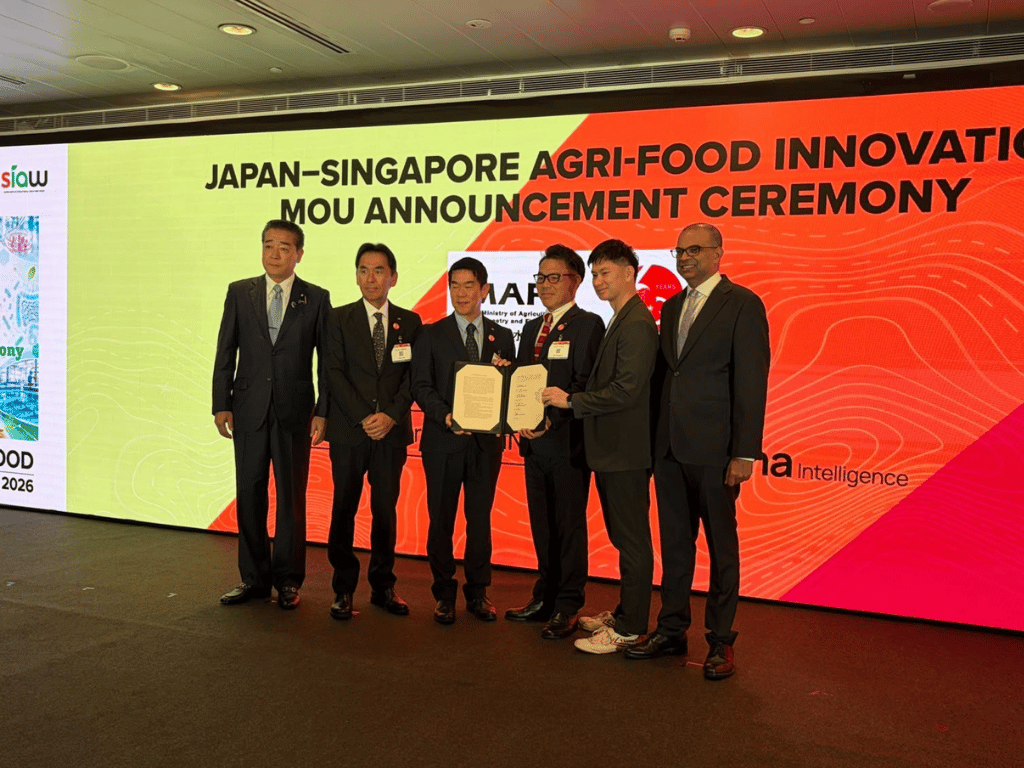
Singapore’s Prefer has extended its partnership with Ajinomoto’s Atlr.72 brand, which will launch a permanent store featuring their bean-free latte. They have also signed an MoU with JTB Group to explore product development across Asia.
Prefer’s beanless coffee is gearing up for a major expansion, thanks to two collaborations aimed at broadening its footprint in the Asia-Pacific region.
The Singapore-based startup has extended its ongoing partnership with Atlr.72, the sustainable food brand by Japanese conglomerate Ajinomoto.
After a successful test launch of Gre:en Drop Coffee, their line of dairy- and coffee-free drinks in collaboration with Finland’s Solar Foods, Ajinomoto is opening a permanent location for Atlr.72 at Jewel Changi Airport in January.
“The shop will offer gelato, sweets, gift products and beverages, including coffee blended with Prefer’s Coffee Extender,” Keiichi Murakami, general manager of the Atlr.72 brand, tells Green Queen.
Additionally, Prefer and Ajinomoto have signed an MoU with Japanese travel agency JTB Group to develop ingredients and beverages for the Asian market using the former’s coffee alternative.
This builds on last week’s extended agreement between Singapore and Japan to strengthen cooperation in agriculture and food tech to ensure a climate-resilient supply and boost food security.
“Japan and Singapore have renewed their cooperation framework for agriculture and food, adding food technology as an area of collaboration,” explains Murakami. “Our partnership aligns with the broader objective of developing more resilient and sustainable food systems.”
Prefer expands bean-free coffee footprint
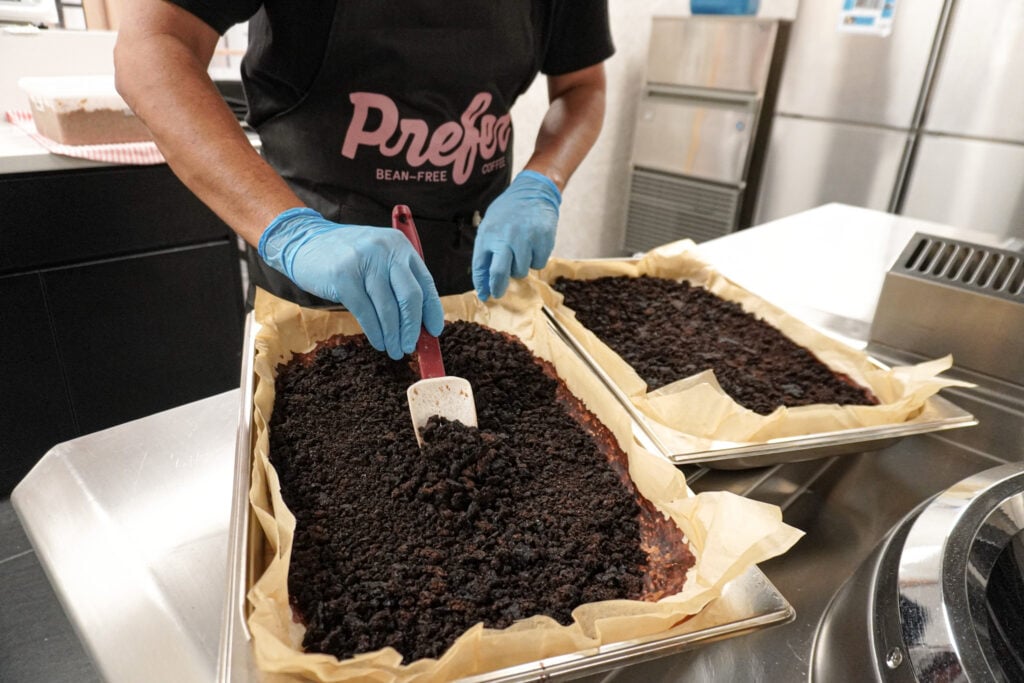
Prefer uses food-grade microbes to ferment rice and chickpeas, which are then roasted and ground just like conventional coffee, unlocking the same aroma volatiles.
Its ingredient, called PreferRoast, can substitute up to 40% of coffee in commercial formulations, is 50% cheaper than arabica on average, and has an 85% smaller carbon footprint. It can be supplied to CPG companies, food manufacturers, private-label retailers, and flavour houses for use in a range of products.
It has launched the ingredient as part of its ready-to-drink beverage line, comprising a black coffee and two iced lattes, which are available in all 56 Shell convenience stores, 92 Sheng Siong locations, and 47 Le Tach vending machines across Singapore.
“Our PreferRoast ingredients are also featured on Fura’s menu,” Prefer co-founder and CTO Ding Jie Tan tells Green Queen. The bar has been a fixture on the Asia’s 50 Best Bars list since 2024, and is known for its sustainability-first approach. It uses the coffee alternative as part of a cocktail, pairing it with discarded banana peel rum, green cardamom, lacto-banana cream, and banana skin caramel.
Prefer’s B2B ingredient has also been sold in the Philippines and Japan, and its black coffee debuted in the latter this year through a partnership with Tokyu Land. The company is eyeing Thailand next, and will soon establish a 500-tonne plant that will ramp up its capacity 50-fold. Tan teased “exciting news” for its coffee alternative in the first quarter of 2027.
It’s a response to the climate threats faced by the coffee industry. Between 2021 and 2025, Brazil, Vietnam, Colombia, Ethiopia, and Indonesia – which represent 75% of the global coffee supply – experienced 57 extra days of harmful heat (above 30°C). This can cause heat stress in coffee plants, leading to reduced yields, lower bean quality, and higher susceptibility to diseases.
It’s partly why global coffee prices reached an all-time high in early 2025. And research shows that 60% of coffee species are already endangered, and the tropical area suitable for growing coffee is set to be halved by 2050, making alternatives like Prefer’s all the more important.
The startup is also developing cocoa-free chocolate. “PreferChoc continues to see use cases in ready-to-drink beverages, baking, as well as confectionery applications,” says Tan. “We are developing these in collaboration with our partners and are hopefully we can share news about the ingredient in Q1 next year too.”
Ajinomoto to roll out CPG product with Prefer’s coffee extender
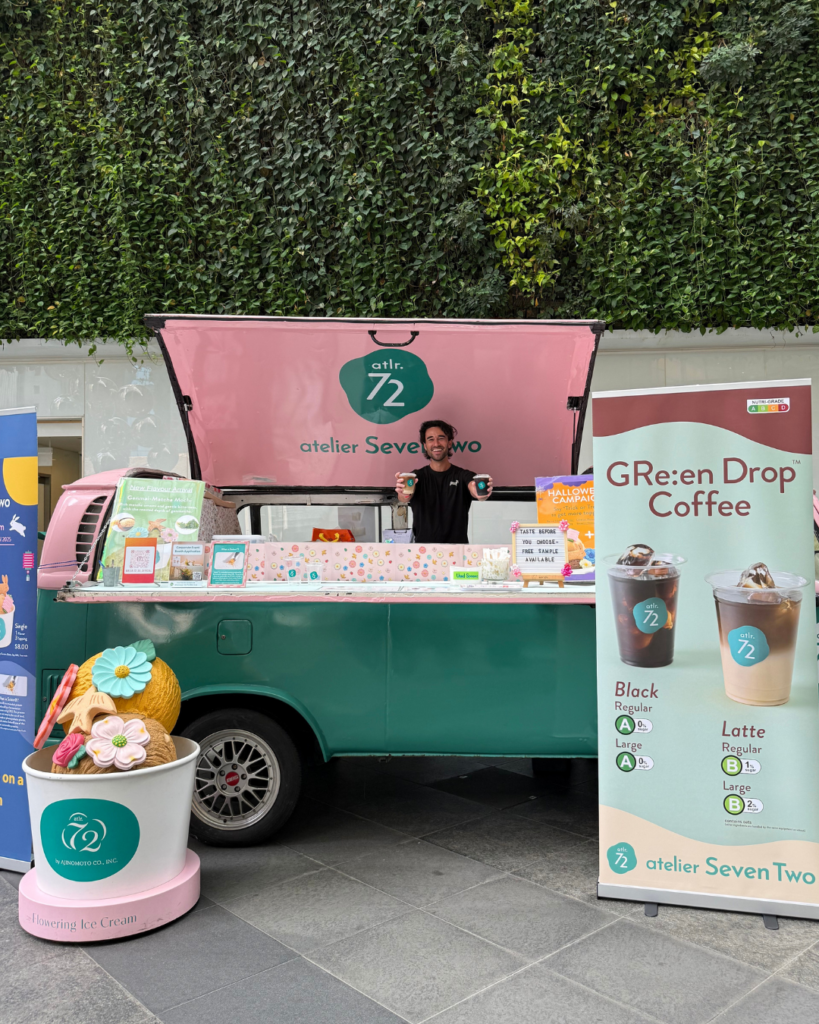
Prefer debuted the Gr:een Drop Coffee range with Ajinomoto last year, blending conventional coffee with its bean-free alternative in a batch-brewed filter coffee and latte combining oat milk with a dairy-free cream made from Solar Foods’s gas-derived Solein protein.
“Our coffee offering has been part of our broader exploration of how new ingredients can be incorporated into familiar, enjoyable food and drinks. Through temporary sales locations, we have been able to introduce our products directly to customers and learn about their preferences,” says Murakami.
“The decision to open a permanent location builds on the overall development of Atlr.72, including our coffee, ice cream and sweets. A permanent shop will allow us to build ongoing relationships with customers, refine our products through their feedback, and offer a more complete brand experience.”
The new store will open on January 23. “We hope it will become a place customers return to for everyday treats, time with family and friends, and gifts, while also introducing international visitors to a brand developed in Singapore,” notes Murakami.
Now, Prefer and Ajinomoto are teasing a new innovation. “We are planning to launch a packaged coffee product blended with Prefer’s coffee extender during fiscal year 2027,” she reveals. “The product is still in the planning stage, and further details will be shared closer to launch.”
Meanwhile, Ajinomoto has been working with Solar Foods since before the Gr:een Drop launch. The latter’s Solein protein has powered mooncakes, ice cream sandwiches and “flowering” ice creams sold under the Atlr.72 brand in Singapore.
JTB partnership will help explore market opportunities across Asia
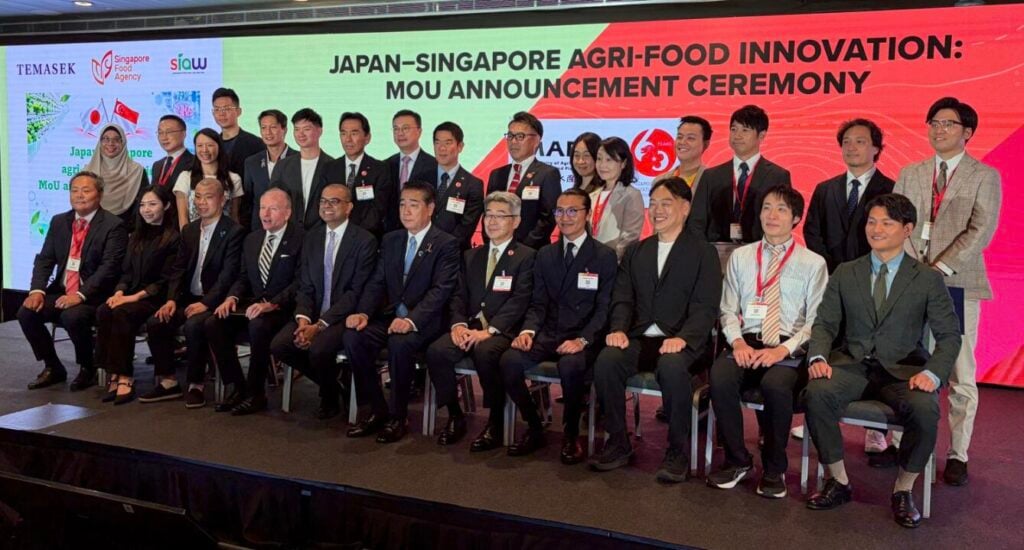
The agreement with JTB builds on Prefer and Ajinomoto’s existing collaboration and “shared interest in bringing new food ingredients closer to consumers”, according to Murakami.
“Working with JTB creates opportunities to connect product development with travel, education and food experiences,” she says, outlining that the MoU involves Ajinomoto’s Japan and Singapore businesses, JTB’s Singapore arm, and Prefer.
“Under the agreement, we will explore food education and sustainability activities in Singapore, food experiences linked to tours and educational trips from Japan, and products for travel and corporate customers,” she explains.
“We will also explore product development and market opportunities across Asia using Prefer’s ingredients. These initiatives are at the planning stage, and the MoU provides a framework for developing them together,” adds Murakami.
“Ajinomoto contributes food development expertise, Prefer brings ingredient innovation, and JTB can help connect these products with travel and learning experiences. Together, we aim to make food innovation more accessible through taste and everyday experiences.”
Asked how this ties in with the broader agreement between the two governments, she says: “By diversifying the ingredients used in familiar products, we aim to create more options as food supply chains face climate-related pressures. Our role is to translate ingredient innovation into products that people enjoy and can incorporate into their everyday lives.”