

Veg-Led Food & Plant-Based Alternatives Can Coexist, Says Redefine Meat After Doubling UK Footprint

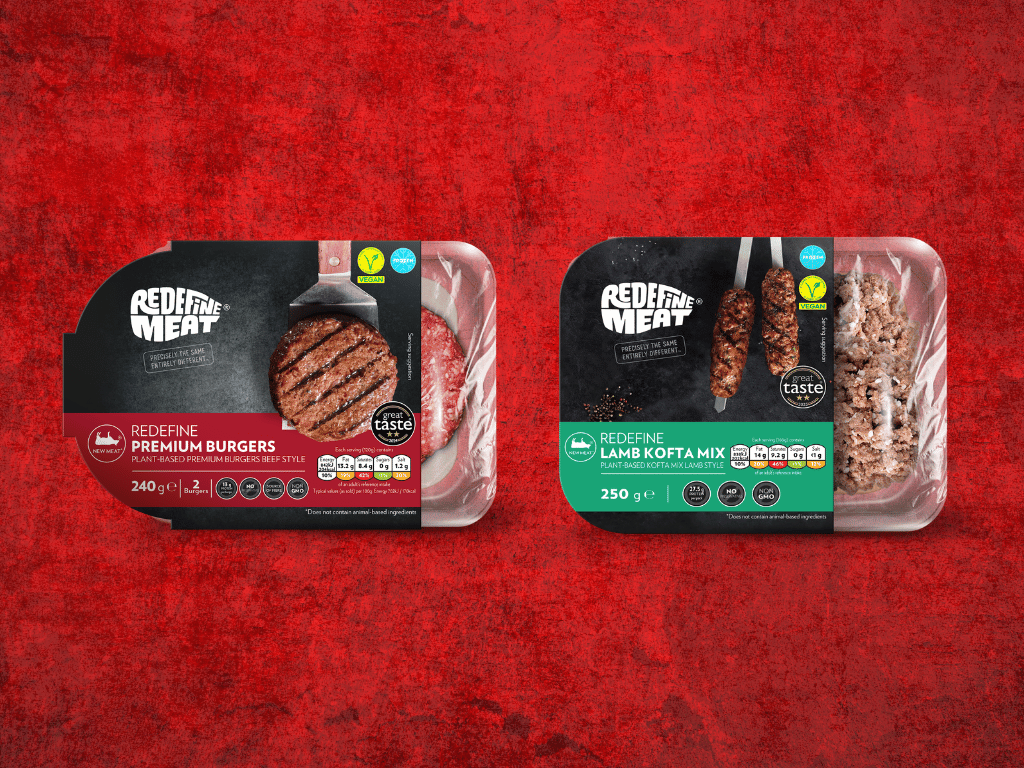
Redefine Meat has secured listings for its 3D-printed meat alternatives at nearly 400 Tesco stores, marking a significant expansion less than a year after entering UK supermarkets.
“We don’t think the future of plant-based food has to be one thing,” says Simon Owen.
He is the UK lead and VP for the EMEA region at Redefine Meat, a startup known for its 3D-printed meat alternatives, and he’s speaking to Green Queen following the company’s launch in 391 Tesco stores.
Britain’s largest retailer is now carrying the firm’s premium burgers and lamb kofta mix in its freezers, just as plant-based eating rebounds in the country.
That growth, however, is driven largely by “veg-led foods” rich in protein and fibre, according to Tesco. The supermarket group missed its sales goal for plant-based meat last year, though it said the meat-free sector was “back in growth” as sales of vegan mince jumped by nearly 25% and whole-food proteins by 12%.
That trend has continued this year, as Brits move away from ultra-processed foods (UPFs) and towards vegetable-forward options and clean-label proteins like legumes and tofu. In the first half of 2026, unit sales of beans, pulses, tofu and tempeh grew by 7.3% and veg-led analogues such as sausages and pies by nearly 25% compared to the same period a year ago; meat alternatives, on the other hand, experienced a 4.3% dip.
However, as Owen asserts, there’s room for everything. “Veg-forward food and alternative proteins can live alongside each other and serve different occasions and consumer needs. Our role is very specific: we make plant-based meat for occasions where people want the taste, texture and satisfaction of traditional meat, without the animal,” he says.
“That’s why we’re focused on continuously improving our products while protecting the eating experience,” he adds, pointing to the concentrations of protein, fibre and essential micronutrients in its preservative-free, non-GMO meat alternatives. “Ultimately, consumers shouldn’t have to choose between something that tastes great and something that delivers nutritionally.”
Ingredient transparency ‘a positive thing’, but taste remains ‘biggest barrier’
Redefine Meat’s products undergo a patented additive manufacturing process – more commonly known as 3D printing – which helps it better replicate the taste of meat and texture of animal muscle fibres. The process disintegrates textured vegetable protein into fibres and blends them with a dough made from soy and/or pea protein isolates.
It has a broad product range endorsed by celebrity chefs like Marco Pierre White, spanning beef, pork and lamb alternatives in formats like pulled, mince, sausages, burgers, and whole cuts.
These can be found at over 4,000 foodservice locations in 10 countries, plus retailers in several European markets. Redefine Meat only entered British supermarkets last October, when seven of its products landed in 364 Asda stores. In less than 12 months, its footprint now spans 755 brick-and-mortar locations, alongside an online presence at Ocado, Asda and Tesco.
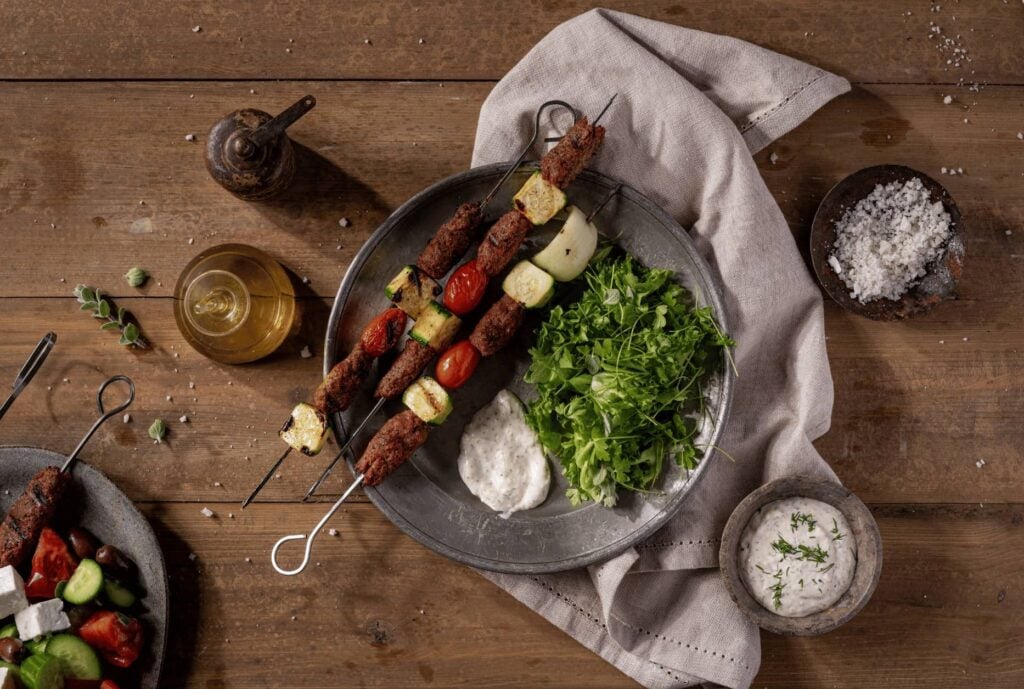
“We feel that ultimately Tesco saw two products that they felt would work well for their shoppers. The burger is familiar and easy to understand, while the Kofta Mix offers something a bit different and gives people much more freedom in how they use it,” Owen says when asked why Tesco chose to stock these two products.
“They’re also both proven products for us, with strong recognition from Great Taste and a really positive response from consumers, so we felt very confident putting them in front of a much bigger audience.”
The premium burgers contain 13.2g of protein and fat each per 120g patty, alongside 6g of fibre, and the kofta mix offers 11g of protein, 14g of fat and 6g of fibre per 100g. Both contain micronutrients like iron, zinc, and vitamins B3, B6 and B12, and have an ingredient list featuring methylcellulose and maltodextrin.
“We absolutely understand why consumers are paying closer attention to ingredients, processing and nutrition, and we think greater transparency is a positive thing. Our responsibility is to be clear about what’s in our products, why it’s there and what the product delivers nutritionally,” says Owen.
“Taste remains the biggest barrier preventing more shoppers from entering the plant-based category. Consumers shouldn’t have to compromise on flavour to choose plant-based food, which is why we’ve focused relentlessly on creating products that deliver an exceptional eating experience first and foremost.”
Redefine Meat takes ‘first steps into US market’ amid expansion drive
The Tesco launch builds on “strong retail momentum” for the brand, which has posted a 31% year-on-year increase in volume sales on Ocado, where it ranks as the second-biggest contributor to the frozen vegetarian category growth (behind Quorn).
“The UK business has continued to perform very strongly, with growth coming across both retail and foodservice. Ocado is one example of the momentum we’re seeing, but it’s part of a much broader picture,” outlines Owen.
“We’ve continued to grow our foodservice presence, entered physical retail with Asda last year and have now taken another significant step with Tesco. What’s particularly encouraging is that we’re seeing strong growth across different channels, rather than being reliant on any one part of the business.”
Redefine Meat is witnessing particularly strong momentum in its core market of Europe, where it’s present across the UK, Benelux, the DACH region, France, and Italy, among other smaller markets. “The focus now is on deepening our presence where we’re already established, while selectively opening up new markets where we see the right opportunity,” he says.
“We’ve built a growing retail presence across the region, with products available through major retailers including Ocado, Tesco and Asda in the UK, REWE in Germany, Coop in Switzerland, and Jumbo, Picnic and DekaMarkt in the Netherlands. We also have an established presence in Israel, and we’ve recently taken our first steps into the US market.”
Its priority over the next 12 months is to build on this sustained demand. “Getting onto the shelf is still only the beginning. Our job is to continue to build awareness, encourage trial and, most importantly, give people a reason to come back,” notes Owen, suggesting that the Tesco listing provides an opportunity to “take what we’ve learned to a significantly larger audience”.
“We’ll continue expanding our presence across retail and foodservice, but we’re very focused on doing that in a way that builds the category rather than simply adding more products to shelves. That means making plant-based meat easier for consumers to understand and use, and showing that it can deliver against the same expectations people have of traditional meat,” he says.
“You’ll also see continued innovation from us, both in the products we already have and in what we bring to market next. Taste will remain at the heart of that, alongside our work on nutrition and ingredient simplicity.”