

MicroLub Bags $10M to Swap Fats with Water & Proteins Without Losing Flavour

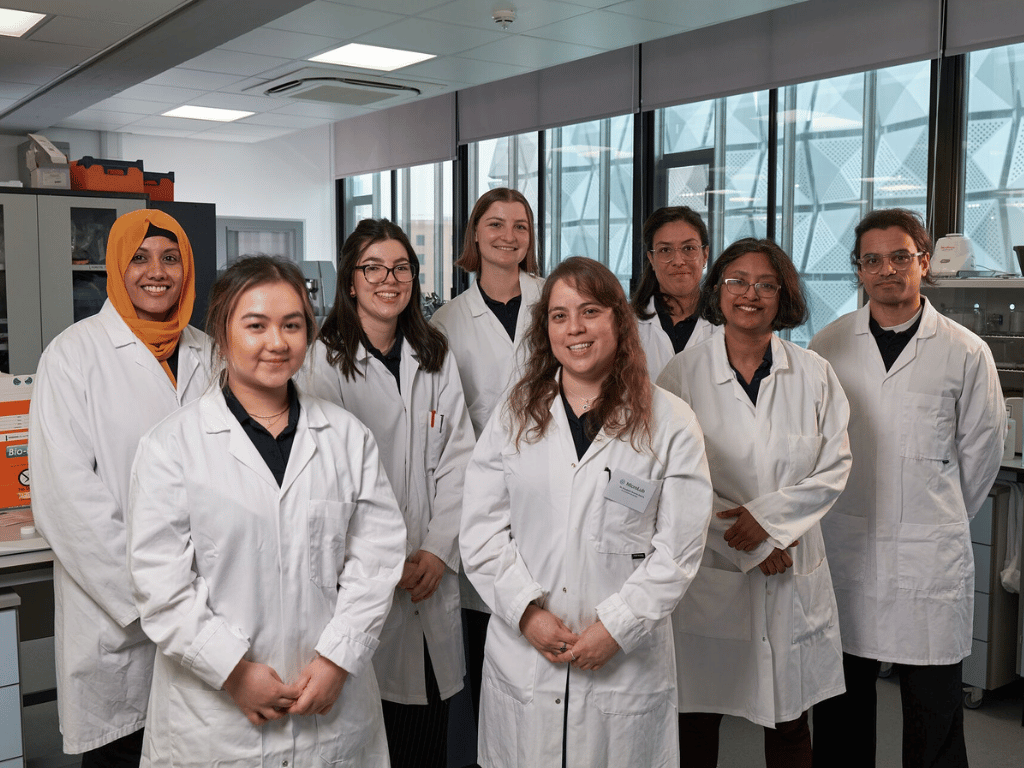
UK food tech startup MicroLub has raised £7.5M ($10M) to fuel its US and Asia expansion with a technology that replaces fats with microgels made from proteins and water.
Can water solve the obesity epidemic?
As Brits take to GLP-1 drugs like a duck to water, University of Leeds spinout MicroLub is betting on a water-derived substitute for conventional fats to help manufacturers lower the fat and calorie content in food products without changing the flavour.
The startup has just closed a £7.5M ($10M) funding round led by Northern Gritstone, with participation from all existing investors, including NPIF II – PXN Equity Finance. This takes its total raised to $14.5M to date.
MicroLub replaces the lubricity of fats with microgels, which are developed by forming protein (either plant-based or dairy-derived) and water gels that are broken into microparticles with a homogeniser. These microgels release water when chewed to create the creamy mouthfeel associated with fats.
The technology can reduce fat and calorie content by up to 75% while maintaining the sensory experience consumers crave. In some cases, it can boost protein content (an added bonus for GLP-1 users) and clean up the ingredient list by eschewing the need for emulsifiers and thickeners, fitting neatly into the demand for minimally processed food.
The firm will use the capital to further develop its technology, expand its team, accelerate expansion into the US and Asia, and convert existing customer trials into commercial agreements.
“Our technology enables manufacturers to reduce fat, increase protein and simplify ingredient lists while delivering the indulgent mouthfeel and texture consumers expect. This investment supports our international scale-up, team growth, and getting MicroLub powered on shelves very soon,” said MicroLub CEO David Peters, who previously headed Oatly’s UK business.
How MicroLub turns proteins and water into fat replacers
Founded by Anwesha Sarkar from the University of Leeds’s School of Food Science and Nutrition, MicroLub is developing a solution for the biggest barrier to food consumption shifts: taste.
Fat is the primary carrier of flavour in food. When we eat, molecules interact with the tongue and the inside of the mouth. This molecular friction generates the sensory signals our brains interpret as mouthfeel – high friction creates unpalatable, sticky sensations, but low friction creates the rich experience associated with fats and oils.
But removing fats or increasing protein dramatically increases friction, worsening the mouthfeel and, consequently, consumer acceptance. So MicroLub creates biolubricants that reduce the friction to create oil-like performance, minus the oil.
It forms protein scaffolds from a toolbox of plant-based or dairy proteins, and then coats them with polysaccharides (long-chain carbohydrates) in precise ratios. The resulting molecules function as a microscopic lubricant that lowers friction to oil-like levels.
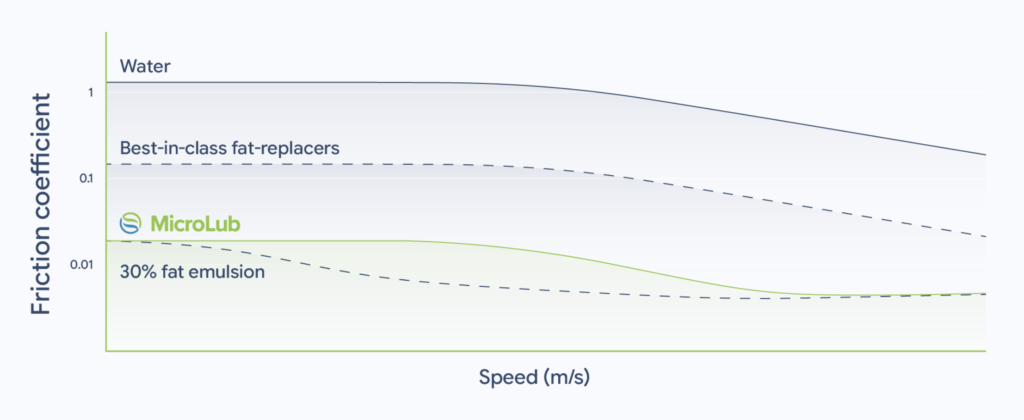
The technology reduces molecular friction by over 20-fold compared to water, and 10-fold in contrast with existing, best-in-class fat alternatives. The choice of proteins and polysaccharides depends on the end application, cost constraints and ingredient pricing, clean-label requirements, and supply chain considerations.
The ability to use plant proteins like pea, soy, oat and fava bean is a “particularly significant” opportunity for plant-based product developers, according to MicroLub, since these ingredients typically cause astringency and texture problems, but its technology can enable products to achieve a sensory experience comparable to those built on animal fats.
Aside from food, MicroLub’s technology can also be deployed in the personal care world, where molecular friction determines how creams and lotions feel on the skin.
An innovation ripe for the GLP-1 market
“MicroLub is addressing one of the food industry’s biggest scientific and commercial challenges. Its proprietary technology enables manufacturers to reformulate products in response to changing consumer expectations without compromising the sensory experience that drives purchasing decisions,” said Northern Gritstone CEO Duncan Johnson.
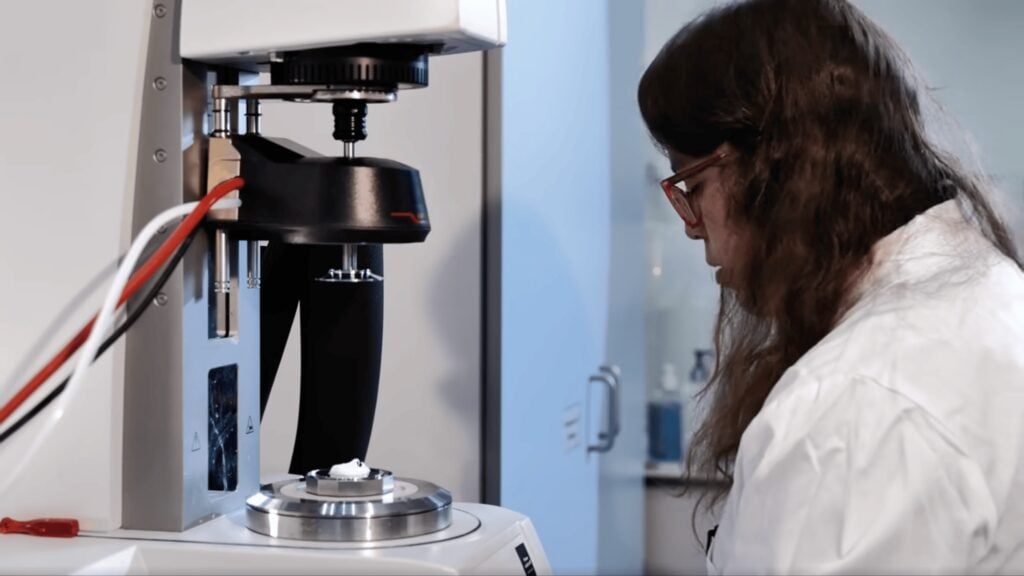
Since its establishment in 2023, MicroLub has progressed from lab scale to industrial manufacturing, and is now working with some of the world’s largest food and ingredient companies. It still uses the university’s research facilities, but also operates its own food innovation laboratory at the institute’s Nexus business centre.
“The company has made exceptional progress, scaling its technology and attracting interest from global food manufacturers,” noted Johnson. “This is exactly the kind of world-class university spinout Northern Gritstone was created to support, and we’re excited to back the team as they build what we believe can become a globally significant ingredient technology company.”
The innovation will speak to people looking to cut back on fat and calories in their food, not least those who take weight-loss drugs like Ozempic and Mounjaro – 9% of Brits have already used GLP-1 medications, and another 18% are now considering them.
And while unhealthy saturated fats are contributing to the growing obesity epidemic – half the world is on track to be overweight or obese in the next decade – fat is still a critical macronutrient. MicroLub’s water-based solution can improve the nutritional profile of products by replacing saturated fat with protein and water.
Plus, it provides a climate-friendly alternative to animal and tropical plant-based fats, which are linked with significant sustainability and biodiversity issues, with deforestation playing a large role. In the cosmetics world, too, most conventional water-in-oil creams rely on planet-harming petroleum-derived ingredients.
“For too long, consumers have had to choose between food products that taste great, but are unhealthy, and those that are nutritious but compromise on the eating experience,” said Peters. “With MicroLub’s technology, that’s no longer the case – they can now literally have their cake and eat it.”