

Our Bodies Adapt to Plant-Based Diets Long-Term to Enhance Iron & Protein Uptake


A new study allays concerns that plant-based eating is linked to lower iron absorption and protein metabolism, finding that the body adapts to sustained dietary changes through natural processes.
Even plant-based foods that are high in protein, iron and other vital nutrients are often viewed as inferior to animal products, due to concerns that they are less readily absorbed by the body.
New research published in Biology, however, argues that this is a flawed assumption. Eating less of something doesn’t automatically mean the body has less of it available.
The authors of the study drew on human intervention and observational studies to find that the body can adapt to sustained dietary changes via natural processes that help maintain its internal balance.
“The available evidence suggests that long-term dietary changes can trigger increased iron absorption, a greater production of some compounds by the body, more efficient use and recycling of amino acids, changes in the gut bacteria that improve tolerance to fibre, and greater transformation of plant compounds into metabolites that can be used by the body,” the study states.
How the body adapts to different nutritional shifts on plant-based diets
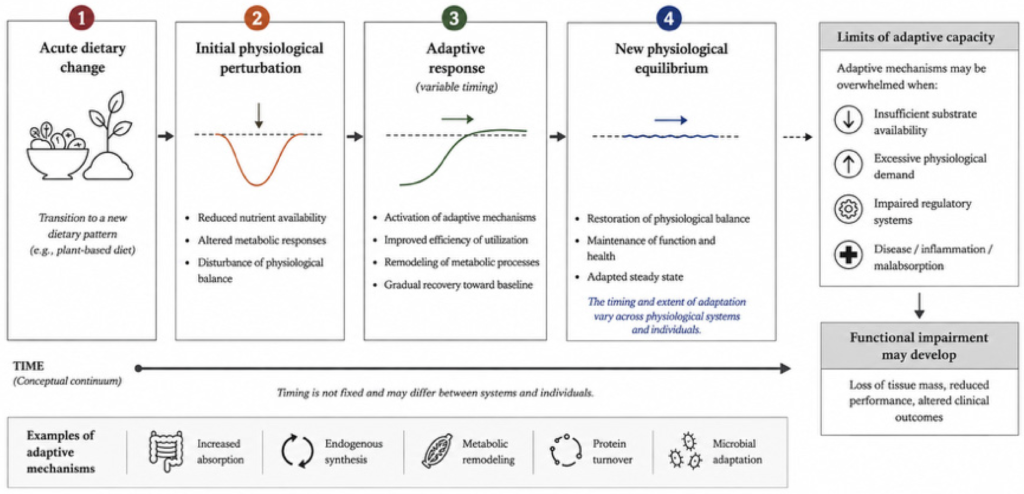
The review synthesised evidence across five areas where plant-based diets are most often flagged as “nutrients of concern”: iron homeostasis, endogenous biosynthesis of creatine and carnosine, protein metabolism, fermentation of dietary fibre by the gut microbiota, and the microbial biotransformation of plant polyphenols.
Among plant-based eaters, iron comes from non-heme sources, which are less efficiently absorbed. Longer-term studies show that the gut compensates by absorbing a greater reaction of it, which is partly explained by lower concentrations of circulating hepcidin, the hormone that gates iron absorption.
Plus, total iron intake between vegetarians and vegans is often as high as or higher than omnivores, because staple plant-based foods like legumes, whole grains, and fortified cereals are iron-dense. “Lower fractional absorption of non-heme iron therefore does not necessarily translate into lower total iron delivered to the gut for absorption,” the researchers explain.
While creatine and carnosine are predominantly found in animal foods, they can be synthesised by the body from amino acid precursors. And though vegetarians run lower baseline muscle stores, they generally maintain normal function and respond more robustly to creatine supplementation when it’s used. This, the authors say, reflects lower baseline saturation rather than deficiency.
When it comes to protein, well-planned plant-based diets that meet the recommended protein intake preserve lean mass and strength comparably to meat-rich diets in controlled trials.
“Protein homeostasis is maintained through several complementary adaptive mechanisms that improve the efficiency of amino acid utilisation during sustained reductions in dietary protein availability, thereby preserving whole-body protein homeostasis across a broad range of physiologically adequate protein intakes,” the study states.
Many have complained about bloating and gas when eating more plant proteins like beans, which are naturally higher in fibre. But these early symptoms ease over weeks as the gut bacteria shift towards microbial groups that ferment complex carbohydrates more efficiently, a pattern documented since early controlled feeding studies of legume consumption.
Finally, gut bacteria also convert plant compounds like soy isoflavones and walnut ellagitannins into more bioactive metabolites. Long-term vegans show markedly higher levels of several of these microbial byproducts compared to people eating an omnivore diet.
Dietary guidelines should recognise ‘long-term biological outcomes’
“For years, nutrition science has treated dietary intake as if it were a straight line to physiological status – eat less iron, absorb less iron; eat less creatine, have less creatine. That’s not how human physiology works. The body is not a passive pipe,” said study co-author Hana Kahleova, director of clinical research at the Physicians Committee for Responsible Medicine.
“When intake changes and stays changed, regulatory systems like the hepcidin-ferroportin axis in the gut, or the enzymes that make our own creatine and carnosine, adjust to hold function steady,” she explained.
“As a clinician, I see this in my patients: the digestive symptoms that come with a new plant-based diet in week one are rarely the same story at month three, and a single blood draw or a single test meal doesn’t tell you what a person’s physiology looks like after they’ve actually adapted.”
The study points out that the body’s adaptive abilities have their limits. Pregnancy, chronic inflammation, digestive disorders or insufficiencies, and other conditions could reduce the body’s ability to compensate and increase the physiological relevance of dietary intake, planning and supplementation, outlining the need for individualised dietary counselling.
“This isn’t an argument that nutrient composition doesn’t matter; it clearly does, especially for patients whose adaptive capacity is already stretched thin,” Kahleova said. “It’s an argument for asking a better clinical question: not just what is this person eating, but how long have they been eating this way, and does their physiology show signs of having adapted?
She and her co-authors state that the framework has a direct implication for clinicians and dietitians, who should extend plant-based diet counselling beyond nutrition-of-concern checklists to also consider adaptation timelines and individual adaptive capacity.
“Rather than considering dietary intake as the sole determinant of physiological function, nutritional assessment should increasingly recognise that long-term biological outcomes emerge from the continuous interaction between dietary exposure and adaptive homeostatic regulation,” they write.
“Incorporating this perspective into nutritional research and dietary recommendations may improve the interpretation of dietary interventions and provide a more physiologically grounded framework for understanding the relationship between diet and human health.”