

Opinion: Blending Climate With Taste & Price Was A Win for Food at NYC Climate Week


Vicky Bond, CEO of research non-profit Madre Brava, argues that the future of food looks encouraging following this year’s NYC Climate Week.
Food was a thing at New York Climate Week 2026.
This year, amid some concern that it had once again taken a back seat to bigger draws like energy, transport and tech – with the ubiquitous AI discussions that form the backbone of any major gathering nowadays – food was on the menu like never before.
Granted, the proportion of events with food as their topic was not in proportion to livestock’s contribution to climate emissions, but nevertheless, it was more prominently featured this year, a direction we need to celebrate.
While those of us who work on food and climate are often frustrated by its seemingly lowly place in the discussion, it was clear to me this year in New York that there is momentum and that the desperate problems and innovative solutions that make food system transformation so urgent and compelling are gaining traction in the climate debate, against a challenging political environment in the US.
Taste and price form a winning recipe
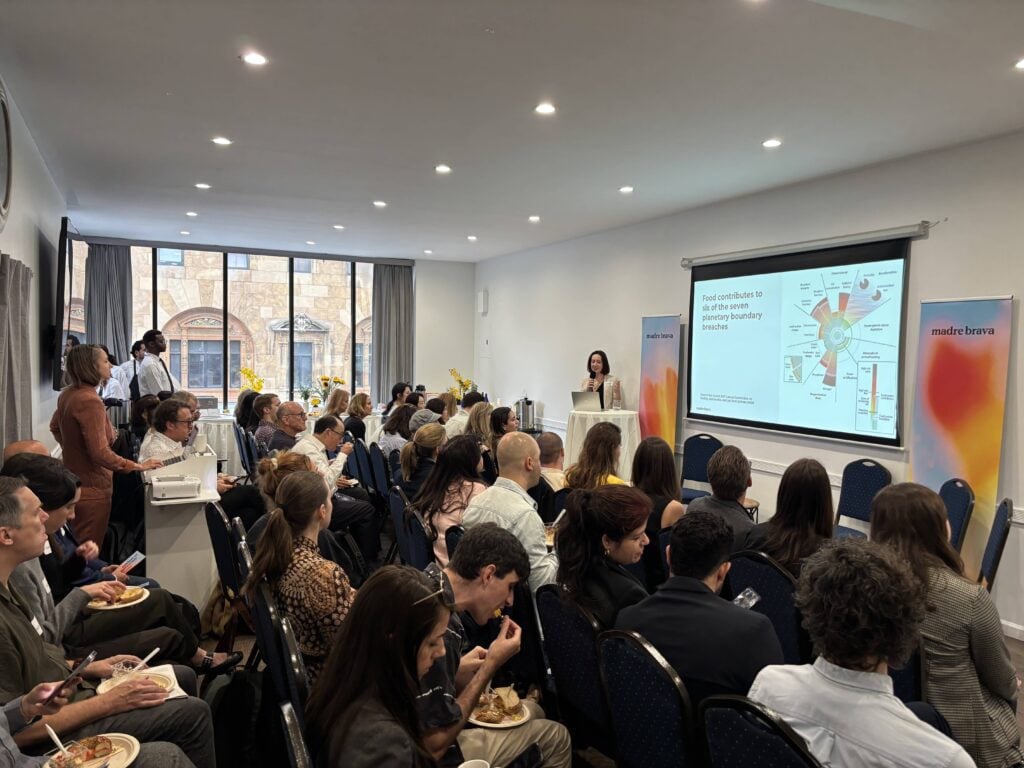
Tilt Collective’s well-attended Food Day is testament to that. And it was also clear at Madre Brava’s Breakfast of Tomorrow, where discussion and debate were fuelled by balanced protein, alongside cultivated salmon and plant-based egg and dairy alternatives.
Food is also a huge health and cost of living issue. Grumbling that it is not prominent enough in discussions about how to tackle the existential threat we face (something that I often do) is to miss the full picture: food is often central in discussions about affordability and health. The solutions to the problems raised in these discussions can also be of benefit to the climate.
Climate doesn’t sell when people are in the aisle picking their food – taste and price win out. And that’s why balanced proteins and the revival of beans offer an opportunity to reduce the climate impact of meat without having to revolutionise consumer habits. These products are often cheaper and just as tasty as their full-meat counterparts.
The Dutch, recognised leaders in shifting to more plant-rich diets for the good of people and planet, are predictably ahead of the game here. Early evidence from Dutch supermarkets suggests the introduction of balanced products has been a commercial success, with nearly all retailers (including the biggest) now adopting them and a study from Food Valley finding these products were on average 4.4% cheaper than their non-blended counterparts.
In the UK, the renaissance of beans has been a great success. Balanced protein needn’t be made by the producer – simply adding beans to a meal and taking out some or all the meat adds in fibre and nutrients while making the meal more affordable and tasty.
Food is still a climate issue

On top of the price and taste selling points, there’s the health (and climate benefit of less meat in a meal) and, with poultry in the US for example, there’s the nutrition by stealth angle – the Chicken Plus range by Perdue adds veg that some parents are hard-pressed to get into their kids in its standard form.
While price, taste and nutrition are the headlines here, there is no doubt that food is a climate issue. These products are the bridge we need to tackle climate emissions today.
And at the Breakfast of Tomorrow, we heard about the incredible opportunities that blended protein offers US foodservice companies, which can introduce a product that undoubtedly benefits our climate with a far lower risk of being dragged into a culture war.
Greener by Default is a perfect example of this concept in action, working with universities, hospitals and commercial caterers to help create healthier, more sustainable meals.
High-level policy debates about food and climate are essential, but the practical solutions, like balanced protein, are a way to affect the climate, while being part of other debates that are relevant to people’s lives.
I am already looking forward to next year’s New York Climate Week, where I am sure food will be even higher on the menu.