

Exclusive: Israel’s Aleph Farms Taps Singapore Manufacturer to Expand Cultivated Meat Across Asia-Pacific
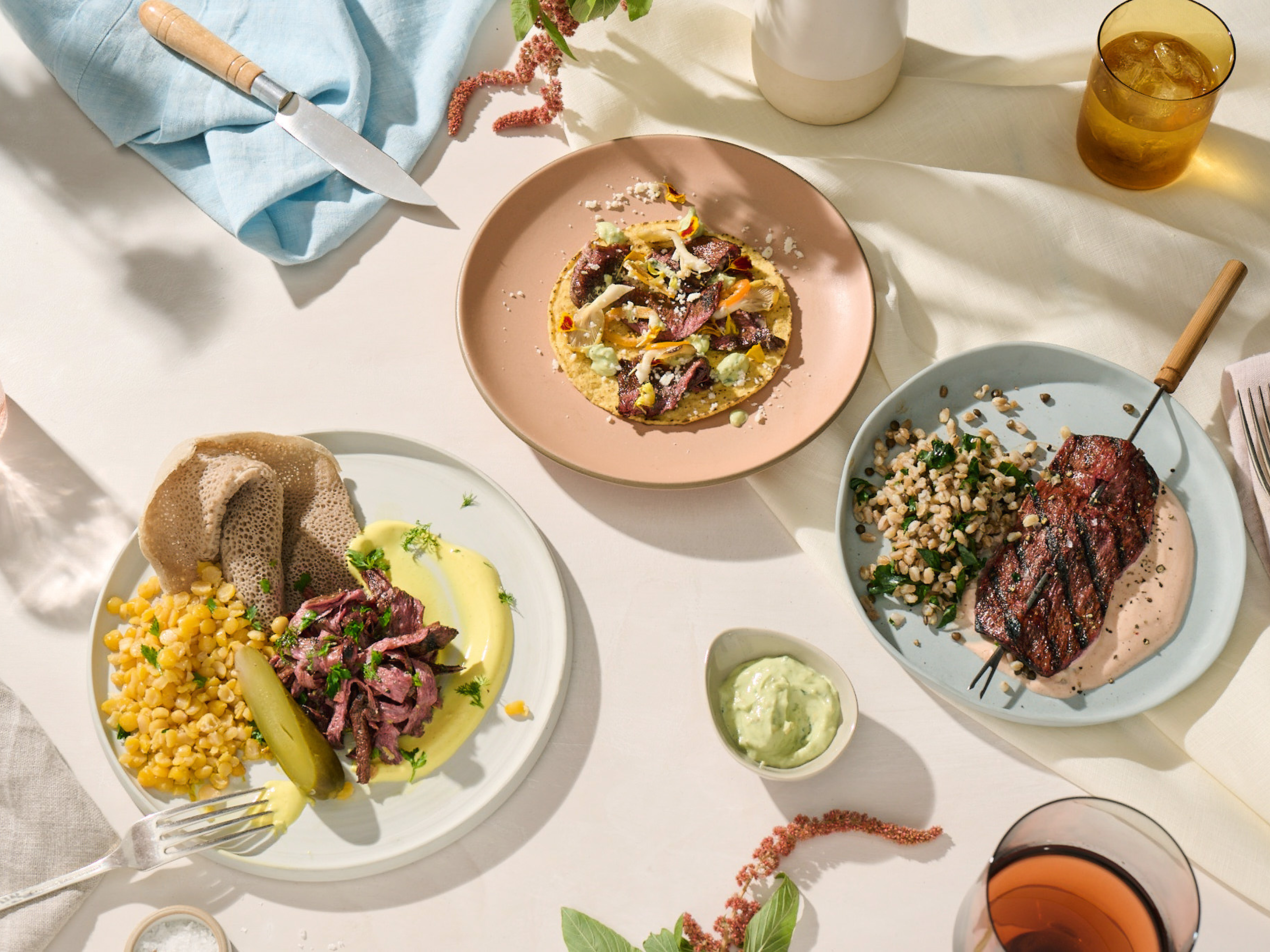
Israeli cultivated meat startup Aleph Farms has partnered with contract manufacturer Cell Agritech and set up an entity in Singapore to serve as its Asia-Pacific hub.
As it awaits regulatory approval from the Singapore Food Agency, cultivated meat firm Aleph Farms has established the country as its hub for scale-up and expansion across the wider Asia-Pacific region.
The Israeli startup has teamed up with Cell Agritech, a contract manufacturer (CDMO) specialising in cultivated meat, in a move it said reflected its “asset-light approach” to commercialisation – i.e., via strong local partnerships instead of centralised mega-facilities.
In addition, Aleph Farms has set up a legal entity in the city-state to support regional operations, partnerships and future commercialisation across Asia-Pacific.
“We are pleased to support Aleph Farms as a CDMO partner in Singapore, as Singapore offers a strong regulatory and innovation ecosystem for cultivated meat and alternative protein,” said David Cheng, director of Cell Agritech Singapore.
“Singapore remains central to our Asia strategy as a regional hub for production, innovation, and R&D, supported by a strong national focus on food security and deep public–private collaboration in food innovation,” Aleph Farms co-founder and CEO Didier Toubia told Green Queen.
Marrying Singapore’s innovation with Malaysia’s manufacturing and cost leadership
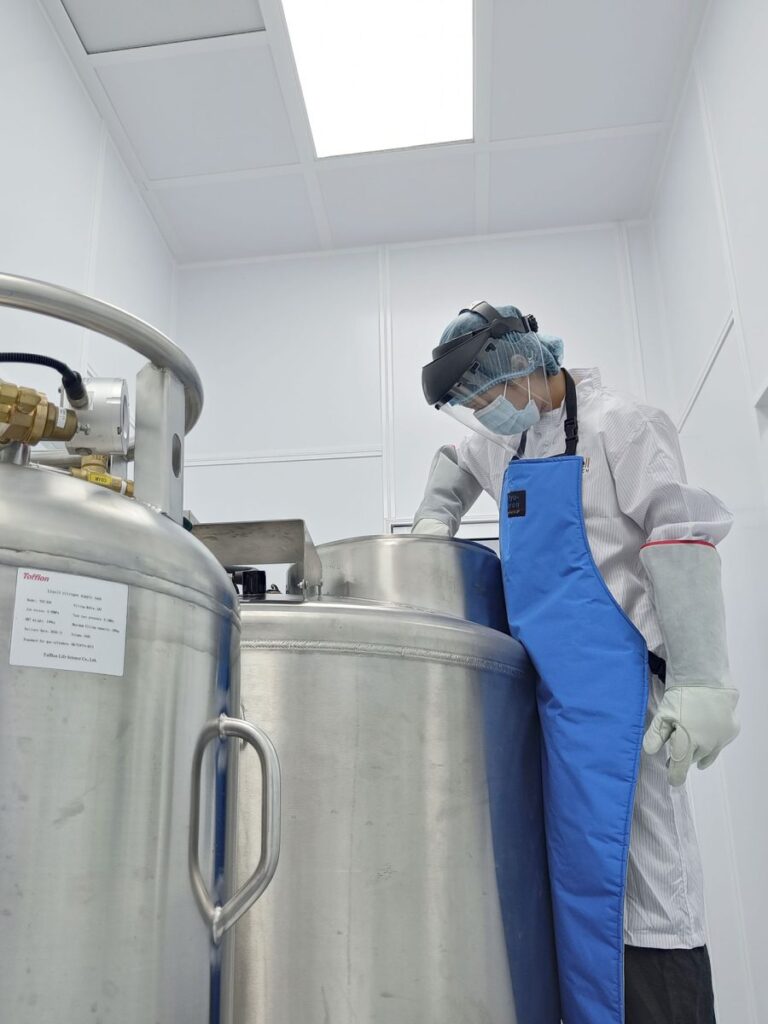
The strategic partner will see Cell Agritech provide Aleph Farms with access to its pilot and scale-up infrastructure, technical expertise, and regulatory-ready facilities.
This will enable the Israeli startup to advance product localisation, process development, and regional readiness without the need to build capital-intensive greenfield plants.
Singapore will serve as the firm’s regional innovation and regulatory base, complemented by Cell Agritech’s established presence in Malaysia, and enabling future scale-up activities as regional demands build. Aleph Farms said the hub-and-spoke model will combine Singapore’s innovation leadership with its neighbour’s manufacturing scale and cost efficiency.
Its staggered regional expansion has been built on years of process optimisation and a techno-economic validation, which have enabled it to define scalable, cost-efficient production pathways before committing to manufacturing footprints. This helps the firm lower its capital risks and enhance operational predictability.
“By leveraging our facilities and manufacturing expertise, we aim to accelerate Aleph Farms by scaling up in a capital-efficient manner while maintaining the highest quality standards,” said Cheng.
Toubia added: “By partnering with Cell Agritech, we are establishing a long-term regional foothold that allows us to move faster, stay capital-efficient, and derisk execution as we prepare for commercialisation across Asia.”
The firm also operates a 65,000 sq ft plant in Rehovot, Israel (with a capacity to initially produce 10 tonnes of cultivated steak annually), is building a factory in Thailand with biotech firms BBGI and Fermbox Bio, and has teamed up with Switzerland’s The Cultured Hub to produce cultivated meat for its European operations.
In 2023, Aleph signed a Memorandum of Understanding (MOU) with ESCO Aster to utilise its facility in Singapore for cultivated meat production, though the company is not working with them currently.
“ESCO was part of our early exploratory work in Singapore, but at this stage, we’ve decided to build our production capacity with Cell Agritech. ESCO remains an important player in the local ecosystem, and we may work together on specific projects in the future. This announcement reflects the operational framework we’re putting in place now,” Toubia told Green Queen.
Aleph Farms eyes cultivated meat launch by 2027

Aleph Farms’s signature offering is the Petit Steak, a hybrid meat product combining non-modified, non-immortalised cells of a premium Black Angus cow with a plant protein matrix made of soy and wheat.
The product has already been approved for sale in Israel, and is awaiting clearance in the UK, Switzerland and Singapore too. The latter was the first country to issue an approval for cultivated meat, and has since authorised three more.
According to Toubia, a dozen or two others are still in the process of obtaining the green light in Singapore. “After being the first country to approve cultivated meat at the time, they really want to make sure that they are not perceived as a country where it is easy to get approvals,” he told Green Queen in September.
“We do see Singapore as a hub for Asia,” he added. “We’re big believers in Singapore. We believe that the potential is great and that it’s a great footprint for us in Asia. So we remain very committed and excited about the opportunity in Singapore.”
The partnership with Cell Agritech is reflective of Singapore and Malaysia’s position as the import and distribution hubs for much of the Asia Pacific region’s beef supply chain. Embedding its cultivated steak into the existing local supply chain can help position the protein as a practical complement to conventional meat, according to Aleph Farms.
Aleph Farms, which has secured $147M to date and is currently raising more capital, plans to pursue regulatory approval in the EU and the UAE too, and is aiming to launch products with restaurant partners in Israel and Singapore by 2027.
Toubia called the latter a “mature, proof-driven market where scientific rigour, safety, and credibility are essential”. “This makes Singapore one of the few environments where cultivated meat can move beyond early pilots into meaningful commercial and technical validation, with consumer dynamics that closely resemble a global reference market and help inform adaptation across Southeast Asia,” he said.
The Good Food Institute APAC’s CEO, Mirte Gosker, echoed Toubia’s words. “By choosing Singapore as their regional hub, startups gain immediate access to world-class scientific partners and a tight-knit innovation ecosystem where the ‘future foods’ sector is bustling and open for business,” she told Green Queen.
“The Lion City is also wisely strengthening its ties with Malaysia – a manufacturing powerhouse that recently completed a government-led cellular agriculture feasibility study and announced a landmark fatwa by its Islamic authority affirming the halal permissibility of cultivated meat,” she added.
“Just as policymakers and local firms moved early to scale renewable energy in response to rising global demand, every country will need new ways to produce more meat with fewer resources – and Southeast Asia is once again laying the groundwork to sell the world what it needs.”