

Walmart Sued for $5M Over ‘Conspicuous Labelling’ of Additives in Bettergoods Plant-Based Milk Line

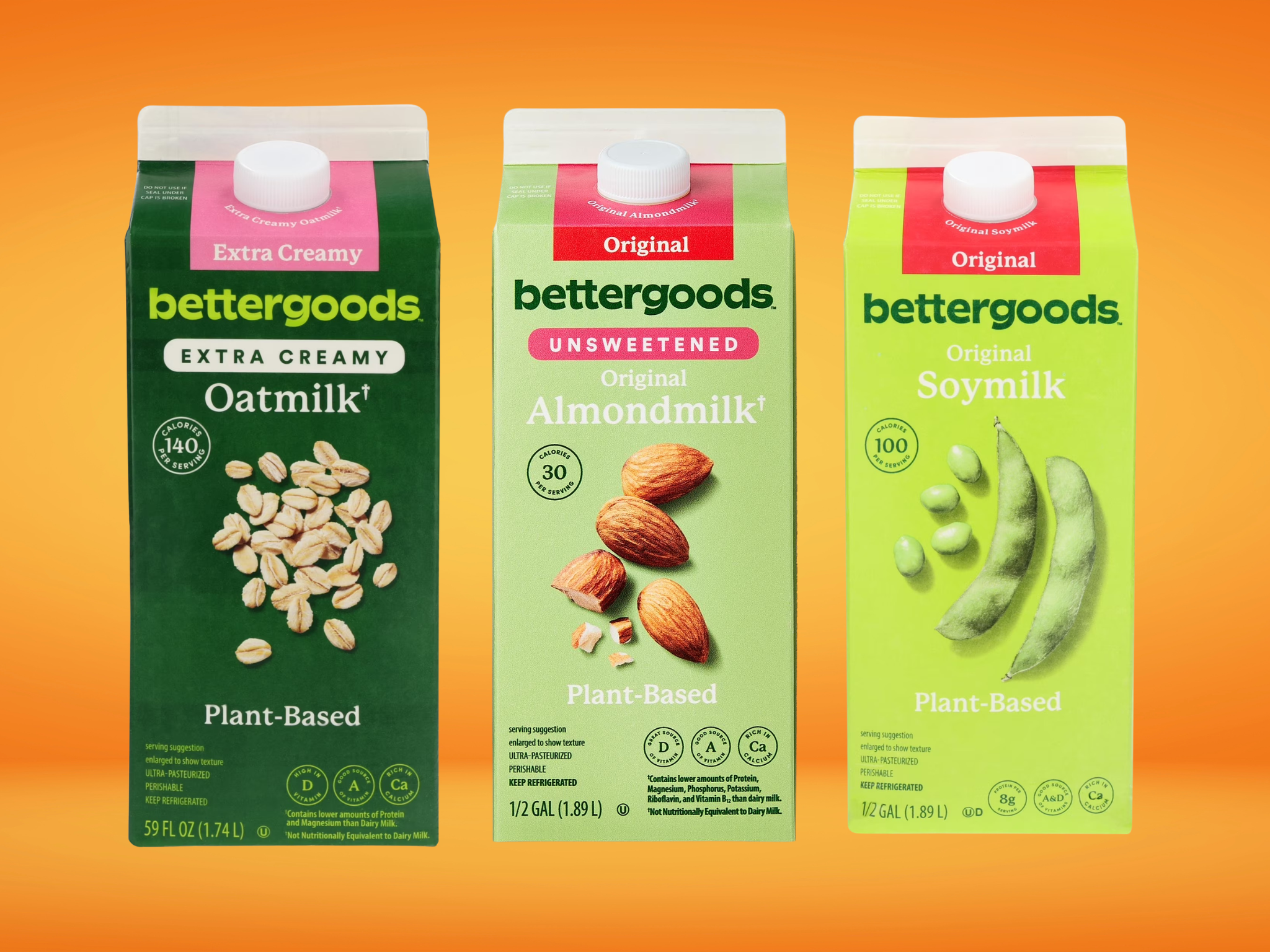
US supermarket chain Walmart has been hit with a class-action lawsuit for labelling its Bettergoods dairy-free milks as ‘plant-based’ despite allegedly containing inorganic or animal-derived additives.
Walmart, the world’s largest supermarket, is facing a lawsuit for “deceiving consumers” by marketing its non-dairy milks as ‘plant-based’ even though they contain ingredients derived from other sources.
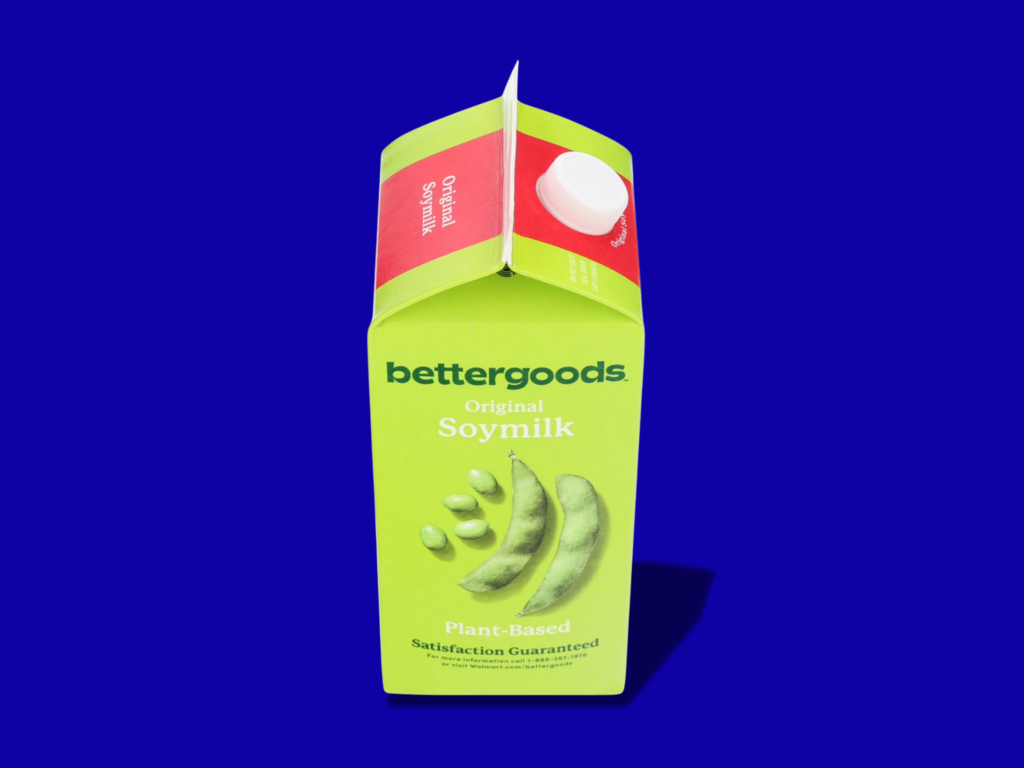
The retailer sells a range of almond, oat and soy milks under its private-label brand, Bettergoods, which feature the term ‘plant-based’ prominently on the front of packaging, as is the case with most milk alternatives.
The plaintiff, Christina Bauer, argues that the products contain additives that are inorganic, synthetic and often animal-derived, which makes the ‘plant-based’ designation a “misleading” representation to consumers.
“A reasonable consumer would not expect that non-plant-derived stabilisers are used in the product, when the front and side labels prominently feature the representation ‘plant-based’,” reads the class-action complaint, filed in the Tampa Division of the US District Court for the Middle District of Florida.
Green Queen has contacted Walmart for a comment on the story.
Lawsuit highlights mineral and animal sources of additives
The complaint alleges that Walmart’s products “contain several ingredients that do not come from plants, including calcium carbonate, dipotassium phosphate, and vitamin A palmitate”.
Highlighting the plaintiff’s grievance, the document suggests that Bauer regularly purchases Bettergoods’s milk alternatives, which display the ‘plant-based’ label both on the front and side of packaging. This, she says, suggests the product “only contained ingredients derived from plants”.
The complaint explains how calcium carbonate – a common food additive used to fortify products with calcium – is an inorganic chemical compound. It’s found in nature in materials like limestone, chalk and marble, as well as in animal-derived sources like seashells, eggshells and snails.
“While there are numerous methods of producing calcium carbonate for use in food products, the most common involves limestone or quarried marble, and then introducing water, temperature, and pressure,” it states. “Calcium carbonate is thus not derived solely from plants.”
Similarly, dipotassium phosphate – often used as an acidity regulator – is a synthetic compound produced through a reaction of potassium with phosphoric acid. In the food industry, the plaintiff says it’s most commonly produced by mining potash.
Vitamin A palmitate, on the other hand, is a fat-soluble vitamin comprising retinol (the alcohol form of vitamin A) and palmitic acid. It’s produced synthetically for plant-based foods, since it naturally occurs in liver, fish, and dairy products.
The complaint also spotlights the use of tricalcium phosphate in several Bettergoods products, which is found in nature as a mineral and can either be sourced from animal bone ash or rock deposits, or synthesised.
Plant-based milks regularly use such additives – what does this mean for labelling?
These “false representations” amount to a “breach of warranty”, the plaintiff argues, accusing Walmart of “deceptive labelling, marketing, and selling”.
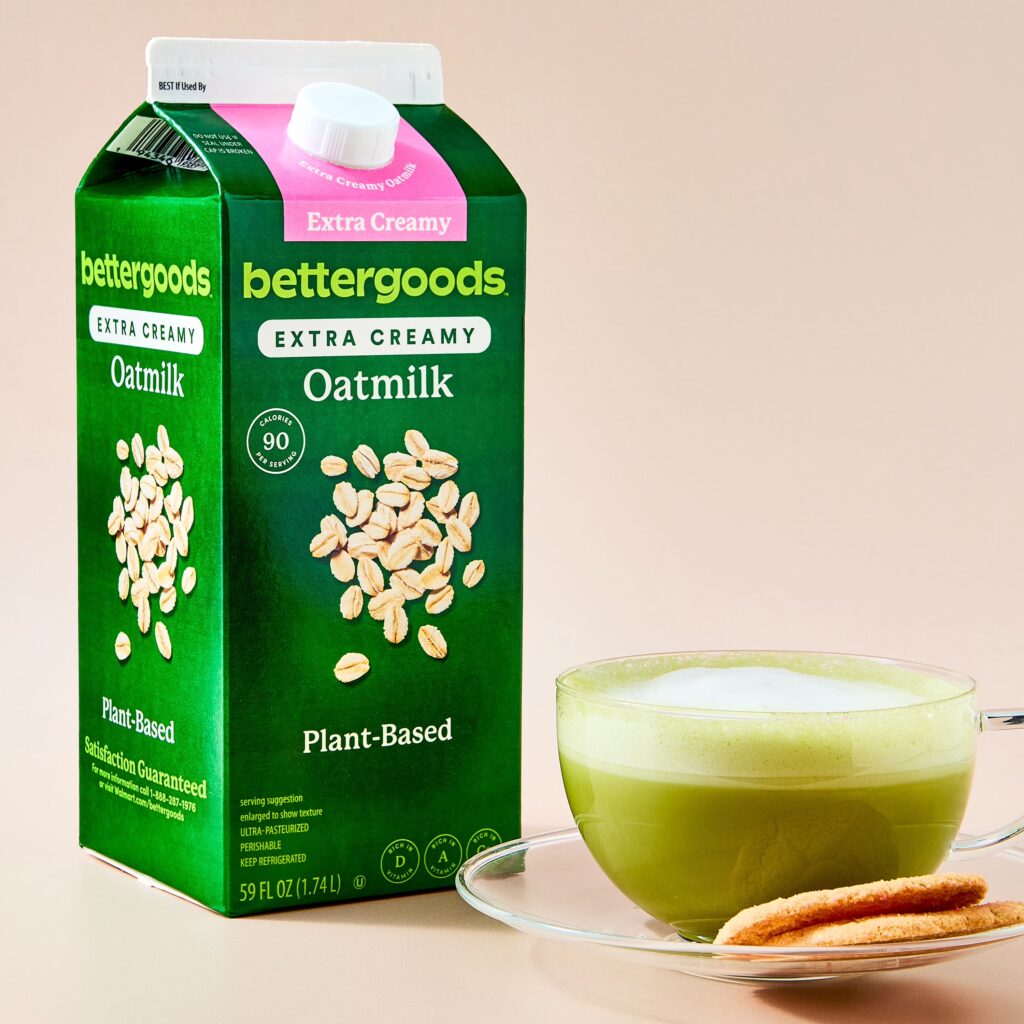
The retailer’s ‘plant-based’ label is “not disclaimed or modified on the products’ labels”, she says in her complaint. “Instead, defendants add images of fruit and almonds, and other traditionally ‘healthy’, plant-based foods to reinforce their marketing of the products as ‘plant-based’,” it reads.
“By deceiving consumers about the products’ nature, quality, or ingredients, defendants steal from competing market shares, commanding a price premium, thereby increasing their own profits.”
The argument is that Walmart doesn’t clarify how it sources these additives, though it isn’t required to do so. And in any case, these emulsifiers, stabilisers and fortifying agents are commonly used in the plant-based milk industry.
For instance, Oatly’s barista oat milk contains tricalcium phosphate, calcium carbonate and dipotassium phosphate – in the US, the former calcium ingredients are derived from limestone, and the company’s health FAQ page outlines that dipotassium phosphate is considered food-safe in jurisdictions around the world, including by the US FDA.
So Walmart’s use of these ingredients isn’t out of the ordinary, and the plaintiff – who is seeking $5M in damages, exclusive of taxes and costs – is homing in on the literal meaning of the term ‘plant-based’. In fact, one of her claims is that some of the Bettergoods plant-based milks contain sea salt, “which, as the name suggests, is derived from ocean water, not plants”.
But it does raise a question around the labelling of plant-based products: how literal are companies expected to be? Is there any room for ambiguity when the nature of the ingredients is deemed easy to perceive by consumers?
The plant-based industry has already faced attacks from the livestock industry for using terms like ‘meat’ and ‘milk’ on the packaging. This lawsuit argues that companies have gone too far on the other end, too. It remains to be seen if the courts agree.