

Is Mycoprotein the Missing Ingredient in Scaling Cultivated Seafood?

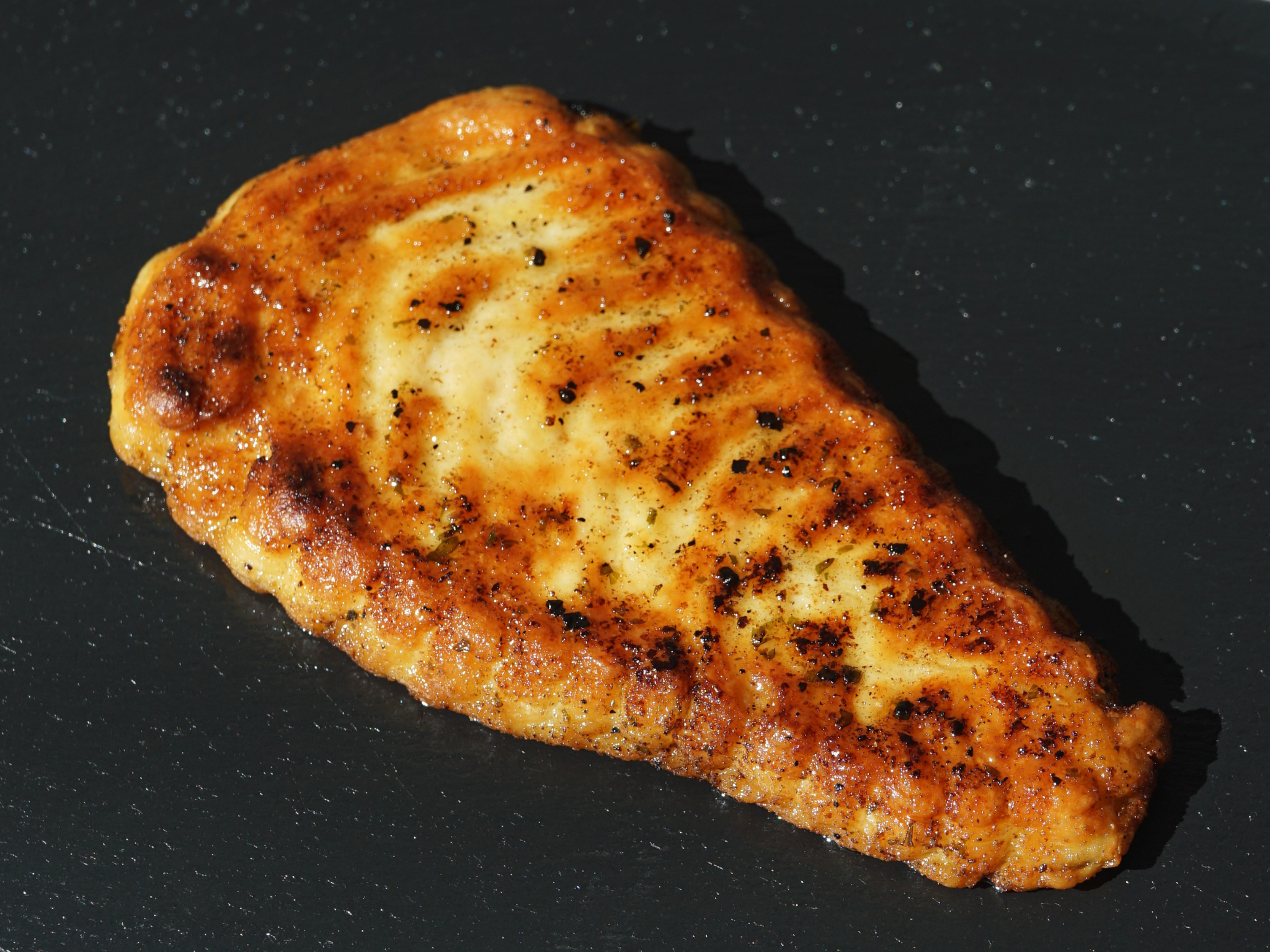
Two food tech startups are working together to use mycoprotein and 3D printing to create scalable whole-cut cultivated seafood products.
Mycelium could be the key to unlocking large-scale production of cultivated fish fillets, at least according to two companies betting on this hybrid approach.
Austria’s Revo Foods, known for its 3D-printed mycoprotein-based seafood alternatives, is working with US-based Atlantic Fish Co to create a whole-cut cultivated whitefish fillet.
The partnership aims to solve the biggest bottleneck of the cultivated protein category – building a scalable production process that can eventually compete with the output and prices of the animal protein sector.
To do so, the two companies are targeting a hybrid seafood innovation, combining mycoprotein with cell-cultured proteins to enable the production of sustainable whole-cut fish.
Using mycelium to make whole-cut cultivated fish

The collaboration marries Atlantic Fish Co’s proprietary whitefish cell lines and tissue engineering expertise with Revo Foods’s industrial mycoprotein structuring and 3D food extrusion technology. The companies are exploring whether structured mycoprotein matrices can serve as a scalable backbone to integrate cultivated seafood cells.
Instead of relying solely on cell growth to recreate the texture and structure of fish fillets, they are using myoprotein as the primary carrier. This structured base could allow cell-cultured material to be incorporated in a matrix that, together, can make cultivated proteins cheaper, while still delivering on taste and texture.
“The mycoprotein matrix acts as a scaffold and texturizing ingredient, to which the cells from Atlantic Fish Co are added. The combination of those two materials combines the ‘best of both worlds’, namely texture (from the mycoprotein matrix) and enhanced sensory properties (from the cells),” Revo Foods CEO Robin Simsa tells Green Queen.
Last year, Revo Foods debuted El Blanco – Inspired by Black Cod, a mycoprotein-based alternative to the deep-sea fish. It was produced with a new 3D extrusion technology at its production site, with computer-guided models transforming unstructured proteins (like mycoprotein) into products with aligned, heterogeneous fibres.
The integration of fat into the protein matrix is key, leading to a ‘flaky’ texture reminiscent of black cod. The product showcases how layered protein structures can replicate the texture of whole-cut fish at industrial scale, and this platform is now being evaluated as a host matrix for Atlantic Fish Co’s cultivated whitefish cells.
“[Mycoprotein] is ideal because it is softer and has a neutral flavour. So basically, added cells (or flavour or other similar ingredients) are not ‘buried’ in a dense matrix, but rather freely available, which leads to a better taste perception of cellular materials,” explains Simsa.
“The goal is to find an economically and technically suitable way to bring cell-based meats to the market,” he says. “In this case, Revo Foods is the provider of raw materials and structuring technology, and Atlantic Fish Co is the provider of cellular material.”
The hybrid approach has informed most cultivated meat products that have made it to the market, whether it is Wildtype’s salmon, Mission Barns’s pork, or Good Meat’s chicken. At current levels, producing cultivated proteins is expensive, but mycoprotein – having been around for decades – is already cheap and highly scalable.
Atlantic Fish Co preparing US regulatory application
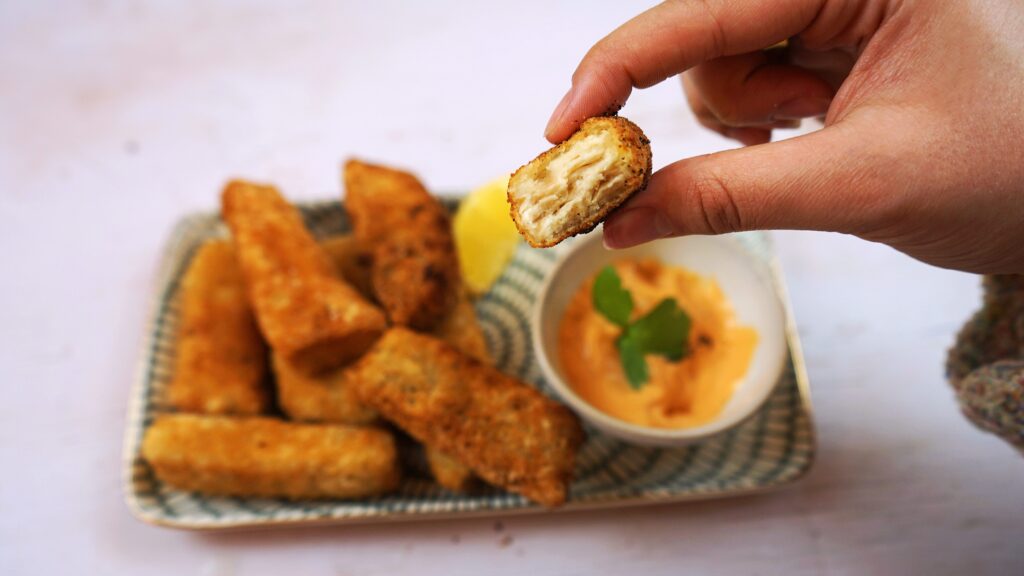
Atlantic Fish Co’s initial focus is on high-value whitefish, specifically black sea bass. The startup takes a small sample from fish muscles and selects the healthier cells. These are then fed on the same food-grade nutrients they’d receive inside fish, enabling them to grow into lean muscle in a bioreactor.
With Revo Foods, it will test cell-based materials via the Austrian firm’s 3D structuring system to observe economical, technical and sensory applicability. The focus on whole cuts is deliberate and crucial – according to the companies, more than 80% of whitefish products are consumed as whole cuts, making this format critical for consumer acceptance.
The hybrid approach could be an ideal lever for these products, offering a faster and cheaper route to market while offering better flavour, mouthfeel and consumer acceptance than plant-based alternatives.
Simsa explains that mycoprotein is superior to extruded textured vegetable proteins or high-moisture extrusion materials since it has a softer texture. “[This] lets the hero ingredient – the cells – develop their full flavour profile in the hybrid product,” he says.
“Texturates are created by high temperature and pressure application, in industrial extruders, which destroy cellular material. Therefore, cells must be added at a later step to the textuates, which means they are more loosely mixed together with the texturate matrix but not really integrated,” he adds.
“Mycoprotein is an inherently fibrous and already textured food ingredient, which does not need to be heat or pressure treated to obtain its properties – it needs to be merely formed or mixed with other ingredients. This is a big advantage for cell-based meats, as it allows a deeper and more homogeneous integration of the cells with the underlying matrix.”
Atlantic Fish Co’s partnership with Revo Foods builds on a $1.2M funding round in November, which it said it will use to finalise its go-to-market product and secure the necessary regulatory greenlights to launch in the US. So far, only Wildtype has obtained clearance to sell cultivated seafood. Will mycoprotein help Atlantic Fish Co be the next?
As for Revo Foods, Simsa reveals that the firm experienced “very good traction” in 2025, and possibly more than doubled its revenues from Q1 to Q4: “We want to continue this positive trajectory, bring out more products this year and especially focus on the unique opportunities that our 3D extrusion system gives us, for visually creative and appealing food textures.”