

GFI President Bruce Friedrich, Author of ‘Meat’, on Protein, Politics & Plants

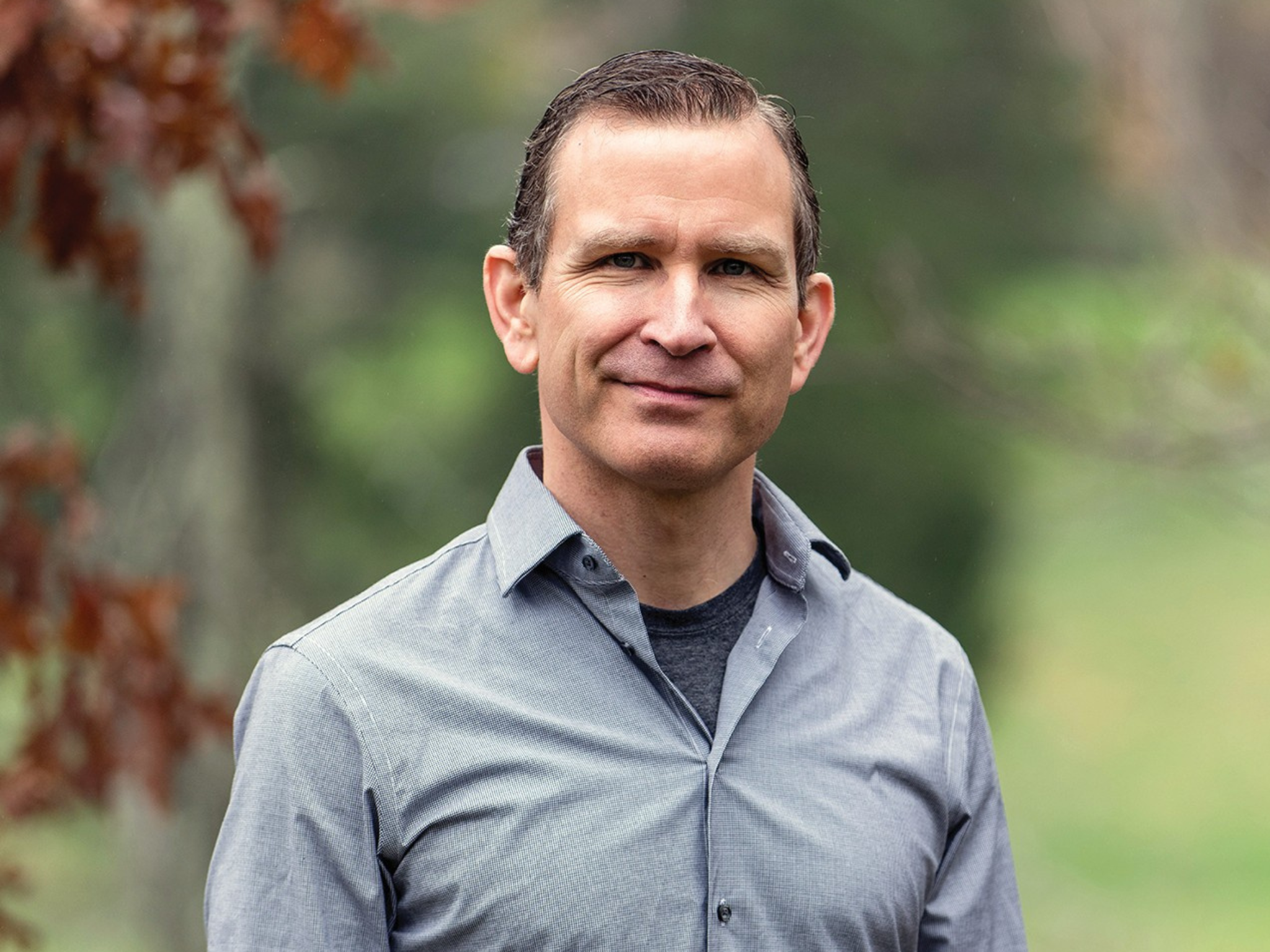
To mark the release of his book, Meat, the Good Food Institute founder Bruce Friedrich talks alternative proteins, political bans, investment struggles, blended meat, and parallels with cars and the internet.
The seed that sparked Bruce Friedrich’s decades of food advocacy was sown in his confirmation class in 1980s Oklahoma – a heartland of American cattle production.
“The pastor who was leading my confirmation class drilled into us the idea that a suffering person in Eritrea or Somalia or anywhere else in the world is no less important in the eyes of God (or the universe) than my wife, my father, or my son,” he says.
Friedrich has been motivated “at a visceral level” to alleviate hunger and malnutrition ever since. In college, he ran an anti-poverty group, organised fasts to fundraise for Oxfam International, and led volunteer trips to a nearby homeless shelter and soup kitchen (he’s still friends with the priest who was running it in the late 80s).
He majored in economics and wrote his thesis about the impact of global agriculture policy on the world’s poorest. “Demand for meat in the Global North drives up prices for land and food, meaning that countries across Africa and South America are shipping feed crops to the Global North for farm animal feed, even as their populations starve for lack of any food at all,” he explains.
After college, he spent six years running a Catholic homeless shelter and a soup kitchen in Washington, DC (becoming privy to the dysfunction of the domestic food system). This was followed by a 13-year stint at Peta’s international grassroots campaign division, two years at Teach For America in Baltimore, and four years at Farm Sanctuary.
All that experience went into the venture Friedrich is best known for now, the Good Food Institute (GFI). He founded the science-based food awareness think tank in 2015, and today, it has seven chapters across the world. Its impact is perhaps best encapsulated by the New York Times’s Ezra Klein, who calls GFI “second-to-none in the influence of its public policy efforts”.
As the president of GFI, Friedrich is at the heart of the global policy, research and funding efforts related to alternative proteins like plant-based meat and dairy, fermentation-derived ingredients, and cultivated meat.
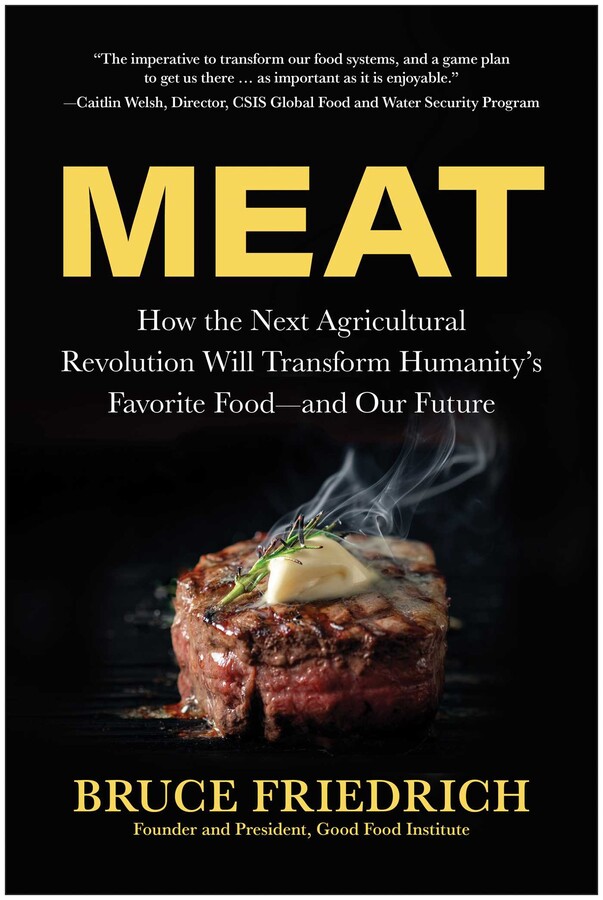
He has leveraged his decades of expertise and advocacy to inform his new book, Meat: How the Next Agricultural Revolution Will Transform Humanity’s Favorite Food – and Our Future, which is out today.
He concedes that there are plenty of books on climate and food, industrial policy, hunger and food security, antimicrobial resistance, and pandemic risks. “The way I discuss my core topics is, I think, quite novel,” he says of Meat.
Eight of the 12 chapters frame alternative proteins as an “economic and jobs boon, as a critical precursor to reimagining global agriculture in ways that ensure thriving farm families, and as quite possibly the strongest intervention available for food security” for countries big and small.
Plant-based and cultivated meat form only part of the book. “I tried to present new analysis and ways of thinking about those issues, too,” he says.
Decades of advocacy haven’t lowered meat consumption
As Friedrich points out, meat consumption has increased by around two-thirds over the past 25 years, and that kind of hike is likely to repeat itself over the next 25 if we keep doing things the same way.
“Success in bending that massive upward meat trajectory could not be more important – for ecosystems, for our climate, for animals, and for the world’s poorest members of the human family,” he says.
A chief lever of this transition is advocacy, which he says has been “wildly successful” in raising awareness about the health, climate and animal welfare benefits of eating less or no meat.
“Many people have changed their diets as a result. More than that, many people (including me) have changed vocations based on advocacy and awareness-raising. It’s also advocacy that convinced all the major startup founders in the alt-protein ecosystem to start their companies,” he says.
That said, advocacy can only take you so far. “I do observe that decades of diet change advocacy have not led to decreased meat consumption, and that I haven’t seen any new ideas or other evidence that seems likely to change that in the future,” Friedrich admits.
“I’m all for people continuing to advocate and educate. I just think we shouldn’t put all our efforts into that one strategy. I’m also in favour of efforts on behalf of regenerative agriculture and agroecology; again, I just think we should use all the tools available to us. That includes alternative meats.”
This is why the thesis of the book centres around the fact that people are not going to stop eating meat – and neither should they. But the meat they eat could be produced in a better, much more efficient way, and that’s where alternative proteins come in.
Alternative protein struggles mirror automobiles and the internet
If you were watching this space at the turn of the decade, meat alternatives were hot property. Beyond Meat went public and hit a $14B valuation, Impossible Foods raised $500M, and Upside Foods another $400M. Eat Just, meanwhile, debuted its Good Meat cultivated chicken in Singapore, and the meat industry wanted a piece of these new products.
Things have changed since. Beyond Meat saw its stock price drop below $1 and made a move into the drinks category, Impossible Foods is still not in Europe and has been teasing blended burgers, Upside Foods expanded into life sciences, and Eat Just’s cultivated chicken is still confined to a solitary butchery.
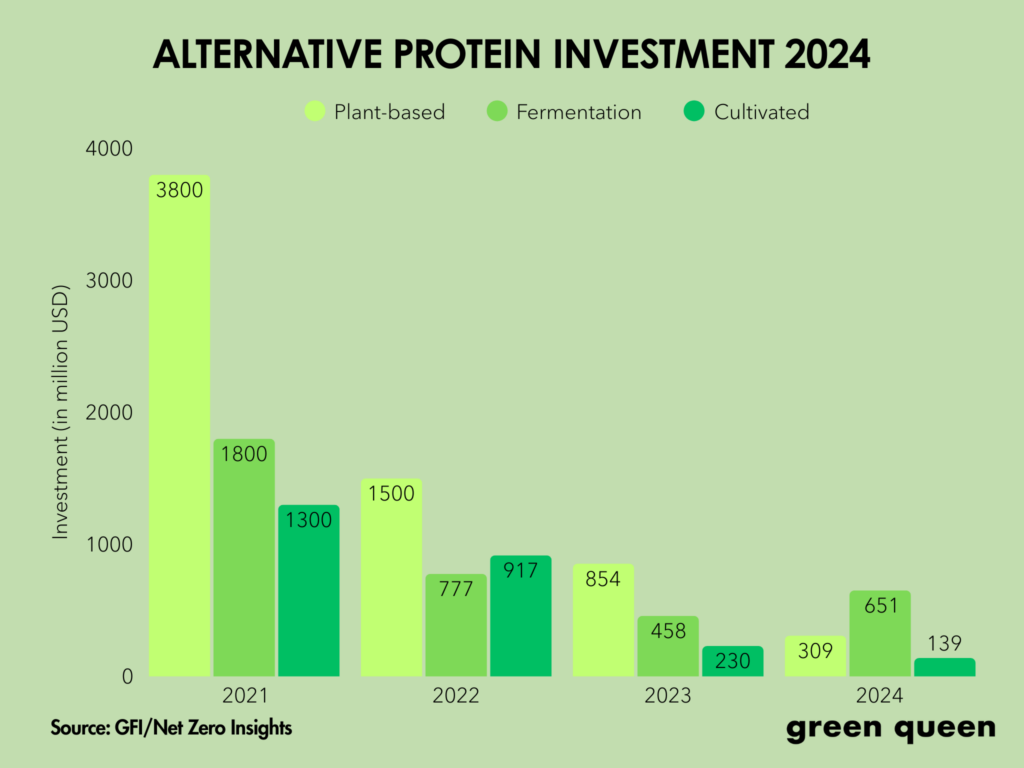
Investment in the alternative protein category neared $7B in 2021, before falling off a cliff to just $1.1B three years later. Many promising startups have shut down in these years, and some Big Meat players have divested from the category. This prompted critics to declare the death of veganism and meat analogues, and has left people wondering about the future of the industry.
Friedrich finds this pattern “entirely normal”, drawing parallels with two equally disruptive industries. “Between 1900 and 1915, more than 500 car companies failed, even as Henry Ford was cracking mass production with the Model T, which was far easier for everyone to use – not just the mechanically inclined – and […] manufacture, leading to cheaper and cheaper cars,” he says.
“In the internet era, the NASDAQ lost roughly 80% of its value, more than half of internet companies failed, and Amazon stock fell by about 95%, from $213 to under $6 a share.”
As we now know, both industries “came roaring back”.
Friedrich says there are “encouraging signs of capital returning” to the alternative protein sector, citing recent fundraises by BlueNalu, Mosa Meat, and The Better Meat Co. “Today’s plant-based and cultivated meat companies are significantly undervalued relative to their potential,” he argues.
“Just as investment flooded back into dotcom survivors and turned the US auto industry into the dominant American industry in about 20 years, if we all work together to create the right conditions to make it happen, we can expect more and more capital to flow back into this space, driving the next wave of growth and innovation.”
Scaling up to match the price of meat the biggest challenge
Many experts have compared alternative proteins to the electric vehicle sector. How can the former replicate the latter’s success without alienating consumers, given that what you eat is much more personal and emotive than what you drive?
“The vast majority of people eat meat because they like meat, not because of how it’s produced. For a small minority, production methods matter, but that’s not most people,” Friedrich highlights.
“The theory of change is that if we can deliver an identical meat-eating experience (plant-based and cultivated meat that are indistinguishable from conventional meat) at the same price or lower, most consumers will be open to it. Since we’re not forcing it on anyone (this is totally a consumer’s choice), I don’t think there’s much risk of consumer alienation.”
In his book, Friedrich argues that we have “more than enough” consumer enthusiasm for these proteins to be “wildly successful” once they can match meat on taste and price.
“The worst-case scenario market for alternative meats that compete on price and taste is about 20 times the current plant-based meat market,” he suggests.
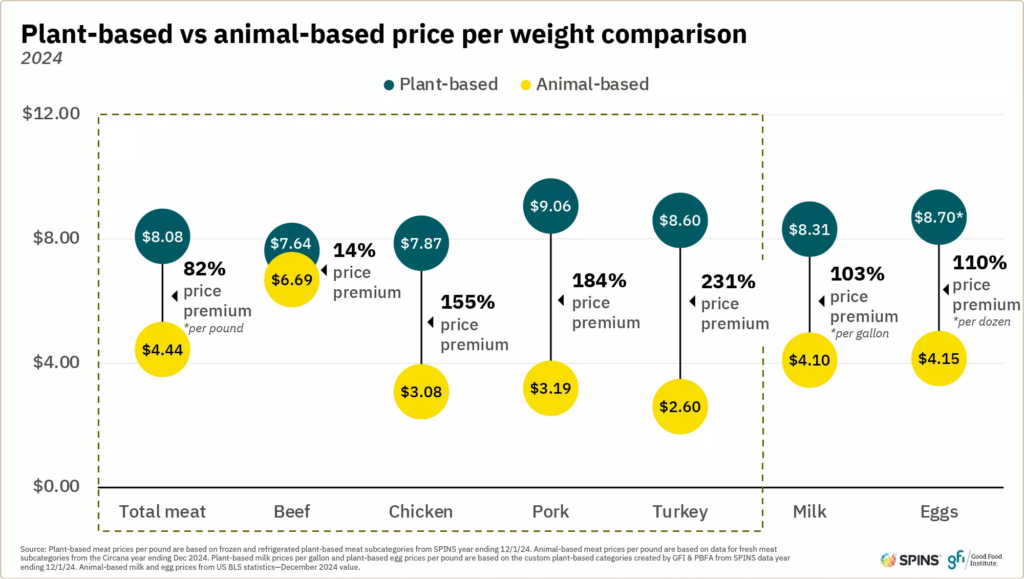
“From there, I make the case that once we have products that compete on price and taste, and some significant portion of the population has shifted (20-60%, depending on the product and the poll), familiarity will convince a lot more people that the safety and health benefits are sufficiently appealing that they should switch, too.
“At that point, the meat industry will also have larger profit margins from alt-meats, so they’ll be incentivised to market them, which will also help.”
This is why he identifies scaling as the tallest hurdle for both plant-based and cultivated meat, which presents “the classic chicken and egg scenario”. “Prices have to come down so that we can sell more, but we can’t sell more until prices come down,” says Friedrich.
“There are a few ways to address that, but scaling the top ingredient (the protein) by creating taste and price-competitive blends is certainly one way,” he adds. The same goes for cultivated meat, whose cost problems are currently being solved by blending it with plant proteins or mycoprotein.
“I’m also excited to see Beyond Meat expanding into beverages, Impossible Foods expanding into pasta,” he says.
Plant and microbial proteins the best way forward for blended meat
Friedrich touched upon one of the most dynamic categories in the alternative protein ecosystem: blended meat. These proteins have exploded in popularity over the last year, combining meat with plant-based or microbial ingredients to lower emissions, costs, and ill health effects.
The GFI founder has been a longstanding supporter of this approach, even when early efforts by the likes of Tyson and supermarkets in the UK failed. “A few false starts [aren’t] much of an indictment. In those cases, the two most important factors – price and taste parity – were ignored,” he points out. “So predictably, the products were not good enough, and they cost too much. Of course they failed.”
His thinking about the most effective way to move forward has taken a turn recently, based on two things. First, according to Mirte Gosker, CEO of GFI’s Asia-Pacific division, blends can solve the aforementioned top challenge for plant-based meat: scaling.
“She pointed out that if blends work, and if they use soy protein, pea protein, or mycoprotein, that will allow production of those ingredients to scale, which will bring down prices, and allow 100% plant-based meat (or mycoprotein-based meat) to hit price parity more quickly. This factor is really huge,” says Friedrich.
Indeed, research from GFI APAC shows that cost is the single largest barrier to widespread adoption of plant-based meat in Southeast Asia.
The second factor emerged when Friedrich was writing his book. “I crunched the numbers on the most meat-like plant-based meats, as well as all the mycoprotein-based meats, and I realised that they are all much higher in protein than conventional animal meat,” he notes.
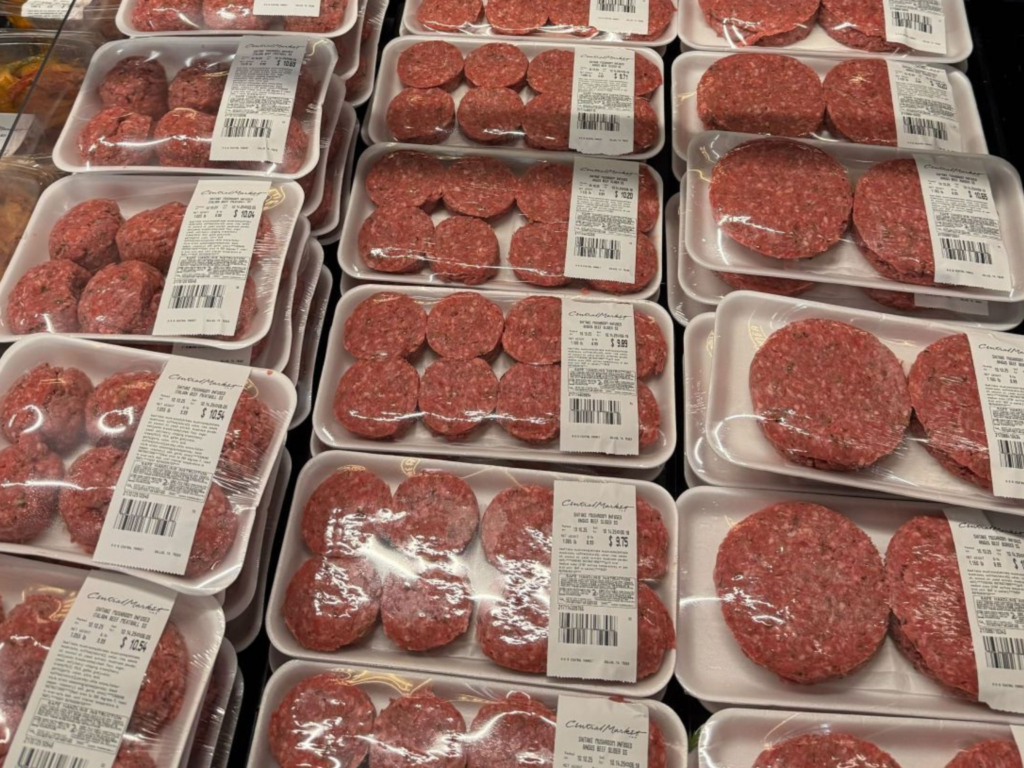
“This really solidified my belief that the highest impact focus for blends is going to be plant protein and mycoprotein. So if you’re blending 80% soy protein or mycoprotein with 20% beef, pork, or chicken, you’re creating a product that’s much higher in protein and fibre than the conventional meat it’s replacing, and also much lower in fat, saturated fat, and cholesterol.”
That’s precisely the focus of an ongoing project at GFI Israel, which is working to replicate the meat experience using just 10-29% of animal protein, with the rest coming from plant-based or microbial sources.
“It’s surprising to me that there’s been no work on this precise challenge from any of the major agricultural or food sciences departments at universities around the world, and no work that we know of from any of the major food corporations. We’re hoping that as we start releasing the results, that will spur a lot more interest from both the academe and the private sector,” says Friedrich.
Scaling up production and expanding the health benefits are the two reasons he is most excited about blends featuring these plant and microbial proteins, rather than only vegetables or mushrooms. “But of course, all forms of blends pay great dividends for our environment, global health, and animals; so I’m supportive of all of it,” he states.
State-level cultivated meat bans ‘not a prominent issue’
In Meat, Friedrich describes alternative proteins as a bipartisan intervention. But he’s based in a country where seven states have banned the sale of cultivated meat, plenty of others have put restrictions on how it can be labelled, and some have floated bills that could send you to prison for selling it.
“The first thing to say is that there are no efforts to ban cultivated meat in most of the world: India, Israel, Brazil, Singapore, Korea, Japan, China, the UK, Switzerland, the Nordic countries, and so on. In Brazil, the Bolsonaro and Lula governments have supported alt-meats. That’s true in all those countries and many more,” says Friedrich.
“Even in the US, the cultivated meat bans may have a bit more support from conservatives than liberals, but none of the most prominent national politicians on either side of the aisle have supported these bans, and a sum total of zero conservative media outlets, think tanks, or non-profits have supported them,” he suggests.
“The two most prominent politicians who have expressed support for the bans are Ron DeSantis (Republican) and John Fetterman (Democrat) […] and it’s not a prominent issue for either of them,” he says. “The vast majority of Republicans and Democrats oppose those bans, and there’s a 0% chance of such a thing passing Congress at the national level.”
He invokes the example of the Cato Institute and the National Review, both of which spoke out against the bans. Likewise, the largest and most powerful livestock lobby groups – the Meat Institute and the National Cattlemen’s Beef Association – went on record in opposition to these policies.
Speaking of the livestock industry, its lobby groups are advocating for policies in favour of animal agriculture, but its companies are simultaneously investing in alternative proteins. What does that dichotomy exist?
“The meat industry is not wedded to the current production system, but of course that doesn’t mean they’re going to sacrifice profits in favour of something that consumers don’t want yet (because the products don’t yet compete on price and taste),” says Friedrich.
“The meat industry will continue to do what every industry does: defend its current practices, while being ready to pivot if and when the alt meat products catch up on taste and price. They recognise that marketing and distribution channels are key factors in selling meat, and they own those.
“That’s why they’re investing in plant-based and cultivated meat companies: so that they can be ready to work with them when the time comes.”
Governments are embracing alternative proteins
Despite the bans in a handful of US states, many governments are actively championing alternative proteins. Denmark and South Korea have published national action plans for plant-based foods (and Portugal is working on one), Singapore and the UK have invested heavily into alternative proteins, and China is shoring up its biomanufacturing capabilities.
“All of the top governments and regions for biotechnology investment are explicitly including alternative proteins in their bioeconomy and biotechnology plans, from India to Israel to the United States to China, and all the rest,” says Friedrich.
“Most are also including alternative proteins in their agricultural plans, including the US, China, Brazil, and the EU,” he adds. “The science advisory council to the German agriculture ministry produced a more than 300-page report focused on alternative proteins. All of these countries recognise the economic and food security benefits of ensuring that their alternative protein sectors are robust.”

Friedrich has also talked about how current government policies are bad for the farm economy. Asked to expand on this, he says: “The farm sector is suffering. In [the book], I talk about how incredibly hard it is to be a farmer or rancher, everywhere in the world, and I lay out my vision of a farm economy that centres on the welfare of farm families.”
Alternative proteins, he notes, “don’t automatically get us there”, but by reducing pressure on land, they do make it “a heck of a lot easier”.
“I’m hoping that my reflections on this can be a part of a conversation about what kinds of policies will be necessary to ensure that the idea of alt proteins as a reset of the ‘get big or get out’ mantra of farming in the developed world can actually come to pass,” he says.
Meat: How the Next Agricultural Revolution Will Transform Humanity’s Favorite Food – and Our Future is published by Benbella Books and available at bookstores and online in the US, Canada and the UK.