

Op-Ed: Food Tech Commercialisation Shouldn’t Wait Until the Technical Answers Are In
Stephen O’Rourke, commercialisation lead at the University of Helsinki’s BioFlavor project, argues why food tech companies should begin working on commercial answers before research is finished.
A lot can go into developing a new food technology before some fairly basic commercial questions are properly tested. Who would actually use it? What are they doing instead? What would make them change, and what evidence would they need before doing so?
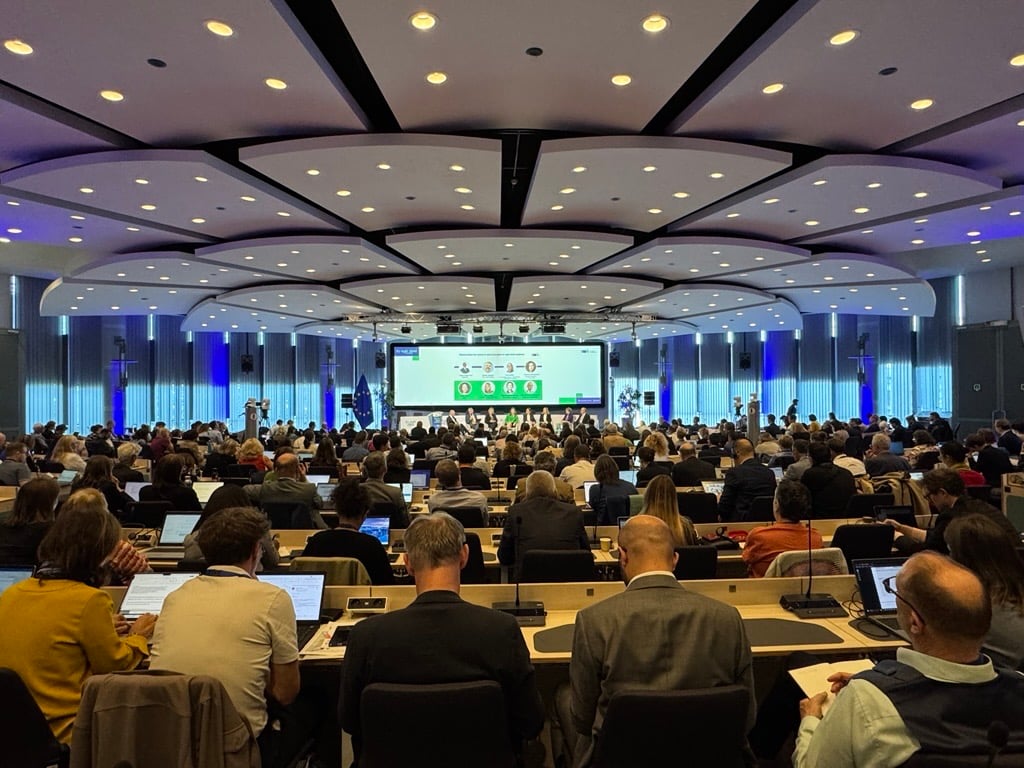
I’ve come across versions of this problem working with food and biotech companies, which is why a panel discussion at the recent EU AgRI 2040 conference in Brussels particularly caught my attention. The panel brought together experts from FAO, CGIAR, Tereos, the Bio-based Industries Consortium, the European Investment Bank and others to discuss partnerships for research and innovation.
The discussion ranged from research incentives and industry adoption to market demand and financing. The perspectives were different, but there was a common issue: what happens between developing something that works and actually getting it into use.
Prof Charles Spillane from the FAO approached this from the research side. He spoke about the difference between producing research outputs and achieving outcomes and impact, as well as the incentives involved and the connections between researchers, the private sector, farmers and others involved in putting research into practice.
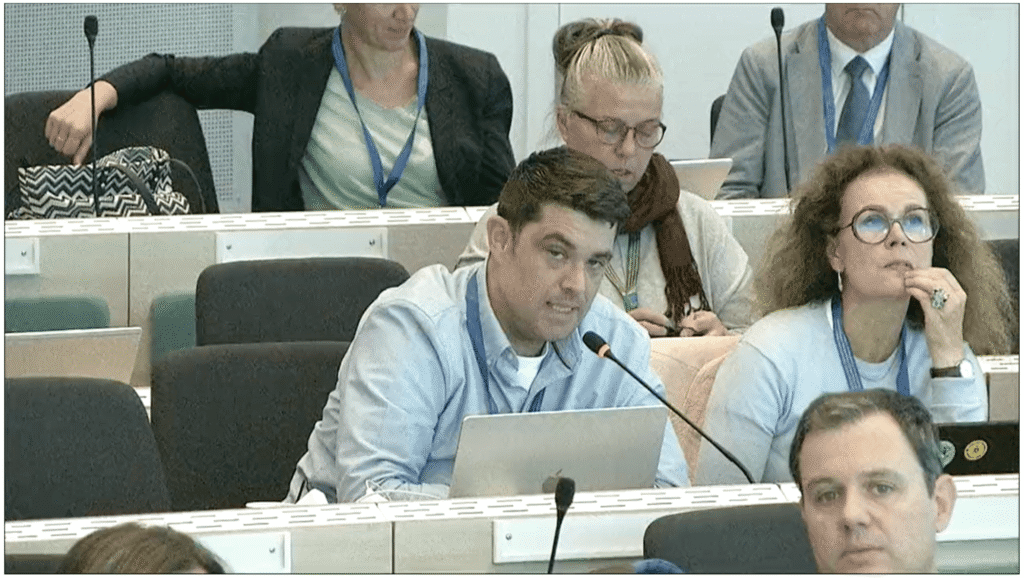
Towards the end of the session, I asked Spillane and Jean François de Saedeleer from the European Investment Bank (EIB) what Europe could do differently to get more of the research it already funds through to actual use.
Part of Spillane’s response concerned fragmentation and incentives. Researchers are very good at producing research outputs, but the incentives associated with doing that are not necessarily the same as those around adoption and impact.
I’ve seen a version of this problem from the industry side. By the time a technology has been in development for several years, quite a lot may already have been decided: what it does, how it is produced, which characteristics have been optimised and often which application is being pursued. Finding out at that point that customers care about something different can be expensive.
That doesn’t mean every research project needs a commercial application, or that researchers should be expected to become salespeople. But if commercialisation is one of the objectives, there is a good argument for bringing some of these questions into the work earlier.
Insights from food industry stakeholders
There were some insightful examples from industry during the panel. Valérie Corte from Tereos discussed decarbonisation projects where there was an environmental benefit but a more difficult economic case because customers were not necessarily willing to pay a premium.
She also described a fibre ingredient that was soluble, transparent, and tasteless, and the positive response it had received from industry. I found that example interesting precisely because the characteristics sound so ordinary. If you are formulating a food product, however, they can make a considerable difference.
Food innovation is often described using terms such as sustainable, bio-based, fermented, circular, or innovative. These can all be meaningful characteristics, but they don’t by themselves give a manufacturer a reason to change an ingredient, process or supplier. The decision may come down to taste, cost, processing stability, regulatory requirements, or whether the ingredient can be introduced without creating problems in production.
The discussion also went beyond the technology itself. Katariina Kemppainen from the Bio-based Industries Consortium (BIC) spoke about what happens as mature bio-based innovations move towards market deployment, including the need for continued support beyond TRL 8 and for demand on the market side. De Saedeleer discussed some of the work needed around a project before finance can really do its job, including the value chain, adoption ecosystem, technical and commercial assumptions, project preparation and eventually the financial model.
For me, the interesting connection between those discussions was the number of things that have to work around a technology before it can actually be adopted. Funding is obviously part of that, particularly when biotechnology needs to be scaled, but additional capital cannot tell you whether a manufacturer values the improvement you have spent years developing or whether the economics make sense for the customer. You only start to understand those things by talking to potential customers.
Developing the technology is only part of the job
I’m now dealing with some of these questions at the University of Helsinki, where I lead the commercialisation work for BioFlavor, a Research to Business project backed by Business Finland and led by Prof. Pekka Varmanen. The project is exploring microbial fermentation, vitamin B12 and plant-based foods.
Research to Business is particularly interesting in this respect because applied research and commercialisation preparation happen within the same project. In BioFlavor, that means we can talk to companies while the research is developing and use those conversations to understand where the work might be useful, what companies already use, what evidence they would need and what could make a potential application unattractive.
Those conversations are not commercial validation, and they don’t mean changing the science every time an opinion comes in. What they can do is give us information earlier. If potential users respond differently from what we expected, for example, that is worth understanding.
What I found encouraging in Brussels was how much overlap there was between people approaching this from very different positions. FAO was talking about incentives, adoption and impact. Industry was talking about whether innovation creates enough value for customers. The Bio-based Industries Consortium was talking about what happens beyond technological maturity and the need for market demand. The European Investment Bank was talking about project preparation, value chains and adoption before finance (including blended finance) can really do its job.
These are different parts of the same commercialisation problem. There is no single answer for getting more research into use, but there does seem to be a fairly broad recognition that developing the technology is only part of the job. For those of us working on commercialising research, that is a useful place to start.