

Mycofeast Snaps Up NZ Precision-Fermented Dairy Protein Startup Daisy Lab

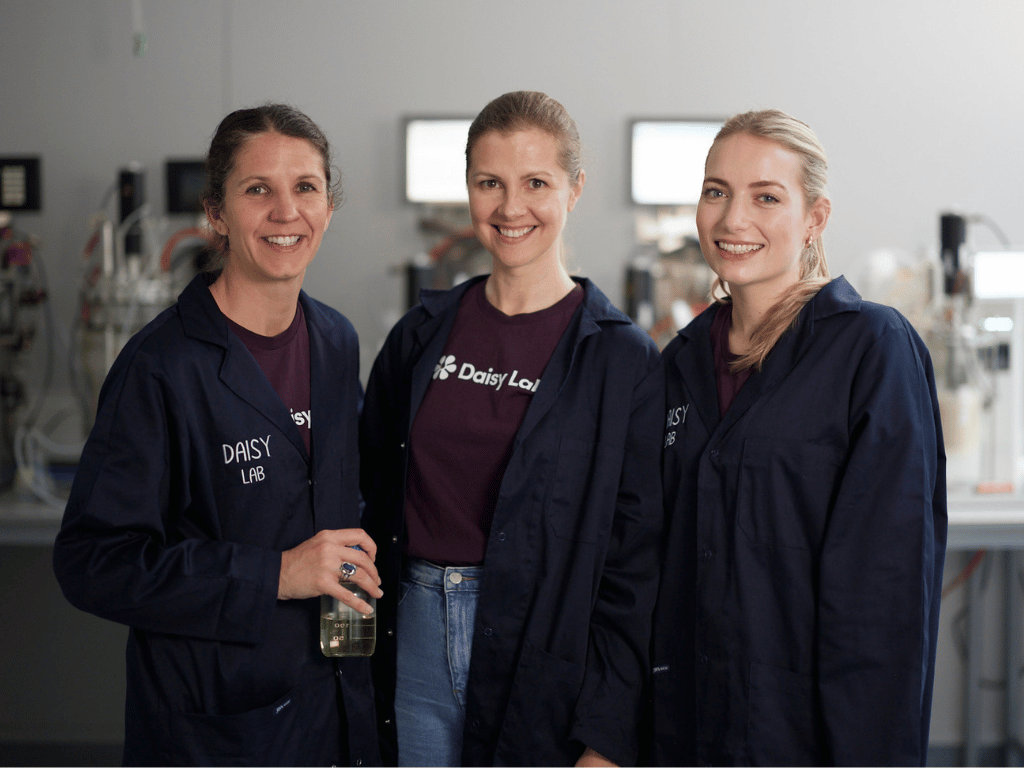
New Zealand’s Daisy Lab, known for its cow-free whey proteins like lactoferrin, has been acquired by UK fermentation firm Mycofeast.
British fermentation specialist Mycofeast, which makes functional ingredients for human and animal nutrition, has added animal-free dairy proteins to its portfolio with the takeover of New Zealand’s Daisy Lab.
The latter makes a range of recombinant whey proteins using precision fermentation, with a high-yielding bovine lactoferrin its most advanced programme.
The transaction will see Daisy Lab’s founders take on roles within the wider Mycofeast group, extending their involvement beyond the New Zealand business, while its scientific team will continue to work on scaling up lactoferrin.
“There are no layoffs associated with the acquisition. Mycofeast wanted both the technology and people,” Daisy Lab co-founder and CEO Irina Miller tells Green Queen.
The deal gives Mycofeast a presence in Asia-Pacific, with Daisy Lab working closely with the group’s R&D subsidiary, Evolutia Bio, in California and its broader engineering, manufacturing and commercial operations.
“We weren’t running a sales process. We have been working with Mycofeast as a potential partner and customer. Through this process, we learned a lot about their team and capabilities. Likewise, they got to know our small and resilient team,” reveals Miller.
“With the challenges we faced around capital [raising] and with the general market conditions for food tech and biotech companies, the conversations naturally progressed to potential acquisition.
“We just want to keep on pushing this forward, and rather than spending years building manufacturing and commercial infrastructure ourselves, we can now access much of that within the group and move faster.”
Daisy Lab working on both bovine and human lactoferrin

Precision fermentation involves inserting specific DNA into microbes to instruct them to produce desired molecules when fermented. Daisy Lab, founded by Miller, Nikki Freed and Emily McIsaac in 2023, uses this tech to make whey proteins like beta-lactoglobulin and lactoferrin.
It has built particular expertise in the latter, a glycoprotein known for its iron-regulating abilities. Lactoferrin is found in both bovine colostrum and human milk, and is prized for its antiviral, antibacterial, immunity-boosting, and gut-strengthening properties. It’s also used to treat low iron levels during pregnancy, lower the risk of respiratory tract infections, and enhance metabolism.
However, purified lactoferrin is hard to obtain, so its supply is limited and costs are astronomical, ranging from $600 to $2,000 per kg. Precision fermentation, however, enables companies to produce much larger volumes at a cheaper cost. “We have installed a 500-litre fermenter onsite in Q1 this year and have been working on scaling up fermentation and downstream processing to this scale,” says Miller.
“It is a pretty magical molecule. And the economics of it make sense – even when stacked against an established industry,” she explains when asked why lactoferrin has become the main focus for precision fermentation companies today. Lactoferrin is scarce, high-value and used at relatively low inclusion rates. Personally, I still want to believe that beta-lactoglobulin (and possibly other bulk proteins) have a lot of future potential.”
Daisy Lab is working on recombinant human lactoferrin, too, having produced it at lab scale. The protein is present in significantly higher concentrations in breast milk, and is gentler and more effectively absorbed than its dairy-derived counterpart.
“It is earlier-stage than our bovine programme, but it remains a very interesting opportunity. Unfortunately, we had to put it on ice late last year, when the big fermenter was being installed,” says Miller.
“In the last few months, we have been focusing on bovine lactoferrin scale-up. Evolutia Bio (a Mycofeast company) has world-class strain-development capabilities in California. We are hoping that this may be developed further if it shows commercial potential.”
Acquisition will accelerate regulatory and scale-up work
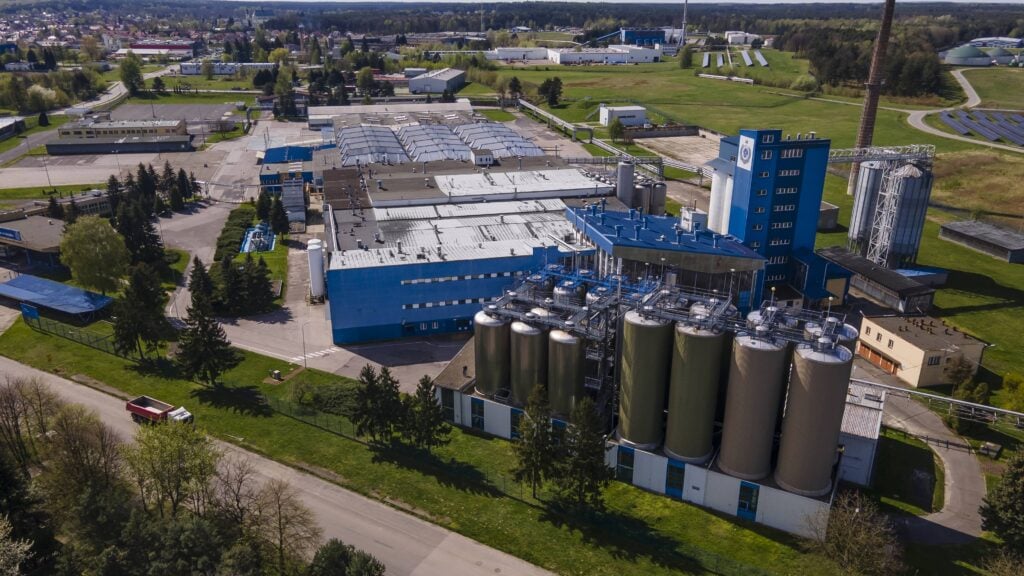
Mycofeast has grown through strategic acquisitions and organic development since its establishment in 2023. Its capabilities span strain development, biosynthesis, enzyme design, fermentation scale-up and industrial production, with a portfolio that includes carotenoids, functional molecules, and other bio-based compounds.
The firm combines biological and engineering expertise with industrial-scale production and functional product development for established markets. Its platform includes the aforementioned Evolutia Bio, which combines AI-led discovery, high-throughput screening and genetic engineering, and biosynthesis to accelerate strain and product development. It also operates a 16-million-litre fermentation plant in Europe.
“We built Mycofeast to move faster than biotechnology traditionally has. The sector has no shortage of exceptional science. The harder problem is connecting that science with process development, industrial manufacturing, capital and commercial markets quickly enough – and with economics that actually work,” said Mycofeast CEO Witek Hruzewicz.
“Daisy Lab brings a strong dairy protein platform, proven scale-up capability and a talented New Zealand team into that system. It is highly complementary to what we are building,” he added.
It’s the latest example of consolidation in the alternative protein ecosystem, where more than 90 companies have merged, been acquired, gone bankrupt, or ceased operations since September 2024.
The focus remains on commercialising bovine lactoferrin, with Daisy Lab engaged in “further scale-up and optimisation, regulatory [filings], customer trials and transferring the process into Mycofeast’s manufacturing plant” over the next 12 months. “Now that we are part of Mycofeast, it will enable us to proceed with regulatory filings,” says Miller, hinting at “a couple of geographical priorities” that are under wraps for now.
Several fermentation companies are producing lactoferrin. Helaina‘s human lactoferrin is already available in around a dozen products in the US, and Nestlé is now working with the startup to develop baby formula. All G has launched its bovine lactoferrin stateside and is working on a recombinant human version too.
TurtleTree’s bovine lactoferrin is also on the market via products like IronKind (by its consumer brand Intentional) and Waywyld’s supplement powder, with the firm now manufacturing and commercialising its protein with Novonesis. Meanwhile, Vivici has self-affirmed Generally Recognized as Safe (GRAS) status for its bovine lactoferrin in the US.