

EU Research Strategy Ignores Funding for Alternative Protein Despite Scale-Up Goals

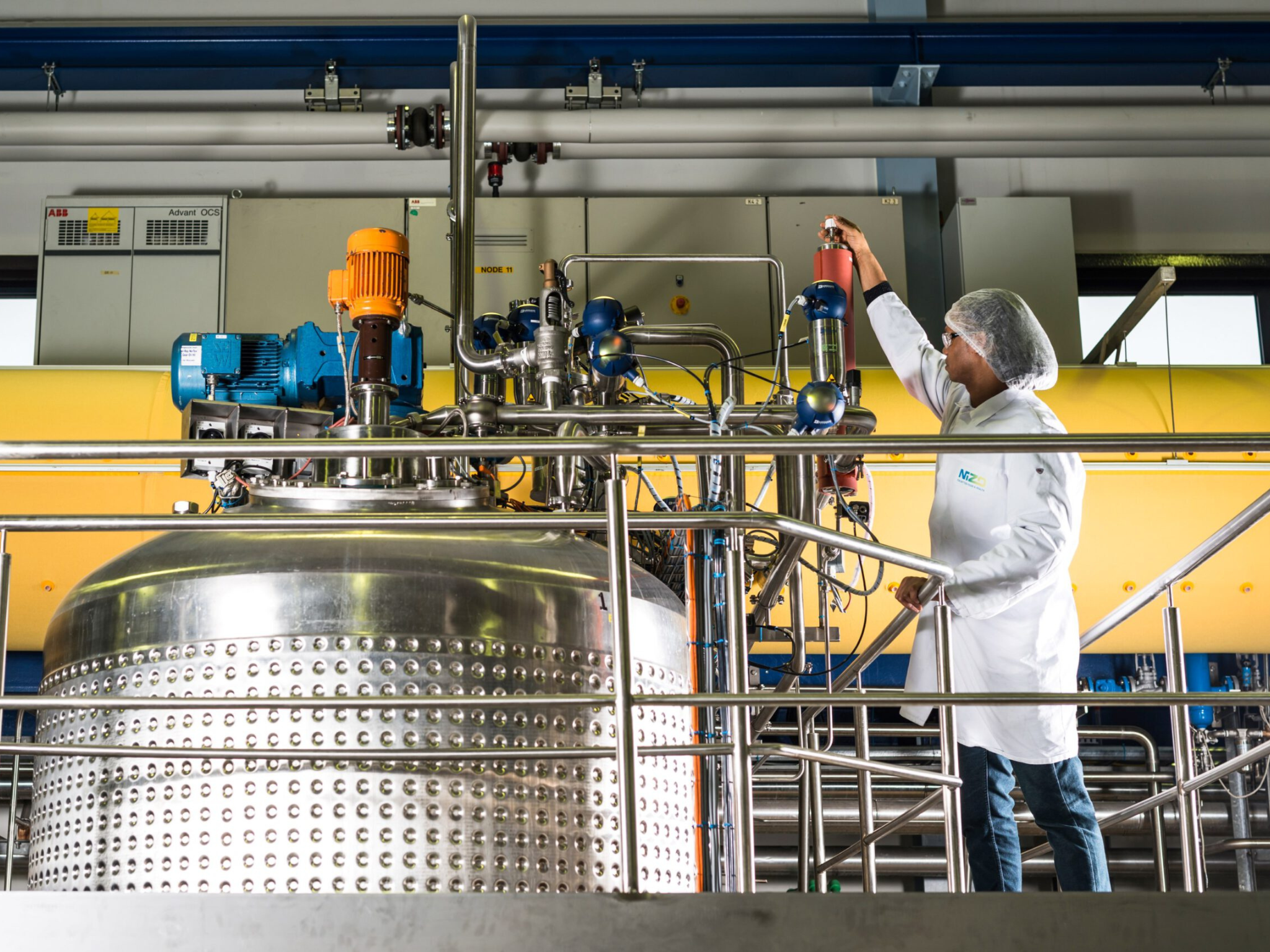
The European Commission’s strategy for food research and innovation acknowledges the importance of scaling up fermentation capacity but fails to commit the necessary funding.
The latest manifestation of the EU’s conflicting stance on the future of food comes with its strategy on research and innovation.
The European Commission’s new plan to build a competitive and resilient agrifood system makes positive references to protein diversification and to scaling up fermentation capacity, but it omits the financial commitments needed to make this happen.
The strategy acknowledges that alternative protein projects “help tackle global challenges such as climate change, natural resource scarcity, food security and sustainability, and malnutrition” and can reduce the risk of zoonotic diseases and antimicrobial resistance.
However, according to the Good Food Institute (GFI) Europe, it falls short of renewing support for dedicated research to improve the taste, texture and price of plant-based, fermentation-derived and cultivated foods, despite an accompanying review of the current Food 2030 outlining the success of these research projects to develop new plant proteins.
“While it’s great to see a renewed focus on scaling up Europe’s fermentation manufacturing capacity, the lack of dedicated research to improve the taste and price of alternative proteins is a missed opportunity, particularly as the Commission has acknowledged their benefits in its own evidence review,” said Alessandro Gardino, policy officer at GFI Europe.
Strategy identifies need to address lack of industrial fermentation capacity
The strategic approach aims to scale up and accelerate the launch of innovative agrifood solutions, strengthen links between researchers and stakeholders to bring knowledge, tools and technologies into practice, and support the sector’s resilience and sustainability credentials.
It brings together two closely linked frameworks: Agri 2040 (focused on agriculture, forestry and rural areas) and Food 2040 (centred on food systems). The former proposes eight preliminary areas of action, including bioeconomy in agriculture, multifunctional forests, livestock systems, and digitalisation.
The latter outlines six spheres of action, from innovation scale-up and resource efficiency to place-based food systems, aquaculture, and healthy and sustainable diets.
The strategy commits the Commission to supporting protein diversification to improve diets for human and planetary health and to raise public awareness of biotech ingredients.
It highlights the importance of building production plants to expand advanced fermentation technologies like precision fermentation, noting that while the EU is strong in financing early-stage innovation, scaling up sustainable food innovations needs more financial support to help startups overcome the “second valley of death” from pilot to commercial-scale production.
The document identifies a need to address Europe’s lack of industrial fermentation capacity, and is expected to guide investment decisions for food research under the Horizon Europe programme from 2028-34. However, it doesn’t provide concrete funding measures for this sector.
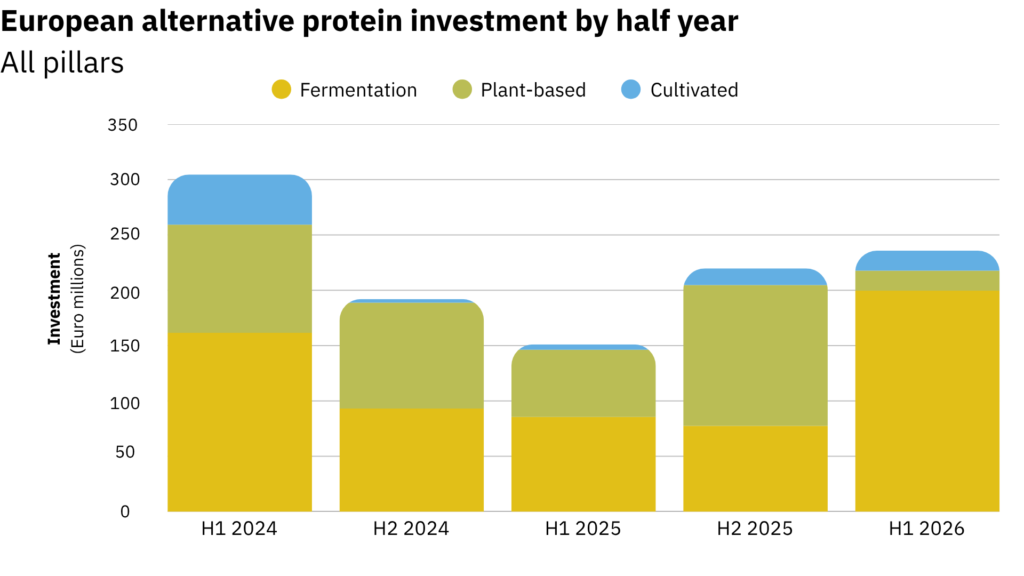
The EU will instead explore ways to encourage private investment in building and upgrading open-access infrastructure. That will help startups test and de-risk processes without large amounts of upfront capital. According to GFI’s analysis, fermentation firms made up 84% of overall private funding for alternative proteins in the first half of 2026, driving a 56% year-on-year increase for the sector.
EU must reverse decision to exclude novel foods from sandboxes
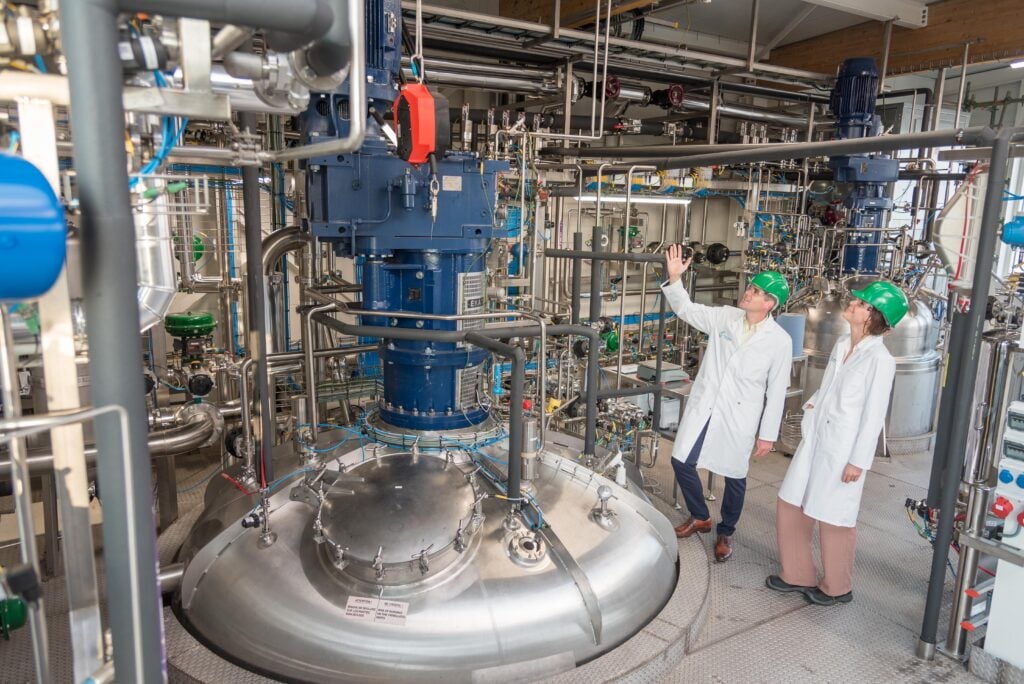
Fermentation has been a priority in the EU’s future food policymaking for some time now. Last year, the EU Commission set aside €350M in funding opportunities to boost food and biotech innovation, highlighting the “significant potential” of fermentation in its life sciences strategy.
And in July, it published a Protein Plan that highlighted precision and biomass fermentation as technologies that could “create new circular business models for farmers and the feed industry”.
However, its commitments to alternative protein have been full of contradictions. The Protein Plan, for instance, was criticised for failing to reference measures to support farmers who want to grow protein-rich crops for human use, instead prioritising their production for livestock feed.
And despite suggesting that plant proteins carry the biggest opportunity, the EU has banned companies from using dozens of meat-related terms on plant-based product labels, with discussions on further restrictions ongoing.
The new research strategy outlines how regulatory sandboxes – controlled environments that let businesses and researchers design standards and guidance for new products with regulators – can help “support pre-market approvals and authorisations for agrifood innovations”.
However, the EU failed to include novel foods in its food and feed regulatory sandboxes in its first Biotech Act, prompting experts to call on its decision-makers to name fermentation-derived food ingredients as a covered technology category in the second part of the legislation, due to be published this quarter.
GFI Europe said the EU must reverse its decision to leave out novel foods from the sandbox initiative if it is to follow its own future food roadmap.
“Europe’s alternative protein researchers also need support to address the remaining scientific challenges around taste, texture and price, so these foods can help to realise the EU’s ambitions for a more resilient, sustainable and healthy food system,” said Gardino.