

Legume Lattes: Koppie Brews Up New Funding to Launch Beanless Coffee By Year-End

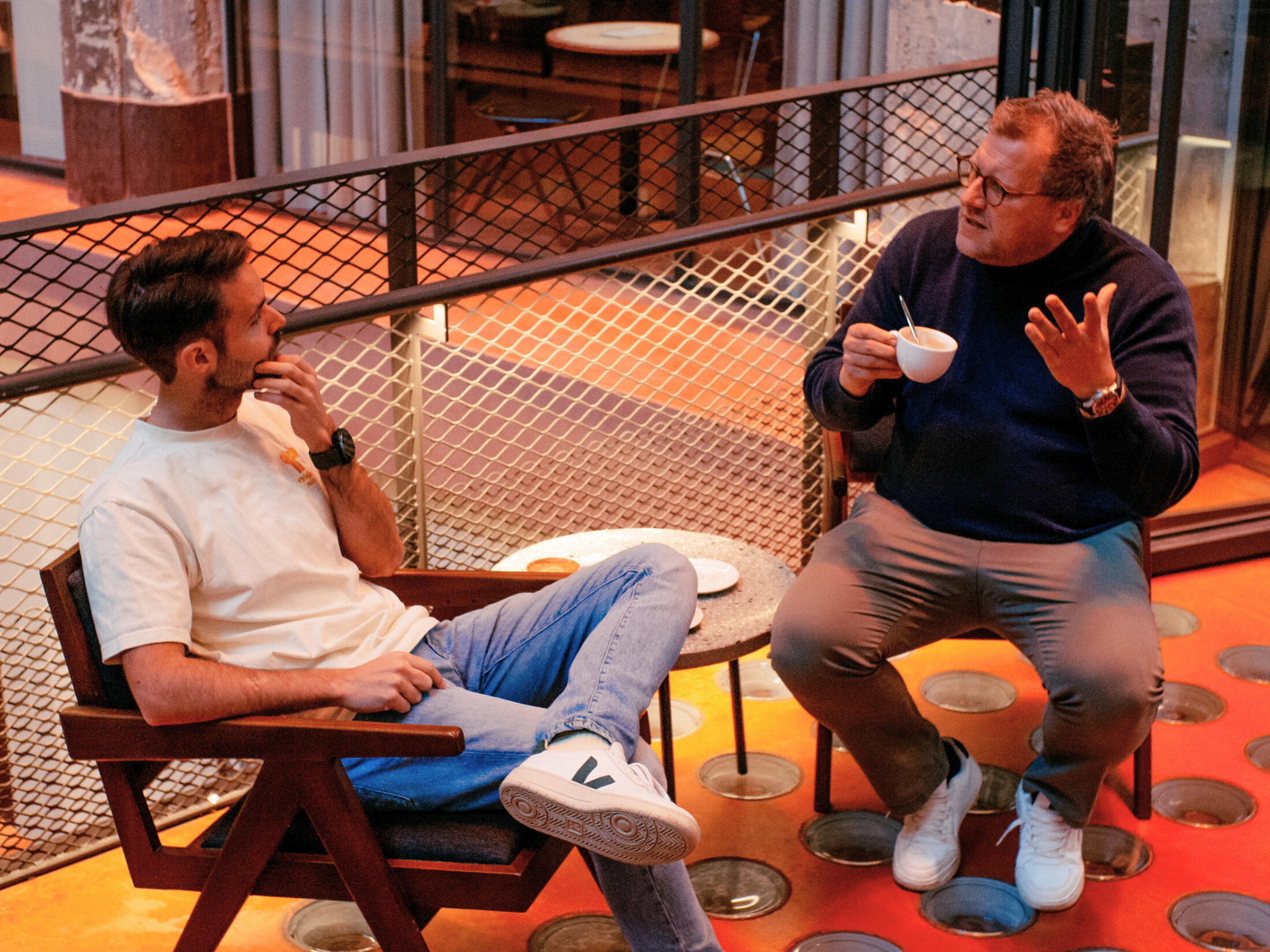
Belgian food tech startup Koppie has secured additional funding and completed an industrial-scale production run of its beanless coffee products, ahead of a planned launch later this year.
Would you drink “hybrid coffee”?
This is a blend of conventional coffee with a bean-free alternative that lowers prices, climate risks, and supply volatility – all while preserving the flavour of the brew.
It could be in your hands as soon as this year, following new financial and production advancements for Ghent-based Koppie. The startup uses fermentation to turn legumes into coffee-like alternatives, which can be combined with coffee beans to offer a hybrid version.
Eight months after emerging from stealth, Koppie has attracted follow-on funding from DOEN Ventures, taking its total raised to over €2M ($2.4M). The investment is complemented by a subsidy through the EU- and state-backed Food Pioneer Accelerators programme, which helps startups cover the high costs of industrial scaling.
The firm will use the new capital to expand and accelerate its ongoing product development and commercialisation efforts, which have resulted in its first successful industrial-scale production run.
“We’re now working on yellow peas as a base material,” co-founder and CEO Daan Raemdonck tells Green Queen. “However, our technology is flexible. We can adjust to whatever is locally abundant and culturally relevant. We’ve worked with yellow peas, chickpeas, [and] fava beans.”
“If we want to be able to meet the demand without maintaining existing harmful practices, we need a radically more sustainable alternative, without compromising on taste, affordability, or compatibility in existing production processes,” said Tom Doornik, impact unvestment associate at DOEN Ventures. “That is exactly what Koppie has brought to market.”
Why Koppie is developing hybrid coffee
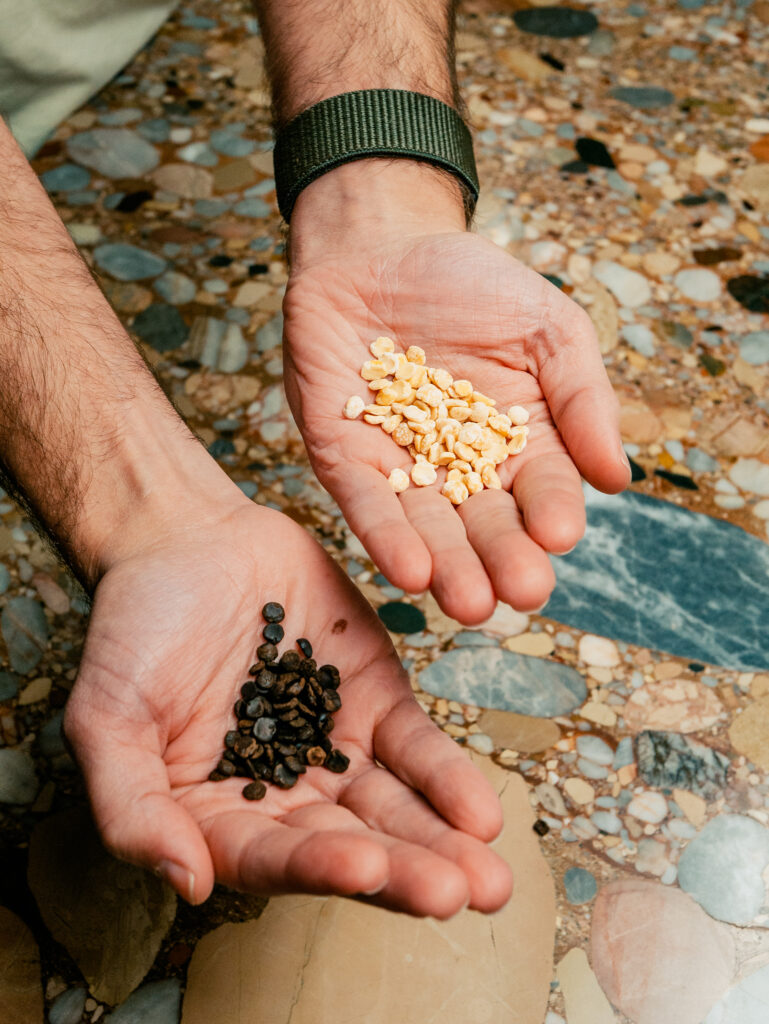
Founded in 2022, Koppie is among a number of food tech players disrupting the coffee industry with beanless alternatives. Doing so is becoming increasingly vital.
Thanks to climate change, crop failures have disrupted global coffee supplies, pushing prices to all-time highs last year. At the same time, 60% of coffee species are already endangered, and the tropical area suitable for growing coffee is set to be halved by 2050.
Coffee production itself is a culprit. A kg of coffee beans, on average, generates more greenhouse gases than the same amount of poultry and pig meat combined. Plus, it takes 140 litres of water to produce enough beans for one cup of joe.
The current system simply isn’t sustainable, either environmentally or financially. Koppie offers an off-ramp, turning locally sourced legumes into “beans” that can be ground and brewed the same way as conventional coffee.
The decision to focus on the bean format confined Koppie’s product to a single-ingredient approach. It screens ingredients based on factors like sustainability, local harvests, allergens, product size, and price, before trialling it with its fermentation technology. The microbial strain used in its process is not considered novel food, so Koppie doesn’t require regulatory approval to enter the market.
A kg of Koppie’s roasted beanless coffee is associated with 1.19kg of emissions, according to a life-cycle assessment, which is up to 95% lower than conventional coffee.
“We can offer a relevant discount versus typical coffee. However, we prefer to look at it as two different products, where we provide great taste and processability, together with price stability, forming a hedge against the volatility we’re seeing in coffee,” Raemdonck explains.
“I say this because the coffee can actually be improved in some cases by adding our product into the hybrid blend. We’ve showcased with our partner that a blend actually outscored the pure coffee. If the end product is tastier, I believe the debate shouldn’t just be focused on bottom prices.”
That’s the good news: if you’re a coffee aficionado, removing some of the actual coffee beans doesn’t ruin the flavour – far from it, in fact. Consumer testing shows that 80% of people rated an arabica-Koppie blend at least as good as conventional coffee, and 40% preferred the hybrid outright.
Koppie runs industrial trials and scores high on the taste chart
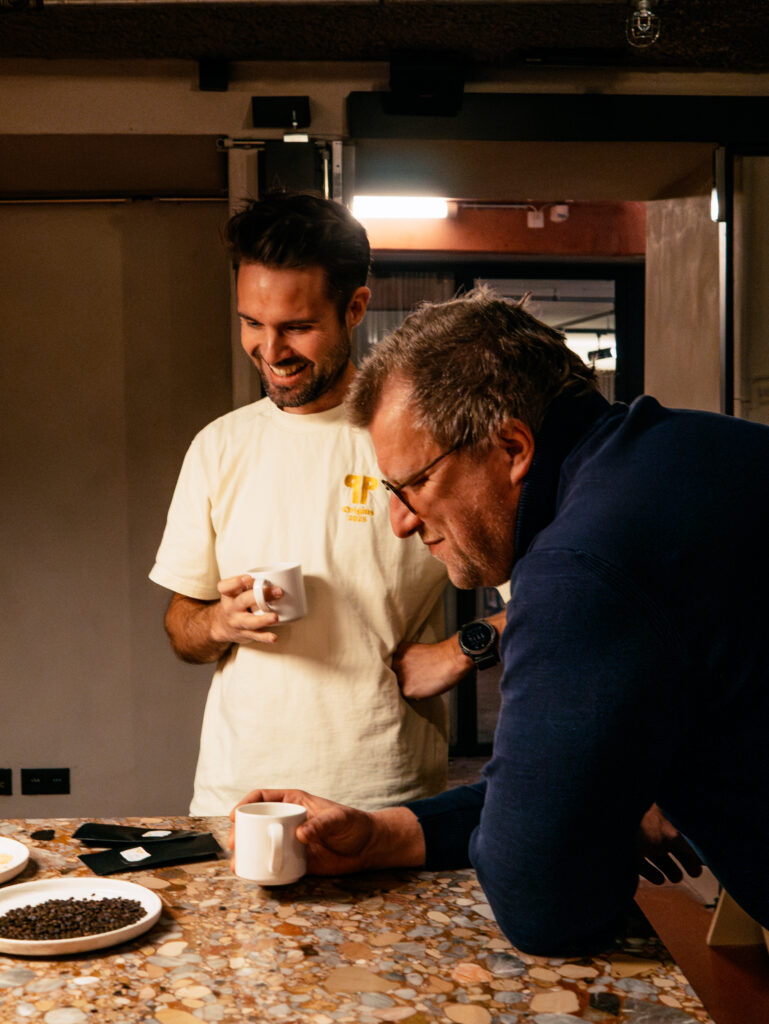
Koppie is setting the stage for its market entry, having finalised product development to offer a full suite of B2B products to match different coffee regions, taste profiles, and use cases. Its lineup covers multiple flavours of “Koppie beans”, blends for espresso and filter applications, and a Koppie Concentrate for ready-to-drink formats, ice cream, baked goods, and more.
“We pride ourselves on selling a ‘fermented and dried bean’, which coffee roasters, or retailers with roasting operations can roast themselves,” says Raemdonck.
“Since our product maintains bean form, and since we’ve made it so it roasts very similarly to coffee, our partners can roast and process it themselves. Whether they then work it towards pre-ground coffee, a bean blend, or capsules is up to them,” he adds. “The concentrate is a different story, where we roast and work with a partner to create a concentrate from this.”
The firm recently completed a four-tonne trial production run, a confirmation of its production economics and future scalability potential. It now expects to be able to reach a 1,000-tonne capacity this year, enough to meet the demand from its launch partners.
“Seeing the results of this industrial trial gives us confidence in cost, scalability, and sustainability, and, therefore, a real sense of pride,” said chief product officer Pascal Mertens, who co-founded Koppie with CEO Daan Raemdonck. “Our focus now is on further cost optimisation and scaling all product variants.”
Speaking of which, Koppie is in talks with coffee majors, retailers and ingredient companies to bring hybrid coffee products to the market before the end of 2026, covering the width of its portfolio with a range of applications and brand strategies.
“We are primarily and actively focused on the EU market, but we are open to conversations with customers in the US and Asia as well,” Raemdonck says.
“As we scale our B2B strategy, we have been asked a few times to also service lower volumes to coffee bars and restaurants. To enable that, we are potentially reviewing a smaller-level own brand. We believe that can only help the B2B position, showing consumer acceptance for a new, local, hot drink product.”
It isn’t the only firm betting on hybrids – Singapore’s Prefer makes a soluble coffee extender that replaces 30% of beans in drinks, which appeared in lattes via a partnership with Ajinomoto and gas protein startup Solar Foods. Others in this space include Voyage Foods, Compound Foods, Atomo, Northern Wonder, and Wake.