

Nestlé Quits Climate Initiative to Reduce Dairy Methane Emissions

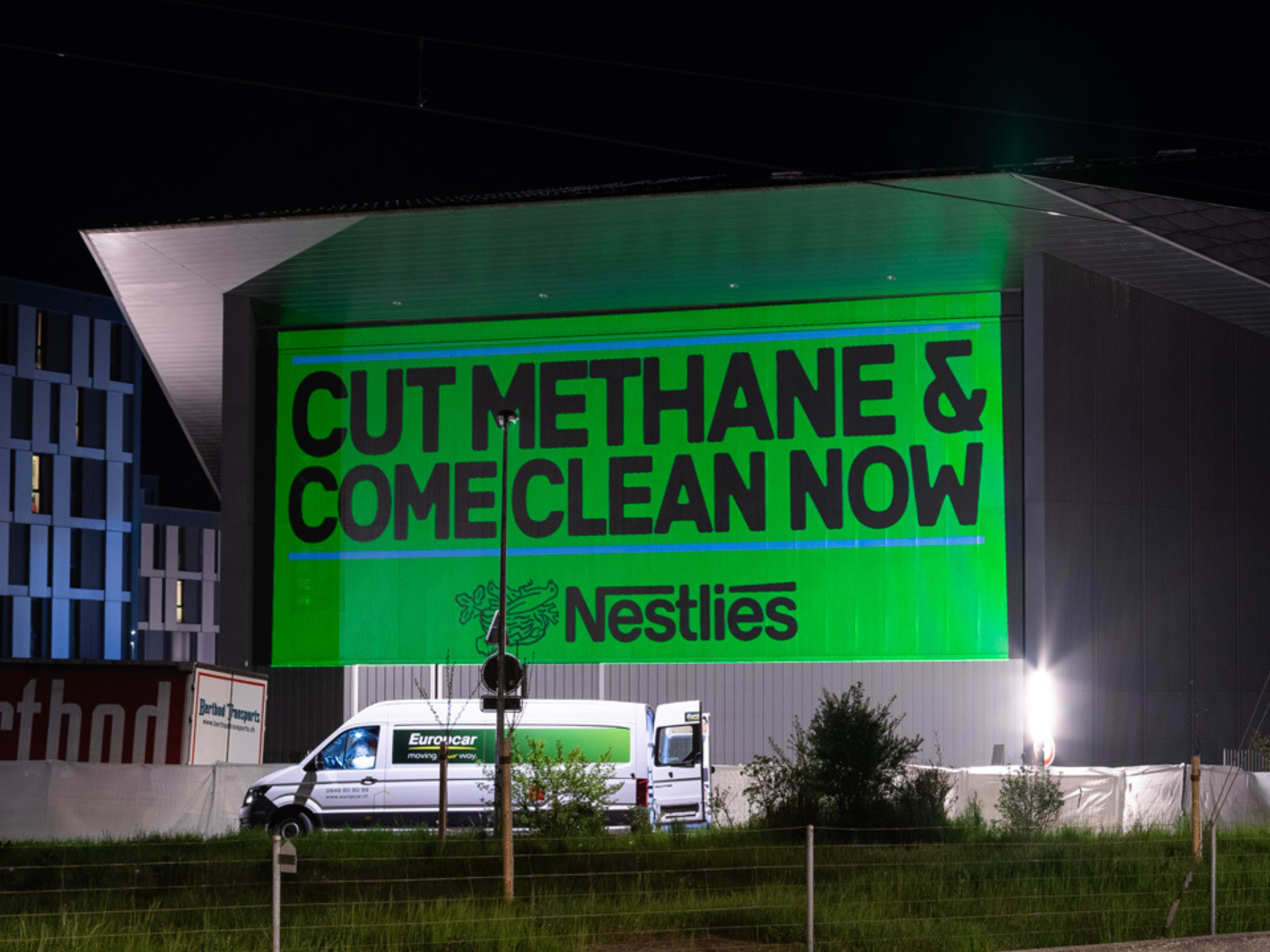
In its latest case of greenwashing, Nestlé – the world’s largest food company – has left a global alliance pledging to curb methane emissions from dairy production.
Nestlé’s greenwashing escapades continue, with the Swiss food and drink behemoth withdrawing from the Dairy Methane Action Alliance it helped set up two years ago.
“Nestle regularly reviews its memberships of external organisations,” the KitKat and Nesquik owner said. “We have decided to discontinue our membership of the Dairy Methane Action Alliance.”
The initiative was launched by Environmental Defense Fund at COP28 in Dubai, which joined forces with Bel Group, Danone, General Mills, Kraft Heinz, Lactalis USA, and Nestlé as founding members. The aim is to lower methane emissions from the companies’ dairy supply chains, as part of their wider climate strategies.
“Rapidly cutting methane emissions is a climate emergency brake and one of the most important short-term climate measures companies can implement,” said Nusa Urbancic, CEO of corporate greenwashing watchdog the Changing Markets Foundation.
“We are suspecting this has to do with the recent change in leadership, and it raises serious questions whether the incoming CEO Philipp Navratil is committed to climate action,” she said of Nestlé’s decision.
Nestlé left Dairy Methane Alliance without explanation
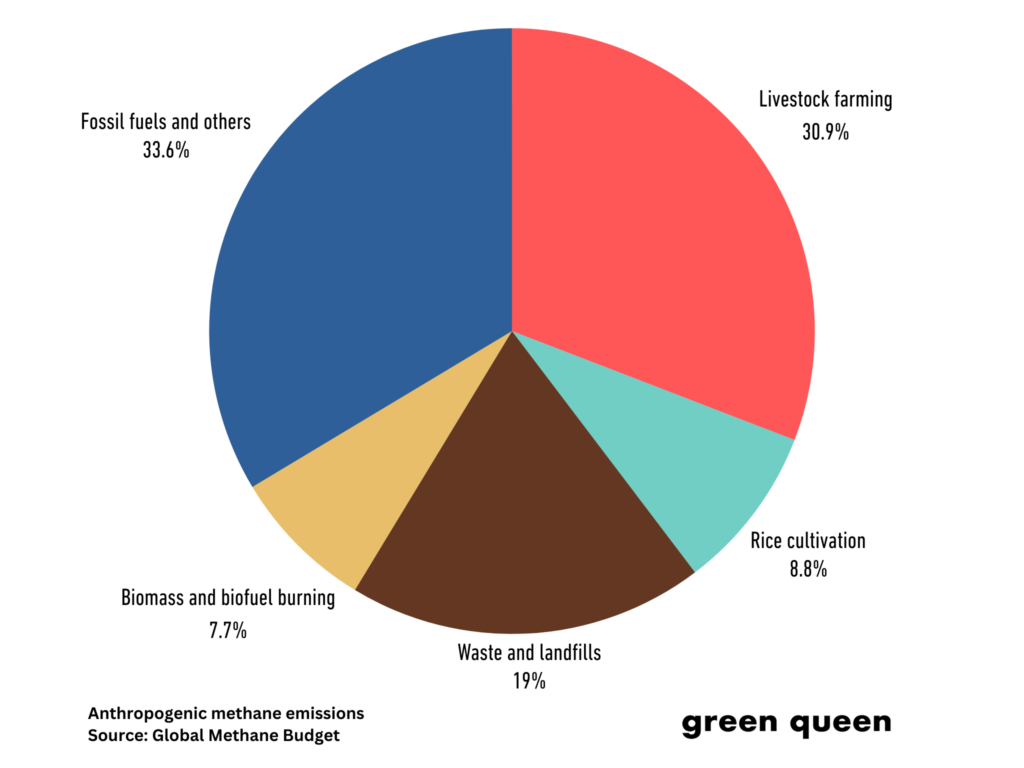
Dairy production plays a big role in Nestlé’s climate footprint, accounting for 37% of its emissions, primarily methane from cattle, according to the Changing Markets Foundation.
This is thanks to cattle’s digestive processes, called enteric fermentation. Since they are ruminant animals, they have specialised digestive systems, allowing them to digest foods that humans and most other animals can’t.
When food enters their stomach, microbes and bacteria break down the particles, which ferment in a part of the stomach called the rumen. As this process takes place, these food particles produce methane. Every time cows belch or flatulate, they emit methane into the atmosphere.
Methane is 86 times more potent than CO2 over a 20-year period, and is the primary contributor to the formation of ground-level ozone, a greenhouse gas linked to a million premature deaths every year.
Agriculture, meanwhile, is the main source of human-caused methane emissions, with livestock farming responsible for the majority of this share. In fact, methane alone makes up 25-80% of livestock producers’ emissions, and according to Danone, dairy is responsible for 8% of global methane output.
It’s why Nestlé had joined the Dairy Methane Action Alliance in the first place. And last year, it had reduced its methane footprint by nearly 21% (compared to 2018 levels). However, Urbancic noted that it quietly left the initiative last month “without really providing a good reason for its departure”.
For its part, Nestlé praised the alliance’s efforts and said it would continue working towards reducing greenhouse gas emissions (including methane) from its supply chains and would be sticking to its net-zero goal for 2050.
“Nestlé remains steadfast in delivering against the objectives in our dairy climate plan and net zero roadmap,” its spokesperson said.
Nestlé long history of greenwashing
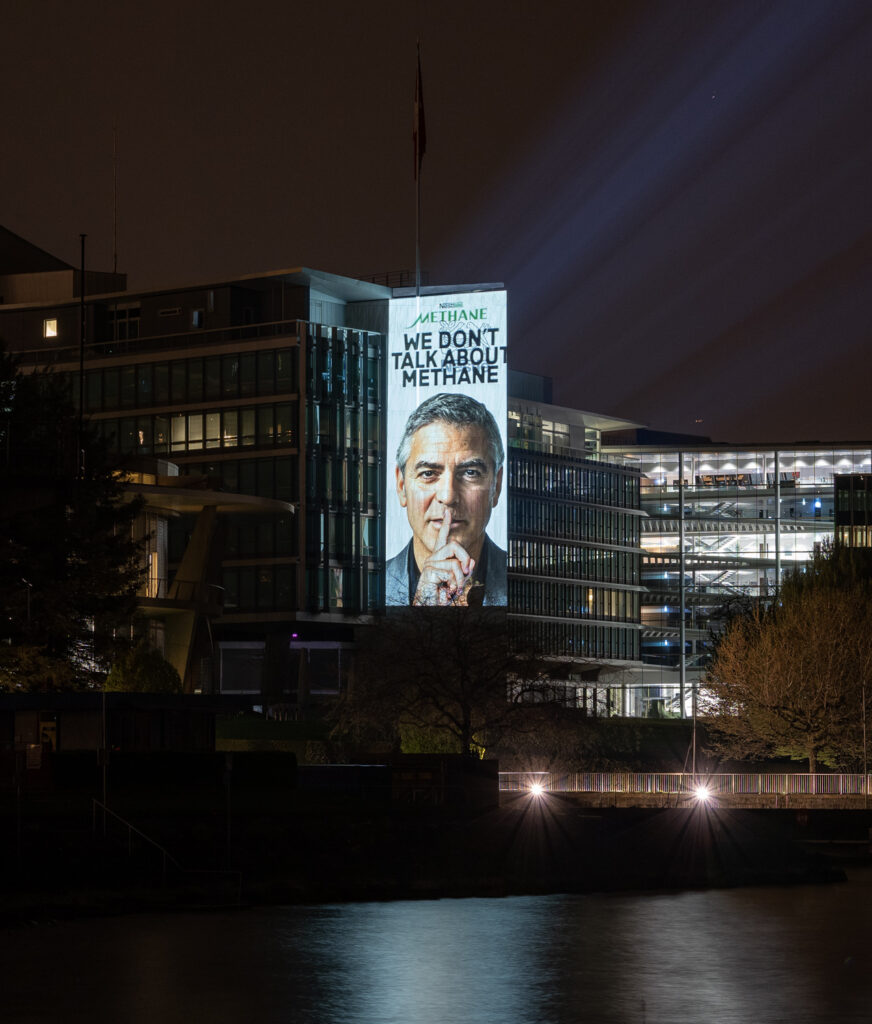
This is the latest instance of greenwashing on Nestlé’s part. The company has been accused of an overreliance on regenerative agriculture, with a 2023 review of its climate roadmaps suggesting that it fails to align with UN net-zero guidance and is unlikely to meet necessary targets.
Last year, the Swiss conglomerate announced a $1.2B investment in regenerative agriculture. This was only for its coffee segment, with meat and dairy left unchecked without any substantial funds or targets.
Several organisations, including NCI, BiteBack 2030, and Planet Tracker, have called Nestlé out for lacking a robust plan to meet its net-zero commitments. Moreover, research has revealed that 36% of carbon credits bought by the firm came from ineffective projects deemed as ‘likely junk’, although Nestlé claimed it had stopped purchasing credits from these projects in 2021/22.
Moreover, it has previously been accused of misleading Europeans over claims that its plastic bottles were “100% recycled”, with consumer and climate groups arguing that these were never made wholly of recycled materials, and the ability to recycle them depends on several factors.
It isn’t unusual for companies to make sweeping statements about their climate initiatives and then quietly withdraw from those efforts afterwards. Coca-Cola was accused last year of abandoning a 25% reusable plastic packaging target for 2030, in what experts called a “masterclass in greenwashing”.
The shift can also be seen in the banking sector. After several major firms departed the Net Zero Banking Alliance in the wake of Donald Trump’s reelection as US president, the coalition officially shut down last week, with its remaining members voting to “transition from a member-based alliance and to establish its guidance as a framework”.
Corporate climate desertion on the rise under Trump administration

The corporate desertion of climate commitments comes as government support for such policies is scaling back globally. With more and more conservative leaders in power, the focus on nationalist policymaking has overshadowed the environmental cause.
Trump himself has been very clear about his priorities. He won the election with a promise to shore up domestic oil drilling, and has repeatedly denied the existence of climate change. He has once again pulled the US out of the Paris Agreement, and in a speech to the UN last month, called the global crisis “the greatest con job ever perpetrated on the world”.
His administration has erased any mentions of climate change from the US Department of Agriculture website, and has shut the scientific research arm of the Environmental Protection Agency.
It will be interesting to see if Nestlé’s pullout will lead others in the Dairy Methane Action Alliance to follow suit. So far, though, Danone, General Mills, Bel, Lactalis and Starbucks (which joined the alliance in 2024) told Bloomberg they have no plans to exit.
And just as well. Analysis shows that among 20 major dairy and coffee companies (worth a collective $420B), most lack clear methane targets, credible action plans, or even basic emissions transparency. And a new study suggests that “there is no foreseeable slowdown in the momentum of global methane emissions growth”, despite pledges to curb them by 30% by 2030.
Urbancic said the dairy sector was “dragging its feet” when it comes to ambitious reductions, noting that the alliance didn’t require them to put any methane targets in place, but only disclose emissions and action plans.
“It seems that even this relatively relaxed approach was too much for Nestlé, the biggest food company with billions of profits,” she remarked. “This move highlights the problems with voluntary commitments […] They are easy to make and even easier to walk away from. This is why we really need government regulation.”