

Exclusive: Perfect Day is Coming Out of ‘Incognito Mode’ With Its Animal-Free Whey


Californian startup Perfect Day has spent two years in the sheds to solve the cost and scalability challenges of precision fermentation. Now, with the whey market in overdrive, it’s re-emerging as a “fundamentally stronger” business.
Perfect Day pioneered precision-fermented dairy proteins, launched a suite of products in multiple markets, raised hundreds of millions of dollars, then disappeared from public view.
A flagbearer of the animal-free dairy sector, headlines about the Californian startup went from partnerships with Nestlé and Unilever to executive departures, lawsuits, and sell-offs of certain parts of its business.
“Over the past two years, we’ve intentionally shifted into what we internally referred to as ‘incognito mode’,” Kyle Failla, Perfect Day’s sales director, tells Green Queen. “Rather than focusing on external visibility, we made a deliberate decision to concentrate on execution and the fundamentals required to build a durable business.”
Now, as the whey market struggles to keep up with explosive demand for protein, Perfect Day is returning to the spotlight.
“Today, we’re emerging with a business that is fundamentally stronger – one built not only on world-class technology, but also on the manufacturing scale and commercial economics required to make precision fermentation proteins a viable solution for global food and nutrition brands,” he says.
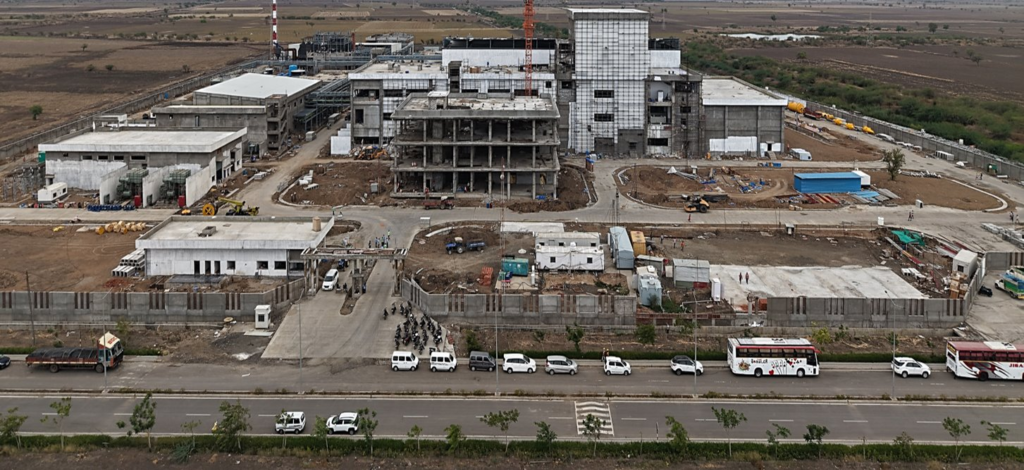
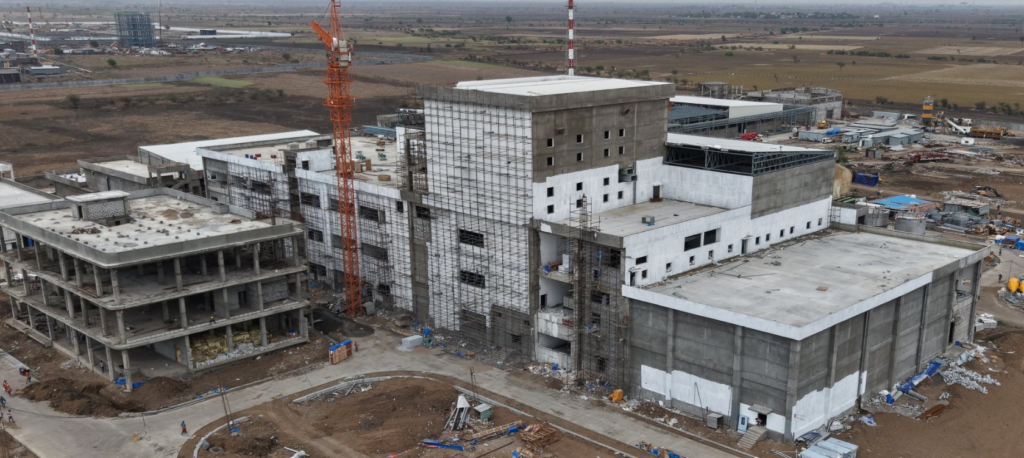
The company expects to begin commercial deliveries of ProFerm, its recombinant beta-lactoglobulin protein, from its joint manufacturing facility with Zydus Lifesciences in Gujarat, India in Q1 2027. The deal came about after the former sold half of its stake in Indian manufacturer Sterling Biotech to the latter for $66M in 2024.
Perfect Day is currently being led by COO Marshall Bredwell. Its co-founders, Ryan Pandya and Peramul Gandhi, left the company in early 2024 (the latter has since launched a new precision fermentation startup). They were replaced by Narayan TM as interim CEO, before he departed in 2025.
Failla says Bredwell is “supported by an exceptional leadership team with deep expertise across biotechnology, dairy, manufacturing, operations, and commercial execution”.
“Innovation may have started our journey, but commercial execution will define our future, and we believe we have one of the strongest teams in the industry to deliver on that vision,” he outlines.
Behind the scenes of Perfect Day’s ‘bridge period’
So what prompted Perfect Day to go into, as Failla puts it, “a bridge period”? “Our priority was to solve the challenges that matter most to our customers: manufacturing scale, reliable supply, and a clear path to long-term commercial success,” he says.
“At the same time, the funding environment for growth-stage companies changed significantly. The focus across the industry shifted from growth at any cost to building profitable, sustainable businesses, and we embraced that reality.”
During this period, one of the firm’s greatest challenges was maintaining commercial momentum while preparing for its next manufacturing phase. “Like many companies pioneering precision fermentation, there is an inherent gap between demonstrating breakthrough technology and achieving the commercial manufacturing capacity needed to support global brands,” says Failla.
“That requires customers to have confidence not only in the technology, but also in the team’s ability to execute against an ambitious scale-up plan. Naturally, sustaining that confidence over an extended period can be challenging as customers wait for commercial supply to become available.”
So Perfect Day employed a straightforward approach. “Stay closely engaged with our customers, remain transparent about our progress, and focus relentlessly on execution,” he outlines. “Rather than overextending ourselves, we concentrated on building the manufacturing capabilities and supply chain needed to deliver at commercial scale.”
The company “invested heavily” in bolstering its manufacturing network and building the foundations for long-term growth. It’s now approaching completion of its Indian plant, which will provide the capacity, economics, and supply reliability needed to support commercial customer launches and future expansion.
This joint facility is a sign that the strategy is paying off, according to Failla: “Customer engagement has accelerated significantly because brands now see a clear path to the reliable supply, manufacturing scale, and commercial economics they’ve been waiting for.”
Why Perfect Day sold The Urgent Company
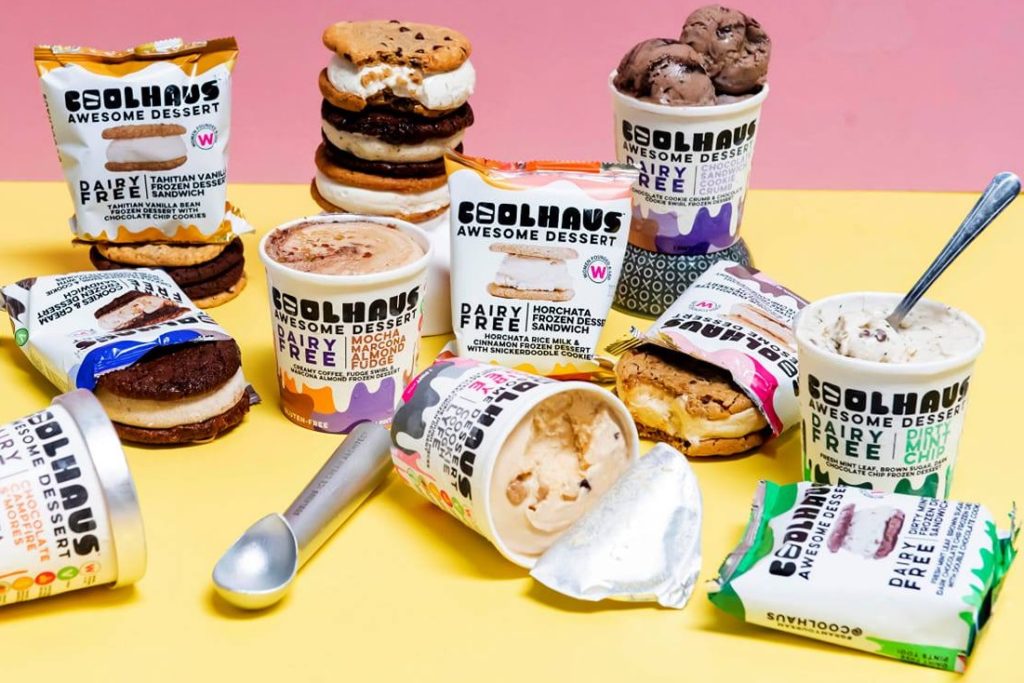
Around the start of the so-called “incognito mode”, Perfect Day sold off The Urgent Company, its consumer brands arm that housed labels like Coolhaus and Brave Robot, instead doubling down on its B2B operations with its tech-focused offshoot Nth Bio.
“The Urgent Company was created during Covid-19 to demonstrate consumer demand for precision-fermented dairy ingredients when many brands had paused innovation. It successfully validated the technology, helped educate consumers, and gave larger CPG companies confidence to launch their own products,” Failla reflects.
“As Perfect Day evolved, it became clear our greatest opportunity was as a world-class B2B ingredient company,” he adds. “Nth BioGroup’s biology-as-a-service capabilities continue under the Perfect Day organisation from India, helping partners scale precision fermentation from concept through commercial manufacturing.”
Speaking of which, once the company committed to building its India facility, it “no longer made strategic or economic sense” to keep producing significant commercial volumes through contract manufacturers. “Instead, we produced inventory to support a core group of strategic customers while preparing for our long-term manufacturing platform,” he says.
Production at the Gujarat facility is expected to reach 2,000 tonnes in the first 12 months, though its nameplate capacity is around 2,500 tonnes annually.
“We have a clear roadmap to expand production to approximately 3,500 metric tons in 2028, followed by a planned second manufacturing facility on the same site, effectively doubling capacity beginning in 2029,” reveals Failla.
“Demand for high-quality protein continues to grow globally, and we’re seeing strong customer interest in precision-fermented whey. Our manufacturing strategy has been designed not only to meet today’s demand but to create the foundation for sustained growth alongside our customers.”
‘Our ambition isn’t to be the lowest-price protein’
Precision fermentation entails inserting specific DNA into microbes to teach them to produce the desired molecules when fermented. Perfect Day uses it to make beta-lactoglobulin, the main whey protein in cow’s milk, by genetically engineering Trichoderma reesei.
Its ProFerm ingredient has previously been used in products by emerging brands and industry giants alike, including Nestlé, Unilever, General Mills, Mars, Graeter’s, and N!ck’s.
It offers a higher branched-chain amino acid content than any other whey protein on the market, as well as emitting 91-97% fewer emissions, requiring 29-60% less non-renewable energy, and consuming 96-99% less water.
“Today, ProFerm can be found in innovative sports nutrition products, including K-Tropix Klean Protein, Brickhouse Nutrition protein powders, NUR Protein stick packs, and Set Protein RTD shots,” says Failla. “Looking ahead, we’re only beginning to unlock ProFerm’s potential as commercial capacity expands.”
The ingredient is poised to capitalise on the supply-strained whey protein market. Contracts for whey have been sold well into 2026, and some supplies are sold out for the rest of the year. Whey prices broke records in 2025, and have kept on surging since.
Over the last two years, the cost of whey protein concentrate has risen by 108%, and whey protein isolate has nearly doubled in price. Instead of competing on commodity prices, Perfect Day is centering its cost strategy for ProFerm on value.
“Our ambition isn’t to be the lowest-priced protein on the market. Customers choose ProFerm because it delivers superior nutrition, functionality, reliable supply, pricing stability, and long-term commercial value,” says Failla.
“Today’s dairy protein market is experiencing significant supply constraints, particularly for high-purity beta-lactoglobulin. In many applications, that allows us to offer customers an immediate economic advantage while also reducing their exposure to dairy market volatility,” he explains.
“Our manufacturing platform isn’t directly tied to fluctuations in the global milk supply, enabling greater pricing stability, improved supply visibility, and long-term planning confidence.”
Perfect Day approved to sell ProFerm in seven markets

To date, Perfect Day has raised more than $825M, making it – by a country mile – the best-funded startup in the precision fermentation space. In 2024, after the departures of its co-founders, the company said it was raising up to $90M in Series E funding, although it’s unclear if this materialised in the end.
Failla declines to comment on the company’s investment status, instead offering that it is in a “good place operationally and would only look for funding for growth”.
“We’ve been fortunate to have the support of investors who share our long-term vision. Today, we’re in a strong position to execute on our strategic priorities, including completing our manufacturing platform and supporting customers through commercial scale-up,” he says.
“Successfully demonstrating commercial-scale manufacturing and a clear path to sustainable profitability fundamentally changes the conversation around future investment, partnerships, and joint ventures. Commercial execution creates optionality.”
Asked about Perfect Day’s regulatory status, Failla notes that ProFerm is approved for commercial use in the US, India, Singapore, Colombia, the UAE, and Israel, and has import approval for Hong Kong.
“Our UK application is currently under review, and our EFSA submission is progressing through the European regulatory process,” he reveals. “Our regulatory strategy follows customer demand. Our objective is to make ProFerm available wherever our customers are innovating.”
He highlights the company’s vision to “build a global ingredient platform” from the outset, rather than just a regional business: “The US, India, and Israel currently represent our strongest commercial opportunities, while the UK and EU remain strategic priorities as regulatory approvals progress.”
Precision fermentation ‘simply a better tool’ to produce superior whey protein
Failla describes the next 12 months as “one of the most exciting periods” in Perfect Day’s 12-year history.
“Our focus is bringing our manufacturing platform online, supporting customer launches, expanding our regulatory footprint, and continuing global commercialisation,” he says. “Innovation creates possibilities. Commercial execution creates industries.”
How does it plan to take on the dairy industry, as well as the string of precision-fermented whey proteins that have come on the market during its quiet period?
“We don’t really view this as a winner-takes-all market. The global dairy industry is enormous, and precision-fermented proteins will represent only a small fraction of overall protein production for many years,” says Failla.
“Our objective isn’t to replace dairy farming. Many members of our team come directly from the dairy industry, and we have tremendous respect for it,” he adds. “Our focus is delivering exceptional protein that performs, scales commercially, and creates value for customers.”
Perfect Day doesn’t believe the future of protein is either conventional dairy or precision fermentation – it’s both. “As global demand for high-quality protein continues to grow, we see precision fermentation as a complementary manufacturing platform that expands what’s possible for brands while supporting the broader dairy industry,” notes Failla.
“At the end of the day, our customers aren’t buying precision fermentation – they’re buying the best protein for the job. Precision fermentation is simply a better tool for producing the best protein for the application.”