

Opinion: Where Disgust Meets Distrust – The Viral Psychology Behind the “Ultra-Processed Food” Narrative


The Ultra-Processed Food (UPF) narrative has gone viral by weaponizing the innate human fear of the unknown, also known as neophobia, inadvertently grouping sustainable and necessary novel food innovations with nutritionally poor junk foods.
The debate over ultra-processed foods (UPFs) doesn’t just reflect renewed concern about unhealthy diets. For beneath the familiar ‘junk food’ critique of excess salt, fat and sugar lies a different form of unease. It’s a concern grounded in fears about the harmful effect of processing itself; the additives, preservatives, and unpronounceable ingredients that we view, consciously or otherwise, as ‘foreign’ contaminants with the power to adulterate our bodies, much in the same way as would an invading pathogen.
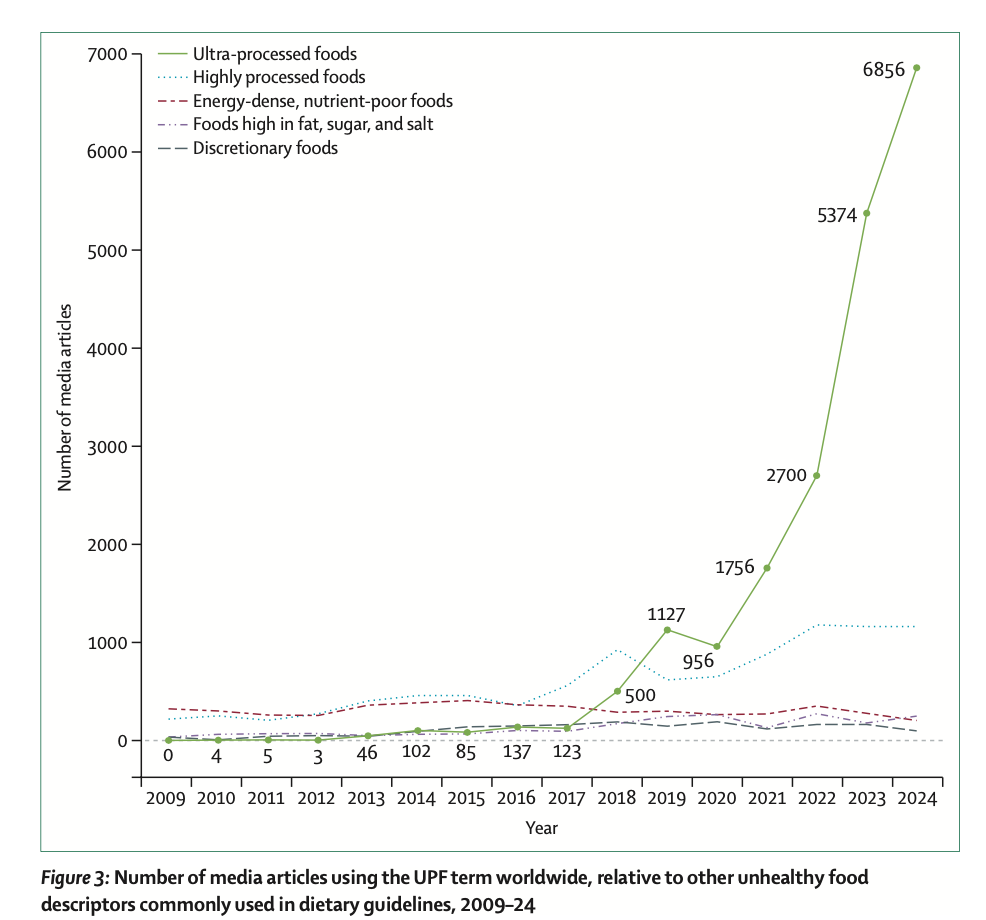
This ‘contaminant’ association may explain why new UPF-based dietary advice and content has received massive media traction, and how it has managed to cut through where traditional healthy eating messaging has often failed. This time, the advice may be landing because it taps directly into a core aspect of our psychology – a deep fear of the invading unknown.
Natural vs Unnatural Risks
In the context of diet, this instinct is known as food neophobia. This term describes the strong aversion, even disgust, that up to 60% of the population report when confronted with an unfamiliar food. From an evolutionary perspective, this response makes total sense as avoiding unknown foods would have reduced the risk of ingesting toxins or pathogens in an environment where trial and error could easily prove fatal.
Yet, the same innate fear is now being effectively triggered by contemporary UPF messaging. Concerns about dietary contamination that once focused on ‘natural’ hazards, like salmonella, E. coli or listeria, are now being successfully redirected towards synthetic or processed ‘pathogens’ found in UPFs, such as heterocyclic amines, acrylamide, or trans-fatty acids.
In many respects, this fear is completely justified. Research shows that excess consumption of certain UPFs does indeed raise the risks of chronic diseases and ultimately increases mortality. However, the mechanism is not one of acute toxicity. The health risks of UPFs arise through long-term, cumulative exposure to an unbalanced and highly processed diet, which leads to a slow accumulation of metabolic harm, rather than posing an immediate risk to our health in the same way as food poisoning.
Novel foods: where disgust meets distrust
It is also crucial to recognise that all ultra-processed foods are not nutritionally or functionally equivalent. Alongside energy-dense snacks, confectionery and sugary drinks, this category also includes foods such as wholegrain breads, infant formula, some fortified and high-fibre cereals, canned beans and plant-based milks. Many of these foods are associated with neutral or positive health outcomes and can play an important role in ensuring dietary quality and nutrient access.
Moreover, the UPF label also captures a growing set of novel and innovative foods, including products upcycled from surplus food, animal-free protein alternatives, and new fermentation-derived ingredients. These are all explicitly designed to reduce the environmental footprint of the food we eat while maintaining access to affordable, quality sources of nutrition.
Given the substantial climate impact of meat-heavy diets, alongside rising concern about food security and supply chain resilience, discouraging consumers from these novel foods by grouping them together with nutritionally poor ‘junk’ foods carries its own risks. These innovations are likely to be increasingly essential to ensure that our growing global population can maintain access to sufficient, high-quality nutrition as climate change progressively and negatively impacts agricultural productivity and, consequently, the availability and affordability of ‘natural’ nutrient-dense foods. Yet this is precisely what has happened. In some cases, labelling of novel foods as UPFs has also been actively promoted by interest groups who are opposed to a broader transition towards a more sustainable food system.
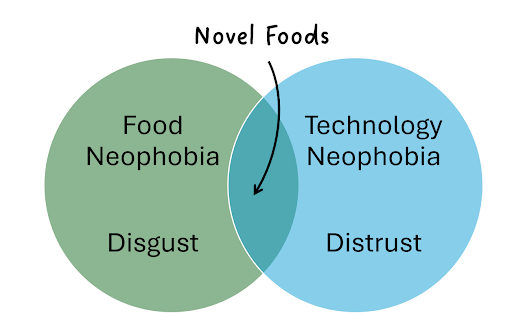
To make matters worse, these food innovations also face a second, overlapping psychological barrier. Not only do we tend to fear the unknown, but we are also highly sceptical of new technologies. Foods that are both unfamiliar and created using innovative forms of processing sit right at the centre of this phobic Venn diagram. They are both strange and perceived as unnatural, and so directly trigger our suspicions of hidden harm, unsafety and even the threat of malign intent from those organizations producing them. In novel foods, our innate disgust meets our innate distrust – a potent combination that can make for some highly compelling and clickable social media content.
Marketing the upsides of novelty
What, then, can those who are developing novel processed foods do to counter these twin biases? Here, we can look to earlier examples of food adoption success stories for some helpful clues.
Take sushi. When raw fish first entered Western markets in the 1960s, it was widely regarded as strange and revolting. Its eventual successful adoption at scale owed much to its reframing as an artisanal, refined, pure and cosmopolitan option. Rather than ignoring consumers’ fears of the unknown, sushi marketeers chose to actively associate the cuisine with positive aspects of the ‘foreign’ – global sophistication, culture and elite culinary skill.
In the same vein, some research into alt proteins suggests that producers may actually do better to create products that offer consumers something entirely new, and do not try to imitate meat or dairy exactly. Framing these not as ‘alternatives’ to the known, but as newly crafted foods that have been designed for those with a little more culinary daring to explore. Here, the hope is that, just as with sushi, these curious ‘early adopters’ can establish a trend that will eventually diffuse into a cultural norm.
We may also learn from the widespread adoption of avocados. Once viewed in Europe and North America as easily-bruised and slimy oddities, they were successfully repositioned as wholesome ‘superfoods’. Media coverage and social media influencers helped to highlight their nutritional benefits, while pairing novel ingredients with culturally familiar formats, such as smashing avocado on a humble piece of toast, allowed consumers to experiment at the margins of comfort rather than confronting full unfamiliarity.
Another way to encourage consumers to accept novel foods is through reframing that turns their unfamiliarity into desirability. A recent example is the viral success of a limited-edition chocolate product in Eastern Europe: milk chocolate filled with roasted edible zophobas larvae and crispy kataifi vermicelli. Such a combination would normally be expected to provoke strong disgust reactions, given that insect-based products sit at the extreme end of food neophobia in many cultures. However, rather than attempt to address concerns, marketers instead repositioned the chocolate as a fashionable object, launched and endorsed by a celebrity persona, released in limited quantities, and embedded within youth-oriented culture. The product rapidly sold out and was even traded on secondary markets, demonstrating how novelty, when associated with status, scarcity, and social identity, can be converted from a source of suspicion into a marker of desirability. Rather than attempting to neutralise fear of the new, the campaign redirected attention toward participation in a trend.
Emphasising craftsmanship, small-batch production and careful engineering can also recast technological foods as products of scientific refinement rather than industrial manipulation. Just as pharmaceuticals (think Bayer’s ‘Science for a better life’), automobiles (Audi’s ‘Vorsprung durch Technik’) and aeroplanes (Boeing’s ‘Building something better’) are trusted exactly because they are technologically advanced, novel foods can also be positioned as nutritionally precise and clinically optimised options with functional benefits for a nutritionally aware audience.
Getting ahead of the fear of the new
For the UPF debate to contribute meaningfully to longer-term public health, food security, and sustainability, the media and expert discourse must clearly distinguish between nutrient-poor, unhealthy UPFs and novel foods, whose production stands to advance health and environmental goals. Crucially, we must recognise that rejection of these foods often arises from instinctive fears of the unknown, rather than being based in the actual toxicity of a product.
Strategies that succeed will be those that recognise these instincts and deliberately find ways to positively reframe novel foods, rather than simply allowing our innate but unfounded tendency towards disgust and distrust to define the future of our diets.

