

Canada Govt Backs AI-Led Fermentation Project to Turn Food Waste Into ‘High-Value’ Ingredients

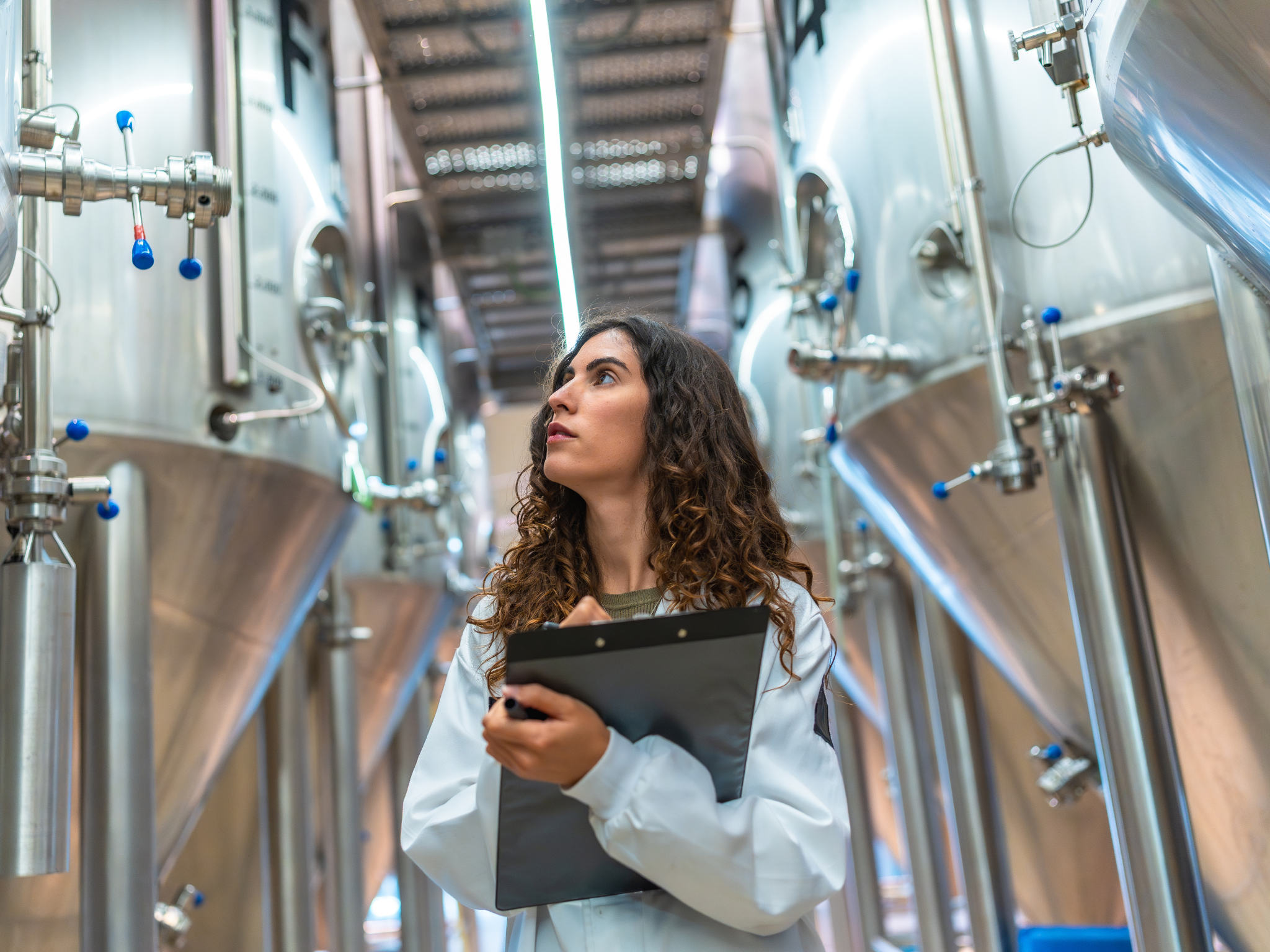
Protein Industries Canada has funded a new project to create an AI platform that can make fermentation cheaper and more efficient, and “unlock new value” from agricultural byproducts.
The Canadian government has announced its latest funding effort to support the future of food.
Protein Industries Canada, one of the government’s five innovation clusters, has committed C$607,000 ($427,500) to a C$1.4M ($986,000) project to streamline fermentation technologies using artificial intelligence (AI).
The initiative is being led by local startups Crush Dynamics and Atomic47 Labs, which will develop an AI platform that uses existing industrial sensors and advanced machine learning to create a “new model for smart and sustainable food manufacturing”.
“Automating industrial fermentation enables Canadian companies to compete internationally, reduce waste and promote more sustainable food production,” said Mélanie Joly, the federal minister of industry.
“This is the kind of cutting‑edge technology that advances our government’s commitment to a strong, resilient and sustainable economy for all Canadians,” she added.
Marrying fermentation with AI and digital twin tech

The new AI platform will use existing industrial sensors and advanced machine learning to continuously infer fermentation conditions, food safety indicators, energy performance and process health in real time.
The idea is that, by shifting fermentation from a manually managed process to an intelligent, autonomous system, the platform can significantly lower energy consumption, enhance product consistency, boost efficiency and yields, and “unlock new value” from agricultural byproducts.
Crush Dynamics and Atomic47 Labs will incorporate AI into the former’s commercial fermentation platform to enable real-time process monitoring, prediction and optimisation, which will – in addition to the aforementioned advantages – strengthen food safety controls.
The project aims to accelerate the conversion of agricultural sidestreams into high-value food ingredients by making fermentation more predictable, scalable and cost-effective.
“Crush Dynamics and its partners will use AI-driven innovation to strengthen Canada’s food supply chain and reinforce our leadership in global food production,” said Joly.
“This project is about moving fermentation from reactive decision-making to intelligent, real-time control,” said Karen Olsson, CEO of Atomic47 Labs.
“By combining Crush Dynamics’ fermentation expertise with Atomic47’s AI, digital twin and industrial control capabilities, we are building a platform that can improve consistency, reduce waste, and help Canadian food processors scale more sustainable ingredient production,” she added.
The development of new technology across the food production and value-added agriculture sectors provides an opportunity for the country to further bolster its domestic food processing capacity. According to Protein Industries Canada, AI takes this a step further by helping companies enhance work efficiencies and product sustainability, as well as grow their market footprint.
Canada aims to become leading supplier of plant-based ingredients
“Innovation is key to strengthening Canada’s food processing sector. By using AI to improve fermentation processes, this project will help food manufacturers adopt predictive, advanced technologies that boost domestic processing capacity,” said Heath MacDonald, Canada’s agrifood minister.
Protein Industries Canada’s AI stream is funded as part of the Pan-Canadian Artificial Intelligence Strategy, through which the federal government is investing in efforts to drive up AI adoption across the economy and society.
The latest funding is part of the cluster’s wider effort to support domestic innovation and grow the plant-based food, feed, and ingredient sector into a $25B industry, with the goal of making Canada the top supplier of plant-based ingredients.
Part of that work is to also bring more value and opportunity to local crops through the Make It Here initiative. “This project is about making more from what we already grow,” said Crush Dynamics CEO Kirk Moir.
“We’re combining our fermentation technology with advanced AI to help transform agricultural sidestreams into high-value ingredients more efficiently and consistently. It’s an important step toward reducing waste, improving sustainability and strengthening Canada’s food manufacturing sector,” he continued.
“Canada’s ability to make more from what we grow relies on our food processors having the tools they need to succeed, and AI systems are an important part of that,” noted Protein Industries Canada CEO Tyler Groeneveld.
“With the development of a new AI system that helps improve energy usage while reducing waste, Canada’s food processors can make great strides in not just strengthening our domestic food supply chain, but also in improving food options for families here and around the world,” he added.
That said, these investments must consider the environmental impact of AI (which extends beyond just training these models). For instance, the energy required to generate a single AI image is enough to power a 10-watt LED bulb for 17 minutes and to use two tablespoons of water. Not to mention, data centres for the tech are regularly accused of leeching resources from public infrastructure.
Still, Protein Industries Canada has been heavily investing in sustainable food solutions, thanks to a C$353M commitment from the government between 2018 and 2028. Last month, it funded part of a C$15.1M ($10.9M) project to scale up whole-cut meat and seafood products, and a C$1.1M ($800,000) initiative to upcycle beer industry waste into sustainable proteins, fibres, and cocoa extenders.