

Germany’s Rewe Group Targets 60% Plant-Based Sales By 2035, Calls for National Protein Plan

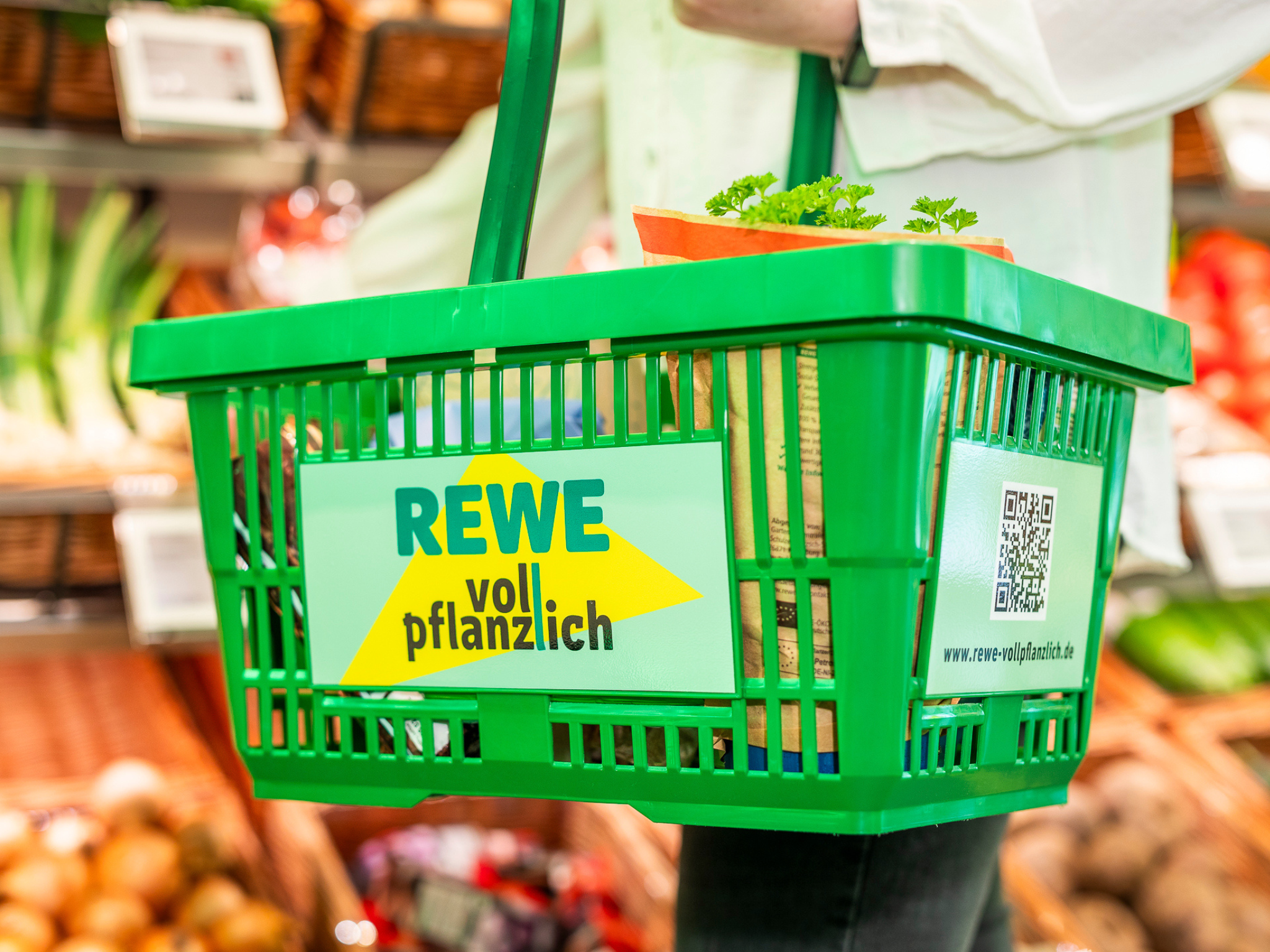
German retail giant Rewe Group has set a ‘protein split’ goal in a new strategy, and calls for a national protein plan as part of six food policy demands.
Six months after announcing the creation of its protein strategy, German retailer Rewe Group has unveiled a target to make 60% of its sales come from plant-based products by 2035.
The supermarket group, which owns Penny in Germany and Billa in Austria, shared that vegan products made up 54% of its sales in 2024 (excluding beverages). The analysis was based on a methodology developed by the World Wildlife Fund last year, which Rewe Group is calling on the industry to adopt.
“Germany has the opportunity to position itself as a pioneer of competitive, resilient, and sustainable agricultural and food systems,” the company said in a position paper. Protein diversification, it added, is a key lever for ensuring healthy and sustainable diets, and so the supply and demand of alternative proteins must be “significantly expanded”.
“Yet, a true dietary transition has not yet been pursued decisively enough at the political level,” the document stated. It’s why Rewe Group has laid out six demands for federal and state policymakers, asking them to develop a national protein roadmap.
Denmark was the first to introduce a plant-based strategy in 2023 (before rolling out a wider green transition plan that includes a carbon tax on meat). It was followed by South Korea shortly after, and late last year, Portugal committed to developing a plant-based plan too.
“For more climate- and resource-friendly food production, the overall political framework must also change,” the company noted. “We therefore welcome the fact that policymakers have also recognised the relevance of this issue, even if developments could be pursued more decisively.”
Rewe Group’s four-pronged protein strategy
“As one of Europe’s largest trading companies with an ambitious climate target, we have committed ourselves to a holistic protein strategy,” Rewe Group said.
The new protein strategy has four strategic pillars. First, it will optimise its product ranges to veganise recipes and ingredients where it makes sense, with a focus on taste and variety.
Second, it will support food tech startups driving innovation in the category with new products and technologies to build a future-friendly food ecosystem.
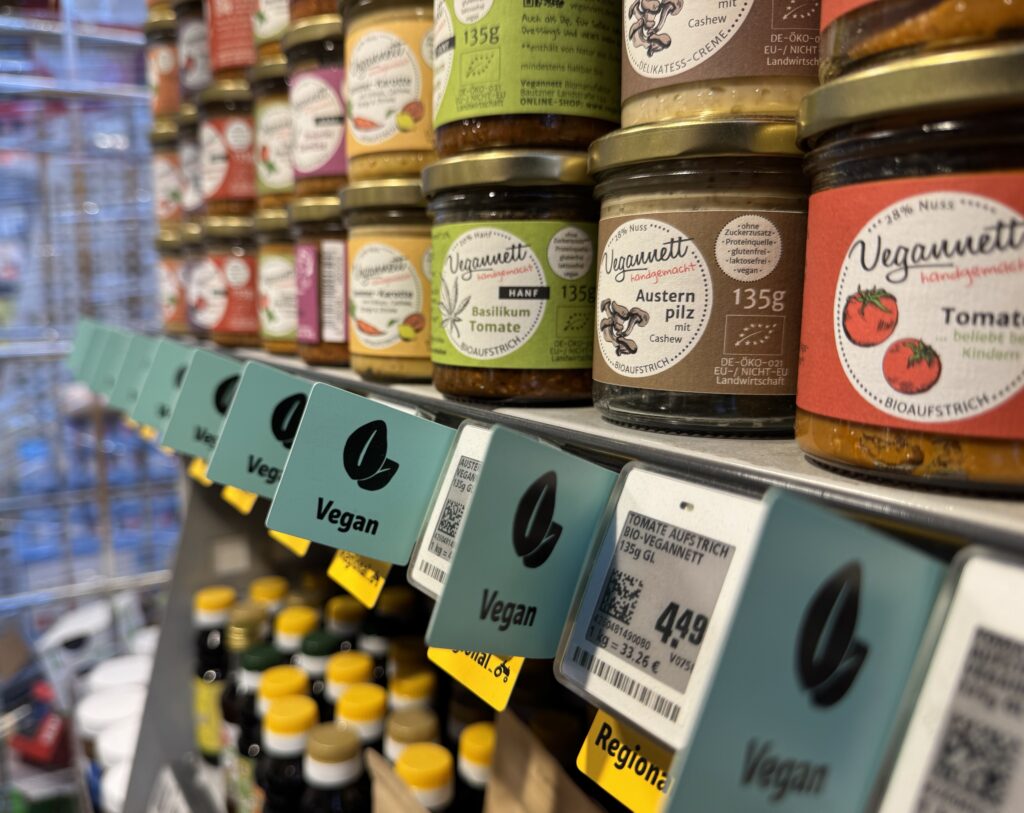
Next, Rewe Group will promote conscious eating and make sustainable diets more accessible via clear labelling, targeted offerings, and an attractive product range.
And finally, the retailer is advocating for a national protein strategy to strengthen the competitiveness of the domestic agriculture sector and support the country’s climate goals. This, it added, would include an industry standard for tracking the proportion of plant-based and animal protein sales, or the ‘protein split’.
“We are taking a step-by-step approach, leveraging our regional market structures and relying on strategic partnerships. Transparent communication, targeted incentives, and continuous innovation are central elements of our protein strategy,” it said.
Rewe Group urges the German government to create protein strategy

Last year, the federal government kicked off the Proteins of the Future on the Plate forum to promote the alternative protein sector, a move Rewe Group said provides a platform for a joint protein plan. It’s asking policymakers to now build on that, and has made six key demands.
- Transparent, simplified regulation: The approval process for cultivated meat and precision-fermented products must be accelerated at both national and EU levels. The German government should advocate for the reliable implementation of novel food regulations to bolster investor and consumer trust.
- Greater R&D investment: The government should step up research funding for protein diversification, as well as investments into food tech infrastructure and startups. At the EU level, Germany should keep calling for the inclusion of alternative proteins in programmes like Horizon Europe.
- Expand real-world lab access: Labs help test new technologies in real-world conditions, but this requires legal flexibility. Experimental clauses, particularly in food law, must be legally anchored and equipped with innovation-friendly guidelines. This would enable systematic regulatory learning and the further development of existing rules.
- Scrap the extra VAT for plant-based milk: Germany currently charges a 19% levy on non-dairy milk, but only 7% for cow’s milk. Matching the VAT for both product sets would help market distortions and heighten consumer acceptance, without impacting animal-based products.
- Boost plant protein production: National subsidies and funds from the EU’s Common Agriculture Policy should be directed towards legume and protein crop cultivation. Farmers should be provided practical information and training opportunities, and public catering services should integrate plant-based options to offer growers more stable opportunities.
- Make science-based decisions: Food policy decisions must be grounded in scientific evidence, and all alternative proteins should be considered with an open mind and treated equally. Calls for national bans on cultivated meat undermine EU law, weaken innovation, and consumer freedom.
The protein strategy comes a month after Rewe Group partnered with Oatly, Vly and Berief Food to launch a petition calling on the government to reduce the VAT rate on non-dairy milks. It has so far received over 93,000 signatures.
Rewe is the latest supermarket to adopt a protein split target, as part of EU retailers’ growing climate ambition. Fellow German retailer Lidl has set a plant-based sales goal too, as has the Netherlands’ Ahold Delhaize. Meanwhile, Wolt Market Denmark has become the first non-Dutch supermarket to adopt the Protein Tracker tool and will now establish concrete protein split targets.
And in the UK, an alliance of over 200 organisations have urged the government and retailers to make reporting of healthy food sales mandatory to include protein sales disclosure too.