

Former FDA Head Gives MAHA Blueprint to Regulate UPFs. What Does It Mean for Plant-Based Meat?


Ex-FDA commissioner Dr David Kessler has filed a citizen petition asking the agency to revoke the food safety status of processed refined carbohydrates, a move that both helps and challenges the MAHA movement.
On Thursday, the Centers for Disease Control and Prevention (CDC) released a study finding that Americans, on average, get 55% of their calories from ultra-processed foods (UPFs). Children and teenagers, it showed, eat more of these products than the rest of the population.
The research was part of the growing literature surrounding UPF consumption in the US. For months now, these foods have been vilified by nutritionists and politicians from both sides of the aisle, heightened by health secretary Robert F Kennedy Jr’s Make America Healthy Again (MAHA) movement.
The CDC study is notable since it shows how prevalent UPFs are in the country’s food supply, and because it came a day after a citizen petition uncovered a way for the government to regulate these foods.
Spearheaded by Dr David Kessler, the former Food and Drug Administration (FDA) commissioner under the Clinton and Bush administrations and Covid-19 advisor to President Joe Biden, the petition is both a tool and a challenge to the current administration.
It lays down a legal pathway for the FDA to fight these foods, and asks the Trump government to use regulation to force change.
“I believe the public health benefit may be as significant as those achieved through the regulation of tobacco products. As one who oversaw tobacco regulation at FDA in the 1990s and who has since written extensively on the role of ultra-processing in our foods, I see similarities between the two,” Kessler wrote in an accompanying letter to RFK Jr.
“On a larger scale, this petition triggers a remaking of the food supply. It will get companies to rethink and redesign the way they make food, so that foods are not injurious to health,” he added.
The lowdown on UPFs
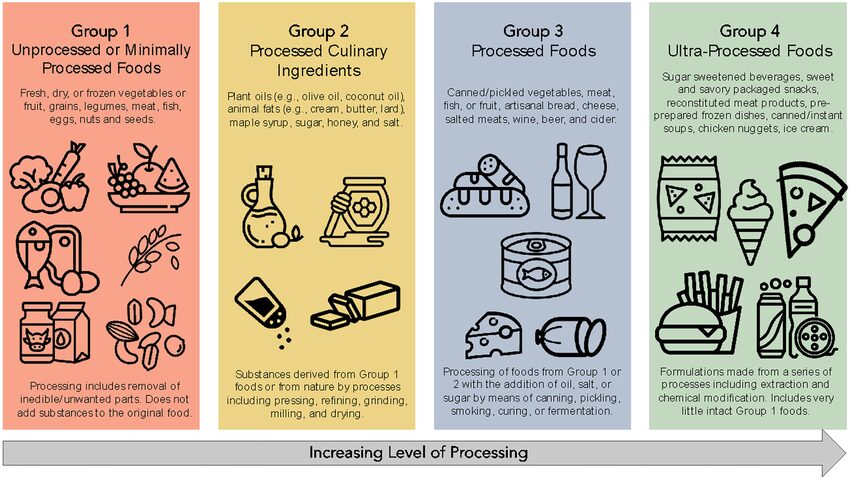
UPFs are at the bottom rung of the Nova classification, which places food into four subgroups, based on the amount of processing. They comprise industrial formulations and techniques like extrusion or pre-frying, and cosmetic additives and substances deemed to be of little culinary use.
These foods have been linked to a range of health ailments, including cardiovascular disease, type 2 diabetes, obesity and cancers, as well as a greater risk of early death. Big Food companies are facing a lawsuit for using the tobacco playbook to market UPFs to kids, and the state of California is mulling a ban on certain UPFs too.
Many nutrition experts, however, have criticised the use of the generic term ‘ultra-processed’ to describe an overly broad range of products, from sugary drinks and packaged cakes to high-fibre breads, cereals, and plant-based meat. A lot of the discourse surrounding UPFs can be misleading, and has led to calls for alternatives to the Nova classification.
This is because there’s no standard definition of UPFs, which has prompted the FDA to take steps to create an official one. The agency is currently reviewing public comments, and the MAHA Commission will release its second report next week, outlining how to address chronic diseases in children. This is notable, considering RFK Jr has previously promised to ban UPFs in school meals.
What does Kessler’s UPF petition propose?

In the petition, Kessler noted that UPFs are comprised of four categories: refined sweeteners, refined flours and starches, added fats and oils, and salt. His effort focuses on the first two, termed “processed refined carbohydrates”, which are “central to the widespread availability of UPFs”.
The ingredients under the spotlight include “starch conversion products” like corn syrups, invert sugar, and maltodextrin, extruded flours and starches such as wheat, corn, tapioca, oat and potato flour, as well as additives like dough conditioners, stabilisers, gums, modified starches, and filler ingredients.
Kessler’s central argument is that these refined carbohydrates are harmful across a range of human health metrics, and that the FDA has the authority and the scientific evidence to declare that they’re no longer Generally Recognised As Safe (GRAS).
This designation allows food companies to bring new ingredients to the market without FDA review, instead relying on scientific evaluations from internal and external experts to self-determine the ingredients as safe. RFK Jr has called it a “loophole” and directed the agency to revise and eventually eliminate the rule.
Kessler suggested that while processed refined carbohydrates were allowed in the food system because they were found to be GRAS half a century ago, “the science no longer supports that determination”. “It has been four decades since the FDA reviewed the scientific basis of GRAS status of processed refined carbohydrates. It has been during those four decades that America’s obesity crisis has emerged,” he said.
“To revoke GRAS status, FDA does not have to prove that the processed refined carbohydrates used in industrial processing are unsafe, but that their safety has not been established.”
His petition is asking the agency he once headed to declare that these ingredients are no longer GRAS since they cause metabolic harm, revoke any existing GRAS regulation for them, and work with the food industry to reduce their use rapidly. Moreover, the FDA should legally classify these substances as additives that are illegal without proof that they’re safe to use.
Kessler added that products containing refined processed carbohydrates must be taken off the market, unless covered by a food additive petition. He proposed that companies should notify the FDA of their intent to file such a petition in 12 months, and act upon it within 24 months.
How will this affect the plant-based industry

The ingredients under attack are used in an extremely wide range of products, from protein bars and yoghurts to bread and cereals. Plant-based alternatives to meat and dairy also face a threat.
For example, one of the ingredients Kessler’s effort seeks to address is methycellulose, a gelling and binding agent made by heating cellulose and treating it with methyl chloride. It is part of many plant-based meat products, including those from giants like Beyond Meat, Impossible Foods, Morningstar Farms, and Lightlife Foods.
The ingredient has faced heavy scrutiny for its synthetic processing and its use as a laxative (though in much higher volumes), which has led many startups to devise cleaner-label alternatives for the industry.
Many plant-based products use modified starch, another ingredient under the petition’s spotlight. This includes NotCo‘s egg-free NotMayo and Violife’s vegan cheeses. Some vegan cream products use mono- and diglycerides of fatty acids; non-dairy milks often use gums to keep the liquid from separating and maintain a creamy texture.
Manufacturers of these products could be forced to reformulate them or put warning labels if the petition is successful. It could lead to higher costs that are passed on to the consumer, supply disruptions, and, in some cases, product withdrawals.
On the other hand, brands using clean-label ingredients or whole-food options could gain from the changes. Veggie burgers like those made by Actual Veggies, traditional plant proteins including legumes, tofu and tempeh, and dairy-free milks with minimal ingredients (such as offerings from Elmhurst 1925 and Malk Organics) stand to win big.
On Thursday, the Physicians Committee for Responsible Medicine weighed in on the UPF debate, asking the MAHA Commission to take a nuanced approach to ultra-processed foods and educate Americans about which ones are unhealthy, and which ones aren’t. It noted that several plant-based processed foods are linked to a lower risk of diabetes and cardiovascular disease.
“‘Ultra-processed’ is an invented term with little meaning and even less practical value,” said Dr Neal Barnard, the association’s president. “Science shows that so-called ‘ultra-processed’ foods differ greatly: certain ones are associated with health problems while others are associated with reduced risk.”
What happens next?
The petition has major implications for the US food system, and the Trump administration. Much of the government’s food policy this year has relied on voluntary cooperation by the industry, with leading businesses pledging to remove artificial food dyes from their products. However, experts have criticised these reforms as “nutritionally hilarious”, arguing that they don’t really move the needle.
Kessler, however, has offered the FDA a viable path to use regulation to tackle food issues. It will be a hard-fought fight, however, given that it impacts some of America’s largest food industries and pits the administration against companies that tend to back Republicans.
The move has echoes of the GRAS revocation of partially hydrogenated oils, or trans fats, in 2015. It was based on extensive research about the cardiovascular risks of these products, with the FDA giving companies three years to remove these ingredients from the products.
But trans fats were already on the way out at the time. Kessler’s proposal to overhaul refined carbohydrates is much, much bigger. It’s potentially a seismic move to reshape the country’s food system.
Citizen petitions are formal requests to the FDA, which is required to respond within 180 days. It’s important to note that revoking an ingredient’s GRAS status isn’t the same as banning it. “Depending on the science and what the proponent of the food additive can show, it is conceivable that certain processed refined carbohydrates could, at low doses, and considering the cumulative effect with other related ingredients, meet the legal standard for approval of a food additive petition,” Kessler explained.
“Such a showing would need to be made in a food additive petition. It would need to demonstrate, taking into consideration the cumulative effects of all related ingredients, that there is “reasonable certainty of no harm,” the petition added.
“We can no longer stand by and do nothing. The removal of processed refined carbohydrates will prove transformative in protecting the public,” he said in his letter. “The government has an opportunity, and a responsibility, to begin now the process of curbing processed refined carbohydrates in our food supply.”