

Indian Culinary School Amps Up Plant-Based Training After Cutting Animal Products by 30%

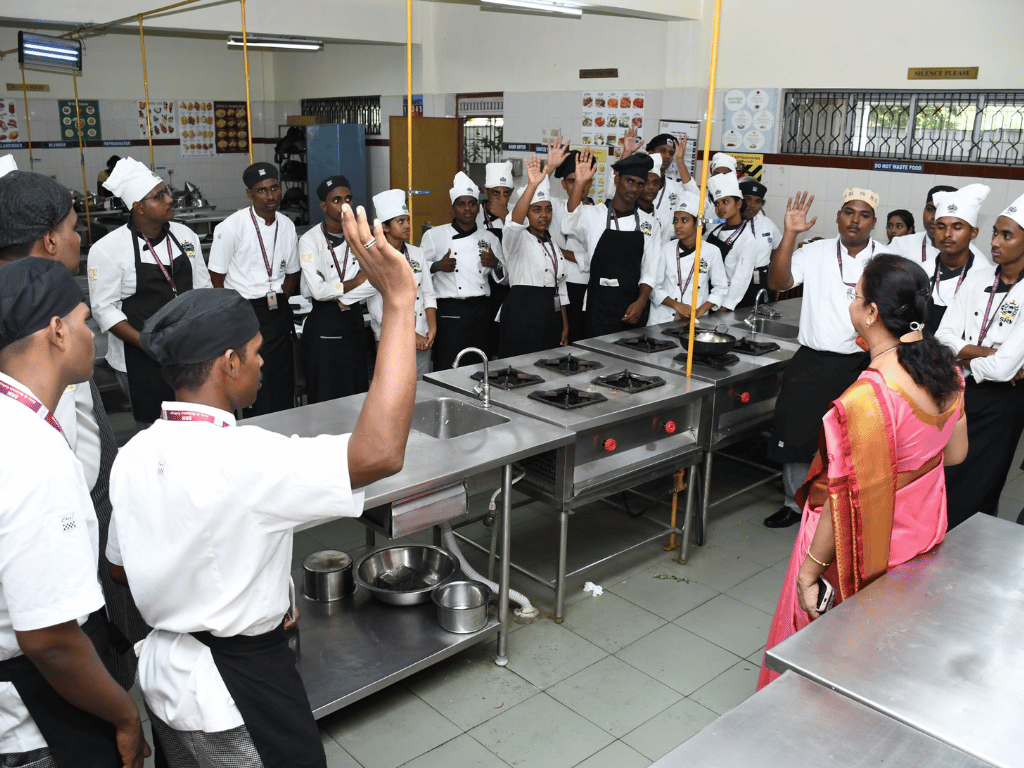
Students at the SRM Institute of Hotel Management in India will spend a fifth of their coursework learning to cook plant-based, with the culinary school already having reduced its use of animal products by 30%.
With plant proteins taking over India’s food landscape, the shift to more sustainable ingredients is manifesting in the foodservice sector too.
The SRM Institute of Hotel Management (SRM IHM) in Kattankulathur, a suburb in Chennai (the capital city of Tamil Nadu), is adding a 25-hour plant-based module to its curriculum next year, dedicating a fifth of the coursework to training students on cooking without meat, dairy and eggs.
The insitute has already cut the use of animal products in its dining halls and hostels by 30%. The move towards more sustainable food follows the institute’s collaboration with non-profit Humane World for Animals India, whose experts trained faculty in plant-based food in a three-day course that reached 60 students.
“It covered the fundamentals of plant-based cooking, ingredient substitution, menu planning and preparation of dishes without meat, fish, eggs and dairy products,” J Lalitha Shri, the institute’s vice principal, told the Times of India. “We reduced animal products in campus dining and hostels to align practical dining hall practices with classroom learning.”
Plant-based training to focus on techniques over recipes
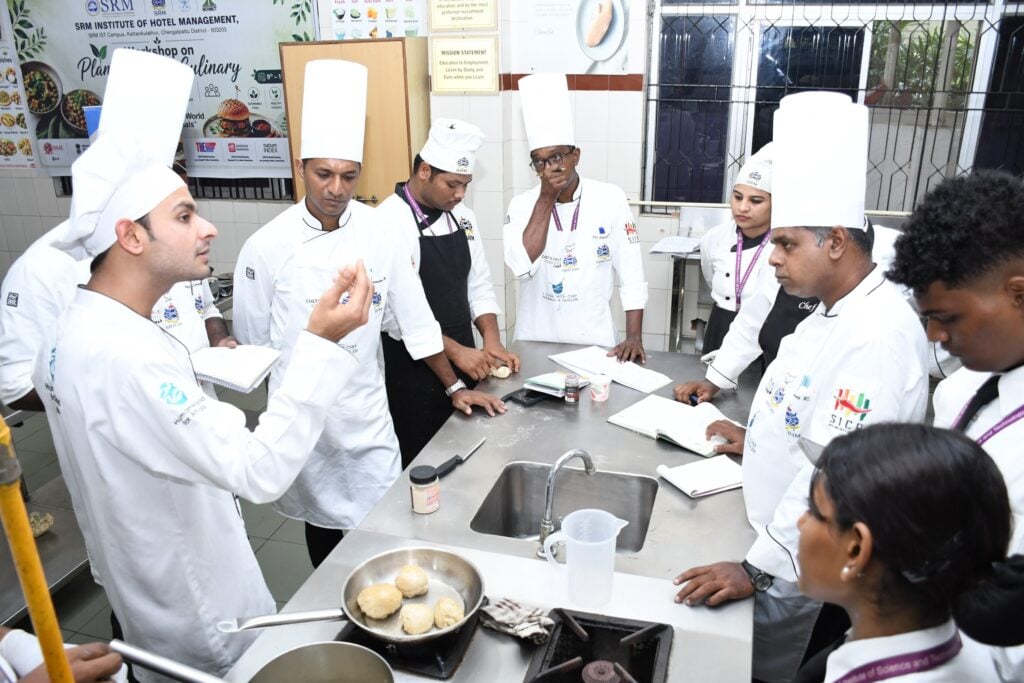
SRM IHM has been a proponent of plant-based food for several years now. In 2024, it partnered with the Green Tuesday Initiative to lower the use of high-carbon foods on campus. As part of this, it introduced weekly plant-based meals in the hostels at its China site.
That move is set to curb by greenhouse gas emissions 1.26 million kgs, conserve 165 million litres of water, and spare more than 19,000 animal lives each year. The climate impact is equivalent to driving around the Earth 259 times and the water consumption of the entire population of Salem, Tamil Nadu’s fifth most populous state, for a day.
At its practical training sessions, SRM IHM students have been exposed to ingredients like fruits, vegetables, grains, pulses, legumes, nuts, seeds, coconut- and plant-based dairy alternatives.
They have learnt how familiar dishes can be recreated using plant-based ingredients, while retaining flavour, texture, presentation, and nutritional value.
“The focus is also on techniques rather than recipes. Students are encouraged to understand how ingredients behave, how flavour can be developed using herbs and spices, how plant proteins can be incorporated into menus, and how locally available produce can be used creatively,” said Lalitha Shri.
“Vegan cuisine is not simply about removing animal-based ingredients; it is about reimagining food with creativity, nutrition and sustainability at its heart. The future of hospitality lies in creating food that is delicious, innovative and mindful of both people and the planet.”
India’s foodservice industry embraces plant-based protein
SRM IHM isn’t the only Indian institute embracing plant-based food. The German International School in Chennai was the country’s first school to go fully vegan back in 2017.
Also in Chennai, the Bharath Institute for Higher Education and Research serves plant-based food in its campus cafeterias on Tuesdays, as do Pondicherry University, Lovely Professional University, Reva University, and Gautham Buddha University in other parts of the country.
In the western state of Gujarat, the Vision International School of Excellence turned its canteen 100% plant-based in 2023, working closely with a nutritionist to ensure children got all important nutrients from the meals. And in Bits Pilani’s Hyderabad campus, the mess features a separate vegan counter.
The growing presence of plant-based food in educational institutes and across foodservice operations comes as 37% of Indians seek to add more plant proteins to their diet. In fact, a larger share of consumers want to increase their intake of protein from plant-based sources than from animal sources.
That shift is being driven by Gen Z, 82% of whom say it’s important to consume protein, and 91% are open to adopting plant-based foods (mainly to increase protein intake). This demographic makes up the majority of India’s college population.
It’s why restaurant and hotel chains across the country are putting more plants on the menu. Starbucks has a long-running partnership with plant-based brand Imagine Foods, and recently introduced a menu item with GoodDot’s soy and pea protein ingredient.
Legacy restaurant group Haldiram’s also added GoodDot’s soya chaap – a local soy-based meat alternative – to hundreds of stores, while hotel giant Hilton partnered with the startup on a month-long plant protein festival across its 32 locations nationwide this year.