

Thai Government Calls for Shift to Plant-Rich Diets as Sales of Meat Alternatives Spike


A Thai government agency has kicked off a campaign calling for a transition to a plant-rich food system, citing better health, climate and economic outcomes.
Thailand has become the latest government to endorse a transition towards sustainable proteins.
The Office of the National Higher Education Science Research and Innovation Policy Council (NXPO), part of the Ministry of Higher Education, Science, Research and Innovation, has asserted that a plant-rich food system would improve public and planetary health, as well as boost the economy.
The approach refers to predominantly plant-based eating patterns, putting vegetables, fruits, legumes and plant proteins at the centre of the plate, and encouraging a reduction in meat intake.
NXPO’s protein transition push comes as sales of meat alternatives rise and research shows that replacing half of its meat and seafood production with plant proteins is the only way for Thailand to stay below the climate-safety threshold (zero deforestation by 2025 and a 72% cut in emissions by 2050) set by international experts.
“NXPO is the first public sector agency in Thailand we have heard speaking publicly in support of shifting diets to include more plants,” said Madre Brava, the organisation that published the aforementioned research.
“Even more remarkable, the agency emphasised the critical role of government in accelerating this shift: from increasing the procurement of plant-rich foods to investing in R&D for alternative proteins,” it added.
Why Thailand needs a plant-rich transition
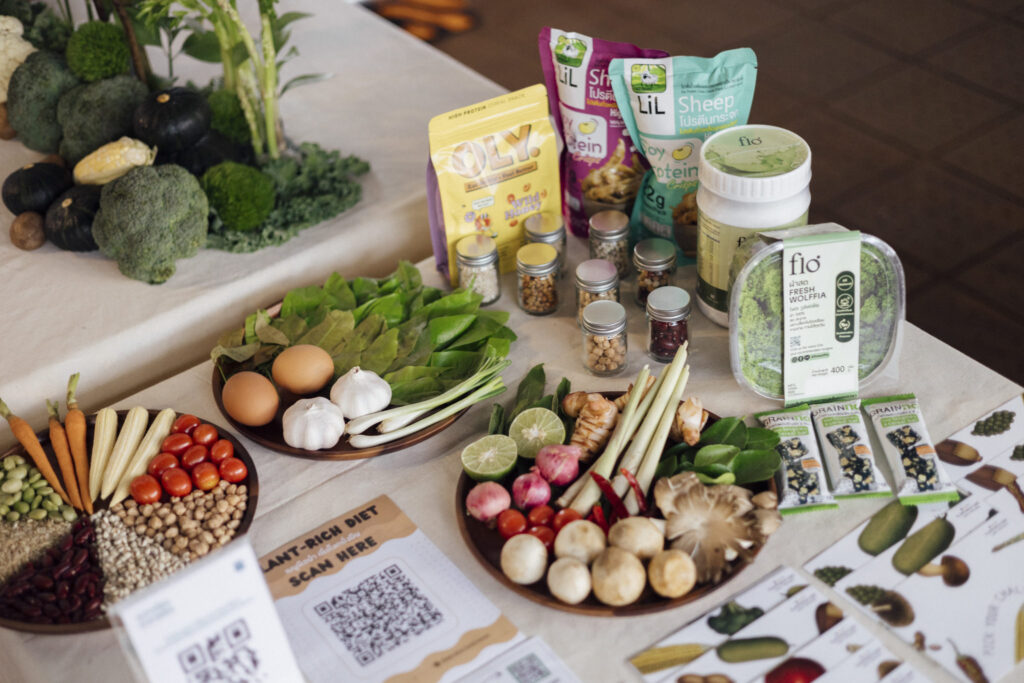
The plant-rich initiative is part of a government sustainability project to accelerate the protein transition, a key component of the bio-circular-green (BCG) economy model.
“The core of the plant-rich diet is balancing human health with the health of the planet, reducing resource use, carbon emissions, and creating a sustainable food system,” NXPO said.
It identified Thai cuisine as an ideal example of such a dietary pattern, given the prominence of local vegetables and ingredients in its culinary staples. Madre Brava agreed, noting: “Thai cuisine, with its diverse herbs, vegetables, and plant-forward dishes, is a natural model of a plant-rich diet.”
With the abundance of raw materials, low-cost infrastructure, and special tax incentives, Thailand holds a ton of potential in the biomanufacturing sector, which could advance foods like microbial proteins and encourage more locals to shift away from livestock-derived proteins.
Still, alternative proteins are largely seen as inferior in taste and texture to conventional meat, and their association with ultra-processing complicates things further.
At the same time, agriculture is the second-largest source of emissions in Thailand, and its livestock sector alone generates 39 million tonnes of CO2e annually. As things stand, this will grow by another five million tonnes by 2050.
The government’s second nationally determined contribution (NDC) to the Paris Agreement covers agriculture as a key focus sector, setting an unconditional emissions reduction target of 30% by 2030. This would be implausible without a widespread shift towards a plant-rich food system. In fact, NXPO suggested that if just 10% of Thai people switched to these diets, over a million tonnes of emissions could be saved annually.
Besides the emissions benefits, it argued that the transition will reduce risks of chronic conditions like type 2 diabetes and heart disease; preserve biodiversity by utilising local, nutritionally rich plants; and create a new economy based on plant-based foods, benefitting farmers and entrepreneurs alike.
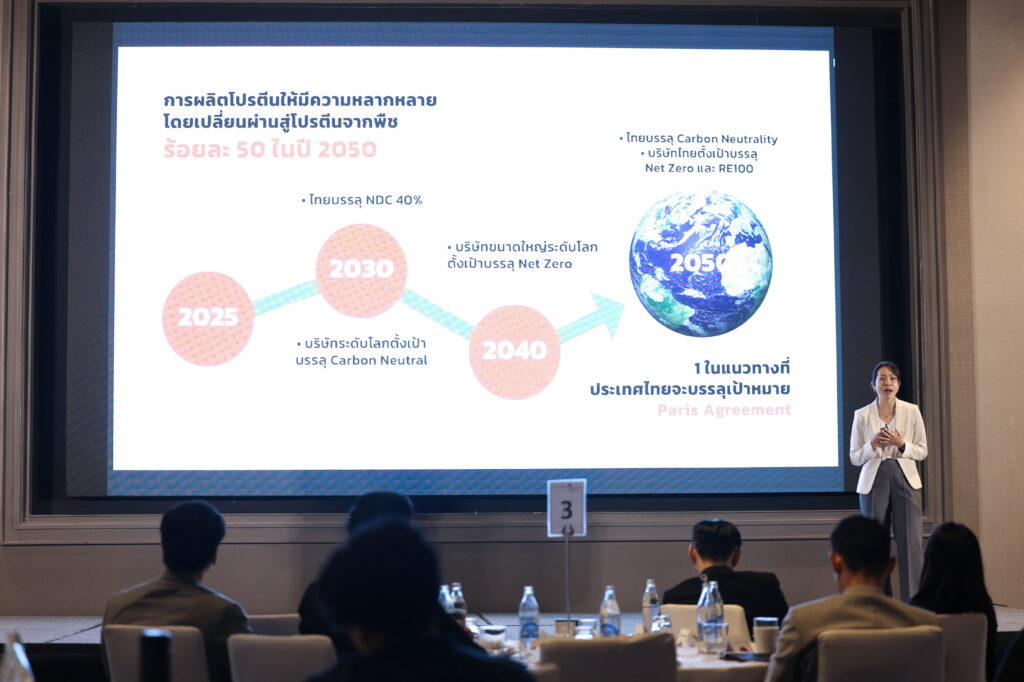
Thai government lays out plan to accelerate protein transition
According to Sirinya Lim, director of the Bio-Economy Policy Division at NXPO, moving to a plant-forward food system would require cross-sector collaboration. For instance, the research ecosystem should enhance public knowledge about innovation in the future food sector, while the public itself should start with simple actions like Meatless Mondays.
The private sector needs to develop products and menus that meet taste, nutrition and sustainability standards. And the government must offer policy support, including public procurement of plant-based foods and investment into the domestic industry.
NXPO is already doing its part, ensuring that at least 30% of the food at its event is plant-based. It has even launched a website to provide more information about plant-rich diets and connect vegan food producers with consumers across Thailand.
The call is echoed by the National Science and Technology Development Agency (NSTDA), which has developed a plan to grow the plant-based protein industry. It involves creating an agricultural producer company mechanism to increase farmers’ share in the supply chain, mobilising investment locally and from overseas, expanding R&D of high-protein crops for minimally processed and blended meat products, and promoting local raw materials and recipes.
The NSTDA is also plotting a protein transition project for 2025-27. This will be focused on strengthening the buyer-supplier network, driving plant-rich policy development through coordination between 20 government agencies, and establishing a short-term training course for 15 “leaders of change” from different fields (including chefs, influencers, nutritionists, and academics).
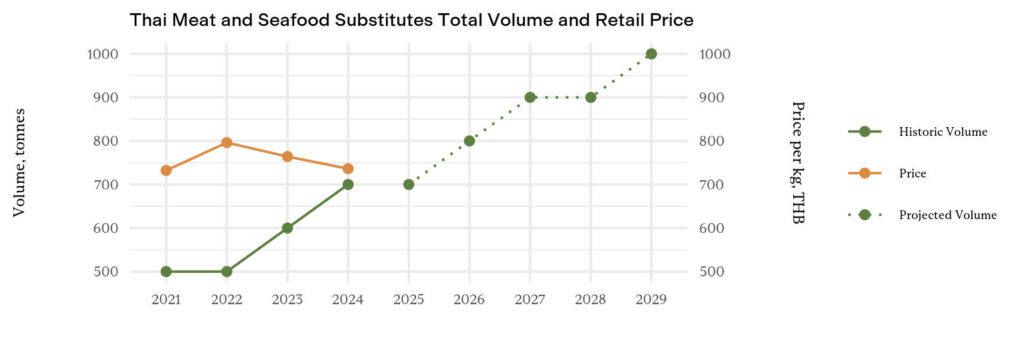
These efforts follow the sustained growth of Thailand’s plant-based sector. Between 2021 and 2024, volume sales of meat and seafood alternatives increased by nearly 30%, thanks to an 8% decline in prices over the last couple of years, as per Euromonitor data obtained by Madre Brava.
The sales performance is only set to continue, with analysts predicting another 43% increase between now and 2029. According to data cited by the NSTDA, the domestic alternative protein market was valued at ฿50B ($1.6B) in 2023, and is set to reach ฿68.8B ($2.2B) by 2027.
In an op-ed for Green Queen, Madre Brava’s Thailand director, Wichayapat Piromsan, called on the private sector to ramp up its protein transition efforts. Food retailers should make plant proteins more visible and accessible, restaurants should offer a higher share of meat-free options (and at a reasonable price), and food producers should ramp up their R&D to make these products more affordable and appealing to Thai consumers.