

This VC Firm is Spending $10M on Next-Gen Sustainable Proteins. Here’s What It’s Looking For


US venture capital firm Coefficient Capital has allocated $10M in R&D funding for alternative protein and future food projects, from egg and fat alternatives to flavour-enhancing ingredients.
Investment in alternative proteins reached a seven-year low in 2025, amid a wider departure of venture capitalists from food and climate tech in favour of artificial intelligence (AI).
Still, the reduced capital base in the future food sector is more focused, targeting R&D opportunities to enhance the sensory and nutritional appeal of sustainable food products.
It’s in that vein that Coefficient Capital, a New York-based VC firm, has issued a new request for proposals (RFP) to address “foundational, pre-competitive research problems” that are “systematically underfunded by both public agencies and private R&D budgets”.
The investor expects to spend $10M on this RFP, with room to increase depending on application quality. Individual awards are set to range from $100,000 to $1M, with two- to three-year durations on average (the maximum is 3.5 years). Startups from anywhere in the world can apply.
“We encourage applications from across the R&D ecosystem, including universities and research institutes; small, medium, and large companies; and public-sector research organisations. Successful teams will likely be interdisciplinary, combining expertise across analytical chemistry, sensory science, food science, fermentation, breeding, and/or industry-relevant scale-up,” the firm stated.
In addition, it is encouraging submissions that include industry partners or outline a credible pathway to industry uptake. Coefficient Capital is soliciting proposals across four priority areas, with an eye toward boosting mainstream adoption, offering a glimpse of what investors are looking for in today’s alternative protein landscape.
1) Reducing off-flavours in plant- and fermentation-derived proteins

Coefficient Capital calls off-notes “the single most commercially important barrier to consumer acceptance of plant-based meat alternatives”, from aldehydes and alcohols to furans and pyrazines.
These off-flavours often arise from the lipoxygenase-catalysed oxidation of polyunsaturated fatty acids in plant protein ingredients during harvest, storage, and processing, with C8 volatiles contributing most to the “musty” off-notes of fungal proteins.
These compounds produce grassy, beany, earthy and cardboard-like notes at concentrations well above their human detection thresholds, while non-volatile off-notes (think bitterness or dryness) worsen overall product appeal.
To solve this, the VC firm is looking for projects that optimise agricultural practices and the supply chain (harvesting, drying and storage) and systematically map off-flavour compound levels for key ingredients. It’s interested in breeding and genetic editing approaches to reduce off-notes in commercially important proteins, as well as other precursors of these flavours.
Hot-water washing, steam stripping, controlled roasting, and temperature management during processing can also reduce off-flavours, and proposals that optimise and standardise them cost-effectively are in its sights. Finally, it’s looking for projects that ferment plant proteins before formulation to eliminate or transform unfavourable flavours.
In this stream, Coefficient Capital is especially interested in interventions that can be widely adopted without the need for new capital equipment, and can be demonstrated to work in model formulations of final alternative protein products.
2) Improving fat alternatives for flavour generation

Alternative fats have been gaining ground over the last year, and Coefficient Capital is eyeing this space. Fat is the main carrier of flavour, so it holds high potential to increase the appeal of sustainable proteins.
For instance, when animal fat is heated, lipid oxidation produces aldehydes, ketones and alcohols that react with Maillard reaction components to produce compounds central to the perception of “meatiness”. This interaction between lipids and the Maillard reaction is absent in many existing plant-based products.
Plus, fats influence palatability through mouthfeel, flavour intensity, and flavour release kinetics. Current plant-based fat systems use oils that are liquid at room temperature, with products immediately releasing fat-soluble flavours at first bite, followed by rapid flavour decay.
The VC company is seeking proposals for fat alternatives that can be manufactured on existing or near-term capital equipment at a cost relative to commodity oils. These include oelogels, which are made from liquid oils structured with gelling agents and are considered the most commercially viable fat alternatives for plant-based meat.
Also in focus are protein-fat emulsion systems with targeted fatty acid precursors for specific meats, antioxidant systems that control lipid oxidation (particularly for alternative seafood), and oilseed breeding to produce longer-chain monounsaturated fatty acids with melting points near body temperature.
Coefficient Capital’s interest in fats extends to isolating oil bodies from oilseeds to create a creamy material that better mimics animal adipocytes, and proposals exploring the incorporation of lipidamides and other similar compounds into fat systems to enable meat-like flavours at trace concentrations.
3) Enhancing egg reduction and replacement
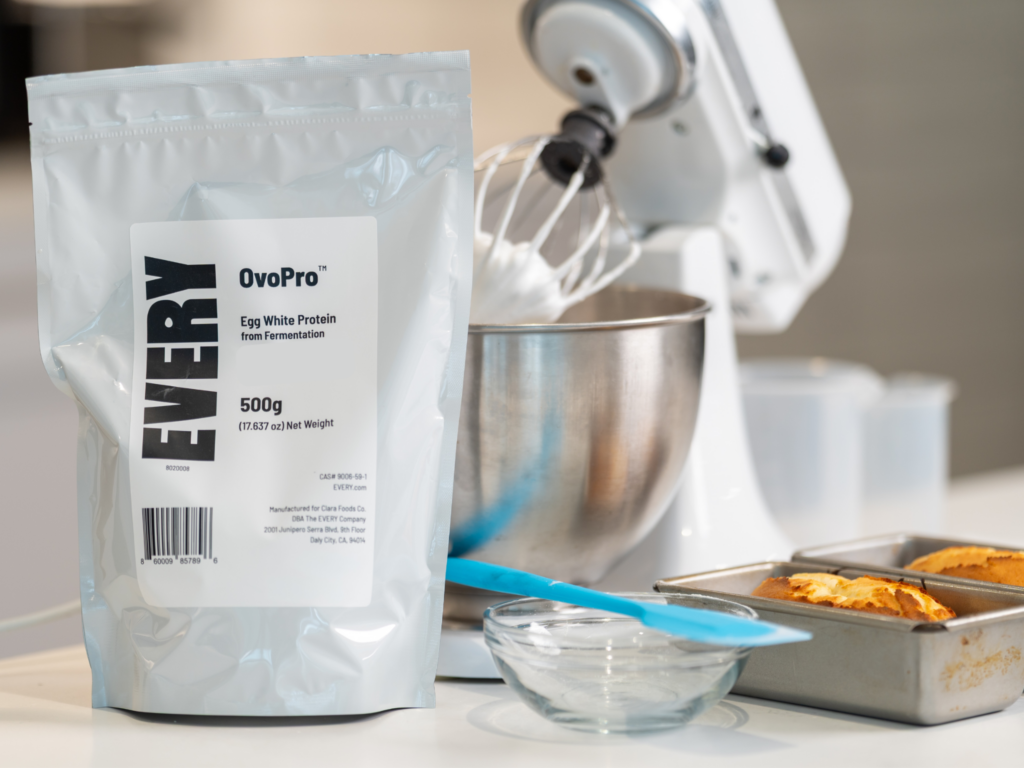
2025 was the year that egg substitutes became more important than ever before, thanks to a broken egg supply chain reeling from infections like the avian flu and Newcastle disease. It’s why Coefficient Capital is actively looking to invest in this space.
It’s looking at five main categories, including plant-based alternatives made from mung beans, potato protein, and more, and precision fermentation, which involves inserting DNA into microbes to teach them to produce molecules like ovalbumin when fermented.
Whey protein provides good foaming and gelling properties, so companies making recombinant versions of this supply-strained ingredient could be in business.
The two approaches it’s most interested in are enzymatic modification, which can increase the emuslification and binding capacity of eggs per unit volume, and hybrid systems that combine technologies like modified eggs with plant proteins to maximise functionality.
The investment firm will assess proposals on expected functional performance relative to egg benchmarks, costs per functional unit, and, if applicable, the degree to which the approach combines multiple technological approaches.
4) Characterising fish flavours in welfare-priority species

The final category Coefficient Capital is eyeing is alternative seafood, which still makes up a fraction of the overall market for plant-based meat. The VC firm notes how several important fish species are processed into non-structured formats, from stocks to pastes to balls, where the fish remaining whole isn’t the value proposition.
So in theory, the replacement only needs to replicate flavour and basic texture, instead of the complex structure of an entire fillet. Still, doing so is hard, because the best analytical-to-sensory pipeline to develop fish flavour seems very unclear, and publicly available flavour characterisation for welfare-priority species is sparse and highly variable.
The RFPs being sought should focus on certain target species selected by the investment firm, which are farmed in enormous numbers, often with significant welfare concerns: tilapias, milkfish, carp, bottom-dwellers, and catfish.
The priority funds work across two sub-areas. Proposals could look into the development of improved analytical-sensory methodologies and demonstrate them on welfare-priority fish species, and/or systematically characterise the sensory profiles of such species in commercially relevant processed formats.
“After a decade of investment, the alternative protein category has produced commercially significant products but has yet to achieve mainstream adoption,” Coefficient Capital noted.
“The dominant hypothesis, as illustrated by consumer surveys and industry, is that taste and price represent the dominant barriers to mainstream adoption,” it added, outlining why it’s choosing to focus on these four streams with its next investment drive.