

No Whey: How Future Food Startups Are Plugging the Protein Shortage

Whey is everywhere, but relentless demand puts it at risk of being nowhere. To address the shortage, manufacturers must turn to alternative protein sources.
Food companies are scrambling to load protein into everything, and the ensuing supply shortage has forced them to, erm, “whey” their options.
Chips, ice cream, lattes, water, syrups, sodas, cookies, ramen – name a food category, and it likely has several protein-boosted options today. It’s the industry’s response to a consumer base obsessed with the nutrient, even though they are already overconsuming it in most Western countries.
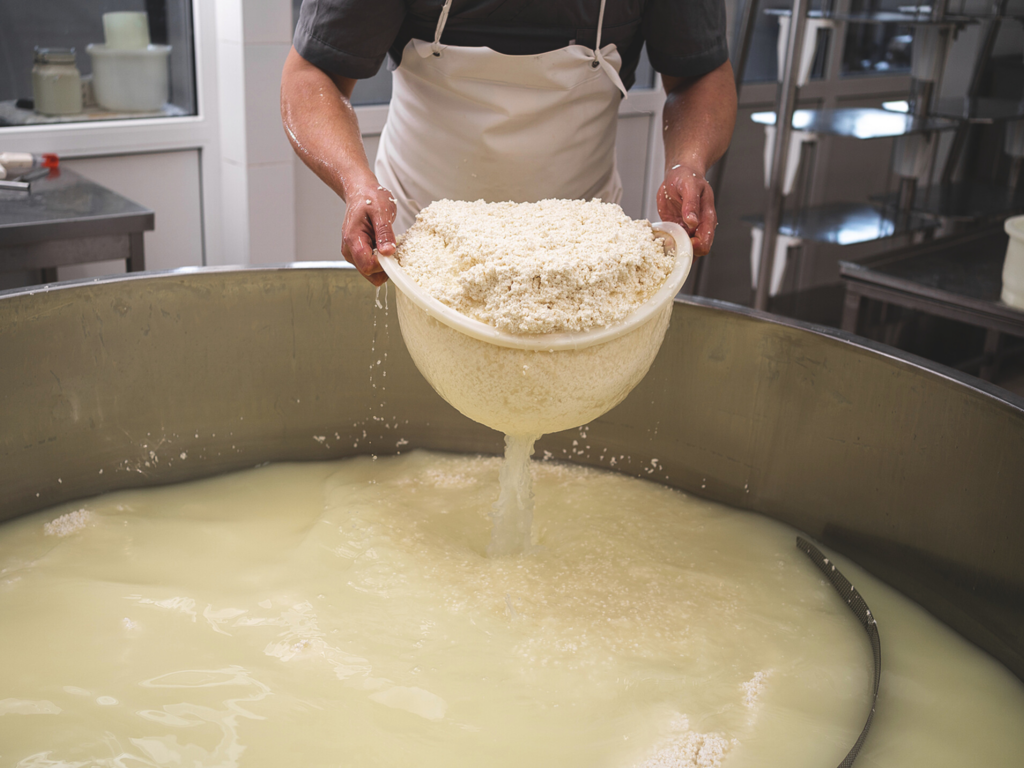
The ingredient that powers most of the protein craze is whey, a byproduct of the cheesemaking industry. Functionally, whey is fantastic – it’s a complete protein, highly digestible, keeps you full, can emulsify, gel, and foam, and is highly versatile.
The problem is, it’s running out. The sustained appetite for high-protein food and drink products has sent the whey protein market into a frenzy. Manufacturers are struggling to meet demand – in the US, contracts have been sold well into 2026, and some supplies are sold out for the rest of the year.
Whey prices broke records in 2025, and have kept on surging since. Over the last two years, the cost of whey protein concentrate has risen by 108%, and whey protein isolate has nearly doubled in price.
Many companies have begun seeking whey producers in Europe, but the continent has limited supplies of the ingredient. All this means the shortage won’t be short, and we haven’t seen the last of the price hikes.
So what’s a food manufacturer with a protein-boosted portfolio to do? The solution could lie with alternative proteins, specifically those produced via fermentation or novel farming technologies that can match (or even outperform) whey on the functional and nutritional scale.
Why whey supply can’t keep up with demand
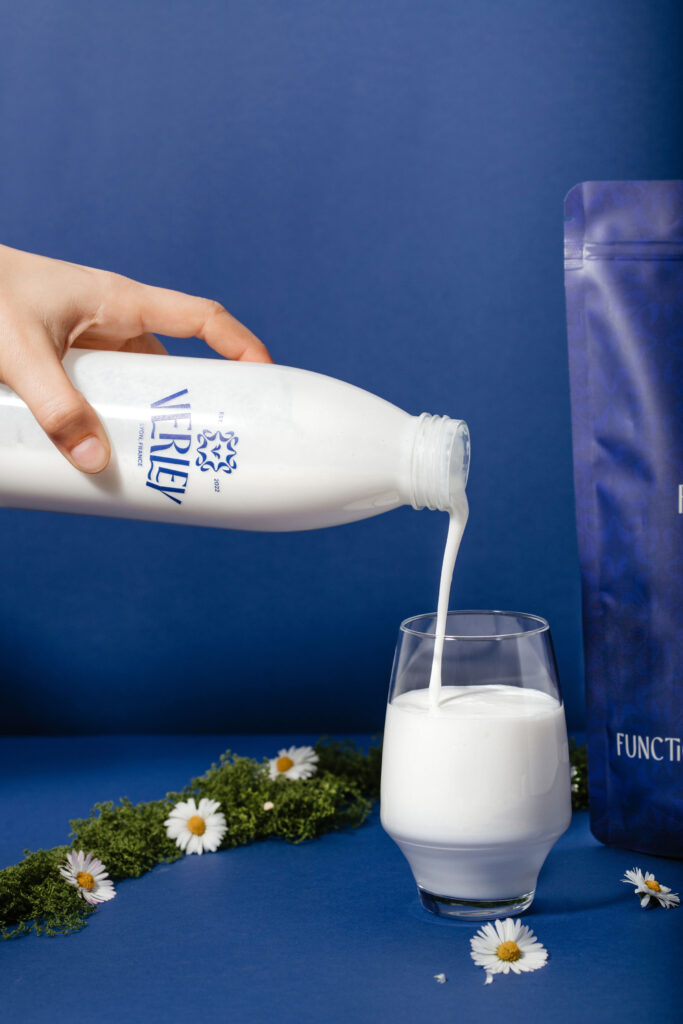
“The demand for whey is enormous and growing very fast for many reasons,” says Stéphane Mac Millan, co-founder and CEO of French precision fermentation startup Verley. “[It] is the protein when it comes to nutrition, muscle maintenance and recovery. Hence, the reason why athletes consume it for decades.”
People are more conscious about their health and how their diet influences it, and they’re more active. “GLP-1 users need to consume whey protein in order to not lose muscle while under medication. Indirectly, people who are not under GLP-1s tend also to consume more whey protein as there is a lot of communication about its benefits for health,” he notes.
The explosive demand means whey needs to be scaled at unprecedented levels, which is a hard thing to do when the ingredient is leftover from the production of another dairy favourite. “Whey protein used to be a co-product of the cheese industry. Now it tends to be the reverse,” says Mac Millan.
“That means supply is structurally capped by cheese production, dairy capacity, and ultimately how many cows exist. You can’t surge it,” explains Magi Richani, founder and CEO of Californian startup Alpine Bio.
Except, in the case of companies like hers and Mac Millan’s, you can. Alpine Bio has devised a proprietary process to isolate specific protein fractions from non-GMO soybeans and remove the components that have traditionally deterred manufacturers from using them in premium applications.
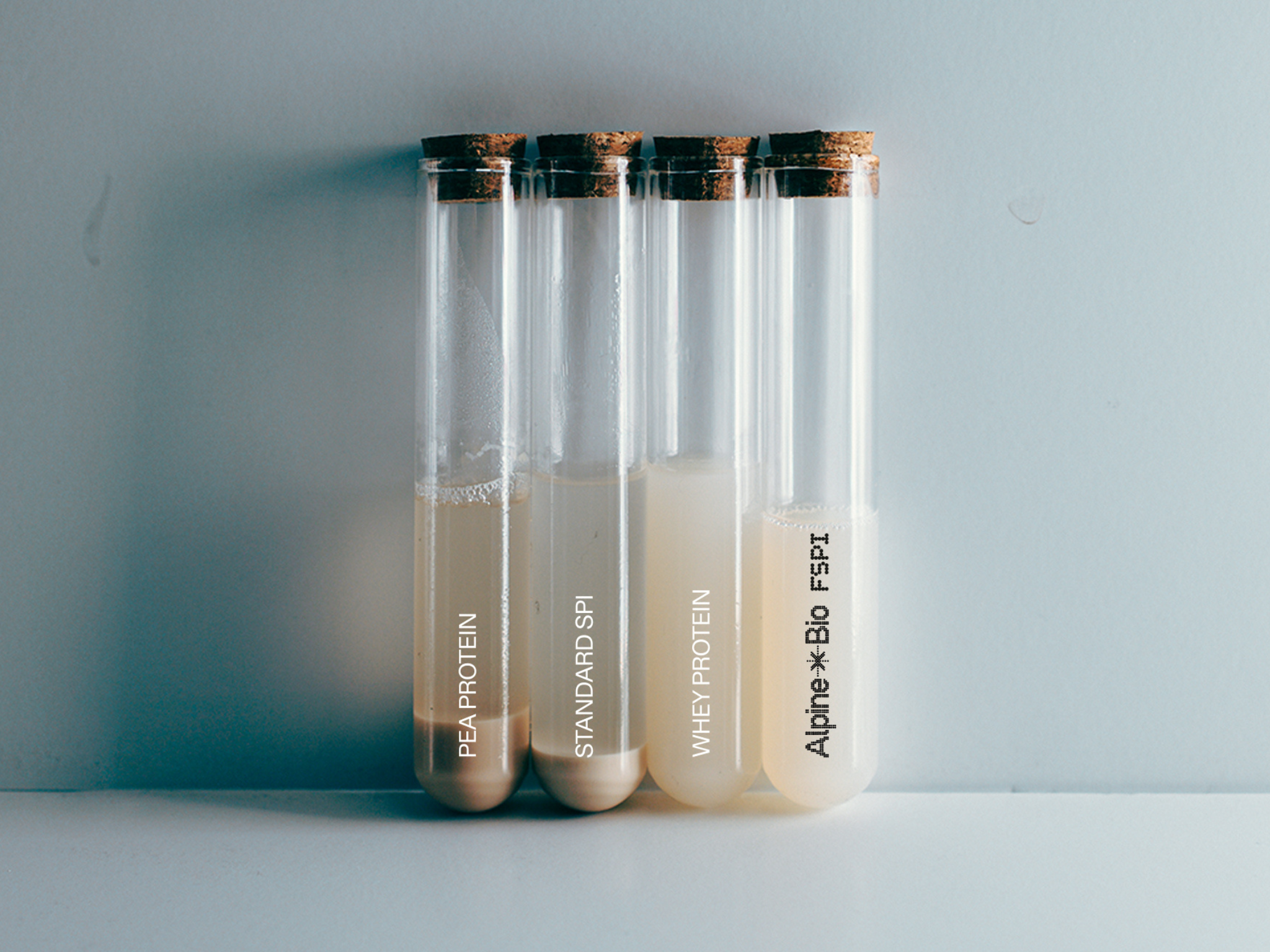
The resulting fractionated soy protein isolate (FSPI) is an “ultra-soluble, neutral-tasting, complete protein” that functions like whey isolate. “We purposefully designed a soy protein to do whey’s job,” says Richani.
Verley, meanwhile, inserts the DNA sequence that codes for milk proteins into microbes, which are fed on sugar and nutrients in fermentation tanks, where they proliferate and produce the desired proteins. It then purifies the biomass to extract beta-lactoglobulin, the main form of whey protein in dairy, and it tailors their structure and behaviour for specific attributes (like better solubility or thermal resistance).
New formats are outperforming both whey and plant proteins
“Whey protein can be produced by directly cracking the milk. But the problem is that when you do so, you generate a lot of co-products. Whey protein only represents 0.6%-0.8% of milk,” explains Mac Millan. “Treating milk to extract whey protein [also] requires very large amounts of capital expenditure and time to build it.”
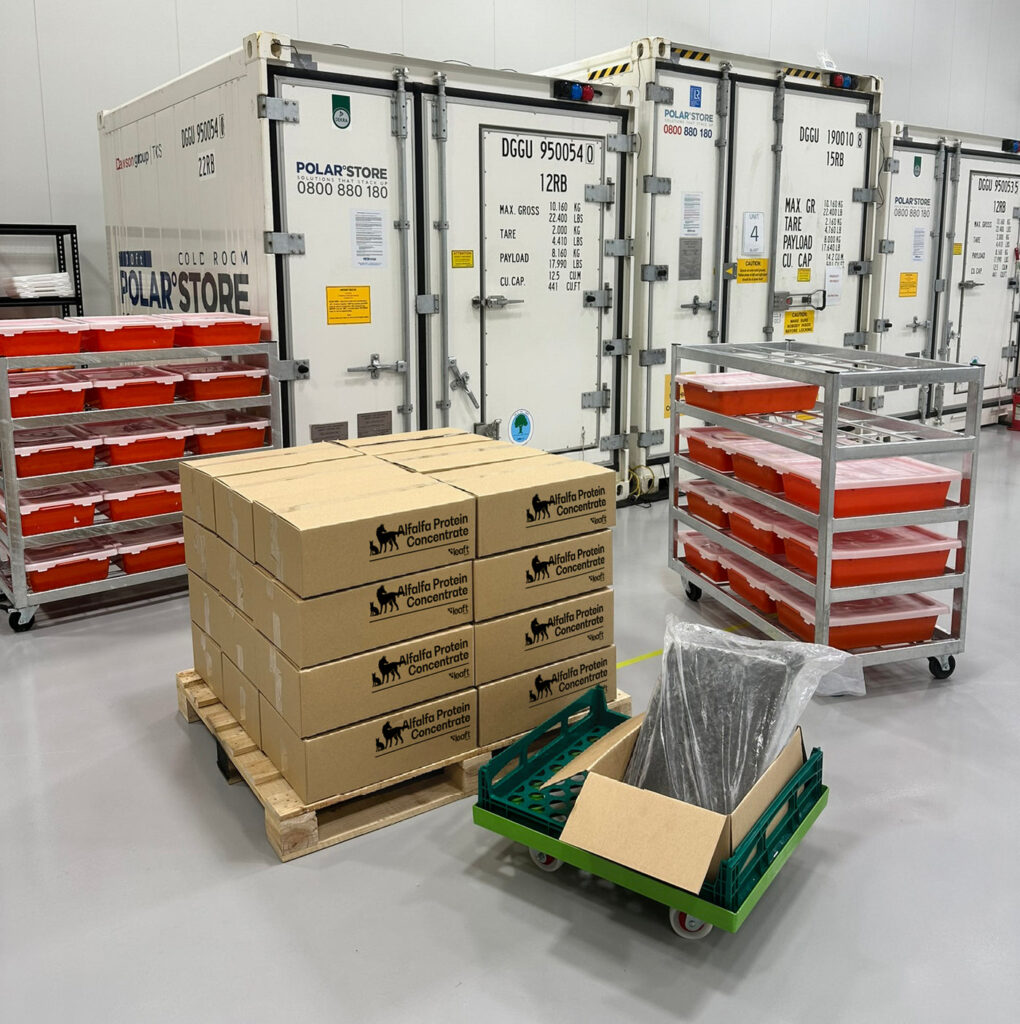
That makes sidestepping the dairy industry crucial. New Zealand-based Leaft Foods is doing so with a different technology. The firm is leveraging Rubisco, a protein found in the leaves (not seeds) of every green plant and described as the world’s most abundant source of the nutrient.
Scientists have been attempting to extract Rubisco from green leaves for over a century; most efforts have destroyed its delicate structure. Leaft Foods, which sources the protein from alfalfa leaves, has developed a gentle, food-safe process that preserves protein integrity.
“Rubisco has the best essential amino acid profile of any protein available in the industry today. It exceeds WHO/FAO recommendations across all EAAs, without blending or fortification. It’s also digested five to six times faster than whey in the gastric phase,” says Leaft Foods CEO Ross Milne.
It is unlike other plant proteins, which come from seeds. These are storage proteins, designed by nature to sit dormant until a plant germinates. They’re compact and stable, but they were never built to perform in food applications,” he explains.
Rubisco is an enzyme protein with a dynamic structure that can dissolve, foam, gel, and emulsify, just like whey, with a better amino acid profile. This allows it to form a base for high-protein non-dairy products, without the “beany notes or grainy texture” of soy.
That’s an issue Alpine Bio is addressing. Its FSPI ingredient, aside from containing all nine essential amino acids and the structure-building functionality whey is revered for, solves a number of pain points of plant proteins.
“Solubility makes or breaks a protein drink, and it’s historically been whey’s biggest advantage over plant proteins. FSPI dissolves cleanly across a broad pH range (water, juice, coffee) without grittiness, gelling, or sedimentation. That gives formulators headroom to push protein per serving without sacrificing texture,” says Richani.
In addition, plant proteins fail due to off-flavours. “Beany, earthy, and bitter notes force brands to bury the base under sweeteners and masking flavours. We’ve put enormous work into removing that,” she notes. “The most common reaction when customers first evaluate FSPI is genuine surprise at how neutral it is, which lets formulators build flavour on a blank canvas instead of spending money covering one up.”
Alternative proteins offer environmental benefits over whey

So while these fermentation-derived, novel plant-based proteins can give whey a run for its money in terms of nutrition and functionality; plus, they offer an added advantage: sustainability.
“Some analyses assign nearly all of the milk’s footprint to the cheese and treat whey as essentially carbon-free,” Richani says. “But the economics have inverted: cheese has effectively become the co-product of whey, and you can’t keep assigning whey’s footprint to something else when the industry is investing billions to produce it and charging record prices for it.”
She points to a life-cycle assessment (LCA) conducted by DuPont, which puts soy protein isolate at around 2.4 kg of CO2e per kg of product, versus 16kg of CO2e for the same amount of whey protein concentrate: “That’s nearly a 7x difference, and it’s consistent with the broader LCA literature: plant proteins carry a materially lower footprint than dairy.”
Likewise, Verley’s LCA shows that, compared to a litre of cow’s milk, a litre of milk made from its recombinant whey, plant-based fat, and sugar has 72% lower emissions, consumes 81% less water, and uses 99% less land.
“And these results would be even better if we had compared conventional whey protein with our whey protein, as the conventional one would have had to go through either cheese production or cracking of milk,” says Mac Millan.
Leaft Foods’ Rubisco protein isolate emits 97% fewer greenhouse gases per kg than whey protein, according to an independent LCA. “We also use alfalfa, a perennial that fixes its own nitrogen, requires no annual cultivation, and can be harvested six to eight times a year,” outlines Milne. “Our process utilises all the raw material, creating multiple revenue streams from every leaf without waste.”
Whey shortage has caused ‘dramatic shift’ in companies’ strategies
Going back to the root cause, Milne suggests that whey’s scale-up is “largely tied to the economics and scale decisions of broader dairy operations upstream”, which increases capital requirements and slows response timelines.
“At the same time, input costs are rising. Fertiliser prices have increased, which means farmers are likely to reduce inputs, grow less feed, and produce less milk, at a time when consumer demand for high-protein products is accelerating,” he states.
“A potential El Niño weather event adds further uncertainty because historically these patterns drive drought in key agricultural regions, reduce yields, and compound the input cost pressures farmers are already navigating.
“Couple all of that with the growing influence of GLP-1 medications driving protein demand, and you’ve got a scenario where the gap between supply and demand is likely to widen before it narrows.”
Alpine Bio’s Richani agrees, noting how protein has moved from a gym-niche ingredient to a mainstream health behaviour, being incorporated into new categories before Ozempic and its counterparts rapidly expanded the consumer base for the nutrient.
“The response from the industry has been to build more dairy capacity. More filtration plants and more cows just rebuilds the same dependency on a larger scale. The actual lesson is that single-source protein supply is a structural risk, not a temporary gap. And that risk doesn’t go away when the next plant comes online,” she says.
This is what’s driving the kind of discussions alternative protein startups are having with their customers, who are looking to derisk their supply chains.
“Over the past year, we’ve noticed a dramatic shift in what these companies care about. Before, food and nutrition companies came to us because they wanted a plant-derived protein that performed. Now, they’re coming to us because their whey supply is uncertain, their costs have spiked, and in some cases, they simply can’t secure it,” says Richani.
“What stands out is that they’re treating this as a strategic decision, not a fire drill. They’re deliberately building toward a more diversified protein supply so they’re never exposed to a single supply chain again. We originally designed FSPI for sustainability and performance, but the supply crisis has revealed another dimension: it gives formulators a protein that doesn’t sit downstream of dairy production.”
Leaft Foods, which is working with dairy major Lacto Japan, is seeing interest in hybrid approaches that blend Rubisco protein with dairy products to boost protein content while alleviating supply constraints.
“Dairy companies are under pressure to deliver higher protein numbers on front-of-pack, but pushing whey concentration up creates real texture challenges. Yoghurt becomes grainy and unpleasant before you reach the protein levels consumers are asking for. Rubisco’s functional profile solves that problem,” says Milne.
“We’re also seeing strong interest on the bakery side. Egg protein faces its own supply pressures, and Rubisco’s gelling and emulsification properties make it a functional replacement versus the approximations on the market today.”
Alternative proteins still have some hurdles to pass
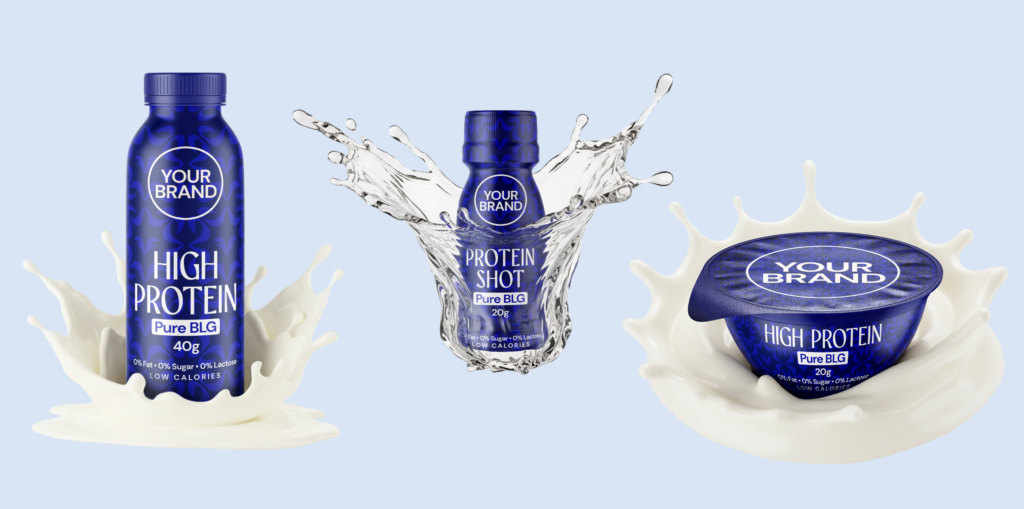
Verley, which is cleared to sell its protein in the US, is focused on laying out how its beta-lactoglobulin is more purified than conventional whey, and why it can help address the supply gap and offer price stability.
The biggest challenge for precision fermentation is scaling up, especially when the volumes required are as large as they are right now. “Until you reach very high volumes, your costs cannot decrease,” says Mac Millan, before pointing out that conventional beta-lactoglobulin is now going for the same price as its animal-free version.
“To scale, Verley’s strategy is [to] start with premium [and] health applications, where price sensitivity is less important. Once volume and scale allow for price reduction, [we’ll] go down the ladder and widen applications,” he says.
For Richani, the biggest challenge is “making something people actually want”: “No one is buying into ‘sustainability’ as a business case on its own. Once alt-protein companies start solving real pain points at the right price, customers will come. Scaling is never straightforward, but having strong demand and guaranteed revenue solves many of the scale-up challenges, like access to capital.”
This is echoed by Milne, who says Leaft Foods has been focused on two “boundary conditions” from the outset: yield and quality: “Without yield, you can’t scale and the economics never work. Without quality, if you’ve denatured the protein in the extraction process, there are no customers.
“Holding both of those constraints in view at every stage of development, rather than optimising for one at the expense of the other, is harder than it sounds, but it’s the only path to a durable business.”
Moreover, scale requires infrastructure, which in turn calls for more capital. That, however, is in short supply – funding for the alternative protein sector fell by 20% in 2025, attracting just $881M. It was the first time this figure fell below the $1B mark since 2018.
“Rubisco has a meaningful advantage here relative to some alt-protein approaches. We’re working with a perennial crop that doesn’t require annual cultivation, a low-input agricultural system, and a process that extracts value from 100% of the raw material,” says Milne.
“We can produce around 2,000 kgs of Rubisco protein per hectare of land, compared to roughly 500 kgs from a dairy system. That underlying productivity advantage is what makes the economics increasingly compelling as we scale.”
Whey is likely to weigh heavily on the food industry’s bottom lines, and the gap it’s creating could be just the shot in the arm the alternative protein sector needed.