

Low-Welfare, Planet-Harming: Food Insiders Blast UK Meat Industry’s Surge in Factory Farming

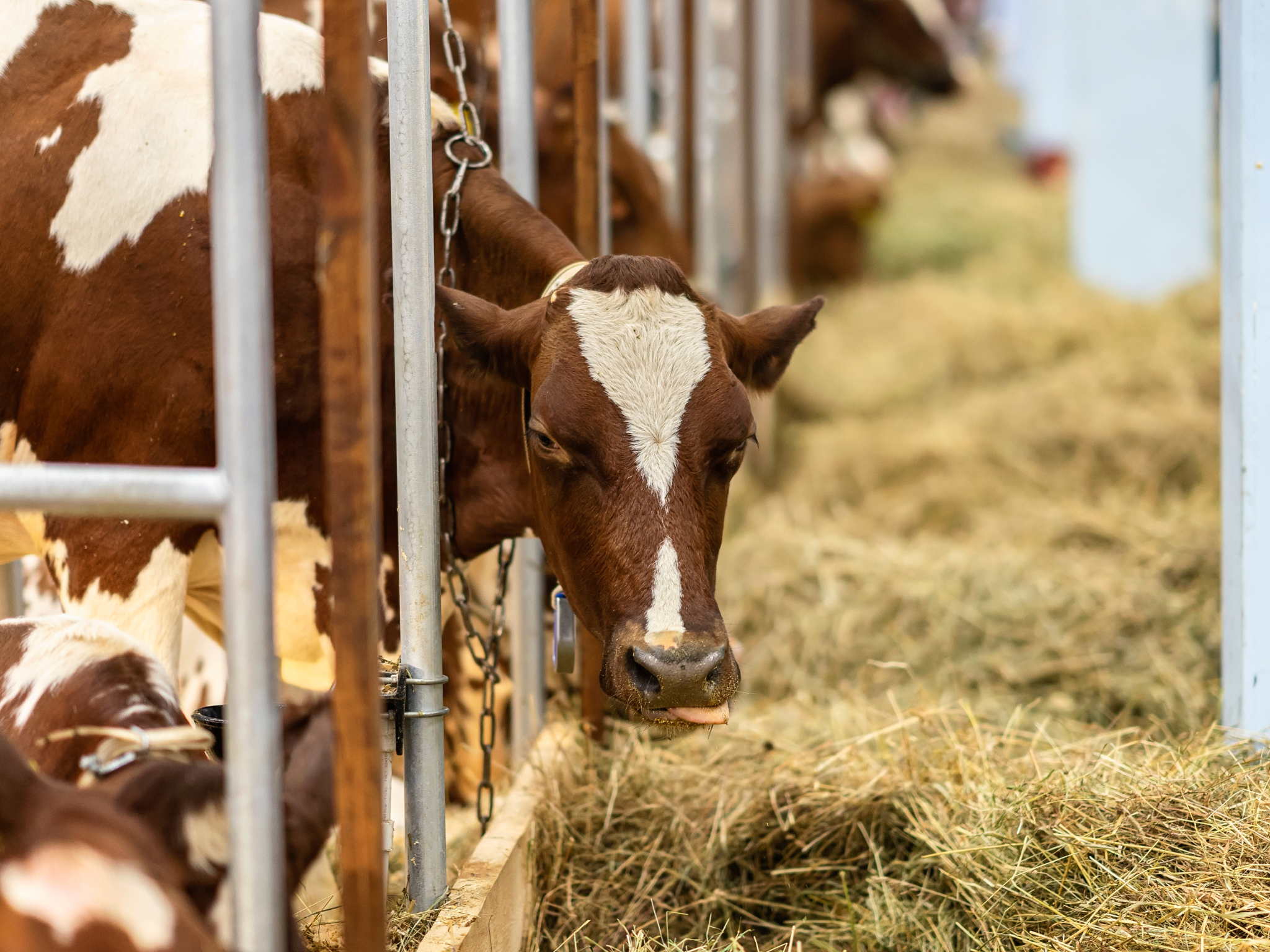
Senior officials from some of the UK’s largest food companies have published a memo detailing how the industry’s push towards intensive meat and dairy farming goes against its health and climate goals.
The UK meat and dairy industry’s growth-at-all-costs culture is driving sales of processed, low-welfare meat, causing poorer health outcomes, and breaching its climate commitments, according to a memo released by over 20 insider executives.
Titled An Insiders’ Guide to Meat and Dairy, it was published by the group Inside Track, and claims that the country’s largest manufacturers and retailers have been signing up to initiatives, reporting frameworks, and targets that are “functionally disconnected from the decision making that matters within industry”.
The memo warns that these companies are considering abandoning their commitments to local farmers in favour of importing cheaper meat and dairy that’s often subject to lower animal welfare and environmental standards. This, in turn, could push British producers to embrace factory farming to compete, threatening food security, animal welfare, and public and planetary health.
“Major food companies are quietly dropping their commitments to ‘sourcing British’ and in the pursuit of cheaper and cheaper meats, they are leaving behind small-scale family farms and medium- or larger-sized higher-welfare farms. Instead, they are looking to source from the most intensive production facilities,” the document reads.
“Ultimately, the food industry is driving farmers away from lower-impact, high-welfare farming through pressure on price and volume.”
Why the UK’s meat and dairy industry isn’t walking the talk
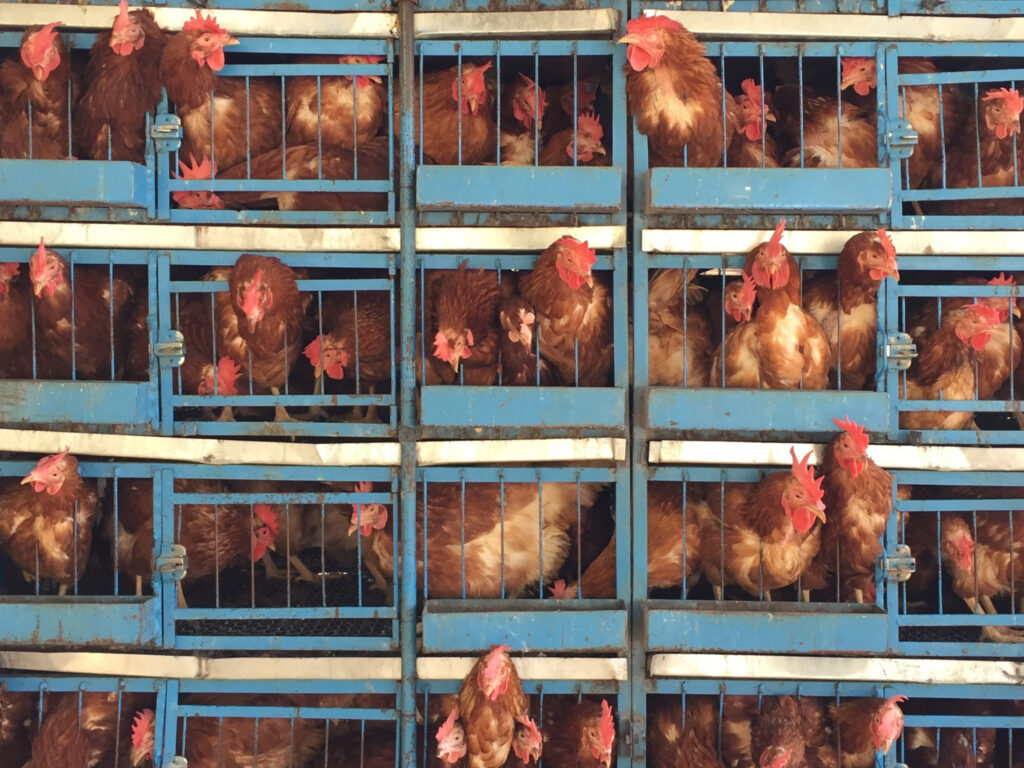
The memo suggests that many industry workers aspire to support healthy and sustainable diets, but the actions taken lead the sector in a different direction. There are several reasons why.
Many businesses are signing off on commercial and environmental plans in contradiction with each other, and the latter inevitably become overshadowed by financial priorities. Likewise, some producers are “projecting a dual track” of growing meat and dairy sales while reducing their environmental impact.
“The data used for these projections are too often from small-scale pilots which have not been proven at scale and fail to account for other environmental impacts beyond carbon emissions,” the whistleblowers warn.
“There have been advances in technology and practice that can reduce emissions from cattle farming; however, there is not sufficient investment to scale them and some will take many years to implement.”
Moreover, the memo accuses the industry of having a culture of “prioritising meat as a food group”; leading executives see meat as critical to their diets, and personal tastes inform their thoughts on what people want, leading to a phenomenon it dubs “meat primacy”.
“There are also close and historic relationships between senior executives, senior leaders in the meat lobby and the executives of intensive industrial animal farming operations. These relationships can and do impact on decision-making,” it states.
Further, buying teams are incentivised to increase margins, meaning that they are increasingly sourcing low-welfare, high-impact meat from overseas. Even in the UK, lower welfare standards have become normalised as a means of accessing cheap meat.
Misinformation exacerbates the problem. “Major food companies tell a story to the general public about farmers and farming that we know to be increasingly untrue,” the insiders say. “We are using brand and advertising to promote a sense of farming that we know not to be true for the majority of our products whilst we migrate to lower quality, lower welfare and less British sourcing.”
What’s keeping plant-based proteins at bay?
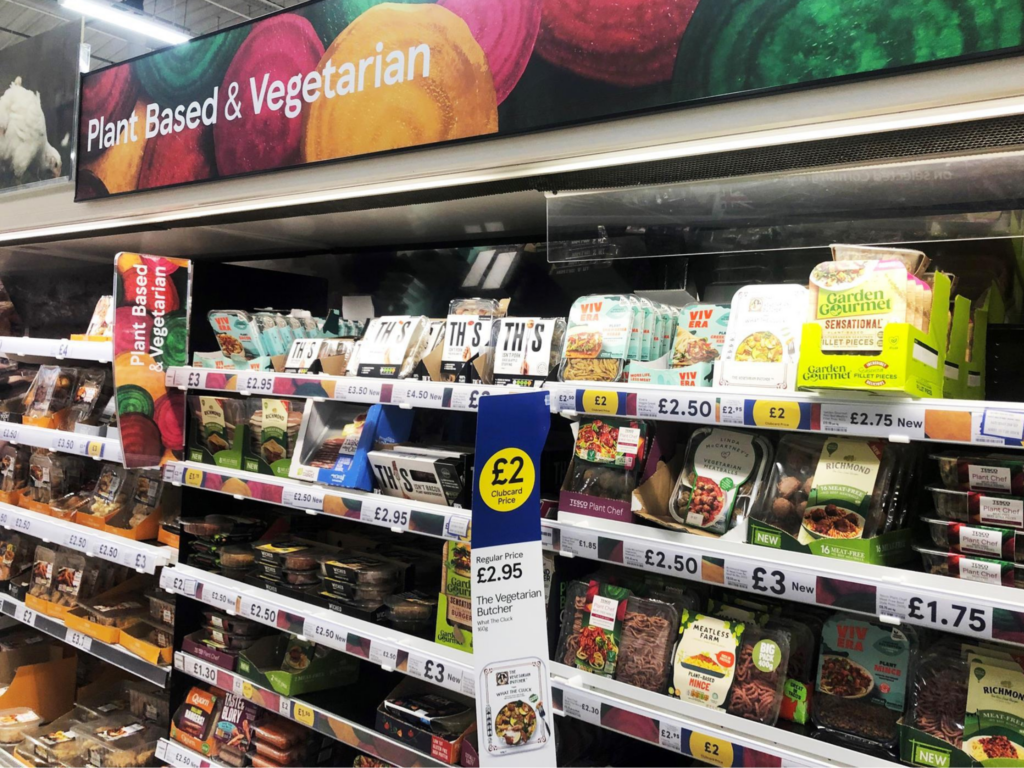
The document notes that high-welfare meats and plant-based alternatives are treated as premium products destined for larger margins. Moreover, the margins on cheap meat are “completely unsustainable”, and yet, they are still used as a mechanism to drive footfall and make profit on other items.
In supermarkets, category directors are tasked to grow their segments, which is true even for meat and dairy alternatives. “But in reality, the strength of the dairy category in a major food business will outweigh the strength of the alternatives categories, meaning that their voice is more powerful within the business,” the insiders suggest.
“Directors of larger categories have more budget for promotional deals, which impacts pricing strategy within their categories,” they add, outlining a key hurdle facing plant-based alternatives.
The land and natural resources used to grow animal protein and livestock feed in the UK significantly outweigh the requirements for plant proteins. “This means that the UK could produce more food from some of the land currently used for livestock farming, hence enhancing UK’s food security,” they write.
The country has a strong cultural connection with meat and dairy, particularly the idea of small, family-run farms. “In reality, there also exists a strong lobby of large global and domestic companies, associated agencies and bodies who exercise huge collective power and influence in service of growing the meat and dairy markets,” the memo points out.
“The quality of conversations is getting poorer within industry, with government, in public debate and with our investors and creditors. We are pushed towards binary stances which delay meaningful action on an issue that needs nuance and care as well as urgency.”
Investors, therefore, have a critical role in working with the industry and managing the intense risks it faces. “We urge them to better engage with companies on the governance failures that are allowing them to undermine commitments they have made,” the food sector executives say.
“We ask them to support any action that brings together major food companies, government and farmers to have honest conversations about the trajectory we are on and what it would take to shift that to the trajectory we have committed to.”