

New US Dietary Guidelines: More Red Meat, More Dairy in Blow to Climate Goals


The new US Dietary Guidelines have largely ignored scientists’ advice to prioritise plant-based proteins, instead endorsing red meat and full-fat dairy in a much-criticised move; seed oils and UPFs are side-stepped.
After months of debate and deliberations, the Trump administration has released the latest edition of the Dietary Guidelines for Americans – and health experts are confounded.
Described as “the most significant reset of federal nutrition policy in decades”, the new guidance runs until 2030, and takes aim at highly processed foods, refined carbohydrates, and added sugars.
In a move welcomed by health advocates, the guidelines recommend “prioritising high-quality protein, healthy fats, fruits, vegetables and whole grains” and limiting saturated fat intake to 10% of daily calories.
However, in a nod to health secretary Robert F Kennedy Jr’s Make America Healthy Again movement, the recommendations endorse the consumption of full-fat dairy and red meat. Both categories are high in saturated fat and are linked to heart disease, certain cancers, and other conditions, though crucially, the document doesn’t highlight the link, instead putting the blame on highly processed foods.
Helena Bottemiller Evich, founder and editor of the publication Food Fix, first broke the story, and called the advice on processed foods “perhaps the biggest takeaway overall”.
The messaging around the new guidelines contains some pointed language, with Kennedy “declaring war on added sugars”, and the administration keen on “ending the war” on food groups like healthy fats and protein.
Protein is central to the recommendations, which advise Americans to eat more of the macronutrient, despite the population already overconsuming it. The previous guidelines called for 0.8g of protein per kg of body weight, whereas the latest guidance has pushed this up to 1.2-1.6g.
That has sparked concern among food and health experts. NYU Professor Emerita Dr Marion Nestle, one of the leading voices on American health, said the advice to eat more protein “makes no sense” given people already eat enough.
“Except for the excellent advice to reduce intake of highly processed foods, which were not particularly prevalent back then, these guidelines take us back to the diets of the 1950s, when everyone was eating lots of meat and dairy and not worrying much about vegetables, and heart disease was rampant,” she told the BBC.
Sophie Egan, founder of food systems change consultancy Full Table Solutions and Director of Strategy at Food for Climate League, an NGO that works to normalize climate-smart eating, said: “This only perpetuates the Great Protein Myth, which is really a trio of myths that people a) need more protein than they do, b) don’t get as much as they think they do, c) and that they can only get the ‘right’ kinds of protein from animal sources. None of which [is] true.”
What the new dietary guidelines mean for Americans
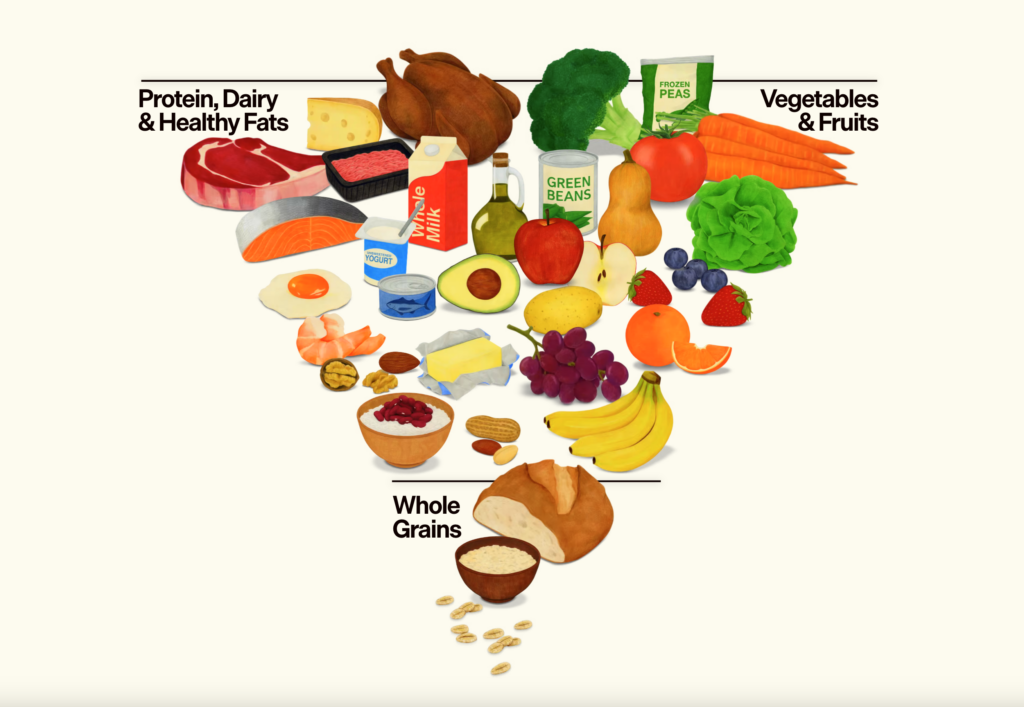
The 2025-30 dietary guidelines invert the classic American food pyramid, placing meat and vegetables at the widest point on the top, and whole grains at the tapered end on the bottom.
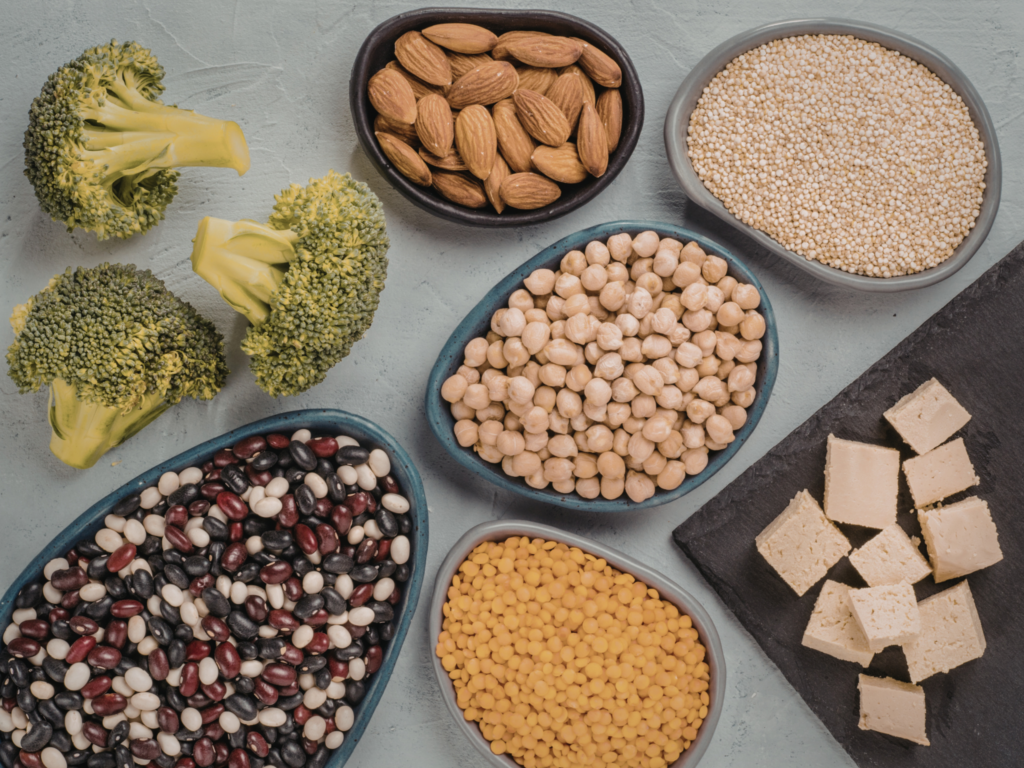
They recommend consuming a variety of protein foods from animal sources, including eggs, poultry, seafood, and (controversially) red meat, as well as plant-sourced sources, such as beans, peas, lentils, legumes, nuts, seeds, and soy.
To its credit, the USDA does say meat intake should include products with no or limited added sugars, refined carbohydrates, or chemical additives, a nod to research that shows no amount of processed meat is safe for human health.
When it comes to dairy, Americans are now advised to include full-fat products like whole milk (despite their higher saturated fat content) and eat three servings a day as part of a 2,000-calorie diet, a recommendation that left Egan “baffled”.
Moreover, they should prioritise oils with essential fatty acids when cooking, like olive oil. RFK Jr has been on a drive to Make Tallow Popular Again, and that’s reflected in the guidelines’ suggestion that butter and beef tallow are good alternatives. This contradicts the saturated fat advice.
Neal Barnard, president of the Physicians Committee for Responsible Medicine (PCRM), said the advice should “spell out” where saturated fat really comes from: “The guidelines err in promoting meat and dairy products, which are principal drivers of cardiovascular disease, diabetes, and obesity.”
Meanwhile, ultra-processed foods, which have been central to the food discourse in the US over the past two years, have many policymakers making moves to restrict them. However, their definition remains fuzzy and disputed, and as a food category, it leaves room for too broad an interpretation.
The supplementary material of the guidelines notes that there’s “no consensus definition” of UPFs (something the FDA says is currently working on) while labelling “highly processed foods” as those “made primarily from substances extracted from foods” or “containing industrially manufactured chemical additives”.
The guidance states that Americans should avoid “highly processed packaged, prepared, ready-to-eat, or other foods that are salty or sweet” and limit products with “artificial flavours, petroleum-based dyes, artificial preservatives, and low-calorie non-nutritive sweeteners”.
“The guidelines take a sledgehammer approach to processed foods, but plant-based and vitamin-fortified processed foods actually reduce the risk of birth defects, diabetes, heart disease, and cancer,” argued Barnard, adding that the USDA “unjustly condemned” highly processed foods and “exonerated” meat and dairy products. “They should have done the reverse.”
US government lambasts scientists’ advice to prioritise plant-based proteins
The new 10-page guidelines are much shorter than previous iterations, which regularly spanned around 150 pages. In the supplementary resources, the government appears highly critical of its predecessors’ focus on “equity considerations” and the scientific board that advised the USDA on the updated recommendations.
The USDA called the latter “a symbolic reordering lacking scientific justification” and took aim at the advisory body’s recommendation that fat replacements should focus on plant-based sources like seed oils, which have been a major target of Kennedy’s.
It rejected the scientific report’s advice to emphasise legume consumption and reduce red and processed meat intake, reorder the protein food group, include more nutrient-dense plant-based meal and dietary recommendations, and support protein consumption flexibility in a way that favours plant-derived sources over animal-based foods.
In the appendix, the Trump administration contended that past dietary guidelines “eroded the quality of the diet with recommendations to shift towards eating a plant-based dietary pattern” based on goals to reduce saturated fat and increase fibre intake.
“These recommendations have the potential to reduce protein density and quality within the diet, encourage carbohydrate amounts that far exceed requirements, and increase the difficulty in establishing appropriate calorie levels for healthy weight,” it said.
It added that plant-based foods are better off as a source of complementary protein and other essential nutrients, and a replacement for refined carbohydrates with low nutrient density. Americans consume two-thirds of their protein from animal sources, which have been linked to rising obesity levels in the US.
That evidence is rejected by the guidelines. “Although a myriad of factors contribute to the rise in obesity in the US, overconsumption of [animal proteins], or specifically red meat, cannot explain the health crisis,” the appendix stated.
What the dietary guidelines say about plant-based meat and milk
Over the last couple of years, more and more countries have supported a transition from animal to plant-based proteins in their national dietary guidelines, including Finland, Norway, Germany, Austria, and the Netherlands. This was reinforced by the Eat-Lancet Commission’s updated report on the future of the food system, which spotlighted the plant-rich Planetary Health Diet.
The US guidelines, however, continue to prioritise animal proteins. “This contradicts their stance about limiting saturated fat to only 10% of daily calories, which is nearly impossible with the inclusion of these foods,” Tiffany Bruno, a registered dietitian who advised the USDA on soy milk’s nutritional equivalence to dairy in the previous guidelines, told Green Queen.
The update does have a section on vegan and vegetarian diets, which suggests consuming a variety of proteins (including tofu and tempeh) and significantly limiting processed foods high in fat, salt or sugar. The supplementary material also mentions mycoprotein as a source.
But people on these diets should be wary of potential micronutrient gaps, with the guidelines advising targeted supplementation, diversifying plant protein sources, and enhancing mineral bioavailability through food preparation techniques.
“Despite the emphasis on animal products, somebody can follow a completely plant-based diet and still be aligned with these new guidelines,” noted Bruno.
“They largely discourage plant-based meat alternatives due to their identity as ‘highly processed’, and instead promote nutrient-dense sources such as legumes, nuts, seeds, and soy,” she said. “It’s admittedly refreshing to see an emphasis on whole foods, but many plant-based alternatives can still fit into a healthy diet.”
Bruno added: “The only mention of non-dairy options is that ‘fortified dairy alternatives are also options’. While I would have preferred to see these prioritised over dairy products, I am happy they weren’t completely eliminated or discouraged.”
PCRM suggested that the dietary guidelines should be modified to warn against animal protein, eliminate confusion on saturated fats, state that meat-free diets provide all essential nutrients with supplementation, and recognise that some processed foods are healthy.
The Center for Biological Diversity and the Center for Science in the Public Interest have released an alternative “uncompromised” version of the dietary guidelines, showing what the Trump administration’s recommendations would look like “if they had actually followed scientific consensus”.
Sanah Baig, a former agriculture and nutritional policy advisor to the Biden administration executive and the director of the Plant Based Foods Institute, argued that strengthening plant-forward policies could boost the national economy too.
“Increased recognition of the important role plant-based protein- and fibre-rich foods have in our diets can help growers expand their farming operations, build durable markets for American-grown pulses and other crops, and keep more food dollars circulating in rural communities,” she said.