

With FDA Approval, Verley Plans 2026 Launch for Functional Cow-Free Whey Proteins

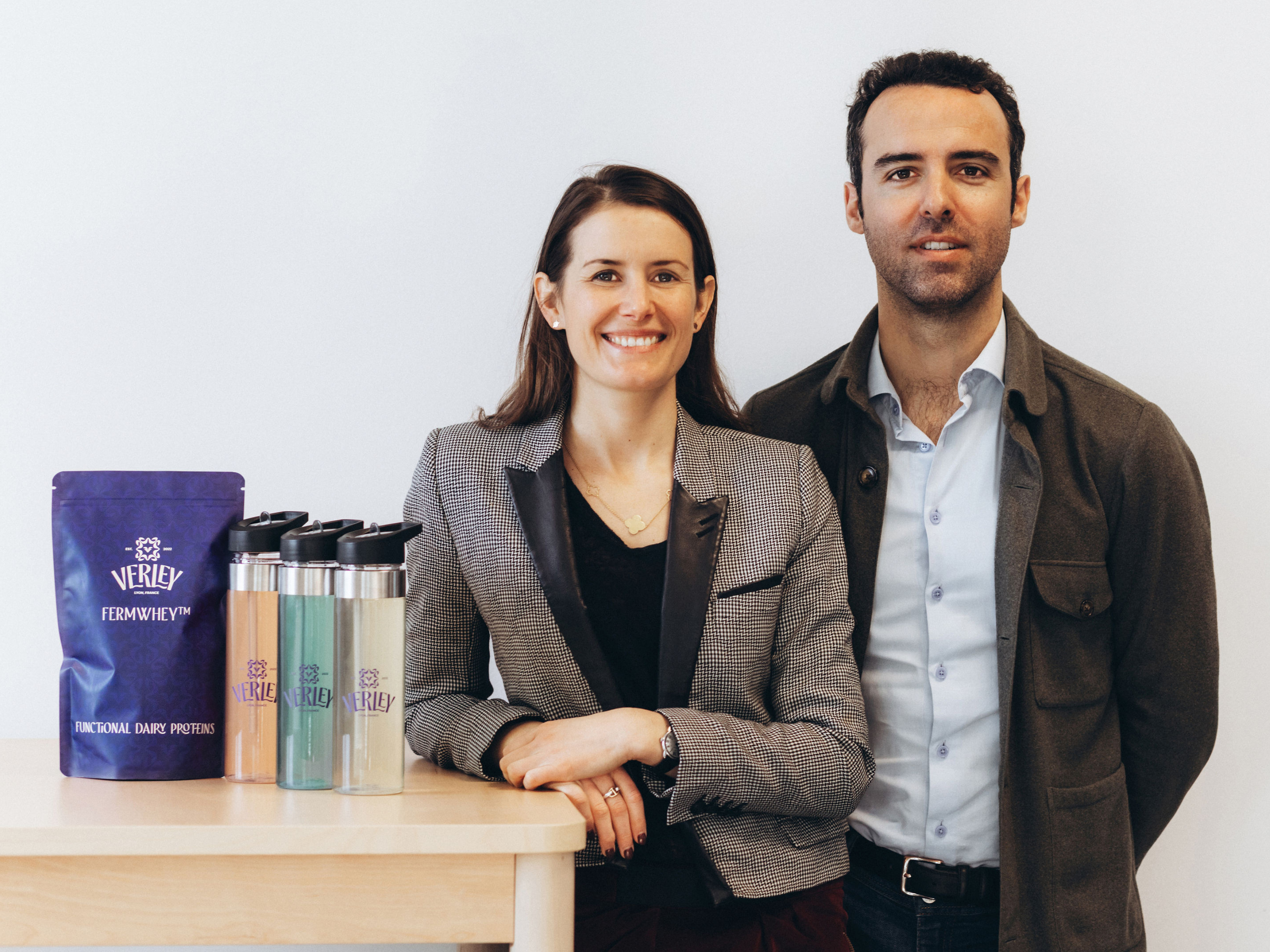
French startup Verley is eyeing a 2026 launch of its precision-fermented whey proteins after securing FDA GRAS approval, alongside new funding and international regulatory efforts.
Ready-to-drink beverages and high-protein shots featuring a cow-free whey protein could soon be on sale in the US.
The Food and Drug Administration (FDA) has granted a ‘no questions’ letter for two precision-fermented ingredients produced by Lyon-based firm Verley, confirming their Generally Recognized as Safe designation.
The startup makes a line of recombinant functional whey proteins called FermWhey, using a process similar to beer brewing to eschew cows for microbes. Its ingredients include Native (for dairy alternatives, clear drinks, and sports nutrition), MicroStab (for ready-to-drink and UHT drinks), as well as Gel (for spoonable dairy, desserts, and meal replacements).
The FDA letter covers the first two ingredients. “We notified the FDA in early 2025, when completing our self-affirmed GRAS,” co-founder and CEO Stéphane Mac Millan tells Green Queen.
“The FDA process was thorough and collaborative. Receiving the ‘no questions’ letter in October 2025, within nine months after notification, is a strong validation of the quality of our scientific dossier, the safety of our ingredients, and the robustness of our regulatory strategy,” he adds.
He confirms that the company is now preparing a regulatory filing for FermWhey Gel, too. “Each ingredient has distinct characteristics and use cases, so we take the time to ensure every submission is rigorous and well-documented. We expect to submit the FermWhey Gel dossier in 2026, with clearance to follow,” he says.
How Verley makes its animal-free whey proteins
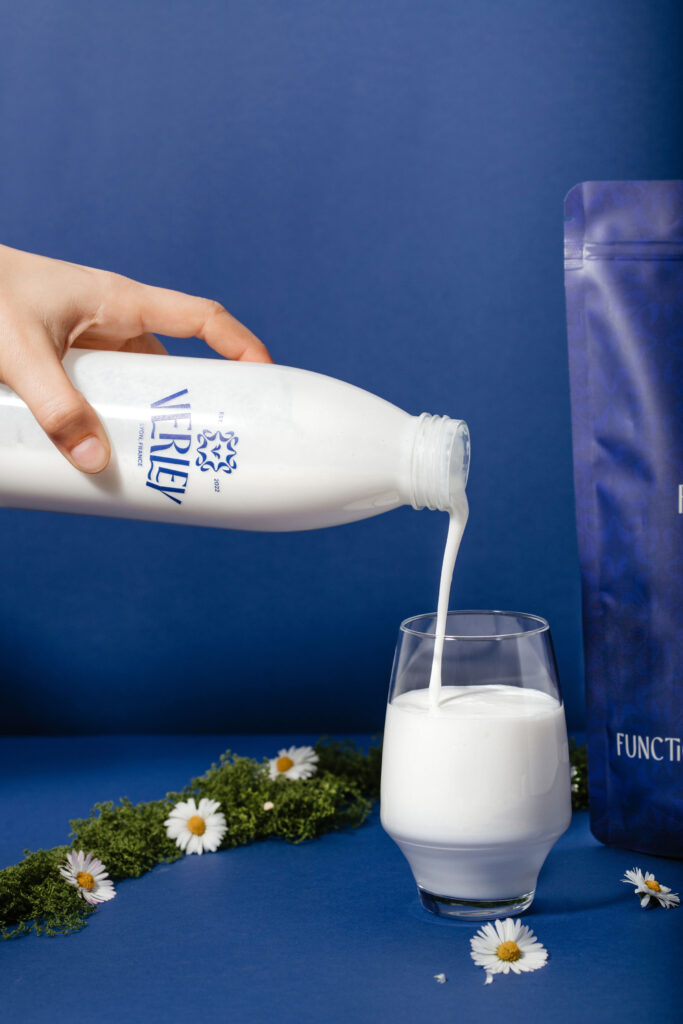
Precision fermentation involves inserting a specific DNA sequence into microbes to teach them to produce the desired molecules when fermented. The technology is decades-old, having been commercialised for insulin and rennet; it’s also being used to produce animal-free proteins.
Like many in the space, Verley is focusing on beta-lactoglobulin, which comprises 65% of the whey content in cow’s milk. It’s said to be nutritionally superior to most proteins and has gelling, foaming and emulsification properties that improve the mouthfeel and texture of a range of food and beverage applications. It’s also tasteless, heat-tolerant, and stable across a wide pH range.
“Microorganisms are programmed to express the target protein, which is then fermented, purified, and functionalised,” says Mac Millan. It’s the proprietary functionalisation process that the startup claims sets it apart.
“After purification, we tailor the structure and behaviour of the proteins to deliver specific performance in food applications, such as improved solubility, thermal resistance, texture, and clarity. This allows our proteins to go beyond nutritional value and solve real formulation challenges in high-protein, clean-label formats,” explains the CEO.
“It’s this combination, high purity, dairy-identical structure, and application-ready functionality, that makes Verley’s ingredients unique in the market.”
Formerly known as Bon Vivant, the startup is targeting the alternative dairy and functional nutrition sectors with its proteins. FermWhey Native offers 95% purity and high leucine content (an amino acid key for muscle synthesis), promoting muscle maintenance, fast recovery, and satiety.
FermWhey MicroStab is a microparticulated whey protein with “unprecedented heat and acid stability”, and is meant for use in high-protein, low-fat formulations. It provides high protein density (over 20%), maintains creaminess in fat-reduced recipes, and can support innovation in advanced nutrition, weight management, and sports supplement applications.
Asked about its production capacity, Mac Millan says: “We’ve completed several industrial pilot runs at industrial scale with leading fermentation partners. Our scale-up plan is based on contract manufacturing for now, which gives us flexibility and capital efficiency while meeting commercial demand.”
Verley prepares regulatory filings in EU, Asia and Middle East

One of the biggest questions surrounding precision-fermented proteins is the cost of the resulting ingredients. Mac Millan remains coy on the exact pricing, but outlines the company’s focus on “high-value applications where functional performance, purity, and nutritional density are critical” – think medical nutrition, high-protein beverages, and performance foods.
“Our ingredients offer a clear value proposition in these segments,” he says. “They reach unprecedented purity levels (>95%), deliver a very high leucine content (45% higher than conventional whey protein isolate) for muscle protein synthesis, and outperform conventional whey with our functionalisation process, in a market where solubility, stability, and sustainability are key challenges.”
He adds: “Rather than compete on commodity pricing, we provide next-generation ingredients designed to meet the evolving demands of food innovation.”
The startup is in talks with several global food and nutrition leaders, including both established CPG players and emerging startups. “We anticipate first product launches as early as 2026 with fast-moving, innovation-driven brands. For larger FMCG groups, timelines are typically longer, with commercial introductions expected by 2028,” says Mac Millan.
“Initial product formats include ready-to-drink beverages and high-protein shots, where solubility, stability, and clean-label performance are essential.”
Verley has raised $25M in its three-year history, though it’s now working on securing fresh capital. “We are currently finalising our next fundraising round to support commercial scale-up, regulatory expansion, and team growth,” he says. “This next phase will help us meet growing demand and accelerate our go-to-market strategy in the US and beyond.”
Speaking of which, Mac Millan reveals that the company is already preparing dossiers to expand to markets beyond the US: “More to come on the American continent, Southeast Asia, the EU, and the Middle East, with priorities driven by strategic commercial demand and regulatory readiness in each geography.”