

Inside Oatly’s Drive to Redefine Cold Foam with Barista Plant-Based Milk

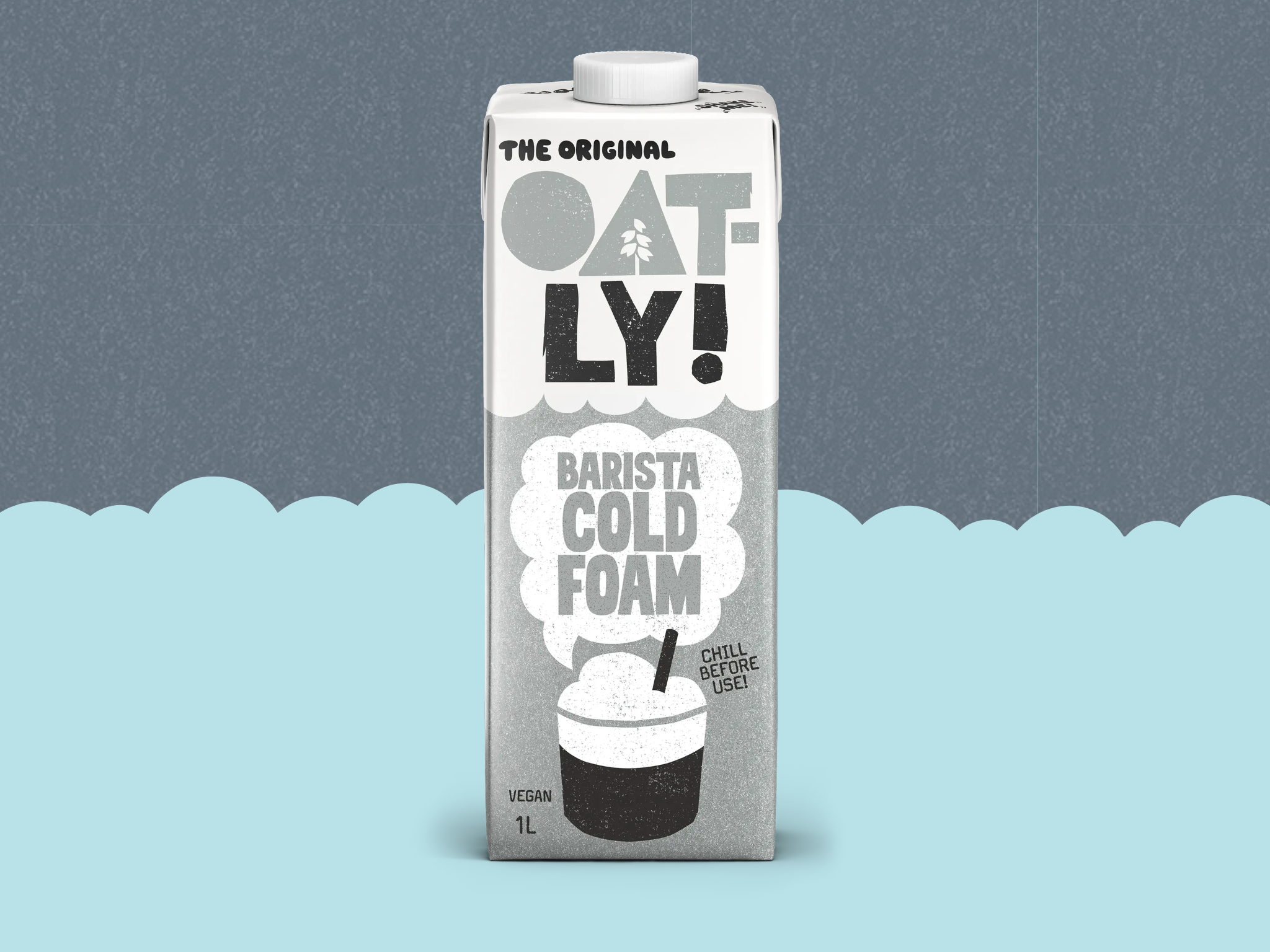
Oatly’s hotly anticipated cold foam barista milk is officially invading coffee shops, heralding a new era for non-dairy versions of the viral topping.
I feel like a failure.
As a chronically online, coffee-obsessed Gen Zer who spends a lot of time in places without access to dairy-free cream or specialised equipment, my incessant craving for a good cold foam remains unfulfilled.
It is only natural, then, that I took it upon myself to turn my kitchen into an R&D lab and fashion my own DIY cold foam, sans dairy.
Behold my futile escapades: a silken tofu version that performed more like a cream top, a blend of oat milk and homemade non-dairy cream that tasted vile, a coconut cream-oat milk-xanthan gum attempt that failed to get off the ground, and even a protein cold foam that was too dense to stay afloat.
So no, I didn’t get to top my yuzu cold brew with a miso-pandan cold foam. But that might change soon.
My experiments with coffee mixology were inspired by the wave of seasonal recipe ‘lookbooks’ released by Oatly over the last year.
The Swedish oat milk company has been at the vanguard of beverage trends for some time now. It’s eyeing the attention of Gen Zers who are thirsty for indulgent drinks with buzzy ingredients, international flavours, and eye-catching visuals – aka me.
Given my cold foam fiascos, maybe it’s wise for me to seek out Oatly for help. And the plant-based pioneer’s latest product is tailor-made for this, catering to the millions hooked on café-style drink culture.
This month, Oatly has begun rolling out a new Barista Cold Foam milk in Europe, which promises to deliver a “light, creamy ‘cloud'” that can be prepared with an array of tools and hold its shape on top of drinks for around an hour.
“There has been a big shift in drinks culture towards visually striking, highly customisable beverages, and cold foam plays a major role in that trend, with no signs of slowing down,” Toby Weedon, Oatly’s barista development director, tells Green Queen.
How cold foam conquered our drinks and feeds
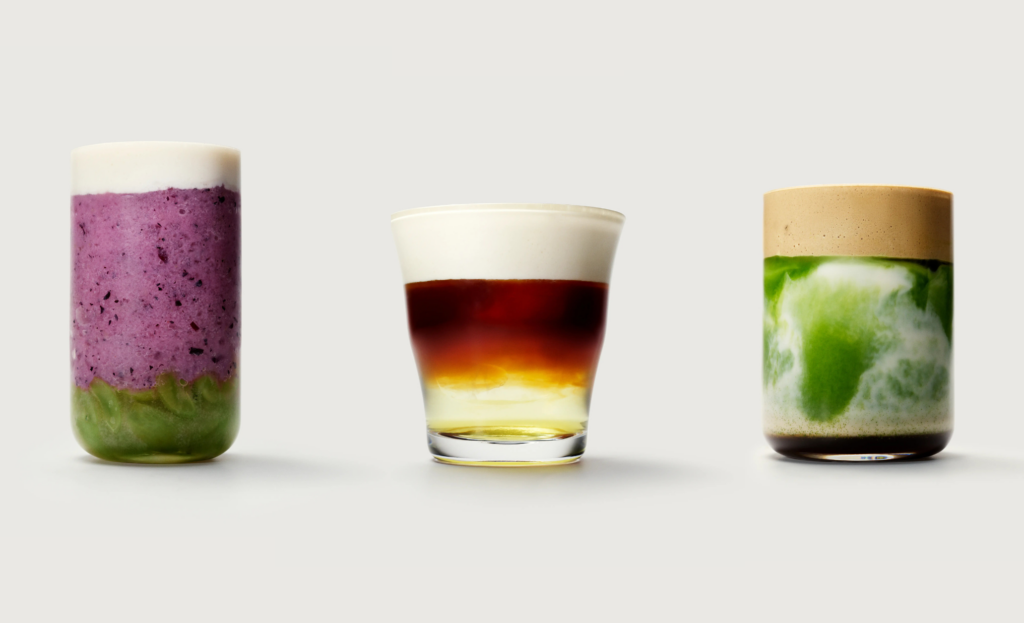
Today, it’s impossible to escape cold foam – the topping is plastered on A-frame signs outside coffee shops and ubiquitous on social media feeds, appearing in everything from coconut clouds to protein-boosted lattes.
On TikTok, year-on-year interest in cold foam surged by 105% in 2025, according to market research platform Spate. That drove the overall online appeal by 73% – and the momentum isn’t slowing down, with another 26% hike expected in 2026.
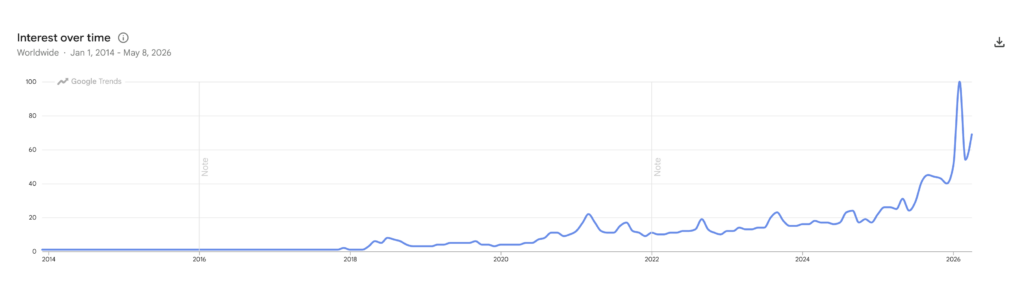
Google Trends data confirms this, suggesting a massive uptick in global searches for ‘cold foam’ in 2025, with a peak in February 2026.
It underscores why Oatly chose to enter the cold foam space with a specialised product. “Cold foam initially gained momentum in the US and Asia, and has been a trend we’ve been watching for some time now,” says Weedon.
Cold foam’s origins likely go back to the 90s, when baristas were experimenting with different techniques to recreate the microfoam-like texture of hot drinks in iced applications.
One of its earliest iterations was the Greek freddo cappuccino, a concoction that involves topping a shaken iced espresso with cold-foamed skimmed milk. It has a glossy, silky texture and slowly dissipates into the drink with time.
Another form of the innovation began appearing in Taiwan’s night markets in the early 2010s, when vendors began topping bubble tea with a cheese foam – a salty mix of powdered cheese milk, whipping cream and salt.
By 2012, cheese foam was omnipresent in China, popularised by the bubble tea chain HeyTea, which (alongside other drink purveyors) tweaked the recipe to include cream cheese – it was the tiramisu latte before the tiramisu latte existed.
Around the same time, over in central Vietnam, a couple in the city of Huế created cà phê muối (salted coffee), a drink comprising a layer of sweetened Robusta coffee capped with a salty, cream-based cold foam. The invention spread like wildfire, and is now one of the most popular Vietnamese coffee beverages across the world.
In the West, though, cold foam was brought to the masses by Starbucks, which introduced an orange-infused cold foam as part of a novel Americano drink at the Starbucks Reserve Roastery in Seattle in 2014. The coffee chain took the concept to all its regular stores in the US and Europe by 2018, with the launch of a freddo cappuccino on its menu.
This is when I first encountered cold foam, too, working as a barista at a Starbucks Reserve store in London. Like the Greek invention, this drink also utilised non-fat milk – whose higher protein-to-fat ratio is better-suited to cold foams. It was whipped up in a special blender with simple syrup and poured over iced espresso.
In the years since, cold foam has gone from a fairly fringe option on the chain’s vast menu to a major USP for coffee shops worldwide. In Q2 2026, for instance, Starbucks reported a 40% increase in cold foam sales.
Despite its popularity, plant-based versions of the frothy topping are hard to find and harder to replicate, with existing options failing to deliver the foamability and stability of dairy. It’s where Oatly comes in.
The challenges of creating a non-dairy cold foam
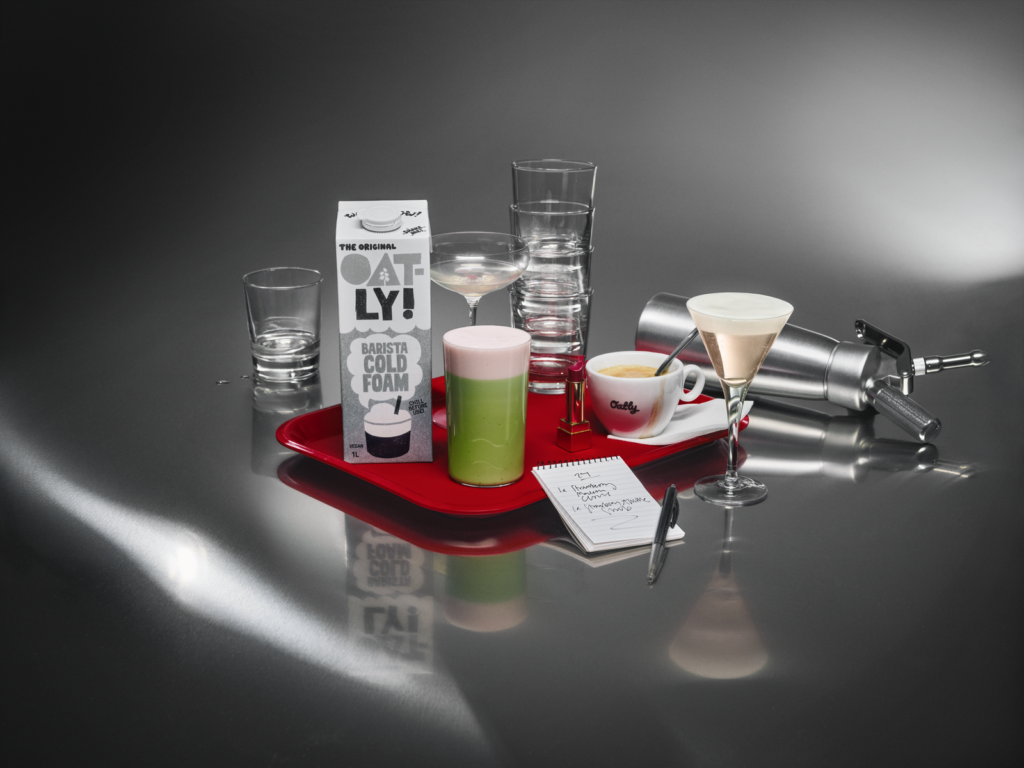
Most cold foams you see online or in coffee shops are dairy-based, and either involve a mixture of cream and milk, or a whipping siphon.
“While demand for cold foam was growing, there were very few – if any – plant-based options on the market available, and DIY solutions often missed the mark on texture or [were] too timely in hospitality environments. That’s what inspired us to create our own Oatly Barista Cold Foam,” notes Weedon.
“Regular barista milks are unlikely to foam up well enough to create a cold foam, because they don’t have enough fat content and, as such, stability to create that dense cream we’d be looking for,” he explains.
Starbucks did pioneer this segment, having rolled out non-dairy cold foams in its US locations in 2020. But the product – which achieves the effect via a combination of soy and oat milk, soy protein isolate, canola oil, sugar, lecithin and other emulsifiers – is designed exclusively for its own stores.
Oatly’s innovation enables independent and specialty coffee shops without deep pockets like Starbucks to offer plant-based cold foams in new formats.
The oat milk maker began developing this topping at the end of 2024. “We went through multiple trial versions, working closely with a small number of strategic partners to test, refine and optimise the product,” says Weedon.
“One of the biggest challenges was ensuring versatility: we wanted the cold foam to work with a wide range of equipment and preparation methods, so it could fit seamlessly into different environments. At the same time, it was crucial to maintain a light, airy, creamy texture that would sit beautifully on top of both hot and cold drinks without dissolving into them,” he outlines.
One key difference between Oatly’s standard barista milk and its cold foam version is the choice of fat. “We use coconut oil over the rapeseed oil found in our barista edition, because it remains more solid at a lower temperature, allowing us to create a creamier and more stable foam,” he says.
“We also use a combination of stabilisers and emulsifiers to create a good emulsion and a stable foam that lasts on top of your drink without collapsing. It’s also important to chill the product before use to create a more stable, shapeable foam.”
Weedon describes the resulting product as “light, creamy and highly customisable”, making for an ideal base to add different flavours or colours to: “This gives partners the flexibility to create unique signature drinks and elevate their menus.”
What’s in Oatly’s barista cold foam milk?
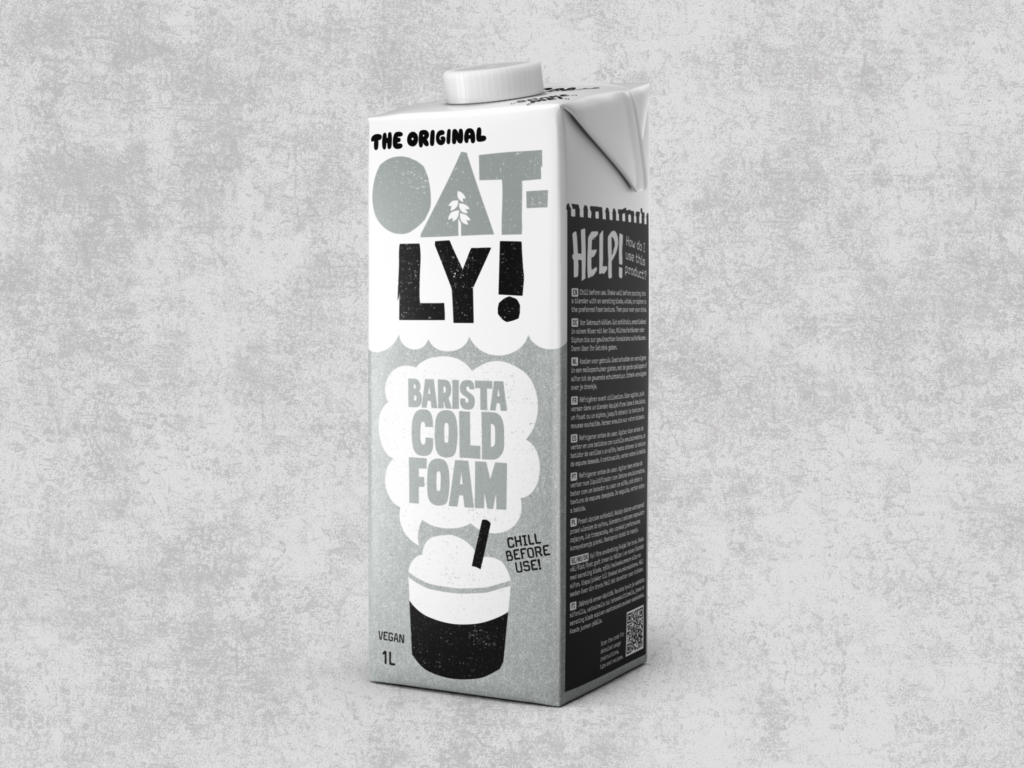
Aside from oats and coconut oil, the cold foam barista milk comprises 8% sugar, maltodextrin, flavourings, and dipotassium phosphate for acidity regulation.
Xanthan gum, gellen gum and hypromellose (a type of methylcellulose) act as stabilisers, while emulsifiers include mono- and diglycerides of fatty acids, esters of mono- and diglycerides, and Polysorbate 60 – all widely used in the food industry.
It contains 5g of fat (4.4g of which is saturated) and 13g of carbohydrates, compared to 3g (0.3g saturated) of fat and 7g of carbs for the regular barista edition. The protein content is also negligible (0.1g), versus the 1g found in the latter.
The cold foam product has a creamy flavour with a light vanilla note, and can be whipped or frothed using a bunch of devices, including aerating blenders, spindles, handheld frothers, and siphons.
It’s currently only being sold in foodservice, and debuts at Black Sheep Coffee in the UK today (May 13).
“It will be available exclusively across all locations, with customers able to enjoy signature serves such as an Iced Americano, Iced Latte and Iced Vanilla Matcha topped with cold foam. Customers will also be able to add Oatly Cold Foam to any drink on the menu, giving them full freedom to customise,” says Weedon.
Oatly will also showcase the cold foam product at the London Coffee Festival (May 14-17), serving drinks from its latest lookbook. “Across Europe, a wider rollout will begin in May, including launches with Coffee Fellows in Germany and Good News in Spain, France and the Netherlands,” he reveals.
Can lookbooks and cold foam innovation drive Oatly’s growth?
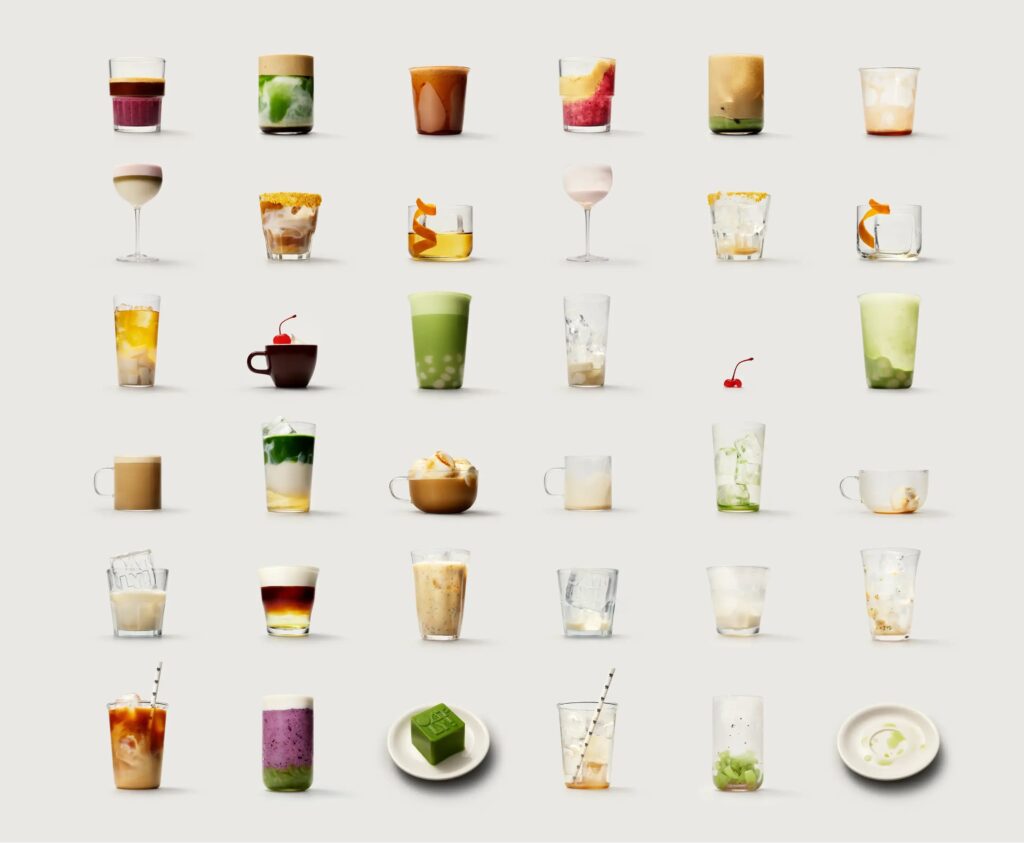
People like cold foam because it is endlessly customisable, visually appealing for the ‘Gram, accessible and easy enough to make – and oh, it tastes delicious. That’s right in Oatly’s wheelhouse.
The cold foam milk joins other taste-forward innovations – such as a matcha latte and a popcorn-flavoured barista milk – that the company has introduced to regain momentum after some tough years for the plant-based milk industry. And for now, that blueprint seems to be paying off.
2025 was the Swedish firm’s first full year of profitability, and Q1 2026 was its first quarter of growth in North America since 2024. Cold foam can help Oatly float on top of many more drinks, but the real test will lie in its ability to drive the bottom line.
The product aligns with the oat milk maker’s flavour-first strategy, which is patterned on the fashion industry and has spawned a Future of Taste trend report and the aforementioned lookbooks.
Oatly has been ramping up its flavour credentials through these recipe books. The latest, for the Spring/Summer 2026 season, is heavy on Latin American flavours, and showcases the true breadth of innovation that plant-based milk – and cold foam – can unleash.
You might be interested in the tortilla and agave latte, the fig leaf matcha, or the mate cola latte, but me? I’m partial to the clarified hojicha Old Fashioned, the oat tepache, and the matcha “Jell-Oat” shot.
“I’m particularly enjoying blueberry cold foam over a cold brew right now,” Weedon says. “But the great thing about our cold foam is its versatility. It works just as well on cold brews, iced lattes and matcha as it does on hot drinks, making it an easy way to elevate any beverage on the menu.”
Oatly COO Daniel Ordonez has made no attempts to contain his excitement for the cold foam oat milk. “Plant-based cold foam options weren’t widely available in the market thus far,” he told investors on an earnings call last month. “This is a breakthrough product that delights consumers and elevates the experience for our foodservice customers.”
He added: “Taste is a new platform for Oatly and for the category. This is not just random innovation.”
The same can’t be said of my shenanigans in the kitchen. Maybe it’s time to give my lab coat home barista apron a break and hunt for Oatly’s latest product to make that elusive miso-pandan cold foam.