

Ajinomoto Creates New Tech to Replace One of Cultivated Meat’s Most Expensive Components


Japanese conglomerate Ajinomoto has developed a plant-derived transferrin protein alternative that can significantly lower culture media costs for cultivated meat production.
In its bid to drive down the cost of producing cultivated meat, Japanese food giant Ajinomoto has turned to a compound found in Cypress trees.
The company has developed a new technology based on hinokitiol, a low-molecular-weight component found in the wood of these trees, to eliminate the need for expensive serum components in cell culture processes.
Ajinomoto has successfully developed an alternative to transferrin, a glycoprotein that is often among the costliest components in culture media formulations.
Culture media are essential to the production of cultivated meat, providing a mix of nutrients that facilitate the growth of animal cells, but they account for the majority of the costs in the entire process. The Japanese conglomerate is now working to bring its low-cost solution to the market “at the earliest opportunity” to make cultivated meat more accessible to consumers.
Hinokitiol can maintain high proliferation rates when replacing transferrin
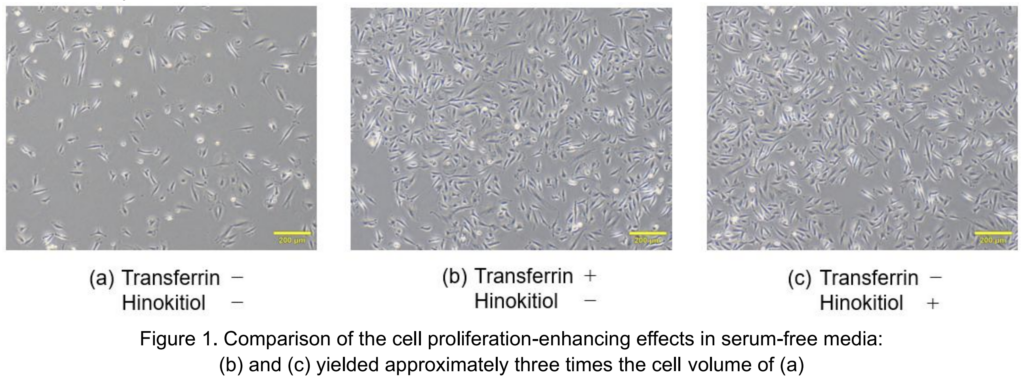
According to the Good Food Institute, transferrin plays a conserved role in iron transport. In addition to albumin, it promotes viability, growth, and differentiation in cell culture.
These proteins are used at much higher concentrations in cell culture than other recombinantly produced growth factors, and have been found to account for 95% of the costs associated with manufacturing cultivated meat.
While scaling up the production of recombinant transferrin could lower these costs, this must be balanced with the time and expenditure required to establish new infrastructure capable of manufacturing thousands of metric tonnes of such proteins.
So finding non-recombinant alternatives is critical to reducing the cost of culture media on a faster timescale and closing the price gap between cultivated and conventional meat.
This is where Ajinomoto’s patent-pending solution comes in. Its tech enables a significant reduction in media costs by replacing expensive transferrin with affordable hinokitiol, a naturally occurring component that binds to iron and delivers it into cells.
Unlike high-molecular-weight transferrin, which is prone to quality fluctuation between production batches, hinokitiol is chemically stable and is expected to help stabilise the quality of serum-free media.
By harnessing its iron-binding properties, Ajinomoto confirmed that hinokitiol can serve the function conventionally performed by transferrin, maintaining high cell proliferation rates in serum-free media. The component is also listed on Japan’s list of existing food additives, which confirms its safety for human consumption.
Ajinomoto envisions an array of business opportunities with cultivated meat
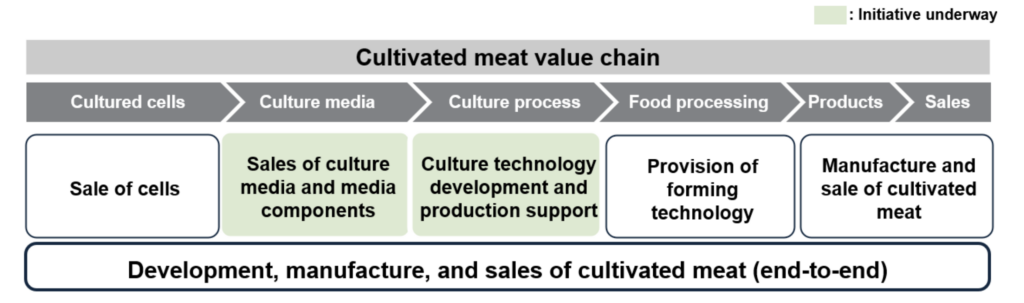
Ajinomoto’s technology has already undergone prototype testing and aims to introduce it to the cultivated meat market within the next several years.
The effort is part of its AminoScience approach to resolve social issues and improve people’s wellbeing through new materials and technologies based on amino acid research.
Ajinomoto’s 2030 roadmap targets dramatic growth in four priority areas with high market potential, including the development of low-carbon food ingredients to accelerate its Green Food business.
The company notes that the cultivated meat value chain entails multiple processes, including the sale of cells, culture media, and growth factors; the development of culture technologies and production support services using those substrates; and food processing and the manufacture of end products. This, it says, presents it with a wide range of business opportunities.
As a first step, Ajinomoto will draw on the technology and expertise accumulated through its biopharmaceutical and regenerative medicine culture media business to enter the media component sale, culture technology development, and production support segments.
The hinokitiol-based replacement for transferrin will help the company support the real-world implementation of cost-effective cultivated meat, which is crucial for the wider adoption of these proteins. For instance, in a four-country survey in Europe last year, 59% of respondents said they wouldn’t buy cultivated meat if it were more expensive than its conventional counterpart.
The cultivated meat industry has already cut production costs by 99% from its starting point a decade ago, and several startups have announced breakthrough technologies to dramatically reduce culture media costs over the last couple of years, including Gourmey (now part of Parima), Meatly, and BioCraft Pet Nutrition.