

Milk-Loving India is Hungry for Plant Protein – Can These New Dairy Alternatives Hit the Spot?

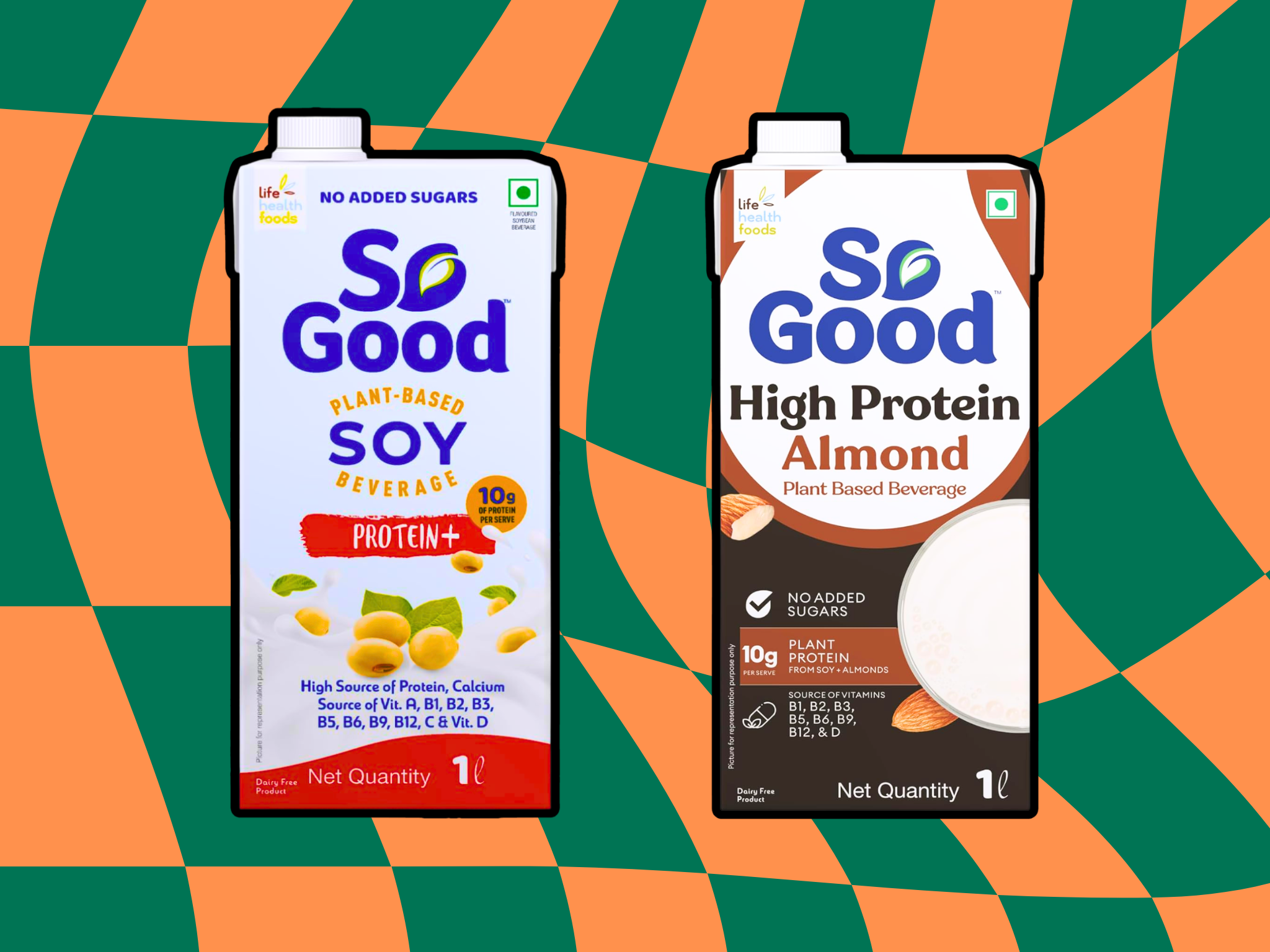
India’s Life Health Foods, the parent company of So Good, has launched a high-protein range of its milk alternatives, banking on the country’s craze for the muscle-building macronutrient.
No country produces or consumes more dairy than India.
The world’s most populous nation is responsible for a quarter of global milk production, with outputs growing by 64% between 2014 and 2024. And most of it is consumed by locals – per-capita availability of milk increased by 48% in this period.
The industry is showing no signs of stopping: India’s milk production is set to rise by 3.6% over the next decade, just as milk holds strongly in most consumers’ daily routines.
India’s love affair with dairy is a result of several factors, but its persistence despite the growing awareness about lactose intolerance can be put down to nutrition, particularly concerns about protein, which plague 62% of its citizens.
People in this country want more protein than ever. Instead of relying on animal proteins like dairy, however, they’re increasingly looking to source the macronutrient from plant-based options.
Tapping into that need is Life Health Foods, which owns the Indian operations of plant-based milk brand So Good. The company has just introduced its new high-protein lineup, featuring two dairy alternatives that fit straight into consumer nutrition trends in India.
So Good’s plant protein milks outperform dairy
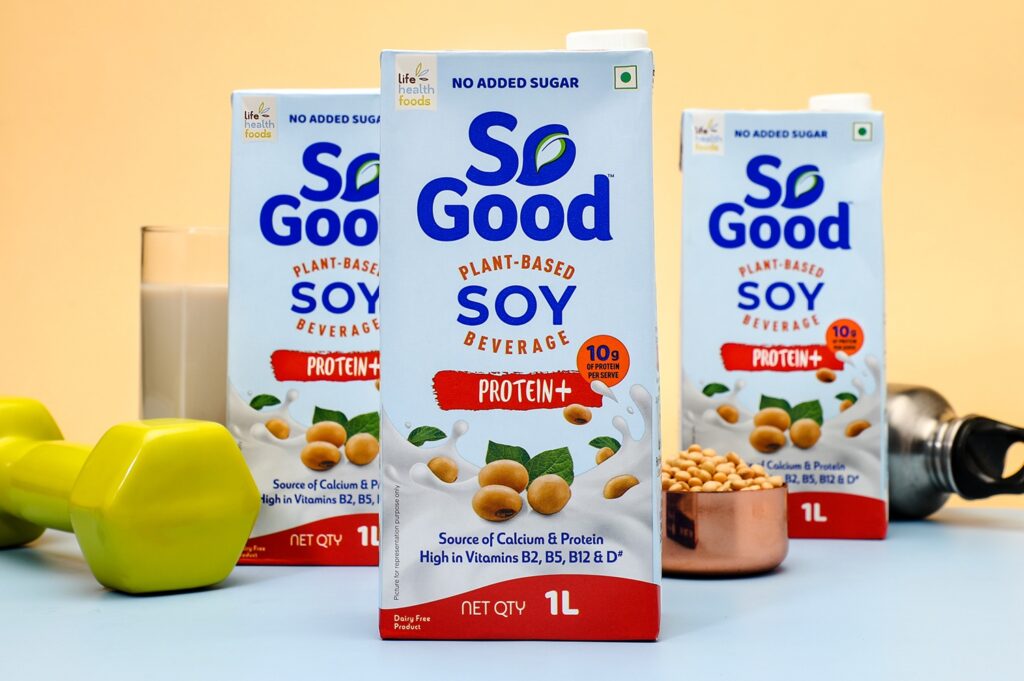
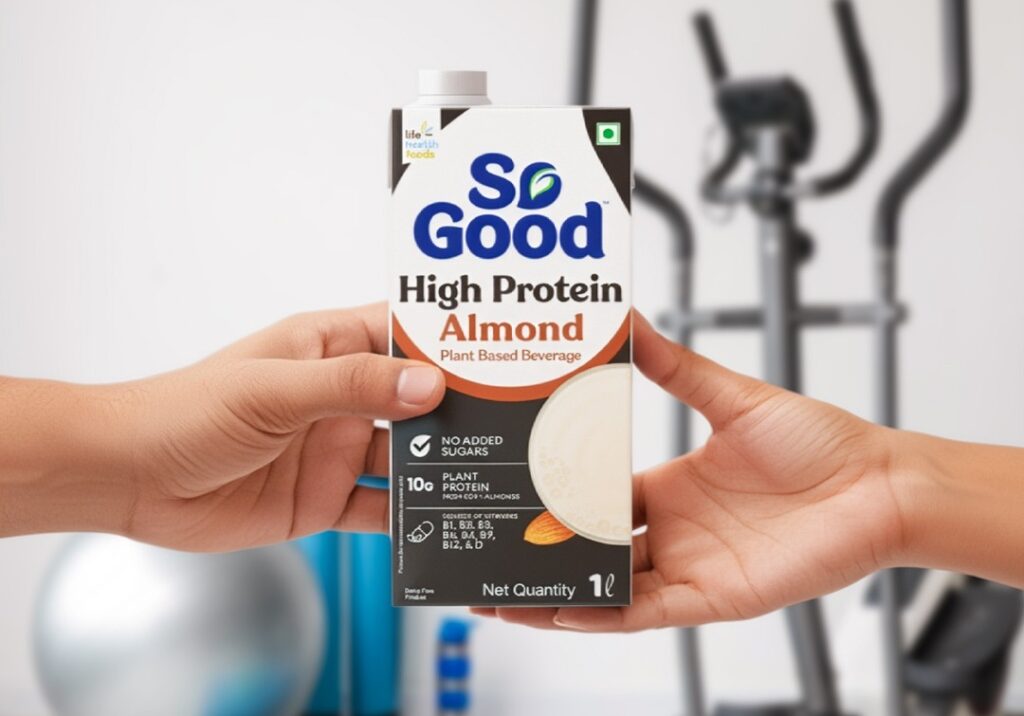
So Good’s protein-rich milks come in two bases: soy and almond. The former contains 18% soybeans and 1.8% additional soy protein, and the latter blends 4% almonds with 3.7% soy protein.
Both milks are fortified with micronutrients, including those often missing in dairy alternatives, such as vitamins B and D, and calcium (the top nutrient of concern for India’s dairy drinkers). Plus, they contain zero cholesterol or added sugar.
The protein-boosted soy milk delivers over 13g of protein per cup (versus 10g for So Good’s original soy milk); the new almond milk packs 10.5g of the nutrient (in comparison to just 1.4g for its regular counterpart). For context, the same amount of cow’s milk by dairy giant Amul has 7.5g of protein.
The company is touting the versatility of the new shelf-stable milks, which it suggests can be used for smoothies, coffees, oats, and more, and help support active lifestyles and satiety.
“Protein is essential for building and repairing muscles, weight management and maintaining overall health. It also helps in keeping you full for longer, supporting weight management and steady energy levels,” noted Rohit Bhagat, general manager of Life Health Foods.
“Plant-based proteins such as legumes, beans, lentils, nuts, seeds, tofu, and whole grains are especially important because they provide fibre, antioxidants, and healthy fats along with protein, making them heart-friendly and sustainable choices for long-term health.”
India goes gung-ho for protein, especially from plants
So Good’s bet on protein is reflective of a wider trend in India. Over the last year, companies big and small have introduced protein-boosted products in a range of formats in both the CPG and foodservice channels.
Surveys show that 37% of citizens want to add more plant proteins to their diet, and more consumers want to increase their intake of plant-based milk (51%) than cow’s milk (41%). Likewise, 9% of Indians said they were looking to cut back on milk alternatives, which rose to 11% for conventional dairy.
According to Ipsos, plant-based dairy companies recorded a 20% increase in revenue in 2024, driving the overall vegan sector’s growth. Soy and almond are the most popular milks, taking up a 45% and 31% share of the market, respectively, validating So Good’s decision to focus on these bases for the high-protein lineup.
And when consumers were asked to rate milk products, 64% said they found almond milk ‘very good’, compared to 49% for soy milk and just 37% for dairy.
Research suggests that 80% of the adult population in India is protein-deficient, although some argue there’s more than meets the eye – still, these consumers are consuming more protein than ever before.
It’s why plant protein startups have piqued the interest of investors and industry giants in recent months. Cosmix Wellness agreed to sell a 60% stake to CPG giant Marico in a deal worth $25M this month, while Earthful raised $2.9M to support the expansion of its women’s health products. Both companies are Shark Tank alums and sell (among other things) vegan protein powders.
Speaking of which, Bollywood star Ranveer Singh’s SuperYou brand launched a yeast protein powder last year and found instant success – it can now be found in every Starbucks India store, as part of the coffee chain’s new line of protein cold foams.
Elsewhere, McDonald’s India rolled out vegetarian slices (made from soy, pea and whey) to add 5g of protein each to any burger. And homegrown restaurant group Haldiram’s has added GoodDot’s soya chaap, a local soy-based meat alternative, to its menus across North India. In January, GoodDot also teamed up with Hilton on a month-long plant protein festival across its 32 hotels nationwide.