

Verley Milks $38M in Funding for US Launch of Functional Animal-Free Whey Proteins

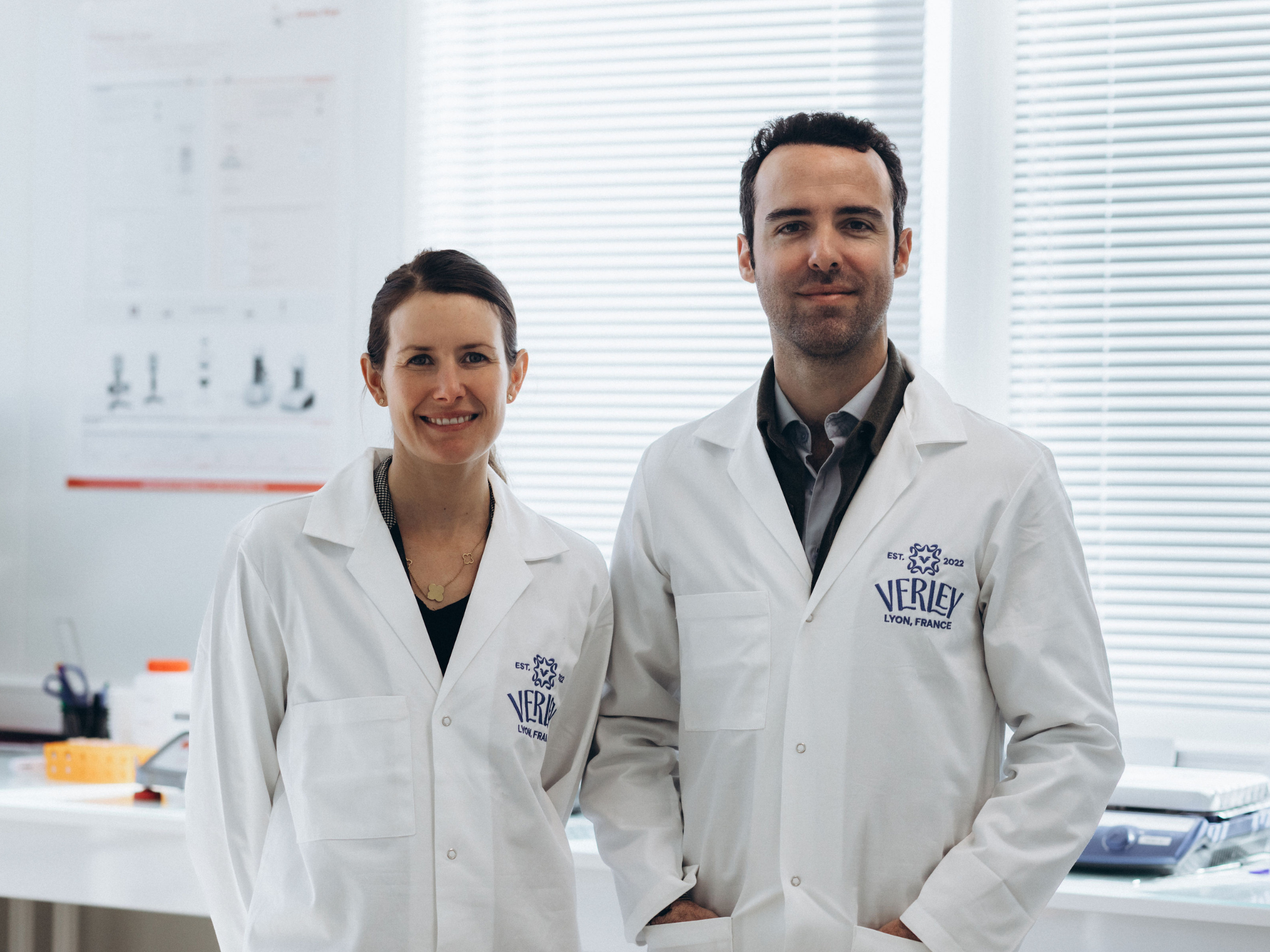
French precision fermentation startup Verley has raised €32M ($37.6M) in Series A funding to scale up and commercialise its cow-free, functional whey proteins in the US this year.
Months after receiving approval from the US Food and Drug Administration (FDA), Verley has taken a giant leap towards its path to market entry.
The French startup has secured €32M ($37.6M) in Series A financing to ramp up the production capacity of its precision-fermented whey proteins and launch initial products with partners in the US by year-end.
The oversubscribed funding round was led by Parisian VC fund Alven, with participation from fellow new investors Blast and state-owned investment bank Bpifrance, and existing backers Sofinnova, Sparkfood, Captech, and Founders Future.
Verley received additional non-dilutive support from Bpifrance, bringing its total funding to over €50M ($59M) since its inception four years ago, according to co-founder and CEO Stéphane Mac Millan.
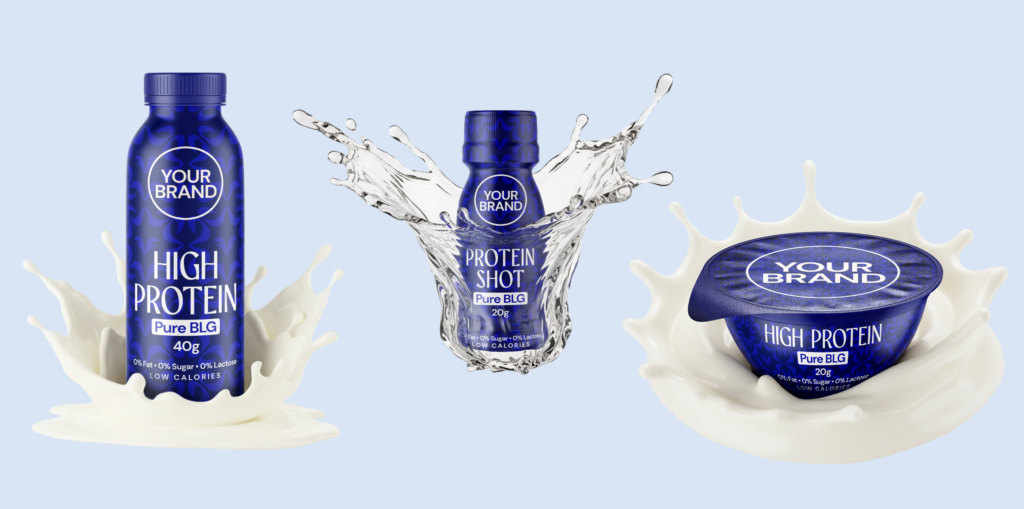
“Our first commercial applications are expected to focus on high-protein, compact formats, particularly protein shots, where density, solubility and stability are critical performance factors,” he tells Green Queen.
“These formats do not simply require ‘more whey’. They require high-purity beta-lactoglobulin, the key functional fraction of whey protein, which enables higher protein concentration while maintaining clarity, solubility and stability.”
Why precision fermentation is critical for whey’s future
Beta-lactoglobulin is the main protein found in whey, and is highly sought after, thanks to its nutritional superiority to most of its counterparts. It has a complete amino acid profile and is rich in leucine, which plays a key role in muscle synthesis and metabolic signalling. This makes it central to the amplified focus on healthy ageing, women’s wellness, and GLP-1-aligned nutrition.
This protein has gelling, foaming and emulsification properties that improve the mouthfeel and texture of a range of food and beverage applications. Plus, it’s tasteless, heat-tolerant, and stable across a wide pH range.
Existing extraction methods for beta-lactoglobulin are complex and resource-intensive. It is obtained by fractionating cow’s milk and requires multiple separation and purification steps from a relatively small base concentration.
The inefficiency has been more pronounced with the recent shortage in whey protein supplies, especially in the US. Contracts have been sold well into 2026, pushing manufacturers to look towards Europe. Howeer, this region itself has limited supplies (relative to the global demand), with prices set to hike.
Precision fermentation, which involves inserting DNA sequences into microbes to teach them to produce target compounds when fermented, streamlines the process by enabling the direct production of beta-lactoglobulin at source. Once Verley purifies the protein, it tailors their structure and behaviour to deliver specific attributes (like better solubility or thermal resistance).
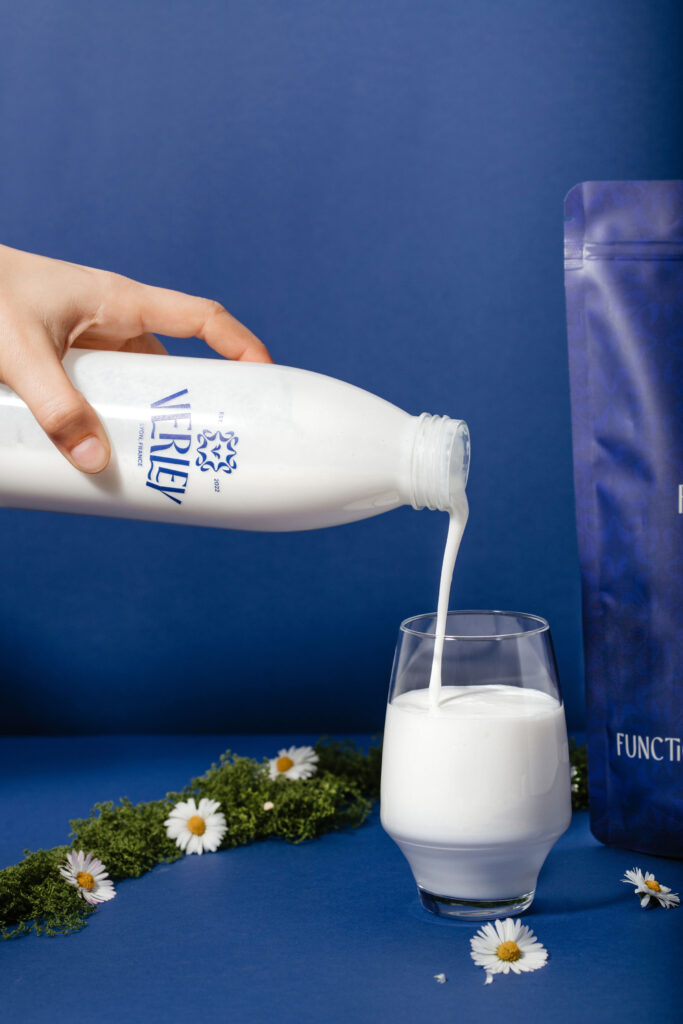
It’s this functionalisation that sets the company’s ingredients apart from other cow-free whey proteins on the market. Verley’s lineup, called FermWhey, requires only a fraction of the resources as conventional whey, and can be seamlessly incorporated into existing food value chains.
FermWhey Native offers 98% purity and is designed for use in dairy alternatives and protein powders, where FermWhey Native 100 is rich in leucine and ideal for clear drinks, protein shots, and sports nutrition.
FermWhey MicroStab is microparticulated and meant for high-protein, low-fat formulations like ready-to-drink and UHT beverages. And FermWhey Gel offers superior gelling properties for protein-rich applications like spoonable dairy, desserts, and meal replacements.
A hybrid model to expand production
Verley wants to become an industrial ingredient company, not a consumer brand, which is why it’s choosing to focus exclusively on the B2B channel.
“Developing a consumer-facing product requires brand investment, distribution capabilities, and marketing infrastructure that are fundamentally different from scaling fermentation and ingredient technologies,” says Mac Millan.
“By concentrating on B2B, we can focus our resources on what we do best: producing high-performance whey proteins that integrate seamlessly into existing food manufacturing systems.”
This model allows Verley to scale faster. “By partnering with established manufacturers and brands, we leverage their market access and formulation expertise, accelerating impact without duplicating value-chain layers,” the CEO states.
With protein at the forefront of consumers’ food choices today, Verley is witnessing demand that exceeds its existing production capacity, particularly from US companies preparing product pipelines for 2026 and beyond. “This gives us strong visibility on commercial traction ahead of full-scale deployment,” suggests Mac Millan.
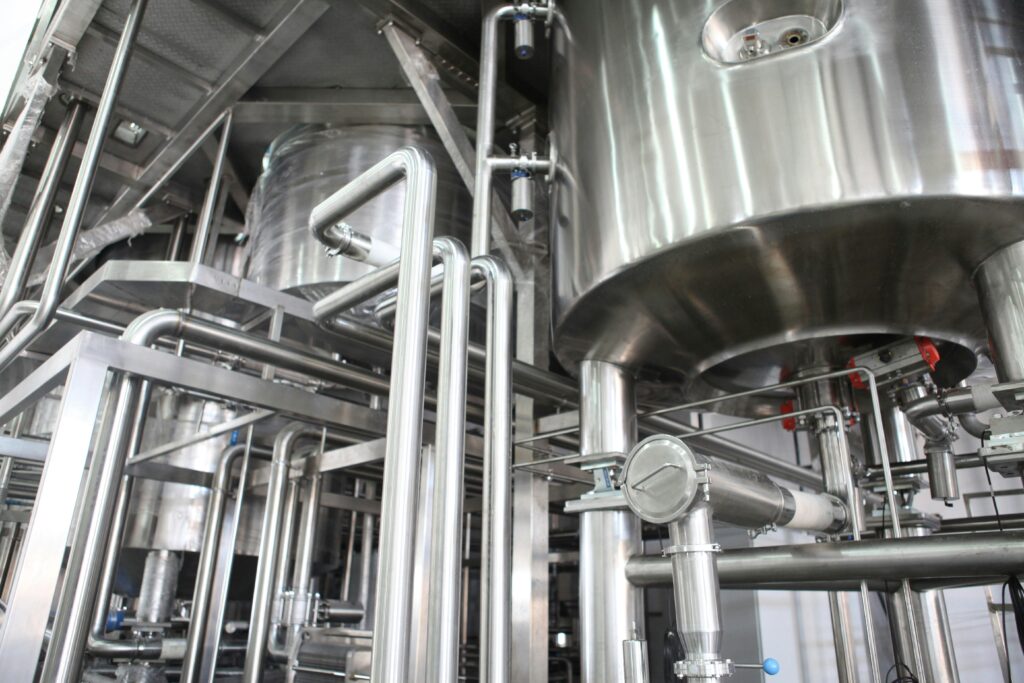
“Our scale-up strategy is phased and disciplined. In the near term, we are expanding production through a hybrid model combining our own pilot infrastructure in Lyon with selected industrial manufacturing partners in Europe and North America. This approach allows us to increase volumes while maintaining process control and capital efficiency,” he explains.
Mac Millan, who co-founded the startup with chief commercial and innovation officer Hélène Briand, highlights that the goal beyond simply increasing capacity, the idea is to do so “predictably and sustainably” to align with market demand.
“As commercialisation accelerates, we will progressively transition towards larger industrial-scale facilities capable of supplying multi-thousand-tonne volumes annually across key regions, beginning with the US,” he says.
Verley looks to Europe and the Middle East following 2026 US launch

Verley is one of several startups to have secured regulatory clearance to sell precision-fermented dairy proteins in the US, though it’s worth noting it has done so faster than most.
In 2024, it completed a self-affirmed Generally Recognized as Safe (GRAS) assessment in the US, which followed the FDA’s issuance of a ‘no questions’ letter for FermWhey Native and MicroStab, covering its first target category: high-protein compact formats.
“Our commercialisation roadmap prioritises the high-protein segment first, given the massive commercial traction we receive on this market,” says Mac Millan. “FermWhey Gel represents the next phase of our portfolio development, alongside other ingredients featuring advanced functional properties designed to enable clean-label, additive- and gum-free formulations.”
He expects the first products featuring FermWhey to hit the US market by the end of 2026. “As a B2B ingredient supplier, final product launches will be driven by our partners’ innovation cycles, but protein-dense, ready-to-consume formats are currently among the most advanced applications,” he notes.
“Our ingredient FermWhey Native 100, a purified BLG produced via precision fermentation, is especially well suited for these demanding formats due to its strong solubility, clean taste profile and optimised amino acid composition,” Mac Millan says.
“In parallel, our food science team has developed several protein shot formulations in our applications lab to support partners in building high-performance products adapted to evolving consumer expectations.”
Concurrently, Verley is advancing regulatory pathways in Europe and the Middle East. Its CEO calls the latter a strategic region for the company, given its growing protein demand and structural reliance on food imports.
“Many countries in the region are actively investing in food security, advanced manufacturing, and alternative protein production as part of long-term diversification strategies,” he says. “Our fermentation-based approach aligns well with these priorities, enabling protein production with reduced dependence on land, water, and conventional livestock systems.”
Verley is part of the Saudi Ministry of Environment, Water and Agriculture’s Sunbolah Accelerator programme, which is designed to support the development of innovative food technologies in the nation. “This participation allows us to deepen our understanding of regional needs while exploring long-term partnership opportunities,” says Mac Millan.
How Verley attracted investors in a bleak funding landscape
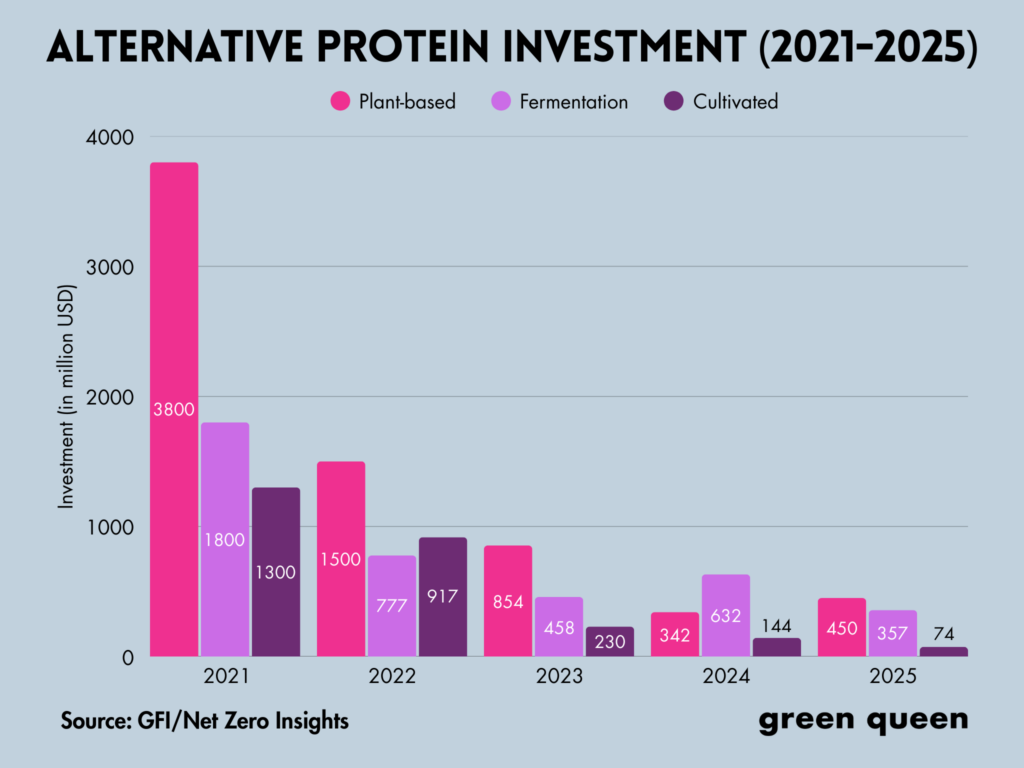
Verley’s $38M raise comes against the backdrop of a grim funding landscape for fermentation, and the wider alternative protein industry. After an uptick in 2024, investment in fermentation startups fell by nearly 44%, totalling $357M.
Mac Millan argues the decline wasn’t confined to fermentation alone, instead reflecting a broader reset across deep tech and capital-intensive sectors. “After several years of rapid investment, expectations around speed of scale-up and time-to-profitability were arguably unrealistic,” he says.
“In alternative and complementary proteins, as we prefer to call it, some companies struggled to move from pilot to industrial production, and that created greater scrutiny from investors around capital efficiency, unit economics and regulatory timelines.
“What we saw in 2025 was less a retreat and more a transition from enthusiasm-driven capital to execution-driven capital. Investors became more disciplined, focusing on technologies with clear regulatory pathways, defensible IP, credible scale-up plans, and demonstrated market demand.
“In that sense, the category is maturing. Fermentation remains a powerful platform, but funding is now flowing towards companies that can combine scientific strength with industrial readiness and commercial traction.”
So how did Verley convince investors to pour so much capital into the business? Our pitch was fundamentally centred on execution. “Precision fermentation remains a compelling platform, but in the current funding environment, promise alone is not enough,” says Mac Millan.
“We focused on demonstrating what had already been achieved: regulatory clearance with our FDA ‘no questions’ letter, a growing intellectual property portfolio, validated industrial performance, and commercial demand exceeding our current production capacity.
“Importantly, we also delivered more operational and regulatory milestones than initially committed during our seed round. That ability to meet (and exceed) early objectives reinforced trust in our execution model.
“Ultimately, what convinced investors was the combination of regulatory derisking, disciplined scale-up strategy, capital efficiency, and clear product-market fit. In today’s environment, maturity and execution matter more than ambition alone.”