

BioCraft Pet Nutrition Publicly Releases Safety Dossier for Cultivated Meat


Austrian-American food tech startup BioCraft Pet Nutrition has published a publicly available regulatory dossier for cultivated meat ingredients in pet food, proposing a minimum safety disclosure standard for the industry.
To advance the low-carbon pet food industry as a whole, cultivated meat startup BioCraft Pet Nutrition has made its own safety dossier public.
The startup had secured registration from Austrian authorities to use Category 3 animal byproducts (ABPs) in the EU last year, allowing it to sell its cultivated mouse meat as a pet food ingredient in the region.
Now, as it gears up for market launch, BioCraft has published what it says is the first complete, publicly available dossier for any cultivated meat product for pet food.
By doing so, BioCraft isn’t treating its regulatory submission as proprietary, which “marks an important and meaningful shift for this category and in feed safety”, according to Dima Faour-Klingbeil, founder of DFK for Safe Food Environment, who consulted the firm on its HACCP plan.
“Choosing to publish detailed safety data and invite external scrutiny is exactly the kind of practice this industry needs more of,” she said, noting that this level of transparency goes beyond the norm in a new ingredient category.
Dossier answers key questions about cultivated meat safety

According to BioCraft, cell-cultured ingredients in the EU and the UK aren’t subject to independent safety review, so approvals apply to the manufacturing facility, not the ingredient itself. Ensuring its safety is crucial for all manufacturers, but a transparent, unified standard of what “safe” should mean doesn’t currently exist.
Aside from baseline sterility standards, there’s no defined checklist of what safety testing a company should perform or what it must disclose publicly. That leaves the onus on manufacturers to decide what “safe enough” means, since no one is required to make safety data public. BioCraft has still done so, and is now urging others to follow suit.
Its dossier, published on bioRxiv, lays out years of best practices and safety characterisations, including cell line identity, tumorigenicity, genotoxicity, chemical safety, viral safety, and media compliance. It’s designed for partners, regulators, veterinarians, and pet parents to review and adopt as the best-in-class standard moving forward.
The document answers the question most often raised about cell-cultured proteins: are the underlying cell lines cancerous? It relied on complementary assays that collectively ask whether the cells show any signs of malignant or tumour-forming behaviour. At the heart of this was a soft agar assay, which involves measuring cells’ ability to grow and form colonies without being attached to a surface.
BioCraft then tested to see whether the cells’ p53-mediated defence response to DNA damage is intact, and looked for two specific markers, CD44 and BMI1, which are linked to abnormal cell behaviour. Together, these three tests confirm that PE25, the mouse embryonic cell line that forms the startup’s ingredient, is neither cancerous nor tumorigenic.
To determine whether cultivated meat is genotoxic, the firm characterised potential hazards such as heavy metals, biogenic amines, and solvent residues, but also subjected the ingredient to internationally recognised genotoxicity assays. This confirmed that the final product is not mutagenic, clastogenic, or aneugenic, and so does not harm genetic material.
BioCraft introduces minimum safety disclosure standard
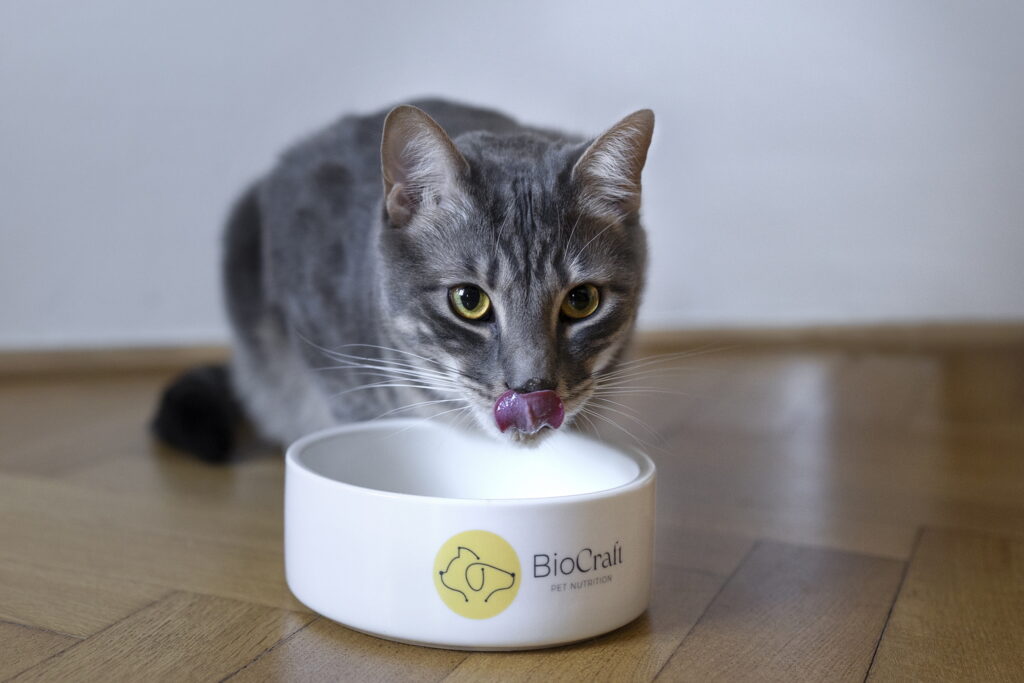
BioCraft’s unstructured ingredient is grown from cultured mouse cells and doesn’t require additional downstream processing. Third-party profiling of over 100 nutrients showed that its cultivated meat has comparable levels of taurine, lysine, methionine and tryptophan to that of chicken slurry, and a superior omega-6 to omega-3 ratio.
Plus, it’s cost-effective. Typically, animal-derived growth media – the mix of proteins, sugar and nutrients that feed animal cells in a bioreactor – cost hundreds of dollars per litre. The startup has developed a plant-based growth medium formulated to provide a nutritious boost to the end product, allowing its pet food ingredient to be priced at $2-2.50 per pound.
Moreover, its cell-cultured ingredient emits 92% fewer greenhouse gases during production than conventional beef byproducts. It previously earmarked an early 2026 launch, and has been working with Partner in Pet Food and Prefera Petfood to bring the ingredient to market.
Only a handful of companies are cleared to sell cultivated meat for pets. Meatly rolled out Chick Bites in the UK, blending 4% of its cultivated chicken with plant-based ingredients from The Pack. Friends & Family Pet Food launched eight cultivated meat products for cats and dogs in Singapore, and BeneMeat has teamed up with Forza10 to establish Coolty Meat, combining its cultured hamster meat with plant-based ingredients for dogs.
Umami Bioworks has also registered its cultivated white fish as a feed ingredient in the EU. And Magic Valley is currently commercialising cultivated dog treats under its Rogue Pet brand within the voluntary framework developed by the Pet Food Industry Association of Australia.
BioCraft, which has raised $6.7M in funding, said cell line origins, growth media, and cell culture processes vary across companies and shouldn’t be judged as one. It’s why it’s introducing the BioCraft Pet Nutrition Standard, a proposed minimum safety disclosure framework for other manufacturers to adopt.
“My dogs are my children, and I speak for many pet parents when I say this. The precedent set by manufacturers of animal cell-cultured ingredients in these earliest days will shape whether veterinarians and pet parents can trust this entire category for years to come,” said BioCraft co-founder and CEO Shannon Falconer.
“We’re publishing every piece of our safety data not because a regulator told us to, but because the pets eating our ingredients, and the people who love and care for them, deserve nothing less.”