

Forza10, BeneMeat Launch EU-First Cultivated Dog Food Under Coolty Meat Brand

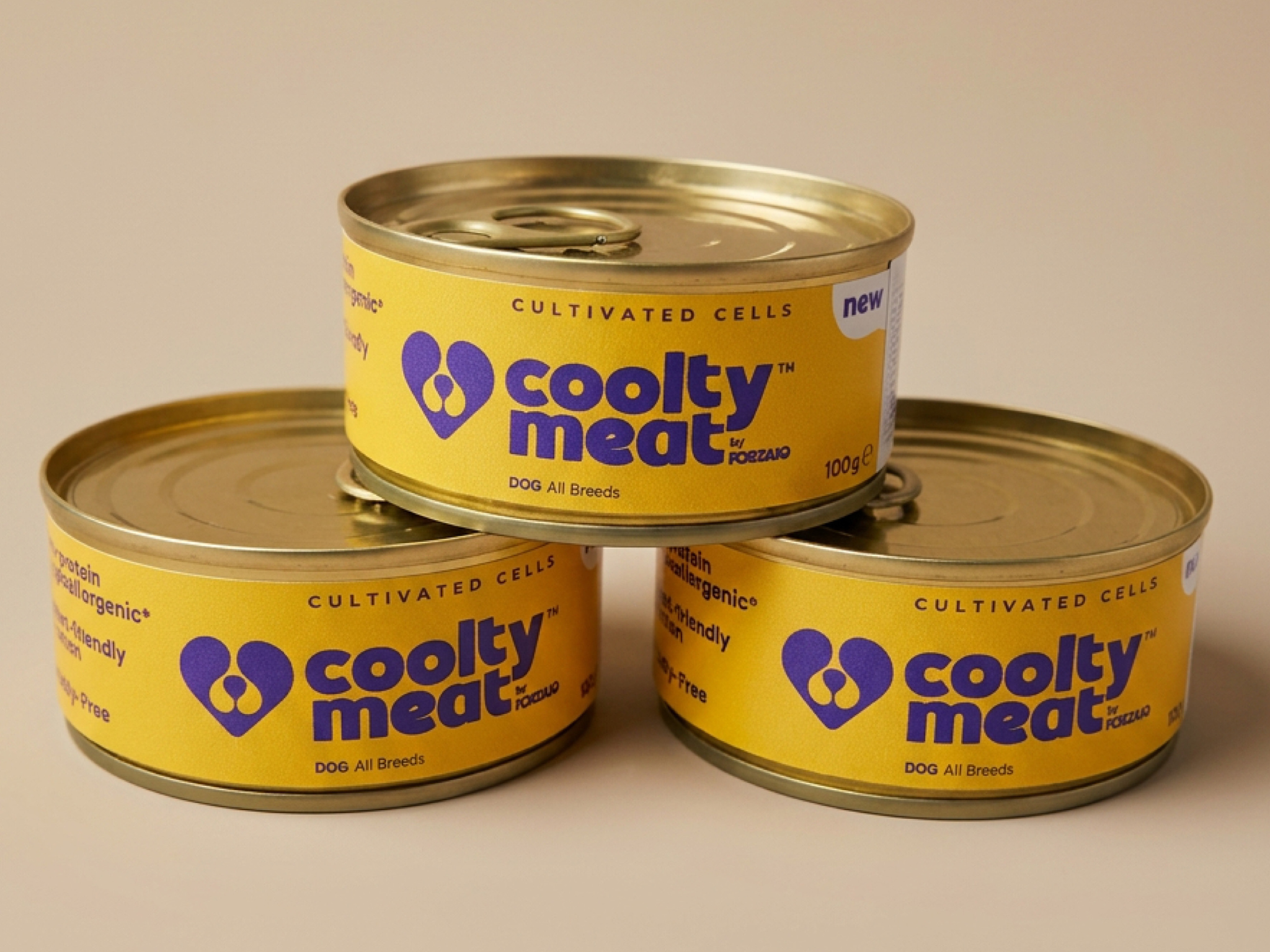
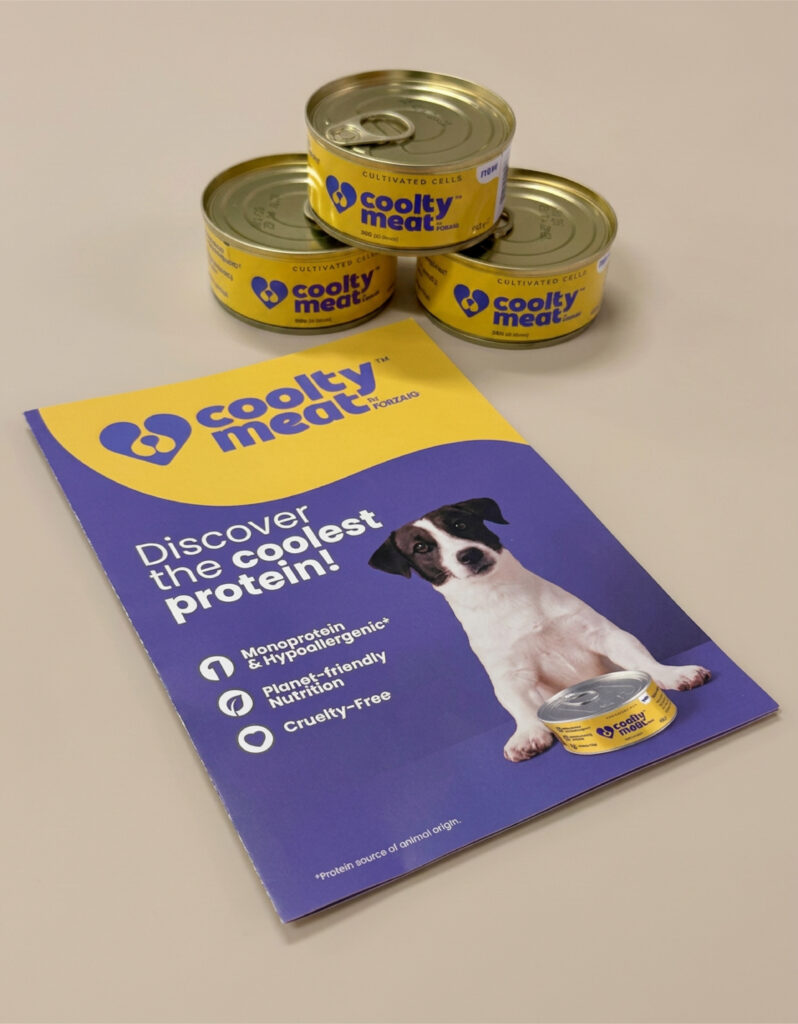
Italian food company Forza10 has debuted the Coolty Meat brand of cultivated dog food, made with cell-cultured protein from the Czech startup BeneMeat.
Cultivated meat is rapidly entering the pet food market.
After launches in the UK and Singapore, the innovation is coming to the EU via Forza10, an Italian food producer that has partnered with the Czech cultivated meat firm BeneMeat.
Forza10 is launching a complete dog food product featuring BeneMeat’s cultivated hamster meat, which was debuted at the Interzoo 2026 trade fair in Nuremberg.
It is made from a monoprotein, free of antibiotics, hormones, and preservatives, and comprises 26% cultivated meat. This is combined with carrots, peas, linseed oil, pea protein, brewers’ yeast, sunflower oil, apple fibre, and inulin. It contains 8% crude protein and is a highly digestible solution, particularly suitable for dogs with food intolerances.
“Retail availability is planned for Q3 2026, while the specific retail partners will be announced by Forza10,” Kateřina Dvořák Vašová, communications coordinator for Bene Meat, told Green Queen. “In Portugal, the product will be sold at Gold Pet in Portugal and at Clinic João XXI in Lisbon. The product will also be sold in Spain.”
The launch follows a Try & Share programme conducted by BeneMeat in 2025, in which nearly 88% of pet owners said their dogs liked treats made with its cultivated meat, and over 85% reported their pets being genuinely excited when receiving them.
“Our goal is to work long-term with the cleanest possible protein sources and to offer solutions for dogs with food intolerances. Cultivated meat allows us to combine high nutritional quality, digestibility, and safety in a single ingredient,” said Gianandrea Guidetti, head of R&D at Forza10, a subsidiary of Nasta Pet Food.
“Our collaboration with BeneMeat has enabled us to work with an innovative ingredient that aligns with our focus on quality and a scientific approach to animal nutrition,” he added.
Forza10 and BeneMeat’s cultivated meat scores high in palatability tests
“BeneMeat is able to develop the entire end-to-end technology and scaled manufacturing in-house, without external funding, something that makes us quite unique in this field and has allowed us to be among the leaders in the field,” said Vašová.
It takes a one-time sample of tissue from an animal, and chooses the strongest and healthiest cells. These are then transferred to a bioreactor, where they’re fed nutrients they need to grow, such as vitamins and minerals, as well as animal-free essential growth factors.
The process closely mimics the conditions found inside an animal’s body. Once the cells have multiplied into the desired yield, BeneMeat harvests them and teams up with food manufacturers, who combine them with other ingredients to turn them into finished products.
BeneMeat works with a variety of cell lines, but the Forza10 product contains cells from murids (small rodents). Explaining that choice, Forza10 says the digestive physiology of dogs is optimised to metabolise the proteins and lipids found in small mammals, and murine protein replicates the ideal nutritional profile of natural prey.
“The product was developed in accordance with FEDIAF and National Nutritional Council guidelines from both the micro- and macronutrient perspectives to meet the requirements for complete dog food and provide a balanced nutritional profile for everyday feeding,” said Vašová. “Cultivated meat serves here as a high-quality and clearly defined source of animal protein.”
Plus, dogs seem to like it. Forza10 combines BeneMeat’s cultivated protein with vegetables, and in testing demonstrates acceptance from around 90% of dogs, and 100% over time. The overall palatability was also favoured by 90% of canines.
Cultivated meat enables precise control over quality, composition and safety, eschewing animal slaughter and drastically lowering the associated environmental impacts of conventional meat.
A recent LCA based on industrial-scale models (with a capacity of producing 400-600kg of protein per day) shows that the carbon footprint of BeneMeat’s protein could range from 3.3kg to 6.6kg of CO2e, depending on the choice of raw materials and the energy mix. At current rates, this is 95% lower than beef and 55% lower than pork.
“Forza10 is a perfect fit for BeneMeat. Their strong position in the market and intention to grow in pet food segments with added value is an ideal combination with our complete biotech knowledge,” said BeneMeat CEO Roman Kriz. “Pet owners will soon have another high-quality protein option available to them, one that is safe, healthy, defined, ethical and environmentally friendly.”
Dog owners embrace cultivated meat as pet food focus intensifies
In 2023, BeneMeat became the first company to register its cultivated meat as a feed material in the EU, enabling it to sell the protein as an ingredient to pet food manufacturers. (Biocraft Pet Nutrition and Umami Bioworks have followed suit with mouse meat and white fish, respectively.)
Since then, it has carried out multiple product tests and trials with partners to ensure safety and strong nutritional credentials. “We aim to be a partner for manufacturers who want to bring cultivated meat into real-world applications,” Simone Stringhetti, clinical studies coordinator at BeneMeat.
“We have scalable technology that can be directly implemented into their production systems, and we guarantee its safety and quality. We leave the final commercialisation to our partners, as it is their primary expertise,” he added.
The Try & Share programme produced encouraging results for the company – and, by extension, the cultivated meat sector. Over 83% of dog owners considered the treats as good as or even better than incumbent options on the market, and 90% said they’d recommend them to friends or veterinarians.
The trials increased consumer trust in both safety and willingness to include cultivated meat regularly in their dogs’ diets – more than 95% reported no concerns about feeding it to their pets. Plus, 86% said they’d buy the product once it’s available, driven by factors like product quality, animal welfare benefits, the absence of slaughter, and sustainability.
The Coolty Meat brand marks the third cultivated meat launch in the pet food market worldwide. Last year, Meatly became the first with Chick Bites in the UK, which combined 4% of its cultivated chicken with plant-based ingredients from The Pack. This month, it raised £10M ($14.1M) to build Europe’s largest cultivated meat facility and start delivering pet food products next year.
In Singapore, Friends & Family Pet Food launched eight cultivated meat products this year, targeting different functionalities for cats and dogs, with another four set to be rolled out this month. And in Australia, Magic Valley is currently commercialising cultivated dog treats under its Rogue Pet brand within the voluntary framework developed by the Pet Food Industry Association of Australia.
BeneMeat, meanwhile, is developing cultivated meat products for human consumption, too. It has previously unveiled a burger that it claimed would be sold at price parity with beef, and is currently working with commercial partners to launch into the human food market once it clears regulatory hurdles.
The company is currently not seeking external investment. “The company is part of the BTL Group and is backed by long-term private ownership. BeneMeat also does not receive public subsidies, as this is against the company’s ethical codex,” said Vašová.