

Ginga Foods Expands Japan’s Blended Meat Space with ‘Half-and-Half’ Sausages


The blended meat wave is encroaching upon East Asia, with Ginga Foods launching a pork sausage product with 50% plant-based meat from Mama Foods in Japan.
Over the last couple of years, blended meat has gained a foothold in the alternative protein sector in the West, with companies viewing it as a way to bridge the flavour gap that often keeps consumers away from plant-based sources.
At the same time, it’s a way for them to introduce better-for-you products with less saturated fat and cholesterol, as well as added fibre. Add to that the sustainability aspect – replacing some amount of animal protein with plant-based ingredients in a meat product will always lower the associated climate impact – and the benefits really speak for themselves.
Now, these products are making their way into other high-potential markets. In Japan, where meat consumption reached a historic low last year, two companies have partnered to offer a blended meat product to food manufacturers.
Ginga Foods, a pork manufacturer based in Hanamaki, has unveiled a “half-and-half sausage” that combines 50% pork with 50% plant-based meat from Mama Foods, a subsidiary of Hokkaido-based Next Meats.
The B2B product is positioned to help restaurants make their food supply healthier and more planet-friendly, and solve the taste and texture issues that plague 100% plant-based meat products, ultimately contributing to national policy goals.
Ginga Foods eyes health-conscious and sustainable food market with blended sausages
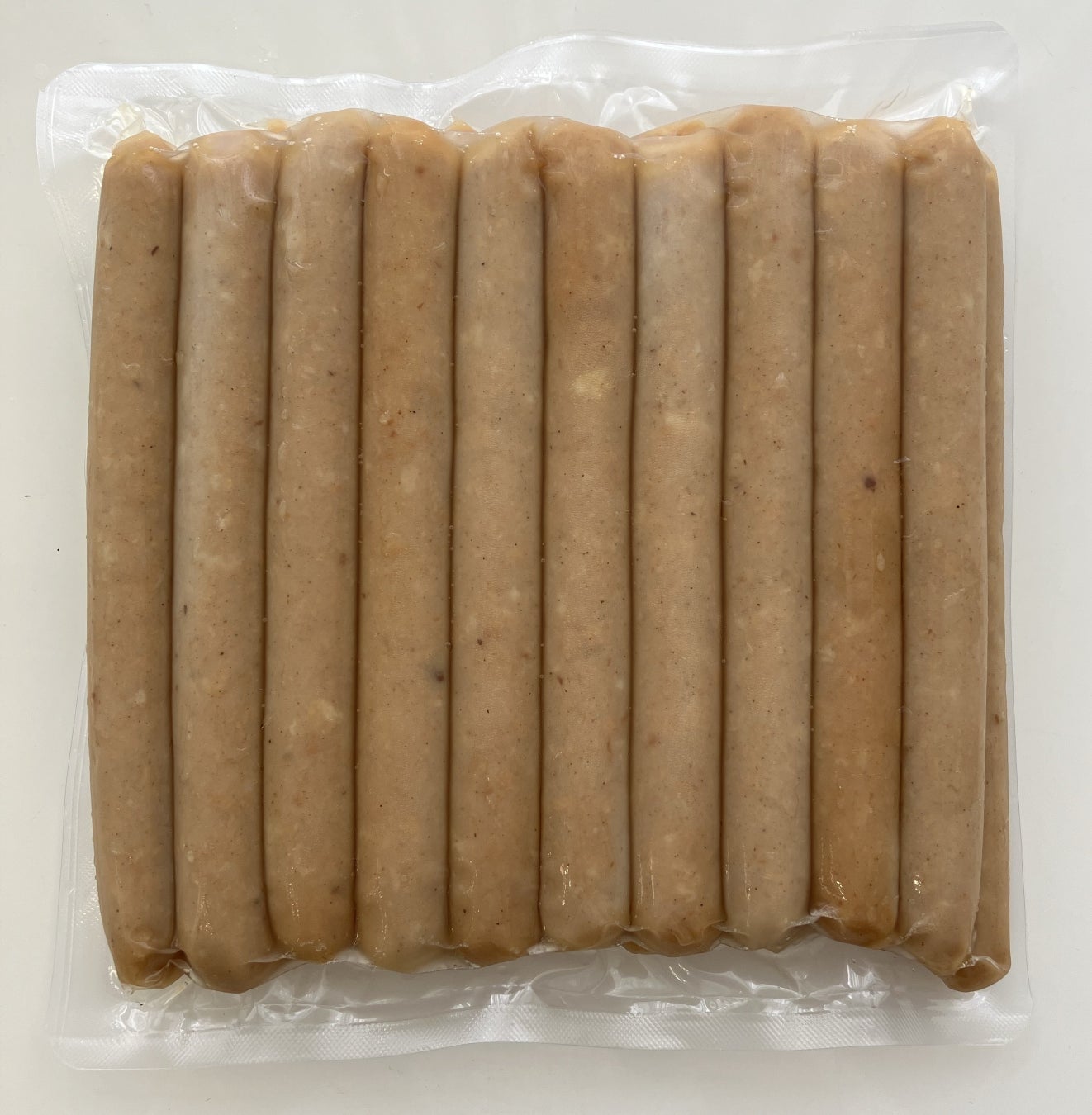
The “next-generation” sausage, as Ginga Foods describes it, has 70% lower fat and 50% fewer calories than conventional versions. It also benefits from 2.2g of dietary fibre, which is hardly ever found in a 100% pork sausage.
The company is gearing the product for use in restaurants (both chains and family-owned establishments), hotels and resorts, the consumer packaged goods sector, company cafeterias, as well as school lunches, where it can fit into more health-conscious menus.
After seafood, pork is the most consumed form of meat in Japan. Consumers have spent more money on pork products as they move away from costlier beef, but overall, meat intake reached a 23-year-low in 2025.
A recent survey showed that a sixth of Japanese consumers intend to cut back on meat. Of these, 38% cited the economic benefits of lowering meat consumption as the most influential factor, while 23% and 22% cited health and environmental wins, respectively.
Ginga Foods is looking to tap into these trends. “Through the sale of this product, we aim to accelerate our expansion into the health-conscious market and the sustainable food market,” it said.
It’s not the first blended meat product in Japan – Daiz’s Miracle Meat has been used in blended beef burgers, chicken nuggets, and tuna rice balls – but given its multifaceted advantages, it won’t be the last either.
Blended meat fits into Japan’s food tech goals

“We will accelerate value creation in the food tech field by considering product development that utilises local resources and expansion into overseas markets,” Ginga Foods said.
The blended sausage plays directly into the Japanese government’s goal to expand domestic and international sales of future foods to ¥3T ($19M) by 2040, with plant-based products set to play a central role.
That target is part of a larger public-private investment roadmap announced in June, which projects cumulative financing of ¥370T ($2.3T) across 17 economic sectors.
Four of these are related to food tech, accounting for a total of ¥9.7T ($60B) in investment, with ¥1T ($6.2B) allocated to new foods. This includes animal-free proteins and functional nutrition products, with the government keen on leveraging the country’s strengths in fermentation, seasoning technologies, rice flour products, and marine ingredients.
Japan wants to become the most advanced bioeconomy society by 2030, and has previously announced an $8B fund to support biomanufacturing, before identifying food tech as a priority growth sector.
The government plans to initially target health- and climate-conscious consumers in Europe and the US with these future foods, before expanding into Asia.
Blended meat is already making a mark in Europe and North America, with supermarkets and foodservice providers across the Netherlands, Germany, Austria, Belgium, the UK, Sweden, and the US all launching such products within the last couple of years.