

Austrian Legacy Meat Producer Combines Plant-Based & Blended Meat Under New Brand

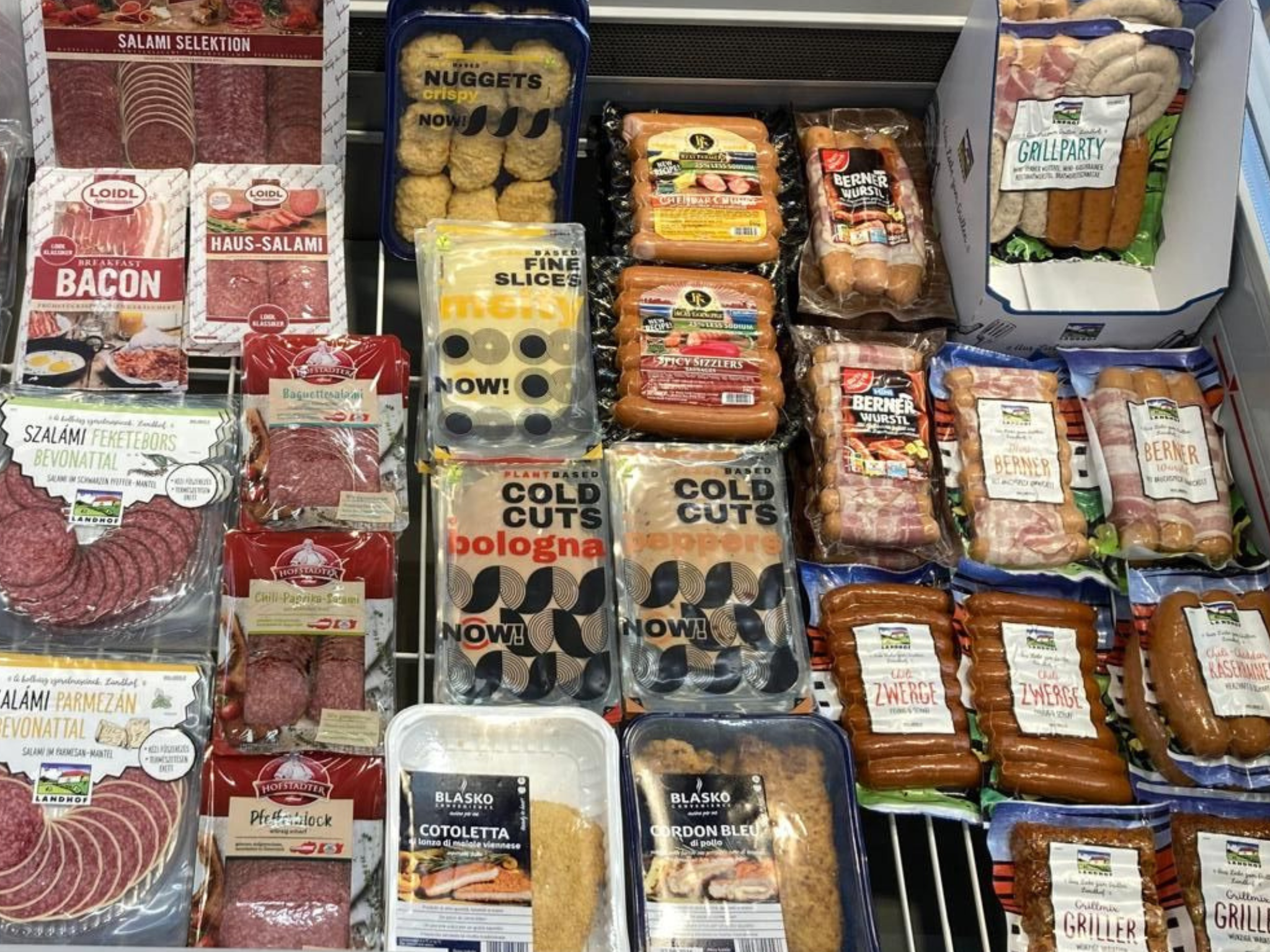
Austrian meat major Marcher Fleischwerke has expanded its focus on alternative proteins with Now!, a new brand that combines plant-based meat with blended proteins.
Blended meat’s momentum seems unstoppable in the current landscape.
After several supermarkets launched private-label products combining meat with plant-based ingredients to offer a best-of-both-worlds protein solution, food manufacturers are getting in on the act, too.
In Austria, Marcher Fleischwerke – a company that has been producing meat for nearly a century – has evolved its meat alternative portfolio to incorporate a wider range of proteins, including both plant-based and blended options.
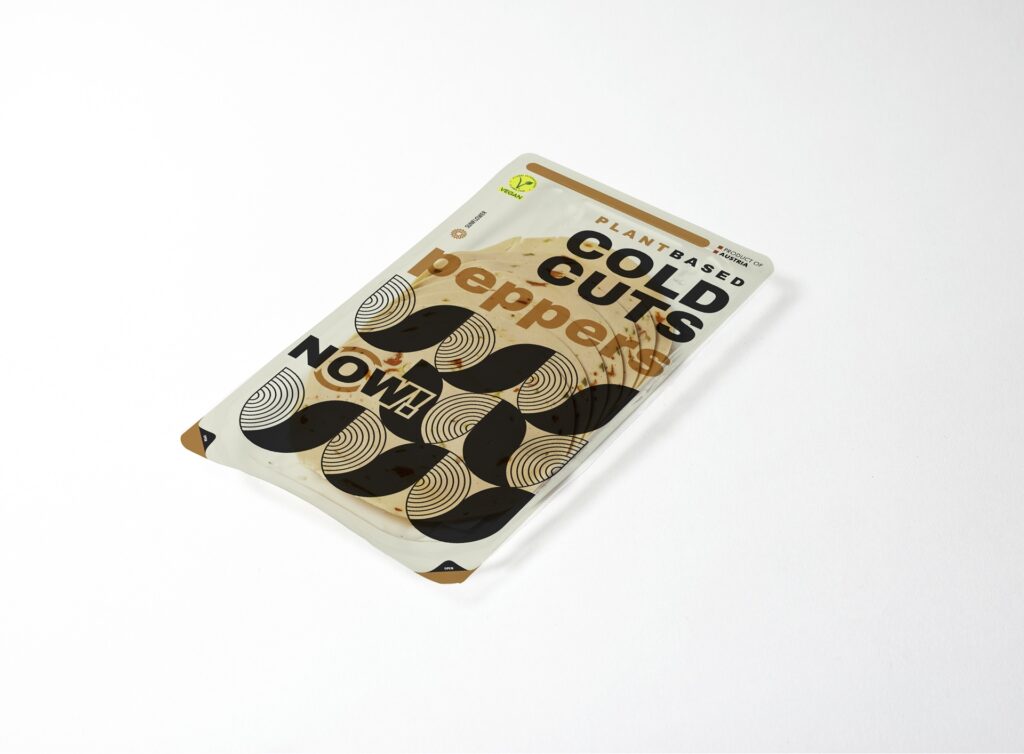
The company is replacing its Die Ohne brand with Now!, a brand that unites vegan cold cuts, meat-free nuggets, blended burgers and sausages under one umbrella. It will also produce a non-dairy cheese product under this label.
“With the development brand Now!, a platform has been created under which future trends can be perfectly presented, and with which Marcher will now appear at trade fairs and in B2B interactions,” explained Markus Fahrnberger-Schweizer, managing director of Marcher Fleischwerke.
Why Marcher Fleischwerke is looking beyond 100% plant-based meat
Marcher Fleischwerke entered the meat alternative space with the 2018 acquisition of Landhof and its subsidiary Die Ohne, through which it launched its first meat-free cold cuts. It soon changed the vegetarian recipe to a 100% plant-based version.
Now, though, it’s transferring its plant-based meat products from the Die Ohne brand to the new Now! range, which it says will help align its business with “current food trends”.
Surveys show that around one in 10 Austrians follow a vegan or vegetarian diet, with meat consumption on the decline, especially among those under 25. In fact, a 2023 poll found that only 48% of the country’s consumers considered themselves frequent meat-eaters, the rest following flexitarian, pescetarian, or meat-free diets.
This aligns with the country’s latest dietary guidelines, which recommend a shift away from animal proteins in favour of plants. They’re based on a ‘plate model’ that advises a diet of 50% fruits and vegetables, 25% whole grains and potatoes, and a further 25% proteins, mostly plant-based.
At the same time, separate research points to a paradox in meat consumption in Austria. Despite 59% of consumers believing that the public eats too much meat, only 46% want to consume less of it. And market data backs this up, with per capita meat consumption rising slightly by 0.4kg in 2024.
It’s why Marcher Fleischwerke is embracing blended meat. These ‘balanced proteins’ can drastically lower the impact of meat products, and enhance their health credentials by adding fibre and lowering saturated fat and cholesterol content.
Blended meat takes over Europe
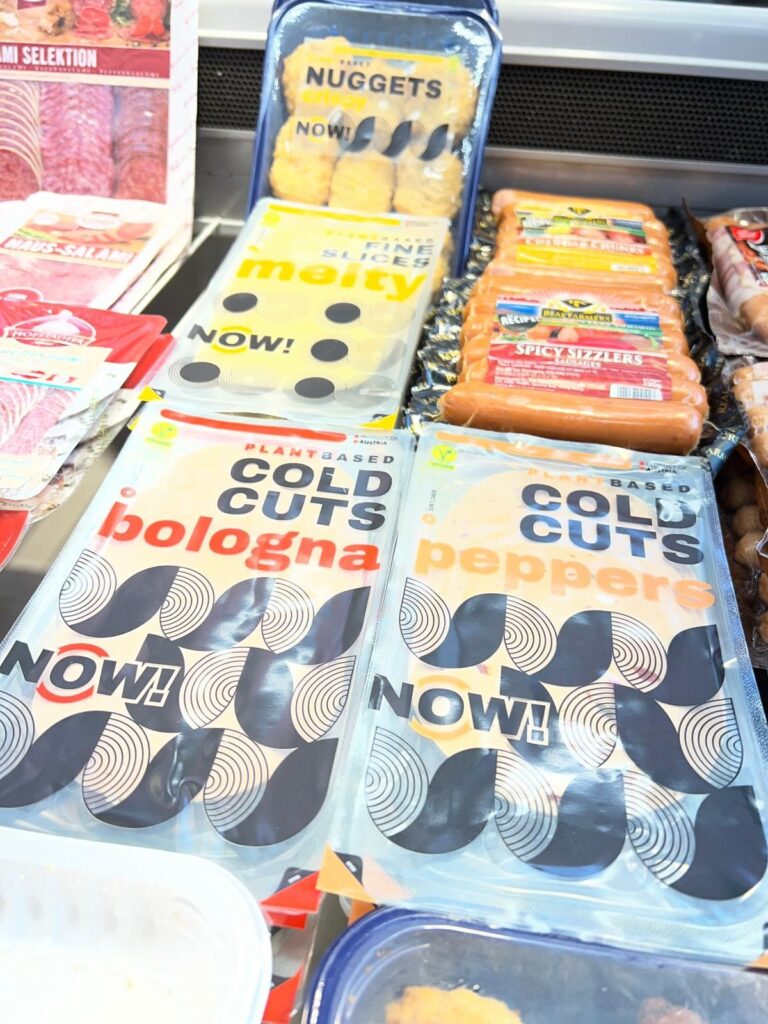
The Now! brand, unveiled at the Private Label Manufacturers Association trade show in Amsterdam (May 19-20), will feature a wide array of alternative protein products.
The vegan range comprises mushroom-based sausages, burgers and meatballs, as well as cold cuts (in classic, cucumber and chilli flavours), frankfurters, schnitzel, and nuggets, made from either sunflower protein or a wheat and pea protein blend. It also includes dairy-free cheese slices derived from locust bean protein.
Meanwhile, as part of its new blended meat portfolio, Marcher Fleischwerke is producing 50/50 beef burgers and pork sausages, combining animal proteins with mushrooms.
“We have spent decades proving that we know how meat and sausage should taste, what texture products need, which spices harmonise, and what flavour should be achieved. Equipped with this expertise, we can confidently explore new paths, experiment, create new foods, and think in a contemporary way,” the company said on the Now! website.
“Recipes based on new proteins are exciting experiments in which the familiar and the traditional merge into something new. The result is a product world that doesn’t have to choose between tradition and the future, but instead shows its strengths in the here and now.”
Blended meat is rapidly gaining ground in Europe. In Germany, Rewe Group, Lidl and Aldi all sell balanced protein products, and Nosh.bio makes a beef mince blended with koji protein for the foodservice sector. And Sweden’s largest supermarket, ICA Gruppen, recently began stocking meatballs made from a beef-mycoprotein blend by Smaqo.
Lidl, Aldi, Albert Heijn and Colruyt Group have introduced blended meat in the Netherlands, which is the most advanced market for hybrid proteins. Here, the average cost of these products is 4.4% lower than 100% meat and dairy.