

Swedish Meatballs, With A Fungi Twist: Smaqo Debuts Blended Meat in Country’s Largest Retail Chain

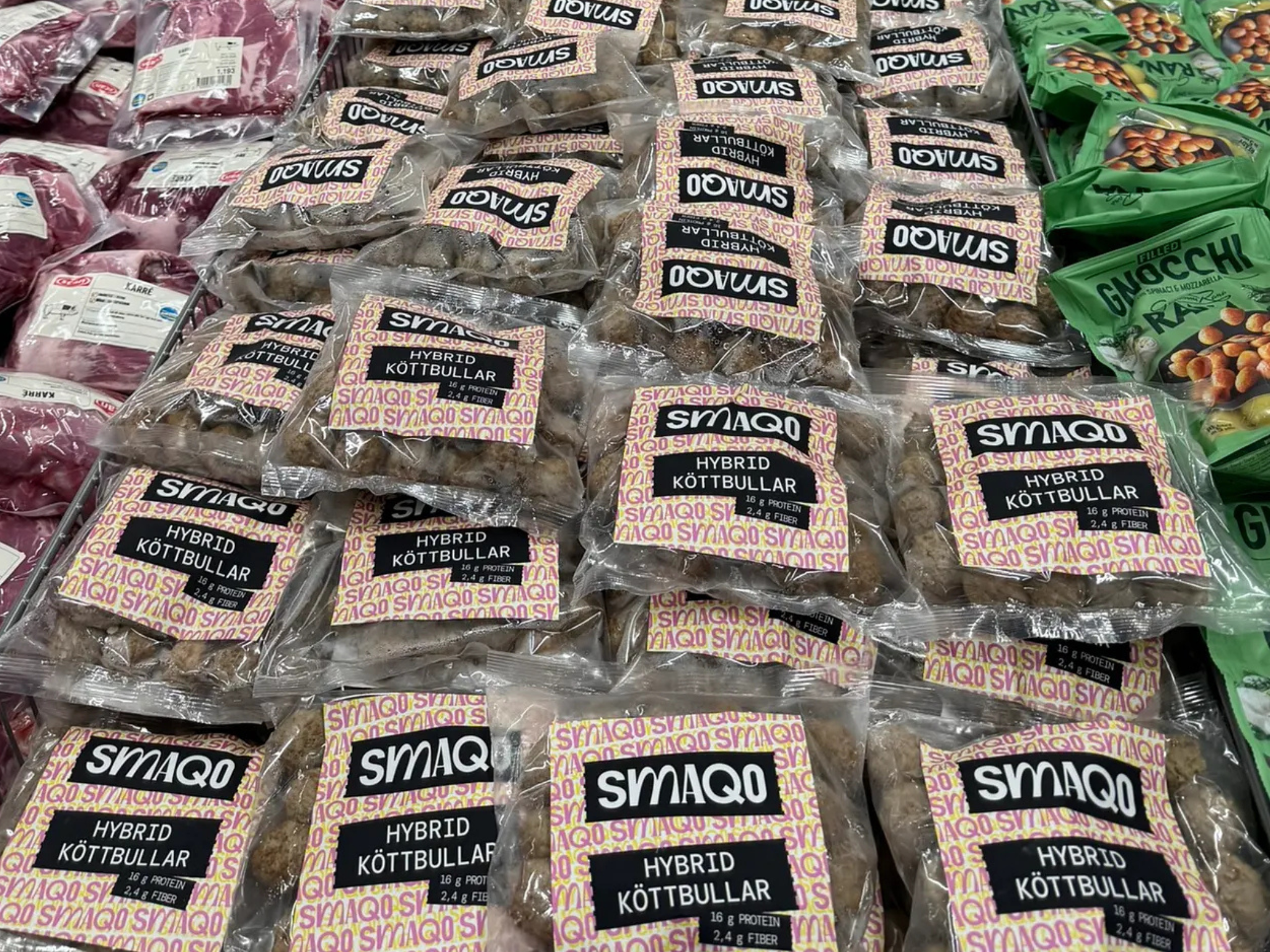
Swedish food tech startup Smaqo has rolled out meatballs made with beef and mycoprotein in supermarkets within the ICA Gruppen network.
First, it was hybrid dairy; now, it’s blended meat. Sweden’s largest retailer is going all-in on the protein transition.
All major Gothenburg and Kungsbacka stores owned by ICA Gruppen, which accounts for a third of the national retail market, are now stocking meatballs made from a beef-mycoprotein blend by Smaqo.
The fungi protein firm, established last year by former Promyc founder and CEO Ramkumar Nair, is looking to bank on the success of blended meat products across Europe, while tapping into the demand for clean-label foods.
“Our vision with Smaqo is to offer consumers a smarter way to enjoy everyday consumer food,” said Nair. “By combining meat with a fungi-based mycoprotein blend, we can create products that are flavorful, nutritious, and more resource-efficient while keeping the ingredient list simple, relatable, and transparent.”
Keying into demand for clean-label options

Smaqo is built on Nair’s years of expertise from Promyc (previously Mycorena), which was acquired by fellow biomass fermentation player Naplasol after filing for bankruptcy last year.
Its blended meatballs have an equivalent mix of beef and mycoprotein, to which it adds yellow onions, salt, allspice, black pepper, and white pepper.
The product contains 16g of protein per serving, with the added benefit of 2.4g of fibre from the fungi protein. This gives Smaqo’s innovation an edge over conventional meatballs, which contain no fibre, at a time when the nutrient is dominating conversations around food and health.
TikTok trends like fibermaxxing in the US have given way to fibrelayering in the UK, all propped up by the rising popularity of GLP-1 drugs like Ozempic, personalised nutrition apps such as Zoe, documentaries like Netflix’s Hack Your Health, and the 30-plants-a-week movement.
The short ingredient list will appeal to Europeans looking for more clean-label food options and dismayed by the ultra-processed nature of certain meat alternatives.
“With no added additives, sugars, or unnecessary fillers, the product aims to meet the increasing consumer demand for clean-labelled foods that balance taste, nutrition, and sustainability without compromising quality,” the company said.
Smaqo teases mince product with beef-mycoprotein-plant blend

Smaqo noted that the launch of the blended meatballs serves as a pilot introduction for its brand, with plans to expand its portfolio with additional offerings in the months to come. Its website teases a Formable Mince product, which combines 50% beef with 20% mycoprotein and 30% plant-based ingredients.
In September, the firm raised fresh funding in a round led by Good Startup, with participation from ITIL Partners and Nuora Capital, to scale up its fermentation platform, expand product development, and introduce its first products.
Smaqo has also established production partnerships in Sweden and Asia, with an international rollout planned for 2027 on the back of an asset-light model.
The ICA Gruppen launch comes weeks after the retail giant began carrying hybrid cheese products from Danish startup PlanetDairy in more than 500 stores. With blended meat on its shelves now, the supermarket company is applying this protein diversification strategy to full effect.
It follows the 2025 update to Sweden’s national dietary guidelines, in which the National Food Agency embedded sustainability considerations and emphasised a higher intake of plant-based whole foods.
This is echoed by a 2025 study by Swedish researchers, who analysed the diets of over 26,000 participants and found that the most climate-friendly diets were lower in animal-sourced foods. In 2024, research revealed that Swedish diets rich in plant-based alternatives were associated with significantly lower emissions (30-52%), land use (20-45%), and freshwater consumption (14-27%).
Globally, 64% of flexitarians have expressed interest in blended meat products, on par with fermentation-derived proteins, and slightly higher than cultivated meat. Europeans supermarkets are betting on this shift: Lidl, Aldi, Albert Heijn and Colruyt Group have all been selling blended proteins in various markets, in a bid to lower their climate impact and contribute to healthier diets.