

Plant ‘n’ Beef: Germany’s Rewe Group Re-Enters Blended Meat Space with New Burger

Rewe Group, which operates more stores than any other supermarket in Germany, has launched a blended burger with 70% beef and 30% plant-based ingredients.
In another sign of blended meat’s wide-reaching potential, Rewe Group has rejoined the category with a new burger SKU.
The retailer had previously launched the Better Half burger and sausages with 50% meat and 50% vegetables in 2021, in what was the first wave of the blended meat category, though these products were later discontinued.
It’s a different world now, and blended meat is popping up everywhere – especially in Europe. Rewe is now returning to the space with Plant ‘n’ Beef, a burger combining 70% beef with 30% plant-based ingredients, produced by meat company Willms.
The blended burger is available in the meat aisle at Rewe stores nationwide, and retails for €2.99 for a two-pack of 115g burgers.
Germans are shifting away from meat
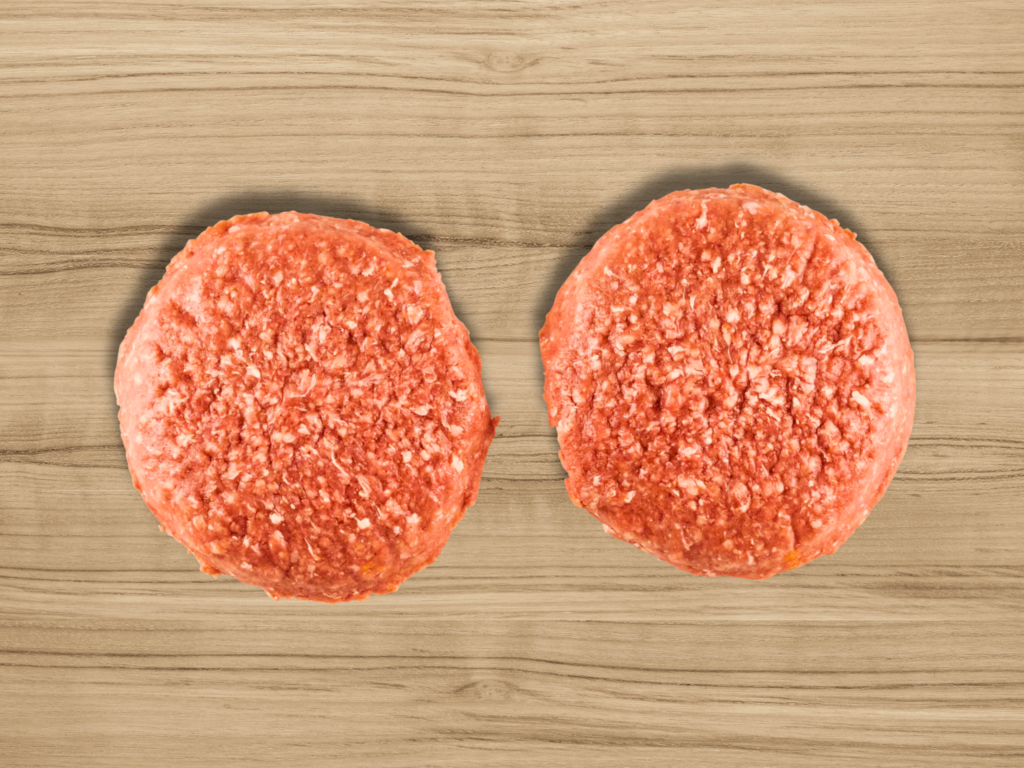
Rewe’s new Plant ‘n’ Beef burger combines a minced beef mix containing salt, spices and antioxidants with 30% textured fava bean flour.
The product contains nearly 30% less fat than the 100% beef patties sold under the Butcher’s Burger brand at Rewe’s stores, with a slight reduction in saturated fat content (from 8g to 7g for the blended product).
That said, the 70/30 patty has 17% less protein than a burger made entirely from beef; however, protein intake isn’t a health issue in Germany, where citizens overconsume the nutrient.
Most strikingly, the blended burger is much cheaper than its fully animal-based counterparts. Rewe’s own-brand organic burger costs €5.69, nearly twice as much as the hybrid alternative.
The launch represents the growing footprint of blended meat in Germany. Last year, local startup Nosh.bio began selling a new mince product combining its fermented koji protein with conventional beef at Berlin canteen Speisemanufaktur Adlershof. In taste tests, 800 participants preferred it to beef, and 87% said they’d eat it again, prompting the canteen to add it to its rolling menu.
It comes amid a plateau in meat consumption in Germany. At 52.8kg per capita, annual meat intake reached an all-time low in 2022. This marginally rose to 53.3kg in 2024, still 13% lower than a decade prior. The intake of red meat, like pork and beef, has particularly driven this decline.
Instead, Germans are hungrier for plant proteins. Half of its adults want to change their diets by either reducing meat or eating more plant-based food, and the primary drivers behind this shift are high costs (25%), health concerns (24%), and changing taste preferences (19%).
This is no surprise, given that the country is the world’s second-largest market for vegan food (behind the US) and home to one of the largest populations of flexitarians. Research suggests that over two in five Germans now identify as flexitarians.
Rewe rebrands plant-based private labels to court flexitarians
Rewe Group’s blended burger launch echoes the strategy of its European counterparts. Fellow German retailers Lidl and Aldi both sell hybrid proteins in the Netherlands and Belgium, as do Albert Heijn and Colruyt Group.
Meanwhile, Sweden’s largest supermarket, ICA Gruppen, recently began stocking meatballs made from a beef-mycoprotein blend by Smaqo. And outside Europe, Central Market in Texas sells several blended meat products made with Fable Food Co’s shiitake mushrooms.
Rewe itself is the second-largest supermarket chain in Germany, operating more stores than any of its competitors. Its decision to sell a 70% beef, 30% plant burger comes on the back of research suggesting that the best way for German retailers to meet their climate targets without breaking the bank is to replace 30% of their meat and dairy offerings with plant-based alternatives.
Last year, Rewe unveiled a plant protein strategy and announced a target to make 60% of its sales come from plant-based products by 2035 – this stood at 54% as of 2024, when it opened its first fully vegan store in Berlin.
It also called on the federal government to develop a national protein strategy, asking policymakers to simplify regulation for novel foods, ramp up investment in protein diversification research, scrap the VAT on plant-based milk, and boost domestic plant protein production.
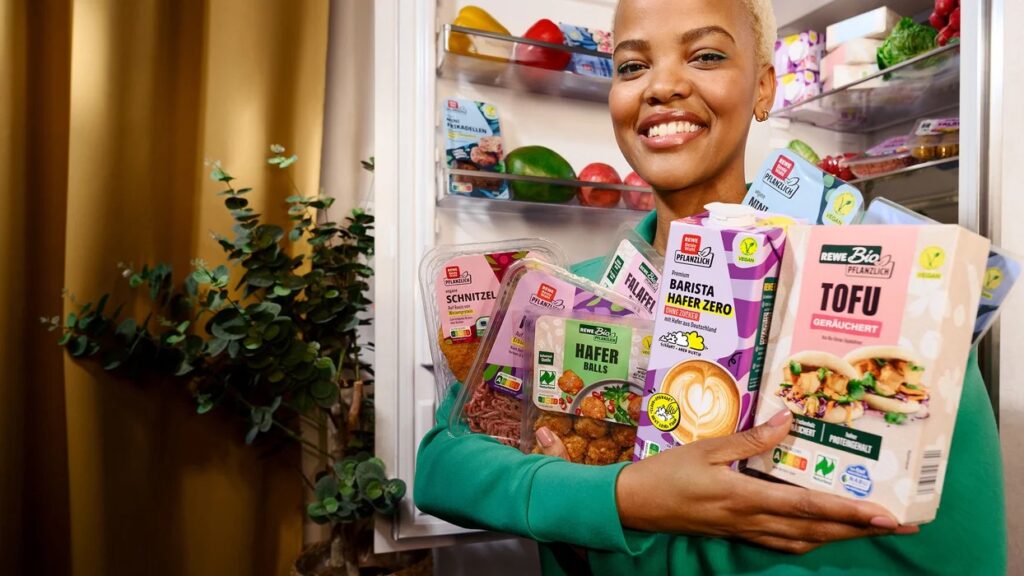
The rollout of the blended burger comes just as Rewe rebranded its private-label vegan brands, Rewe Bio + Vegan and Rewe Beste Wahl, with a ‘Pflanzlich’ (Plant-Based) tag, specifically aimed at expanding their appeal among flexitarians.
“For many, the focus is not on deprivation, but on enjoyment and quality,” the company said. “The new name, Pflanzlich, ensures better brand recognition on the shelf and makes the product range clearer.”