

Australians View Plant-Based Meat As Riskier & Less Valuable – Can Tailored Marketing Fix That?


A new study reveals that meat-eaters in Australia perceive plant-based alternatives as riskier and less valuable, regardless of how they’re marketed, and calls on manufacturers to tailor their messaging to different consumer groups.
Existing advertising formats across Australia for plant-based meat fail to move the needle for omnivores, who continue to perceive these products as less valuable than animal proteins.
That’s according to a new study by Adelaide University, which surveyed nearly 1,000 adults to assess their perceptions of meat alternatives and their willingness to buy or recommend them to others.
“We had expected the advertising appeal to have a stronger overall effect, but for most meat-eaters, it made little difference,” said lead researcher Cassidy Shaw, from Adelaide University’s School of Marketing.
“Their existing perceptions of plant-based meat as riskier and offering less value remained the strongest influence on their decisions. This is consistent with what we know about established attitudes: once formed, they tend to be durable and difficult to change over time.”
Perceptions of risk and value ‘more influential’ than style of message
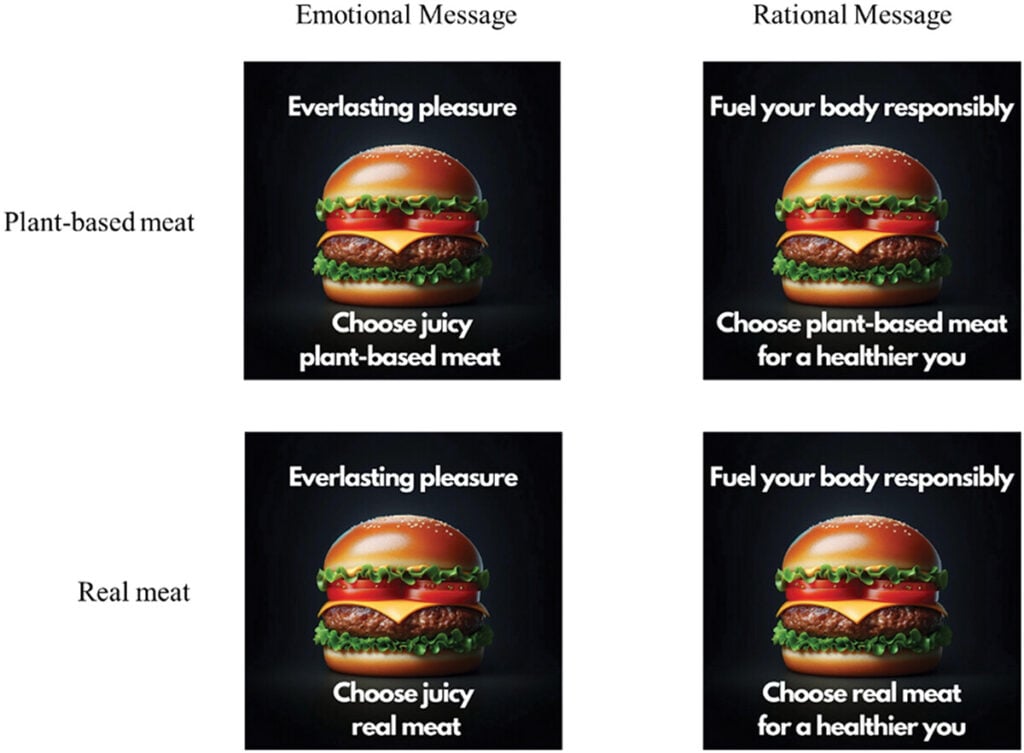
The researchers argue that plant-based meat is still relatively novel for many consumers and could therefore trigger uncertainty about its attributes and performance – consumers may question the taste, texture, nutritional value, processing methods, and ‘naturalness’. This can translate into perceived risks across multiple dimensions, including functional, financial, and psychological concerns.
At the same time, the concept of perceived value entails value for money, quality, and emotional and social value, which predict behavioural intentions about the consumption and purchase of food products. The study argues that consumers find more value in meat because they associate neophobia and taste barriers with plant-based alternatives.
The analysis revealed an indirect yet significant negative effect of plant-based meat on purchase intention and word of mouth through functional, financial, physical, psychological and time-wasting risks, irrespective of whether the messaging was emotional or rational. The impact through social risk, however, was insignificant.
Likewise, for perceived value, meat alternatives had a negative impact on purchase intention and word of mouth through quality, emotional, price and social value.
“These latter results could be explained by the fact that having plant-based meat in a burger does not make sense for meat eaters and removes all pleasure from the hedonic experience of consuming a meat burger, with the average meat eater questioning how environmentally friendly and healthy plant-based meat products are,” the study states.
For most meat-eaters, changing advertising from emotional messaging that highlighted enjoyment to rational appeals focused on health didn’t shift perceptions. “Advertising alone is unlikely to overcome concerns for most meat-eaters because perceptions of risk and value are more influential than the style of the message itself,” said Shaw.
“Among younger consumers, emotional advertising actually backfired, reducing acceptance of plant-based meat because it lowered perceptions of quality. Among vegetarian consumers, rational messages strengthened perceptions of quality and increased their willingness to purchase and recommend the product.”
How companies can revamp plant-based meat marketing

While interest in plant-based meat alternatives is on the rise in Australia, less than one in five consumers buys these products. And the country remains one of the world’s largest consumers of meat. So for manufacturers of the former to succeed, a shift in marketing tactics is sorely needed.
“It is important to understand the target audience for plant-based meat and to tailor marketing strategies, not treating it as one-size-fits-all,” the researchers say.
The study, published in the Journal of Marketing Management, suggests that companies should reduce hurdles that hinder consumer acceptance by reassuring them about the taste, health benefits, and convenience of plant-based meat. Risk-mitigation strategies, like product sampling, in-store tastings, and chef endorsements, could also be adopted to encourage trial.
It’s important to convince people that meat analogues can work just as well as the products they’re trying to replace. “Focusing on factors such as taste, texture, and nutritional value, and on tutorials for preparing dishes with this ingredient, can support this strategy and encourage adoption, rather than relying only on ethical or environmental levers,” the authors write.
And despite having no effect on meat-eaters in general, younger omnivores were still influenced by the emotional appeal of adopting meat for its perceived quality, but not by plant-based meat. This indicates that for young consumers, marketers should steer clear of emotional appeals and focus on rational messaging that clearly communicates product quality and benefits to health, the environment, and animal welfare.
They should prioritise rational marketing for vegetarians, too. As for meat-eaters, communications should focus on reducing perceived financial, psychological and time-related risks by reassuring them that plant-based meat tastes good and offers value for money.
“The fact that the social risk is not significant means that eating plant-based meat is no longer substantially associated with social disapproval. Because of this, businesses might stop spending money on normalisation campaigns and instead focus on making these products taste better and be more functional,” the study says.