

Malk Debuts High-Protein Plant-Based Whole Milk After Sales Surged by 46% in 2025

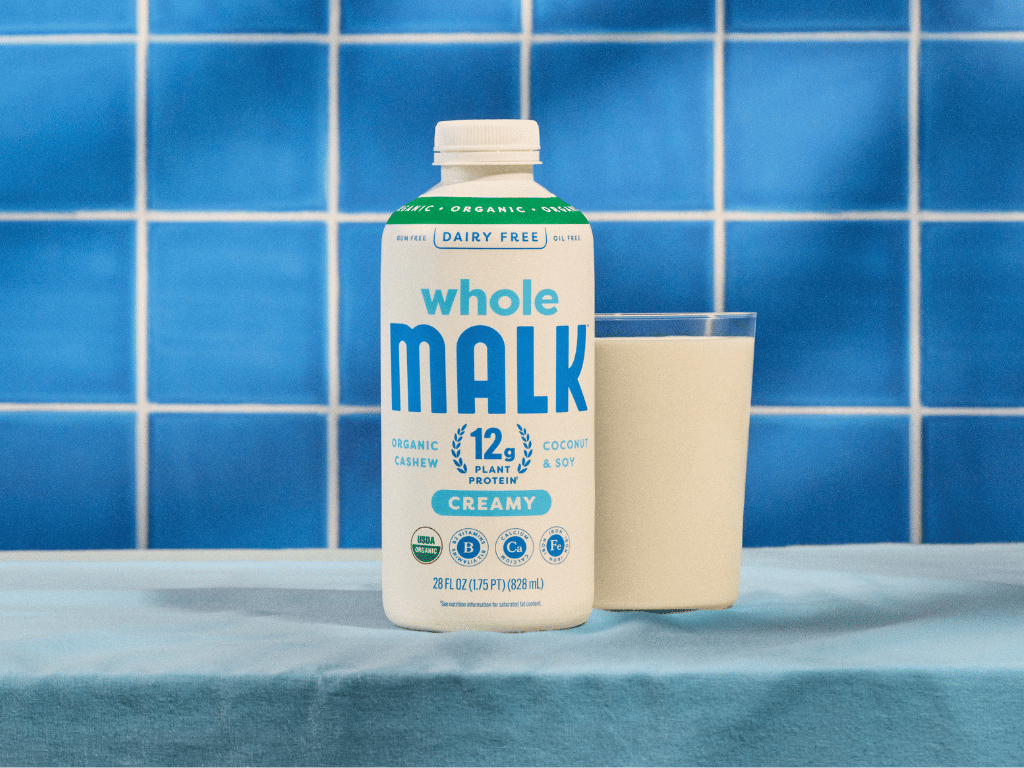
US plant-based milk brand Malk Organics has launched what it calls its “biggest innovation yet”: a high-protein, additive-free whole milk, following a year in which its sales neared $100M.
Malk Organics, the US startup known for its clean-label milk alternatives, has debuted a multi-ingredient whole milk to solve some of the category’s most pressing consumer pain points.
The firm’s Whole Malk product is made from a base of soy, coconut, cashews, and pea protein, and is designed to better replicate the neutral flavour of cow’s milk, while delivering more protein without any additives like emulsifiers or gums.
The product is now available at Whole Foods Market, Target and Sprouts Farmers Market nationwide, and delivers 5g of protein per 100ml, compared to the 3g found in conventional whole milk. It has a small amount of fibre (1.25g per 100g) too, and is fortified with micronutrients like iron, potassium, magnesium, and vitamins B2, B12 and D.
“For years, Malk has been known for what we leave out. Whole Malk gave us the opportunity to thoughtfully explore what belongs in,” Malk president Ryan Rouse tells Green Queen, calling it the brand’s “cleanest expression yet of what a modern everyday milk can be”.
Milking the protein and clean-label trends
Malk’s latest innovation is a response to two converging trends: the growing demand for protein, and a gap in the chilled non-dairy milk category for a product that delivers meaningful amounts of this nutrient only through clean-label and organic formulations.
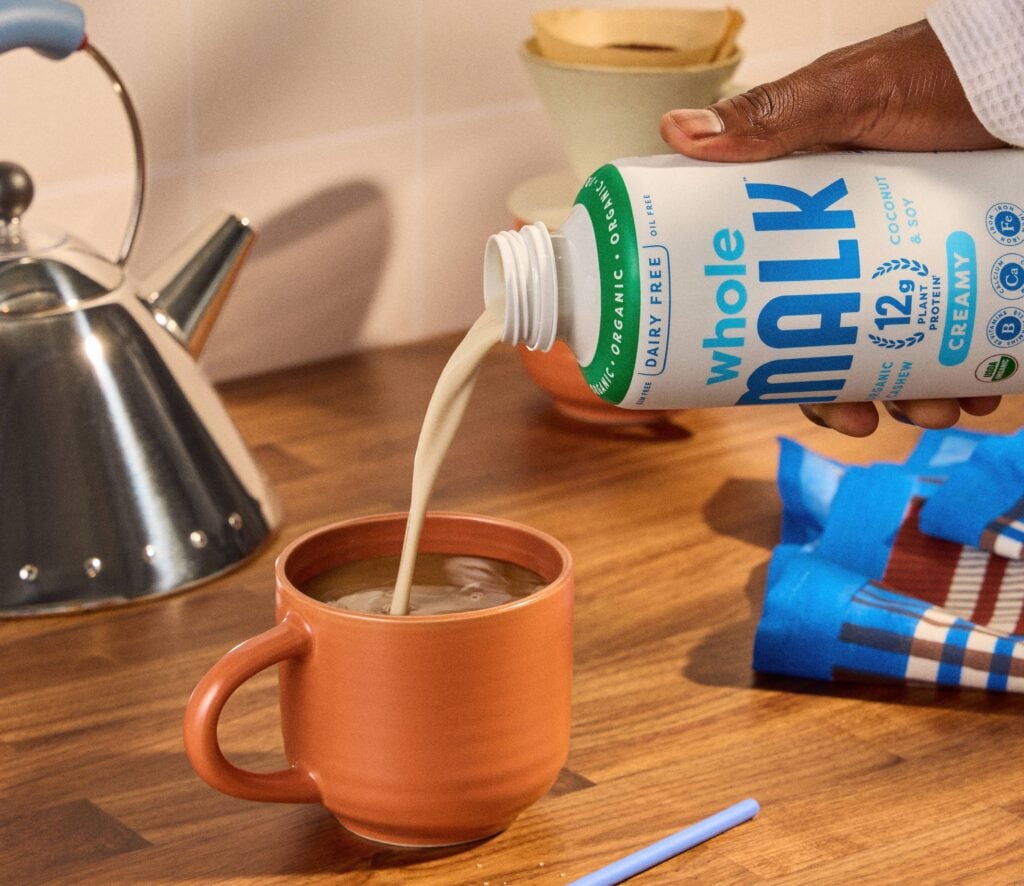
“Consumers are looking for everyday foods that deliver more nutrition without compromising ingredient integrity,” says Rouse. “Whole Malk combines 12g of plant protein with essential vitamins and minerals in a product that’s made for coffee, cereal, smoothies, cooking and family meals.”
Nearly three in five (57%) Americans are prioritising protein this year, according to one poll. Another shows that 65% of Gen Zers and millennials are trying to consume more protein, rising to 73% among GLP-1 users, who witness a 25-40% decrease in muscle mass over eight to 16 months (several times more than non-medicated weight loss approaches and age-related muscle loss).
According to Innova Market Insights, the share of people who have used weight-loss drugs like Ozempic has grown from 10% in 2024 to 18% in 2025, and 40% of them report eating more protein.
It’s why more and more alternative milk brands are boosting their offerings with protein. Danone has introduced high-protein soy milks under its Silk range, featuring 13g of the macronutrient per cup in the US and 18g in Canada, and Strive Nutrition relies on precision-fermented whey protein and plant-based ingredients to offer over 10g of protein per cup.
The furor around ultra-processed foods (UPFs), a category most Americans are trying to avoid, has contributed to this shift. That has boosted the popularity of clean-label products – today, half of American shoppers are worried about artificial ingredients, chemicals and preservatives, and 58% of Americans read labels before buying new items (rising to 87% among health-focused consumers).
Aside from the aforementioned base ingredients, vitamins, minerals, and water, Malk’s whole milk only contains cane sugar and Himalayan pink salt. “Whole Malk uses a blend of organic coconut, cashew, soy and pea protein because we evaluated countless ingredient combinations to achieve the flavour, texture and nutritional profile we were after,” says Rouse.
“Each ingredient has a specific job, and pea protein proved to be the ideal complement to soy. Together, they deliver a complete protein profile while allowing us to maintain the clean ingredient standards, creamy texture and neutral taste Malk is known for.”
‘Plant-based has spent too much time trying to be a substitute’
Nutrition is one thing – taste, however, is a whole other ball game. It’s also plant-based milk’s tallest hurdle. Last year, 83% of non-dairy milk drinkers in the US switched back to cow’s milk, and it’s not hard to see why.
A large taste test by Nectar, a sensory insights initiative by non-profit Food System Innovations, found that conventional milk enjoys much higher overall likeability (82%) than the average plant-based alternative (56%)
“The gap comes down primarily to flavour, specifically off-flavours and off-aftertastes. In our qualitative data, flavour was cited as a dislike two to four times more often than texture or appearance,” Nectar director Caroline Cotto told Green Queen in March.
“Dairy didn’t earn those numbers overnight. It earned them by becoming indispensable. It’s part of people’s daily rituals. I think plant-based has spent too much time trying to be a substitute instead of becoming just as useful. That’s where the opportunity is,” Rouse believes.
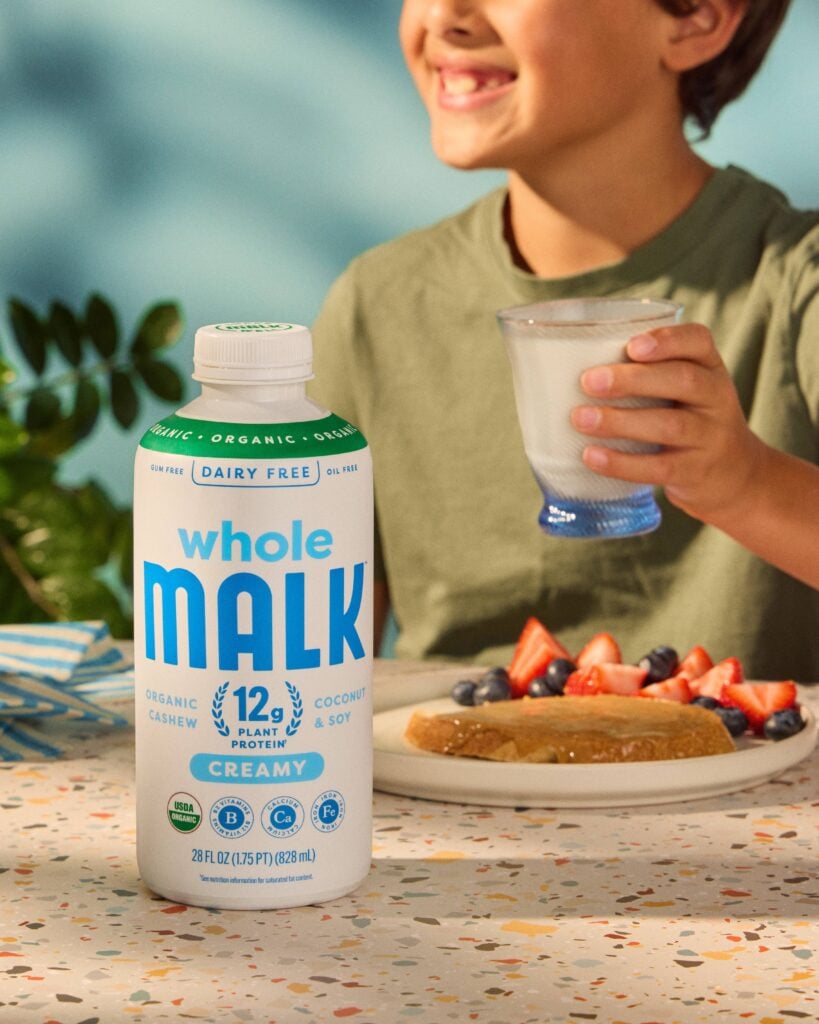
“Our consumers already care deeply about ingredient quality. They’re simply looking for more ways to incorporate clean, organic nutrition into their day without changing the routines they already love. Whole Malk was designed to fit seamlessly into those moments, delivering meaningful protein, vitamins and minerals, whether it’s coffee, cereal, smoothies or family meals,” he says.
“We don’t see it as replacing dairy or even replacing another Malk. We see it as earning another place in the refrigerator by giving consumers another reason to choose Malk.”
That philosophy may be why Malk enjoyed a successful 2025 even as the category witnessed a 2% drop in US retail sales. “Malk surpassed $94M in sales in 2025,” Rouse reveals – that’s a 46% rise from its 2024 total, propelled by over 1.4 million in unit sales.
“The brand attributes that momentum to expanding with the right retail partners, introducing products that meet evolving consumer needs, and remaining committed to simple, organic ingredients and ingredient transparency,” he says.
It’s not the only plant-based milk maker to take the multi-ingredient route. In the US, Califia Farms launched a Complete Kids milk made from peas, chickpeas, and fava beans, and Eclipse Foods debuted a non-dairy whole milk made from pea and chickpea protein isolates.
Elsewhere, NotCo continues to sell its flagship NotMilk line in Latin America, blending ingredients like coconuts, pea protein, pineapple and cabbage, and Alpro retails its This Is Not M*lk range – a combination of oats and pea protein designed to mimic dairy – in several European markets.