

Microalgae Grown from Cultivated Meat Waste Could Cut Costs for Cell-Cultured Proteins

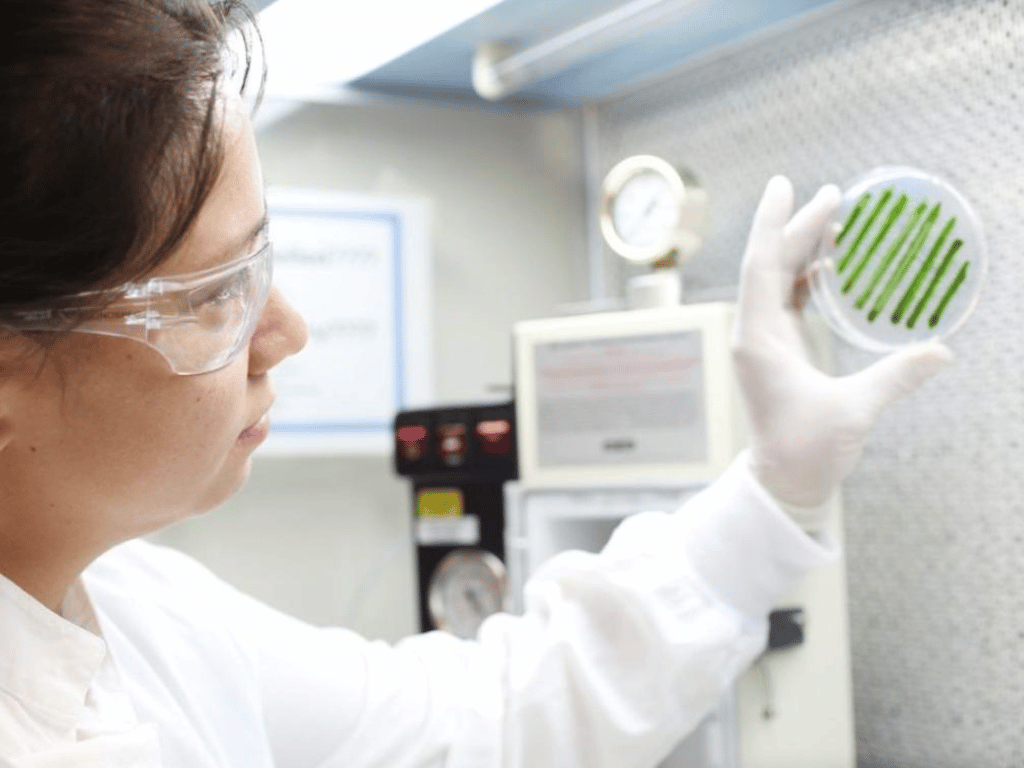
Researchers in Australia have found that the waste from cultivated meat could be used to grow microalgae, which could be fed back into the system to replace expensive growth factors for cell-cultured proteins.
The key to cheaper cultivated meat could be… its own waste.
University of Queensland scientists have developed a way to grow microalgae using waste from cultivated meat production, which can then be processed and fed back into the system to reduce the need for expensive ingredients like growth media and amino acids.
This can help lower the cost of cultivated meat, a major barrier towards large-scale availability of these proteins. “From our calculations, we estimate we can reduce growth media costs somewhere between 60-90%,” said Melanie Oey from the university’s Institute for Molecular Bioscience.
Microalgae can substitute growth factors while boosting cell growth
Culture media are essential to the production of cultivated meat, entailing a mix of nutrients to facilitate the growth of animal cells. They account for the majority of the costs involved in the entire process, whereas growth factors are responsible for the bulk of media costs.
Bringing these expenses down is crucial for the viability of cultivated meat. Moroever, there are ethical concerns from the use of animal-derived inputs like fetal bovine serum.
To solve this, the University of Queensland team worked with Melbourne-based cultivated meat startup Magic Valley on a project funded by the Australian Economic Accelerator. The latter supplied waste material from its process to explore how the closed-loop system could be incorporated into large-scale production facilities.
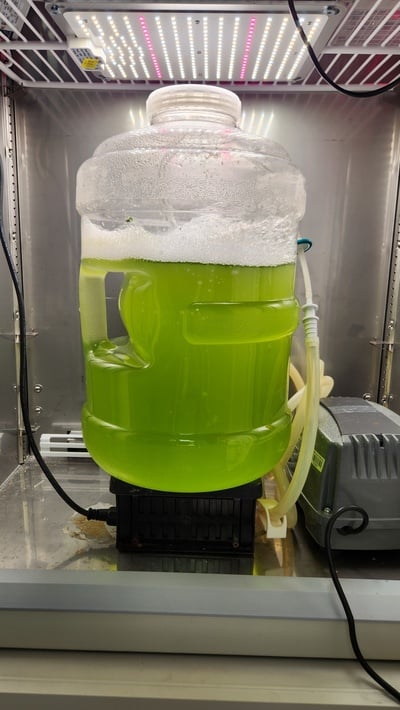
The researchers grew Chlorella BDH-1 on spent culture media from cultivated meat production, which acts as a substitute source for amino acids and animal serum, an outcome that was combined with beneficial mammalian cell-algae co-cultivation.
“The algae could absorb leftover nutrients from the cultivated meat waste while supplying oxygen to meat cells. The nutrients harvested from the microalgae could be returned to the system, creating a self-sustaining circular bioeconomy,” explained Oey.
“This greatly reduces the need for expensive growth factors and amino acids, which remain one of the largest hurdles getting cultivated meat into supermarkets and onto dinner plates.”
Algal lysate combined with algal co-cultivation was found to compensate for a 50% reduction in amino acids and serum and improve muscle cell growth by 40%.
“Overall, the algal lysate could substitute for reduced serum and amino acids, with some conditions even exceeding standard growth medium performance by over twofold,” the study, published in Food Research International, states.
Culture media costs a core focus for cultivated meat innovators

The researchers said the absence of a suitable scale-up system for co-cultivation inhibits the ability to produce sufficient microalgal biomass from co-cultivation to be used for lysate production.
“Our future work will therefore focus on co-cultivation scale-up and related hurdles including spatial separation of algae and mammalian cells, decoupling of oxygenation, and engineering challenges such as light delivery and biomass separation,” the authors wrote.
Andrew Laslett, head of R&D at Magic Valley, believes the research could be transformative for the cultivated meat industry. “By helping reduce media costs, one of the sector’s most significant barriers, this innovation could accelerate the pathway to commercial-scale cultivated meat production,” he said.
The startup is currently working on commercialising its cultivated pork, which has been sampled at restaurants, on TV shows like Gordon Ramsay’s Food Stars Australia, as well as at the New South Wales parliament. The company received an A$100,000 ($63,000) injection from the federal government to transition from lab research to commercial production, and is currently fundraising.
It has also forayed into the dog food industry with Rogue Pet, a brand of cultivated meat treats for canines set to be sold in fashion-industry-style ‘drops’. Across Australia, Vow has secured approval to sell these proteins for human use, with its cultured quail innovation available in restaurants and (previously) its direct-to-consumer store.
Clearance for France’s Parima is also imminent – the startup has been working with Vow to reduce costs of cultivated duck, completing a tonne-scale run on the latter’s 22,000-litre production line earlier this year, with significantly lower growth media costs.
Several companies have been focused on slashing the cost of culture media. South Africa’s Immobazyme has scaled production of fibroblast growth factor 2 (FGF-2) for cultivated meat in a 50-litre bioreactor in collaboration with a government-owned research organisation. And Tufts University spinout Deco Labs has developed a plant-derived replacement for albumin, the costliest culture media component.