

Parima Validates Cost-Effective Commercial Cultivated Meat Production with Vow Partnership

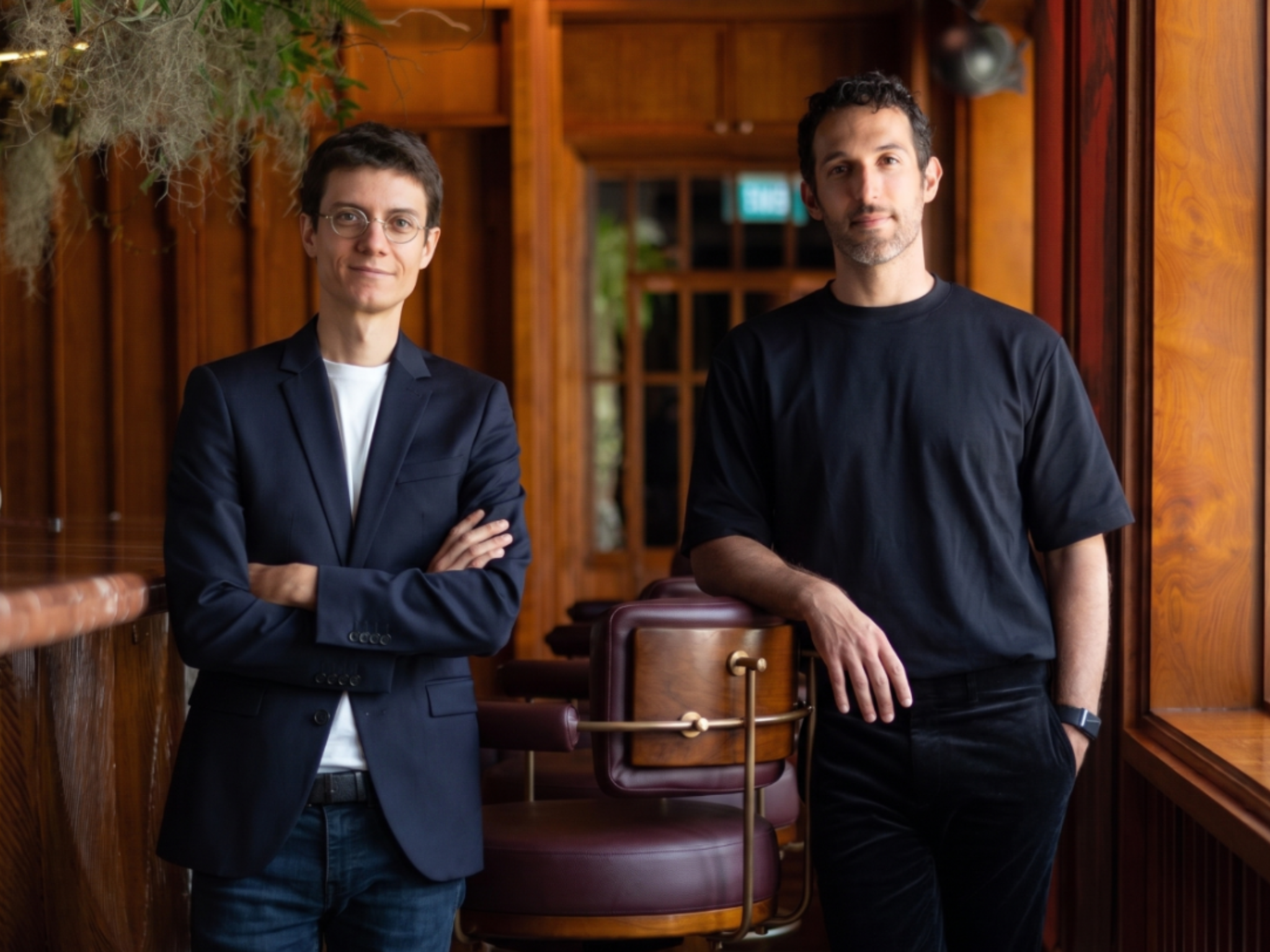
French cultivated meat leader Parima has demonstrated tonne-scale production of its duck at viable cost economics on a 22,000-litre line run by Australia’s Vow.
As it awaits regulatory approval in Australia, France’s Parima has leveraged a partnership in Sydney to prove that commercial-scale, economical cultivated meat production is possible.
The parent company of Gourmey and Vital Meat has demonstrated production of its cell-cultured duck at a tonne-scale volume in a single run on fellow cultivated meat pioneer Vow’s 22,000-litre production line, which is the largest food-grade cell culture bioreactor globally.
“Pairma and Vow began collaborating in 2025,” Parima co-founder and CEO Nicolas Morin-Forest told Green Queen, confirming that this first production run took place this year.
Parima achieved the breakthrough at a 99% lower cost than earlier runs, driven by successive gains in cell culture yields and the volume efficiencies of operating at scale. The milestone removes the “final barrier” to scaling up cultivated meat and secures viable unit economics, according to the startup.
This was driven by “successive gains in cell-culture yield, the removal of the most expensive compounds such as growth factors, albumin, and insulin, and the volume efficiencies of operating at scale”, according to Morin-Forest.
“Most industries start vertically integrated. Early players build everything themselves because the supply chain doesn’t exist yet. As they mature, specialisation sets in, and companies focus on what they do best whilst partnering for the rest,” he said.
“Cultivated protein is now going through that shift, the same one fermentation and other biomanufacturing went through as they industrialised,” the Parima CEO added.
Vow co-founder George Peppou noted: “Our platform has proven that cultivated cell production at 22,000 litres works at unit economics the industry can build on. What this collaboration adds is the demonstration that the economics Vow has already achieved work for partners too.”
He continued: “Parima has been a strong partner in proving that, delivering results on the first attempt, and we’re excited about what comes next.”
Parima clears hurdles that have ‘stalled production and drawn scepticism’
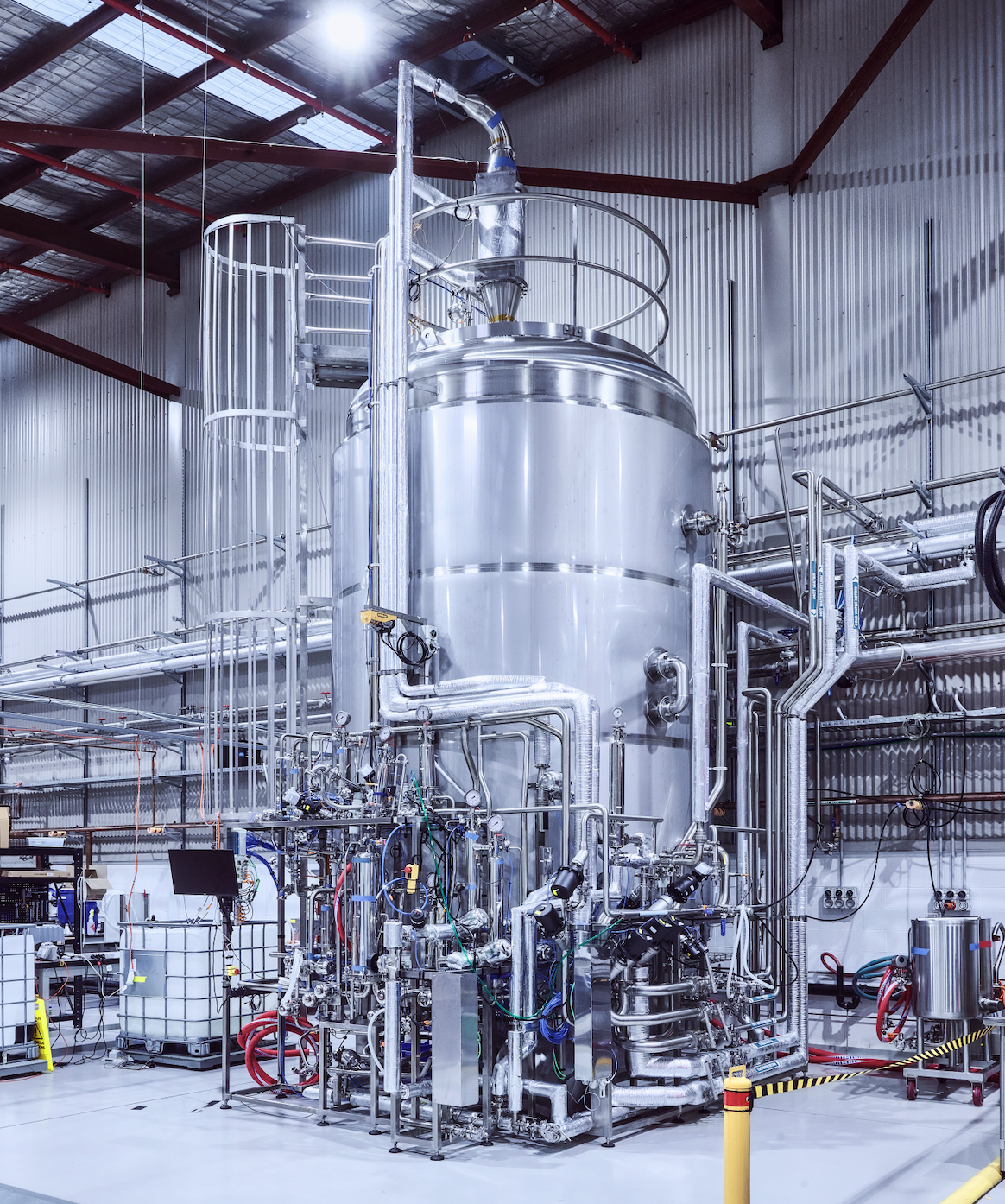
Parima makes cultivated duck and chicken under its Gourmey and Vital Meat brands, respectively, using “high-performing cell lines” that grow efficiently in large industrial bioreactors. The process doesn’t require any genetic engineering or modification, and doesn’t depend on scaffolding materials to structure the product.
Instead, the cells grow freely in suspension in a food-grade nutrient medium designed to ensure stability, affordability, and compatibility with global novel food regulations. Last year, Parima partnered with AI specialist DeepLife to develop an avian digital twin to optimise production of its cultivated meat.
Parima noted that early approaches of producing these proteins utilised expensive growth media, with cells that had to be grown on scaffolds and matured into tissue and processes that were hard to scale. But the startup takes a different route, growing non-GMO cells as an undifferentiated biomass in a manner similar to biomass fermentation.
The Vow collaboration has enabled its latest breakthrough. “We have cleared the technical hurdles that stalled cultivated meat production and drew scepticism over the past few years, specifically around process efficiencies, biological performance, and growth media cost,” said Victor Sayous, co-founder and CTO of Parima.
“The process ran at 22,000 litres on the first attempt, with no performance loss compared to smaller scales. Combined with commercial-scale infrastructure like Vow’s, our breakthroughs open a new chapter for the sector,” he added.
Vow is a leader in the cultivated meat industry. Its cell cultivation capacity was extended to 35,000 litres within its second factory last year, which it says was 20 to 50 times cheaper to build than competitors. The firm claims to have completed the largest cultivated meat harvest in history (1,500 kg), and has recently pivoted its business focus.
“Earlier this year, we shifted from in-house food production to co-manufacturing for finished foods, and a small number of roles were impacted,” Peppou told Green Queen last month, after transitioning to an executive director role and handing over the CEO role to chief of staff Alex Andrews.
Peppou continues to be “deeply involved” in Vow, and is leading a new stealth startup being spun off from the company, which will build on its cellular agriculture technology to access markets beyond food.
Vow is already selling its cultured quail at restaurants in Singapore and Australia, while Parima has secured approval for both cultivated chicken and duck in the former.
The French firm is also awaiting the green light from Food Standards Australia and New Zealand (though the targeted August 2026 timeline seems to have been delayed), as well as regulators in the EU, the UK, Switzerland, the US, and another undisclosed market.
“Economic viability for cultivated meat is no longer an extrapolation from pilot runs. It’s here,” said Morin-Forest. “Our team spent more than seven years building the most robust biology and process to achieve large-scale production. Together with Vow, we are proving that cultivated protein is moving toward industrial maturity.”
Cultivated meat under €10 per kg is just a matter of time
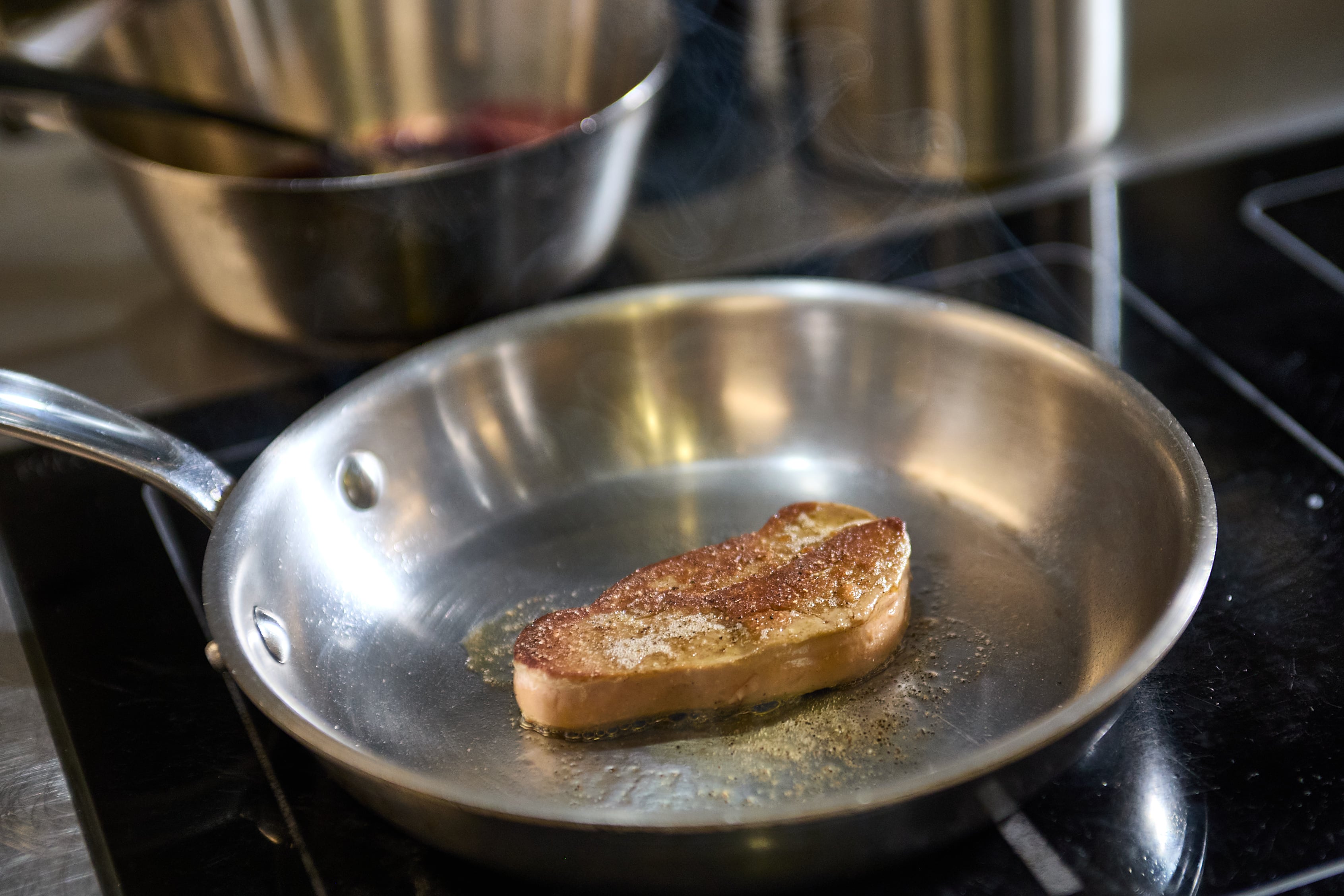
Parima said its collaboration with Vow is indicative of where the sector is heading, following continued declines in funding (investment in cultivated meat startups halved in 2025). Tighter collaboration has enabled a reduction in capital intensity thanks to production runs on shared infrastructure.
The Gourmey and Vital Meat owner currently operates an innovation centre and a pilot facility in central Paris, where it runs multiple 400-litre bioreactors, and a pilot plant near Nantes, equipped with 2,000-litre bioreactors that run daily. Plus, it has a dedicated setup with a 5,000-litre fermenter.
“We manufacture in-house in France at up to 2,000-litre scale, which covers meaningful volumes. For larger commercial scale, our model relies on the best manufacturing partners, such as Vow,” revealed Morin-Forest. “Parima’s core strength is our technology combined with commercial relationships.”
He continues: “On the technology side, this is our cell lines from multiple species, our growth media, and a process that works efficiently and cost-effectively across different vessel scales, including 22,000-litre, and that meets the highest safety standards from regulators globally. We also bring deep food industry expertise to deliver products of the highest quality.”
Analysis by Arthur D. Little has previously suggested that this setup can reduce the cost of producing cultivated meat to $3.43 per lb. Now, a new viewpoint from the consulting firm doubles down on its bullish outlook for the industry.
It argued that this ecosystem is “not so much contracting as reorganising around a more capital-efficient operating model”, with costs of under €10 per kg no longer just a feasibility, but only a matter of timing.
Arthur D Little pointed to three key developments over the last year: an enabling ecosystem with food-grade growth media approaching 20 cents per litre and production offered as a service through contract facilities and tolling; the confirmation of industrial-relevant performance with cell densities spanning 55-100g per litre; and Parima and Vow’s validation on the 22,000-litre scale.
The firm’s analysis shows that a finished-product cost in the low €40s per kg in 2026 “carries a credible path” to roughly €10 per kg by the end of the decade, a 75% reduction. “Sub-€10/kg is closer than most observers expected, and the remaining constraints have moved to regulatory clearance and the opening of markets,” said Santander.
“On the technology, the questions that defined the sector’s early years have largely been answered. Biological performance now sits within the range of more mature processes such as fermentation, and production has been demonstrated at an industrial scale,” said Clément Santander, partner at Arthur D Little.
“From here, further cost reduction comes mostly from volume and economies of scale, with biology playing a smaller part.” he added. “The model is shifting from owning every asset to building on an ecosystem of specialised partners, which is how mature biomanufacturing industrialised previously.”
Morin-Forest asserted that it’s “becoming clear which cultivated protein technologies can deliver unit economics that make sense while meeting the highest safety standards expected by regulators globally”.
“The next phase, and the path to a production cost between €5 and €10 per kg, is less about new science and more about strengthening a value chain of specialised partners, securing offtake, and building the volumes that make economies of scale work, particularly on the cell feed, which remains one of the largest cost drivers,” he explained.
“On that point, faster and more predictable regulatory pathways for novel foods are essential. We are more convinced than ever that the current commercial phase is about high-value premium products, and we now see a clear path to price points compatible with the mass market.”