

Australia’s Vow Appoints New CEO Amid Expansion Beyond Cultivated Meat

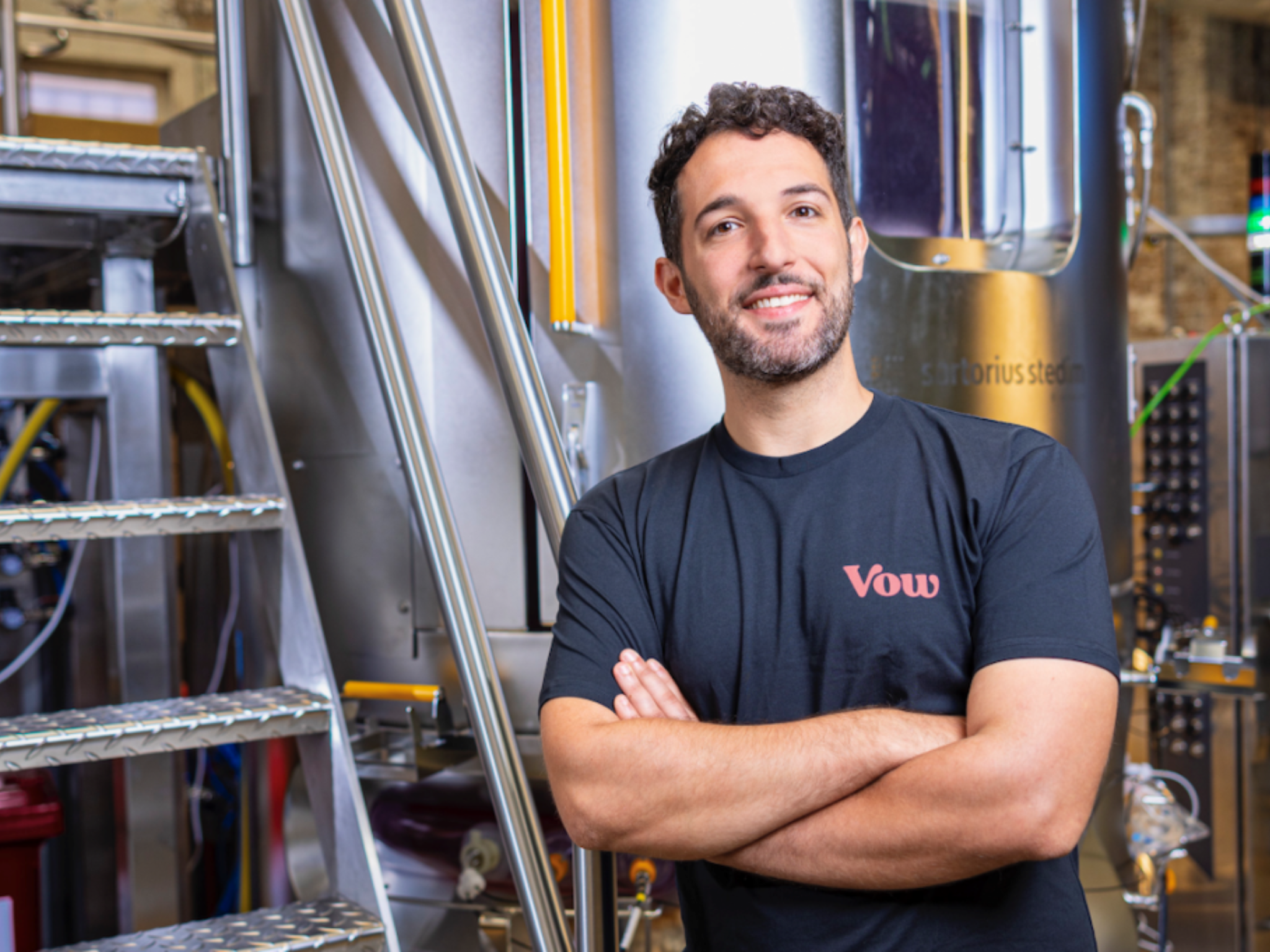
Australian cultivated meat leader Vow has named Alex Andrews as its new CEO, with co-founder George Peppou becoming an executive director, as the startup cuts jobs and eyes new verticals for its cell-culture technology.
A year after rolling out its cultured quail in restaurants across Australia, food tech startup Vow has seen a shake-up in the C-suite.
Co-founder George Peppou, who was the CEO until last month, has stepped into an executive director role. He has been replaced by Alex Andrews, who had joined the company as its chief of staff in January.
Vow also laid off several staff members in May, nearly a year-and-a-half after cutting 25 jobs due to the slow pace of regulatory approvals in several markets.
The reshuffling at the top comes as Peppou leads a new stealth startup spun out of Vow, which will build on the company’s cellular agriculture technology to access markets beyond food.
Vow’s production breakthroughs open doors beyond food
Founded in 2019, Vow has been a trailblazer in the cultivated meat industry. It made international headlines after appearing on The Late Show with Stephen Colbert for its experimental woolly mammoth meatball in 2023, and has always taken a taste-led, premium approach to the technology.
Its unique business strategy has enabled it to raise $55M to date, and become the first startup approved to sell cultivated meat in three countries.
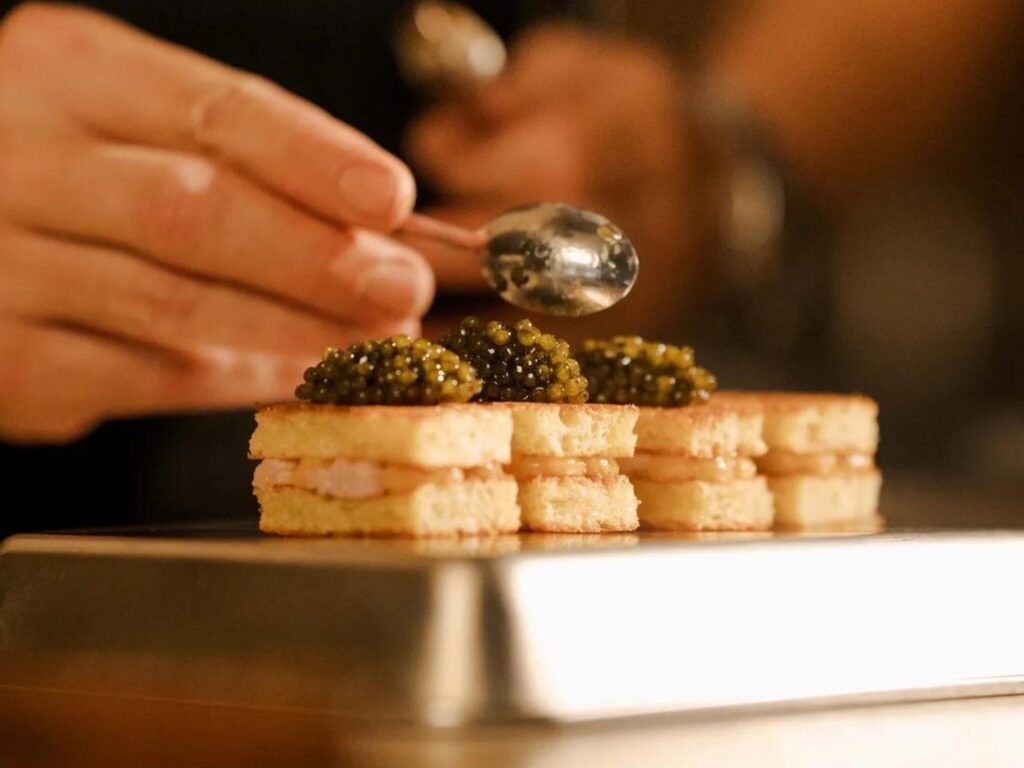
Vow’s signature product, a cultured quail, received the green light in Singapore in 2024, where it was soon rolled out into restaurants as part of parfait and foie gras dishes.
A year later, the company obtained approval in Australia and New Zealand, which was followed by a launch into both foodservice and direct-to-consumer retail.
Its regulatory success was built on a host of technical milestones. Last year, Vow’s cell cultivation capacity was extended to 35,000 litres within its second factory, which it says was 20 to 50 times cheaper to build than competitors.
The firm operates the largest food-grade cell culture bioreactor at 22,000 litres, and claims to have completed the largest cultivated meat harvest in history (1,500 kg). Currently, it is producing over 5,000 kg of cultivated meat per week.
“Last year, Vow had a massive breakthrough on production scale and economics – now by far world-leading in low-cost cell culture,” Peppou told Green Queen, echoing a statement sent to Forbes Australia, which first reported the news. “As a result of this, we have lots of new opportunities outside of food. I and a small team have spun out to a new company focused on one of these.”
Latest layoffs reflect Vow’s ‘multi-vertical focus’
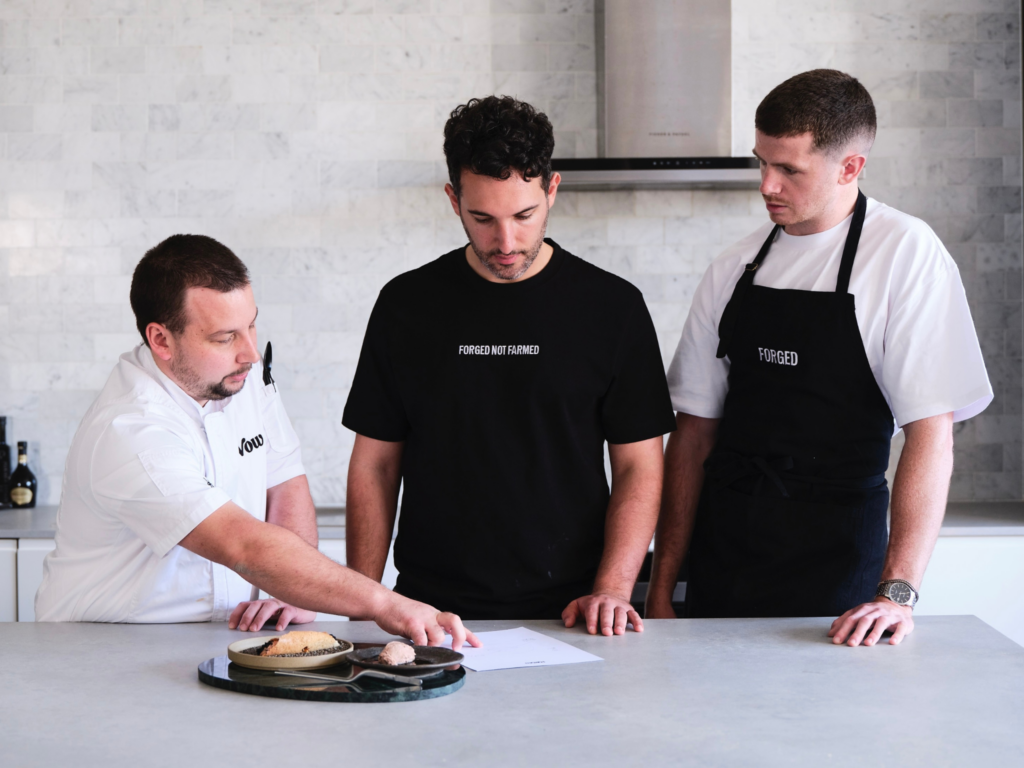
The decision to appoint Andrews as Vow’s new commander-in-chief was spearheaded by Peppou, who told Green Queen that he “asked her to step into the CEO role to grow multiple new verticals, and [provide] contract manufacturing to cultured meat players globally.”
He confirmed that he is still “deeply involved” at Vow as executive director, adding: “Earlier this year, we shifted from in-house food production to co-manufacturing for finished foods, and a small number of roles were impacted.”
These follow the layoffs from 2025, which affected 30% of Vow’s staff across R&D, sales and communications. At the time, Peppou described them as coming from a “position of strength as the industry leader, not a position of weakness”.
Vow has not revealed which new markets it’s targeting or the vertical Peppou’s spinout is focused on. But cell culture tech has a wide range of applications beyond food, including cosmetics, leather, and life sciences.
Other firms have chosen to diversify too. US cultivated meat pioneer Upside Foods – the best-funded startup in the industry – branched out with a new division targeting the life sciences sector, Lucius Labs, which will offer an array of media formulations, buffers and stem cell formulations to accelerate companies’ R&D and help lower their costs.
And last year, UK firm Uncommon Bio pivoted its business strategy by selling off its cultivated meat business to Vow and the now-defunct Meatable and focusing on therapeutics instead.