

New Zealand’s Boring Debuts High-Fibre Oat Milk Boosted with Yeast Protein

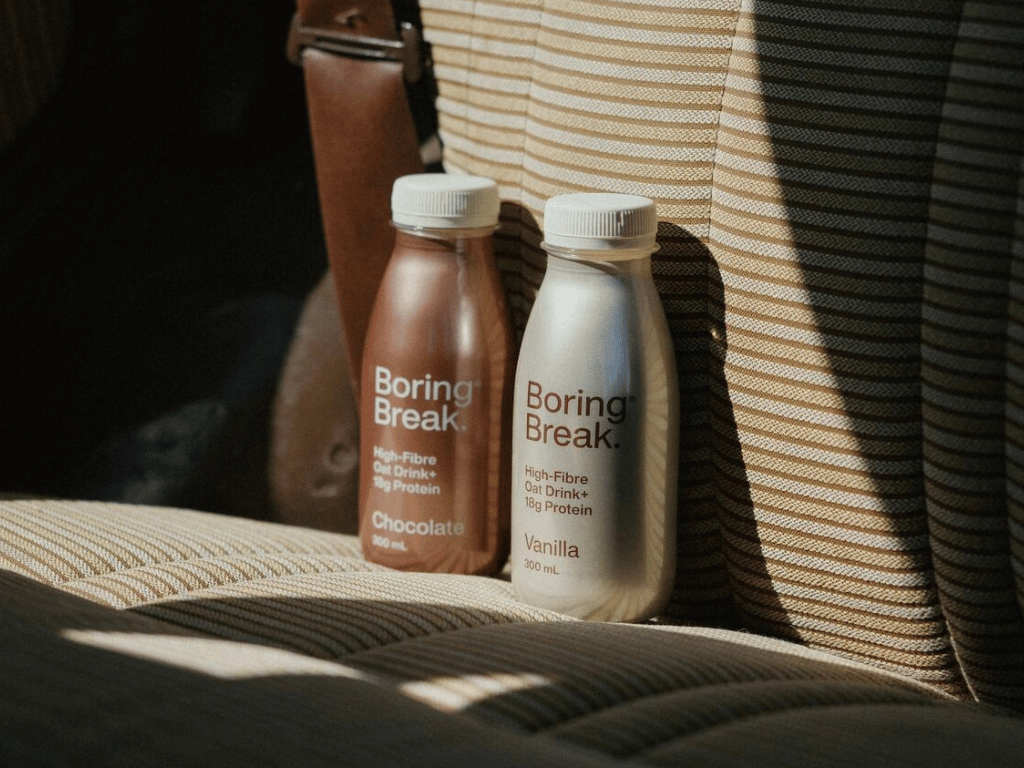
Boring, New Zealand’s best-selling plant-based milk brand, has launched Boring Break, a range of high-protein, high-fibre oat milks to meet evolving consumer needs.
New Zealand brand Boring has joined the wave of protein- and fibre-rich plant-based milk with its newest oat milk.
The company has unveiled Boring Break, a line of oat milk with 6g of protein and 2.3g of fibre per 100ml. The protein is sourced from yeast, and it’s available in one-litre and 300ml bottles of chocolate and vanilla flavours.
The product isn’t meant to be a meal replacement or performance drink; instead, it’s being positioned as a middle ground for “in-between moments”, hence the reference to ‘breaks’ in its name.
Boring is calling the product the “middle child of the drinks aisle: low-maintenance, reliable, secretly running things”. “No artificial sweeteners. No drama. Just a small amount of raw cane sugar doing the job competently,” it said in a LinkedIn post.
An oat milk range three years in the making
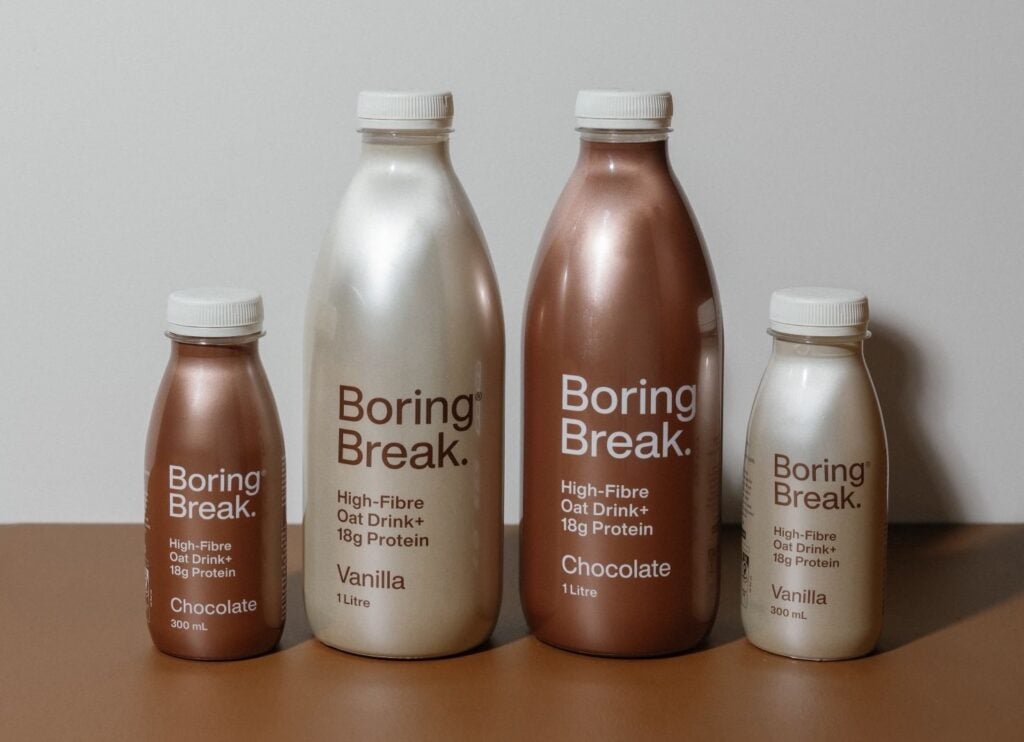
The Boring Break line is made the same way as the brand’s other oat milks. Locally produced oats are wet-milled in large tanks where natural enzymes are added, breaking down the starches and releasing natural sugars.
That mixture is then put through a decanter that separates the solids from the thick, syrupy liquid. Boring then adds the rest of the ingredients and heat-treats the oat milk to extend its shelf life, before putting it through a homogeniser and pouring it into bottles.
The new supercharged oat milks source their protein content from fermented Saccharomyces cerevisiae, or brewer’s yeast, the same variety used in baking.
“We took our time with this one, nearly three years. We didn’t want to launch something for the sake of it – or just add more to an already crowded shelf. It needed to be meaningful,” Boring founder Morgan Maw said in a LinkedIn post.
“The protein was the main hold-up – we were after a sustainable vegan protein source that tasted good and that we could genuinely stand behind in terms of bioavailability and digestion,” she explained.
Aside from the protein and oats, the Boring Break range contains inulin (or chicory root fibre), raw sugar, dipotassium phosphate for acidity regulation, natural flavouring, salt, and gellan gum and sodium hexametaphosphate for stabilisation. The chocolate oat milk also has 1.8% cocoa powder.
“It’s made for the gap between meals: the top-up, the tide-me-over, the light post-workout refuel,” outlined Maw. “A protein drink not strictly for the gym bros… although they’re very welcome too.”
Plant-based milk makers turn attention to protein and fibre

The launch of the new oat milks comes amid a boom in protein-enhanced claims in New Zealand’s food and drink industry, in response to consumers’ growing appetite for the macronutrient. On meal delivery platform Appetise, for instance, one in five users from the country filter their search for high-protein options.
One survey found that a quarter of consumers in markets including New Zealand think protein improves their digestion. However, that health benefit comes more from fibre. Like protein, fibre has also taken the global food industry by storm, as GLP-1 drugs raise awareness of gut-supporting nutrients.
As experts point out, at 20g a day, New Zealanders’ per capita fibre deficit isn’t as bad as in some Western countries, with only 5g needed to close the gap with the World Health Organization’s daily recommended intake. A 200ml serving of the Boring Break oat milk would do the job.
The company pokes fun at global oat milk leader Oatly by pointing out that its products aren’t made “anywhere fancy like Sweden”. They’re instead produced at the manufacturing facility of its parent company, Apollo Foods, in New Zealand’s Hawke’s Bay region.
That said, Oatly itself has been selling a dual-fibre oat milk in China for months, offering 7.5g of fibre in 250ml bottles. Last week, it took the concept to Europe, a continent grappling with fibre deficiency, with two high-fibre oat milks (in barista and low-calorie variants) offering 5g of fibre per 250ml serving.
High-protein plant-based milks are now commonplace, but fibre-boosted versions are quickly invading the market, such as Plenish’s calcium- and fibre-enriched oat milk in the UK and Maïzly’s naturally high-fibre corn milk in the US. Boring’s innovation is one of the only ones meeting both protein and fibre needs simultaneously.
Last month, So Good launched fibre- and prebiotics-packed oat and almond milks in Australia, a market Boring entered in 2025. The brand will hope its new range gives it a leg up against competitors in the Antipodean plant-based milk sector, which include Otis, Oat Milk Goodness, Milklab, Vitasoy, and Oatly, among others.