

Whitworths Debuts Unprocessed Walnut ‘Supermince’ in UK’s Largest Supermarket

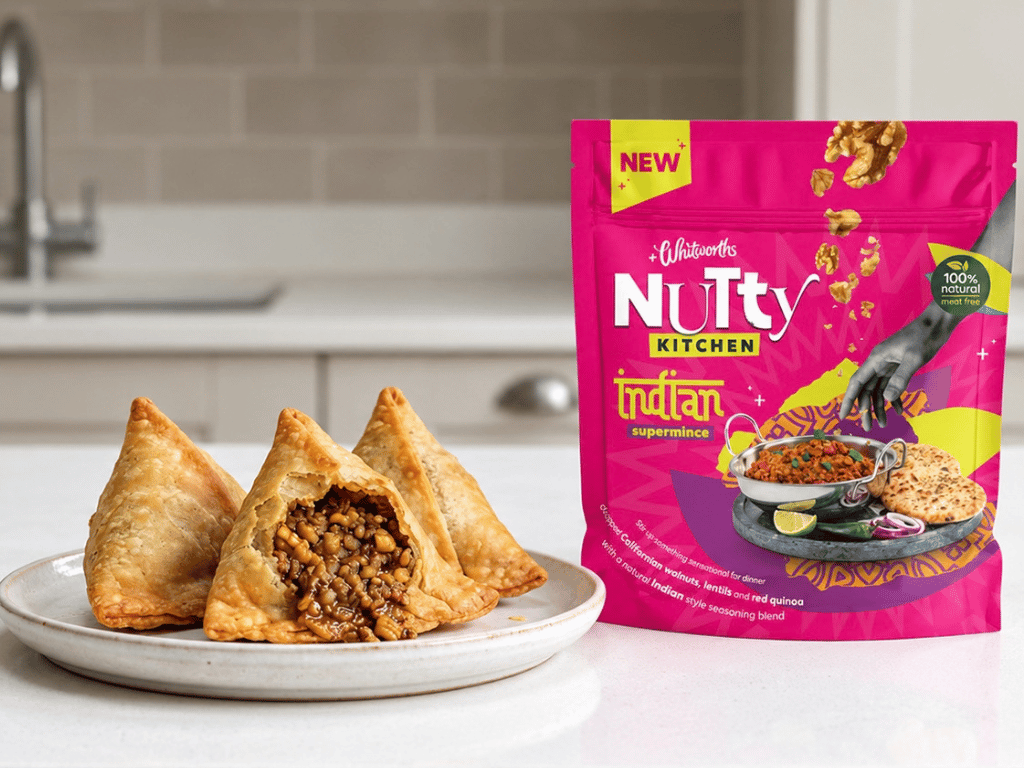
UK food brand Whitworths is bringing its walnut-based minced meat alternative to brick-and-mortar retail for the first time, launching four flavours at 900 Tesco stores.
As the furore around ultra-processed food (UPF) continues to extinguish enthusiasm for meat alternatives in the UK, one snacking brand is making a nut-based alternative to quell consumer concerns.
Whitworths, known for its nuts, dried fruits, baked goods and snacks, launched a meat-free mince made from walnuts online last year, promising an unprocessed, clean-label solution.
Now, it is expanding its reach with a listing at Tesco, the country’s largest supermarket, which is stocking the four-strong Supermince range in 900 stores nationwide.
“Our mission is to make healthy, unprocessed foods more accessible, and our Nutty Kitchen Supermince is a delicious step in that direction,” said Phil Gowland, commercial director at Whitworths. “It’s a product we’re incredibly proud of, and we can’t wait for shoppers to now find it in Tesco stores.”
Walnut base provides protein, fibre, and omega-3s
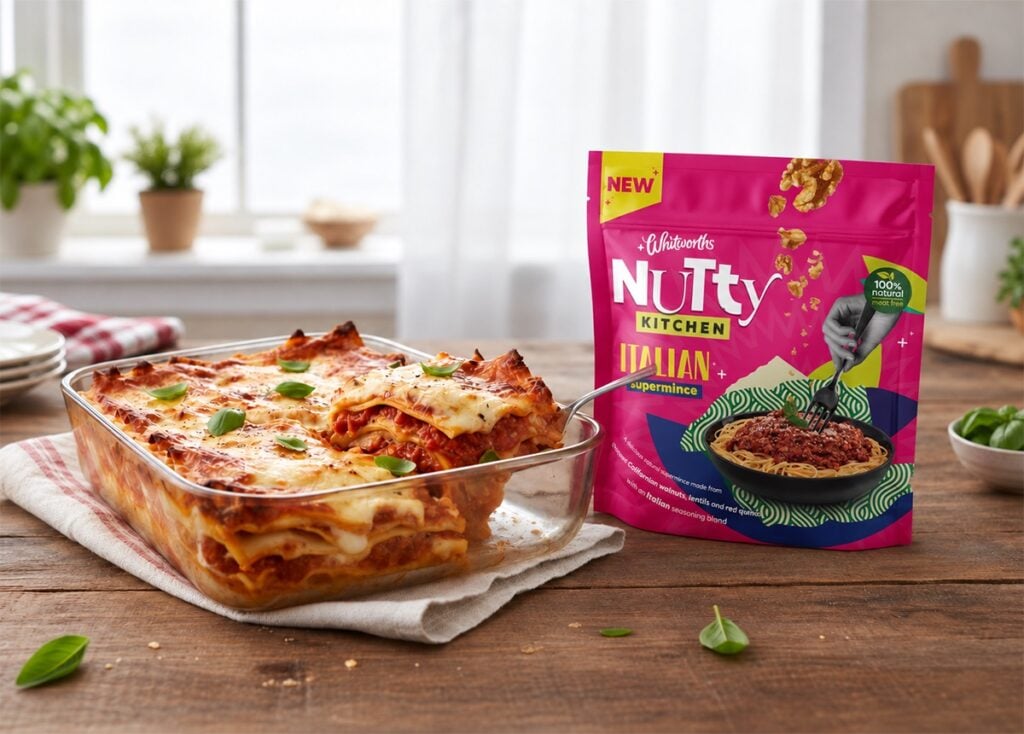
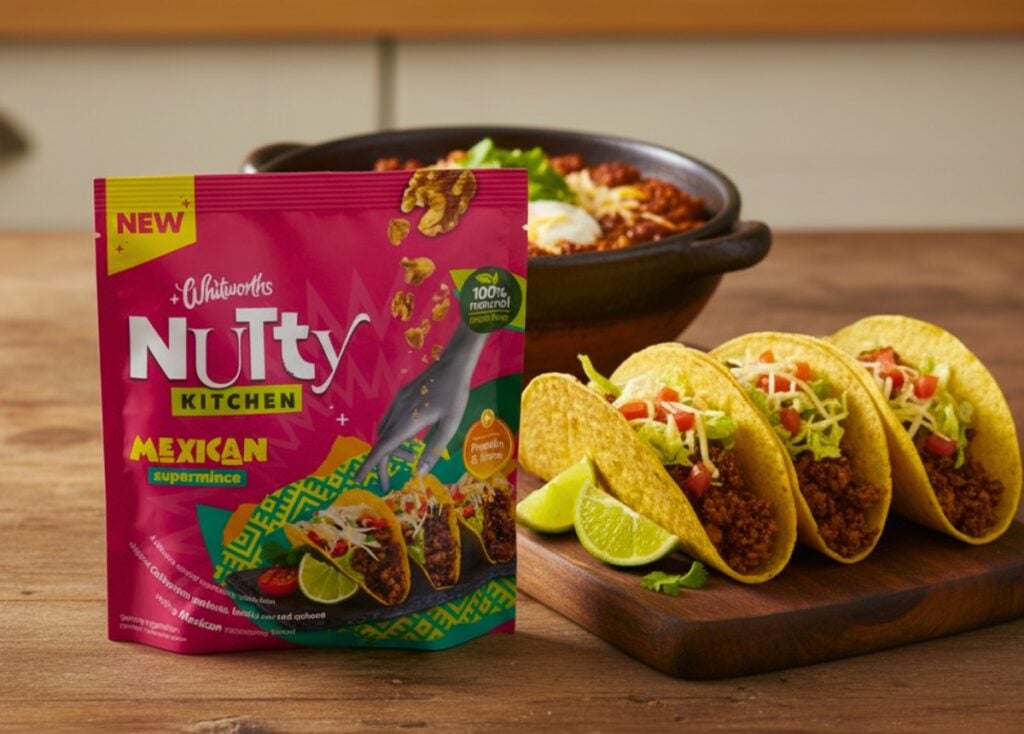
The plain-flavoured Supermince is made from just three ingredients: walnuts, lentils, and quinoa. These are complemented with spices and seasonings, but no additives or artificial flavourings, in the Indian, Mexican, and Italian variants.
They contain 9.9-10.3g of protein and 4.5-5.1g of fibre per 100g, alongside 3g of alpha-linolenic acid, an omega-3 fatty acid naturally found in walnuts. The latter helps lower LDL (or ‘bad’) cholesterol and inflammation, with Whitworths pointing to the nuts’ ability to improve blood vessel flexibility and maintain a healthy cardiovascular system.
The products are said to cook the same way as beef mince, so they make for a simple swap in dishes like bolognese, tacos, keema, chilis, cottage pies, and more.
The Tesco launch comes with a try-for-free initiative, allowing consumers to claim a refund on their purchase, whether they love the product or don’t find the taste suited to their palate.
Whitworths’s innovation is a response to consumers’ shift away from UPFs. Government polling shows that up to 78% of Brits are worried about UPFs, and as much as 75% are concerned about the general healthiness of diets. This is driving them towards cleaner-label options built on whole foods.
“We know shoppers are increasingly frustrated with plant-based products that feel over-processed or fall short on taste and texture. Whitworths’ Nutty Kitchen Supermince is different,” said Gowland. “It’s simple, unprocessed, natural and bursting with essential nutrients we all need on a daily basis, whilst still delivering that meaty texture people love.”
Brits seek out minimally processed foods
The Tesco rollout for the walnut mince comes as Brits look for more minimally processed sources of protein and fibre. In 2025, 43% of Brits increased their protein intake, as searches for ‘natural protein’ went up by 20%. And sales of protein-based foods hiked by nearly 10% in the six months to January 24, with 57% of UK shoppers following a high-protein diet to some extent.
Likewise, research by Ocado last year found that 52% of UK adults were actively trying to add more fibre to their diets, rising to 62% among Gen Z consumers. More recently, HelloFresh revealed that 65% of Brits have been trying to eat more fibre compared to five years ago, and a majority of them recognise its benefits for gut health (82%), digestion (83%), and weight management (61%).
These dietary shifts are being driven by online trends like protein- and fibremaxxing, the 30-plants-a-week movement for gut health, and the rise of GLP-1 drugs. Protein helps users of the weight-loss drugs maintain muscle mass, while fibre triggers the body’s natural GLP-1 response.
Sales of processed meat alternatives have been fading in the UK. Last year, plant-based meat witnessed a 7% dip in sales, and in the first half of this year, this continued with a 2.7% decline in value sales. Conversely, value sales of traditional plant proteins beans, pulses, tofu and tempeh grew by 10.1% in the first six months of 2026, with lentils (which form the base of the Supermince) alone enjoying a 16.7% bump.
This comes despite experts pointing out that not all UPFs are bad for health. Two recent studies have shown that swapping processed meat with plant-based alternatives can boost fibre intake and lower saturated fat and salt consumption, all key markers for good health.
That hasn’t alleviated Brits’ concerns, forcing plant-based meat companies to develop innovations that don’t mimic animal proteins. This now sells veg-led burgers, slices, and bites, a mushroom-based tofu alternative, and a chickpea tofu range with Omami; Juicy Marbles has launched a veg-forward Umami Burger; and La Vie has introduced a line of tofu products.