

Step Aside, Protein: Oatly Targets Europe’s Fibre Deficiency with Latest Oat Milk Range


While competitors come out with protein-boosted non-dairy milks, Oatly has held its line on fibre, launching barista and low-calorie oat milks intended to help Europeans close the fibre gap.
In 2025, Oatly warned that fibre was “coming for protein’s crown”.
The Swedish oat milk pioneer has long resisted calls to add a high-protein version to its lineup. “Most people already meet or, in some cases, even exceed their protein needs through a balanced diet,” its UK general manager, Bryan Carroll, told Green Queen last year.
Instead, the company’s focus is on a macronutrient that most people fall short on. In the UK, 96% of consumers don’t meet the daily recommended intake of 30g of fibre. When it comes to protein, however, Brits generally eat more than they need. That pattern is similar across Europe.
“Thanks to the gut health boom, we’re seeing fibre experiencing a glow-up. And it’s now the nutrient everyone’s talking about,” Oatly wrote in its Future of Taste report last year.
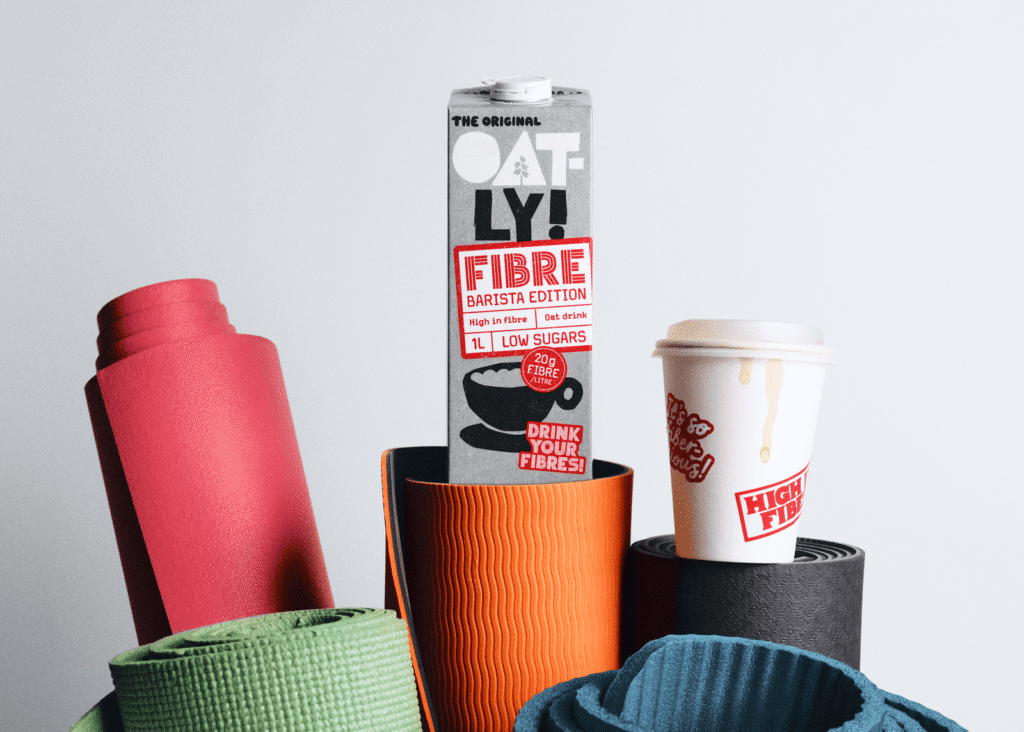
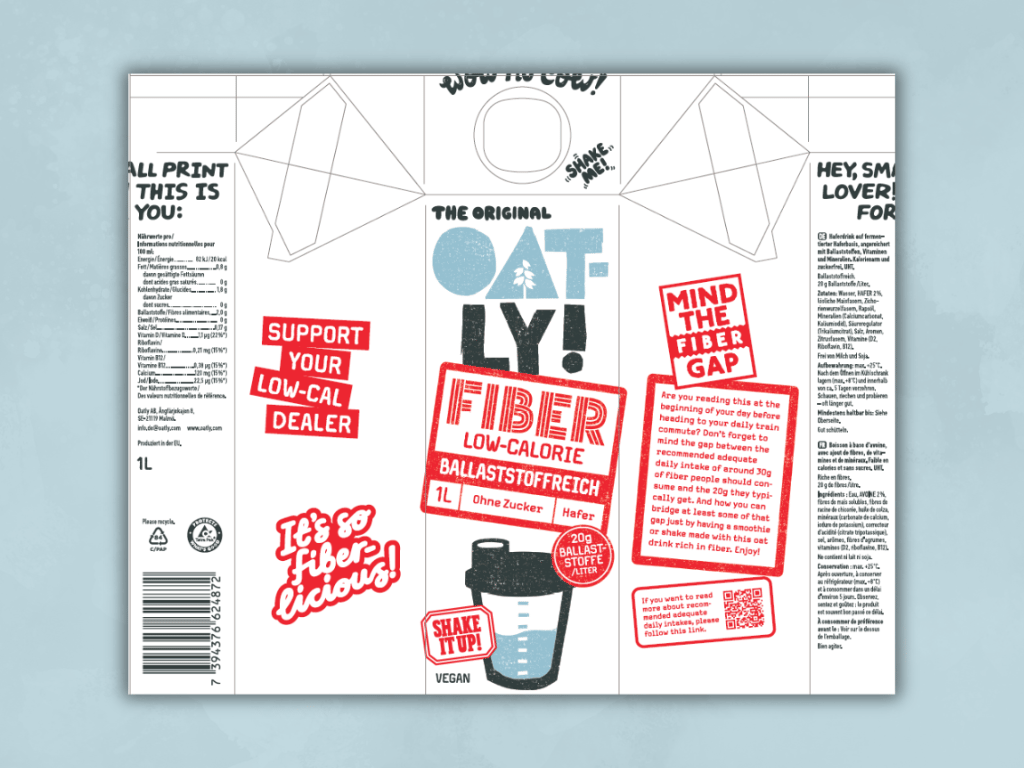
Now, it is walking the fibre talk with the rollout of two oat milks packed with the micronutrient. The barista and low-calorie oat milks contain 5g of fibre per 250ml serving, thanks to the addition of chicory and soluble corn fibre.
“With most people in the UK not consuming enough fibre, getting an extra 5g can be as simple as choosing an oat drink that’s designed with fibre in mind,” said Kate Overy, a registered nutritionist and Oatly’s nutrition science and communications lead.
It’s not just the UK – Oatly confirmed to Green Queen that the fibre oat milks are available for purchase in the Netherlands, Sweden, Belgium, France, Germany and Austria, too, with more markets to follow.
Oatly’s oat milks can address fibre gap without dramatic dietary shifts
The new oat milks were hinted at by Oatly COO Daniel Ordoñez in its Q2 earnings call. “We are super excited […] on how, in the US and as well in Europe, the search and the uptake for gut health and fibres seems to be significantly increasing,” he noted.
“As we are an oat milk company that comes from the good of oats, we see a significant opportunity there,” he added. “We have exciting stuff coming up in the next few months.”
That promise has materialised in the new high-fibre oat milks. The fibre barista version has a similar recipe to Oatly’s signature barista oat milk, the difference being the two plant fibres and the use of tripotassium citrate (instead of dipotassium phosphate) as an acidity regulator. It is also much lower in sugar (0.6g per 100ml) than the standard barista milk (3.4g).
The low-cal fibre oat milk is a new recipe with lower oat content (2%) than any milk in Oatly’s history. Asife from chicory and corn, this also contains citrus fibre, and the taste is rounded out with flavourings. This virtually has zero sugar and only 1.8g of carbohydrate content per 100ml.
The range is available at Sainsbury’s stores for £2.40 per litre (an upcharge from the £2.20 price tag of Oatly’s standard barista oat milk), with other supermarkets set to begin stocking the fibre-packed milks next month.
While fibre is a buzzword now, Oatly insists it isn’t just hopping on a trend. Instead, it says fibre is part of its history, since oats are nutrient-dense and contain beta-glucans (a type of natural soluble fibre), alongside other beneficial fibre components.
The company’s more than 30 years of research and innovation in oats have helped it develop deep expertise in oat nutrition and in how to retain different parts of the grain’s nutritional properties when developing new drinks.
“We designed [the] fibre barista edition and fibre low-cal edition to make it easier to incorporate more fibre into everyday diets,” said Overy, a nod to the fact that the average Brit consumes just 14g of fibre a day. “It’s a convenient, everyday choice that can help contribute to fibre intake without dramatically changing daily habits.”
Plant-based milk makers get in on the fibre act
Oatly’s fibre oat milks fit right into what consumers are looking for today. Last year, research by Ocado found that 52% of UK adults were actively trying to add more fibre to their diets, rising to 62% among Gen Z consumers.
More recently, a survey by HelloFresh revealed that 65% of Brits have been trying to eat more fibre compared to five years ago. And a majority of them recognise its benefits for gut health (82%), digestion (83%), and weight management (61%).
The shift is driven by gut health documentaries like Netflix’s Hack Your Health, personalised nutrition apps like Zoe, the 30-plants-a-week movement, online trends such as fibremaxxing and fibrelayering, and the rise of GLP-1 drugs.
In the UK, 9% of consumers have already tried weight-loss medications, and another 18% are now considering them. Dietary fibre can trigger the body’s natural GLP-1 response, helping your gut bacteria produce short-chain fatty acids, which help regulate appetite and keep you feeling full.
It’s why Oatly has come up with its two fibre innovations. But they aren’t even its first such products. The company has been selling a dual-fibre oat milk in China for months, offering 7.5g of fibre in 250ml bottles. It leverages an innovative enzymatic hydrolysis technology to better preserve beta-glucan content, which is complemented with a water-soluble polyglucan.
While many plant-based milk makers are focusing on high-protein launches, several are – like Oatly – tilting towards fibre globally. These include Plenish’s calcium- and fibre-enriched oat milk in the UK, Maïzly’s naturally high-fibre corn milk in the US, and So Good’s newly launched fibre- and prebiotics-packed oat and almond milks in Australia.