

CarbonFarm Gets $7.8M to Expand AI-Assisted Rice Decarbonisation Tech Globally

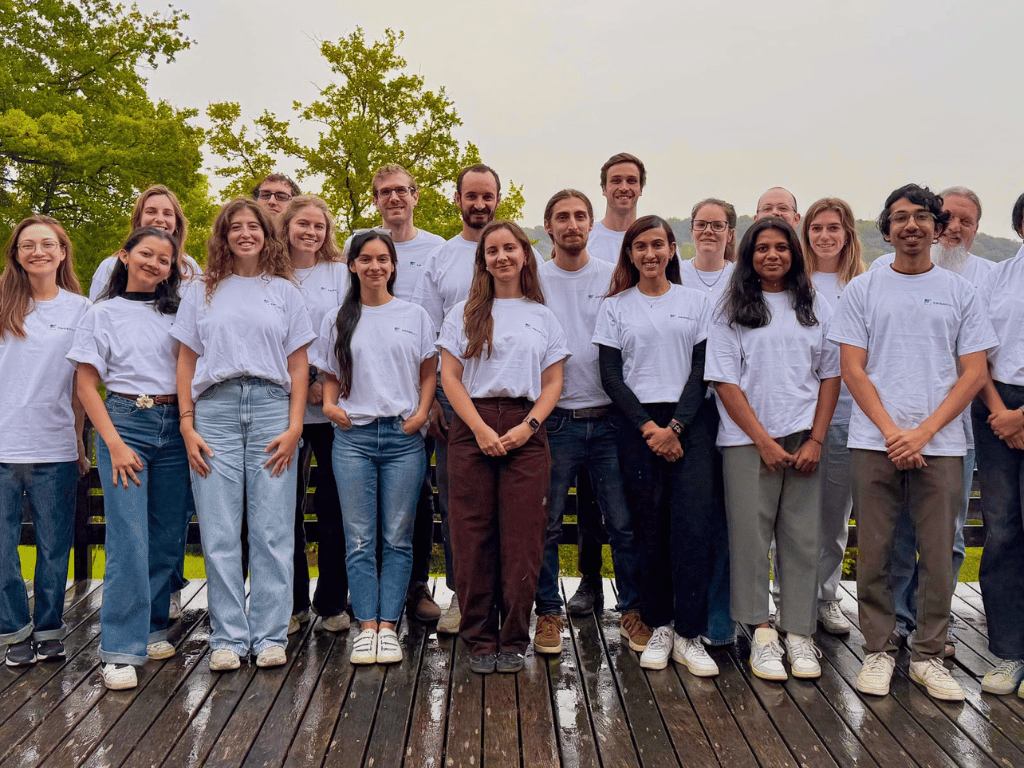
French climate tech startup CarbonFarm has raised €7M ($7.8M) to scale its rice decarbonisation platform, which uses AI to measure and finance high-integrity projects that cut methane and water.
Climate-smart rice farming is witnessing a wave of investments this year, as the world reckons with the impact of one of its most important staple crops.
France’s CarbonFarm has become the latest rice decarbonisation startup to raise capital in recent months, closing an oversubscribed €7M ($7.8M) Series A round led by Colam Impact. Proparco, Suma Capital, Elea, Working Capital Fund, Albo, and Bpifrance also participated, as did existing backers Serena & Makesense and Techmind.
The startup says it turns the climate ambitions of the rice industry into measurable change across millions of farms. The funding will support its next growth phase by expanding the technology and expertise needed to develop, finance, and measure high-integrity rice projects globally.
It will deepen its presence across Asia, Africa and Europe, where it works with over 150 hectares of land across 19 countries, and accelerate its expansion into Latin America.
“CarbonFarm is building the enabling infrastructure for one of the largest untapped decarbonisation opportunities globally. We believe its combination of project-development expertise, climate-finance capabilities and digital MRV [monitoring, reporting and verification] creates a uniquely scalable platform in the rice sector,” says Benjamine Friderich, investment director at Colam Impact.
Why CarbonFarm is tackling rice emissions
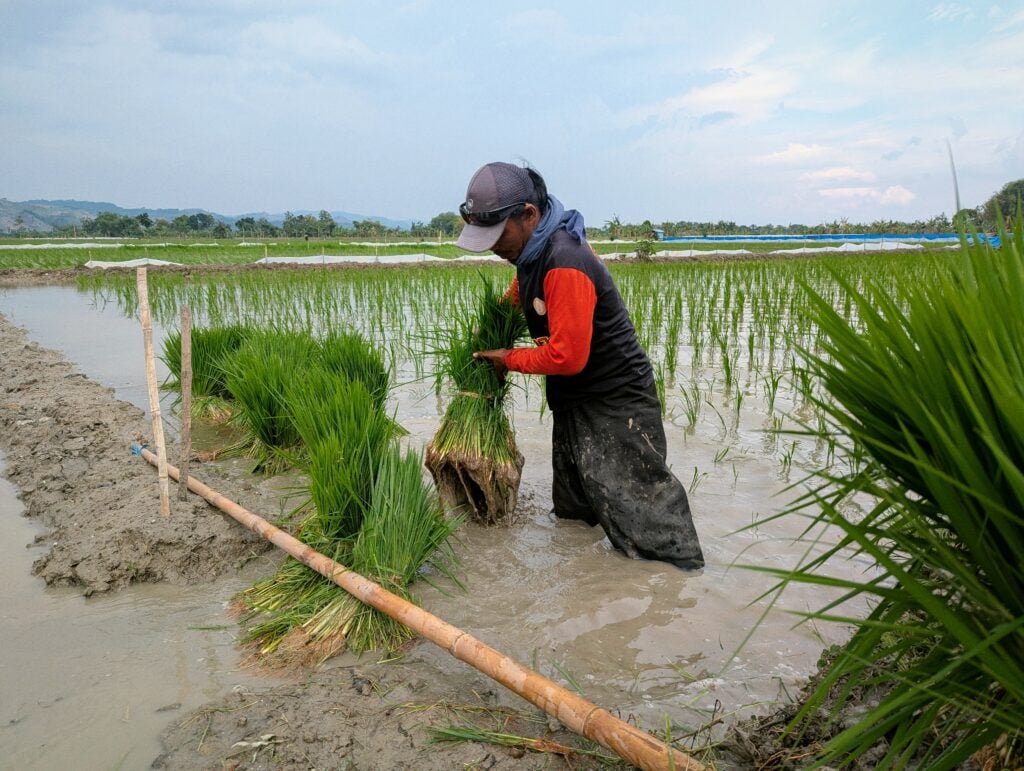
Rice is a staple food for half the world’s population. However, it uses up to 28% of the world’s freshwater resources and is responsible for 9-12% of global methane output (equivalent to the entire aviation sector) and around 1.5% of overall greenhouse gas emissions.
Methane has an outsized impact on the planet. It accounts for around 0.5°C of global warming, and is 86 times more potent than CO2 over a 20-year period. Its atmospheric presence is expanding faster than ever before, and without action, human-caused methane emissions will rise by up to 13% from 2020-30, taking us in the opposite direction of the 1.5°C goal.
Moreover, rising temperatures could reduce rice yields by 40% by the end of the century and are already raising arsenic levels in the crop. Extreme rainfall has slashed rice output in China over the last 20 years, and nearly 250,000 acres of land in the Mekong Delta, known as Vietnam’s rice bowl, are being taken out of production, partly due to the climate crisis.
All that makes decarbonisation critical for the rice farming industry, and the global food system as a whole. Practical solutions like alternative wetting and drying (AWD) – which involves several wet and dry cycles, rather than keeping the paddy flooded continuously – have been found to cut water use by up to 30% and emissions by up to 50% without impacting yields.
These practices can make rice farming more resilient to extreme weather events like droughts and floods, presenting a rare opportunity to simultaneously address climate mitigation, adaptation, water security and rural livelihoods, according to CarbonFarm.
The startup calls itself a “carbon enabler” for rice. “We combine AI analysis of satellite imagery, field data collection tools and greenhouse gas modelling to track practices and quantify emissions at field level, across thousands of smallholder plots,” COO Aparna Raturi tells Green Queen.
“We don’t replace local players. We equip them. We partner with rice producers, cooperatives, agribusinesses, NGOs, governments, and local developers, supporting them from project design and financing through certification and buyer identification,” she adds.
AWD is CarbonFarm’s core practice, though not the only one. “We also work with other water and crop management practices, such as SRI (system of rice intensification), direct-seeded rice, etc.,” says Raturi. “Better water management can cut methane by up to 30-40% and water use by up to 30%, but impact varies from location to location. In certain countries, our models can be over 90% accurate, but results are location-specific.”
Carbon accounting ‘much more rigorous’ now
CarbonFarm says its AI-assisted MRV capabilities provide stronger evidence for carbon credits and corporate supply chains as interest grows in rice carbon projects. Rice credits are now compatible with most regulated carbon markets, opening new sources of finance.
Given that rice is predominantly grown by smallholders, scaling such programmes requires convincing tens of thousands of farmers to change practices and giving buyers and investors reliable evidence of the results. That’s the hardest part of rice decarbonisation.
To help solve for this, the startup works with organisations that have already built trusted relationships with farming communities over many years, complementing their capabilities with its expertise in rice project development, digital MRV, access to climate finance, and connections to carbon buyers and corporate supply chains. In addition, it supports partners from project design and financing through to certification and finding buyers.
Although the efficacy of the voluntary carbon market has been called into question by experts numerous times, CarbonFarm offers registry-certified, satellite-verified credits to corporate clients.
“We are in compliance with all existing methodologies for each standard – for example, VM0051 for Verra,” says Raturi. “We are not a standalone standard, but a satellite- and digital-based MRV, which becomes a means of monitoring practices independently, often reducing manual data collection as well as reducing operational workload while increasing integrity. Credits are then verified by accredited third-party auditors.”
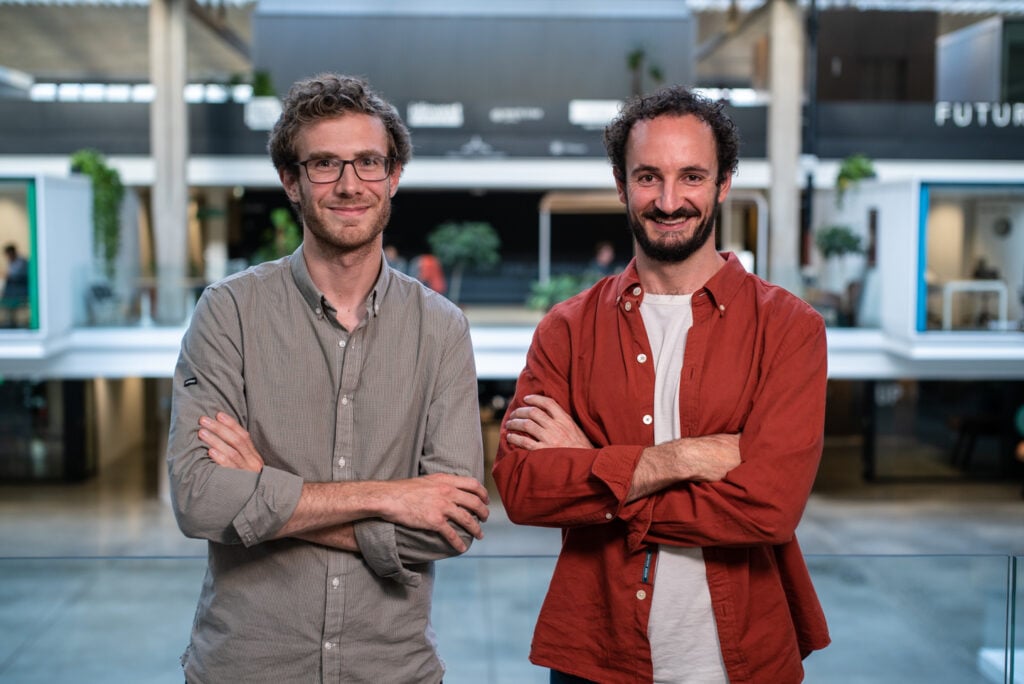
CTO James Hastwell, who co-founded CarbonFarm with CEO Vassily Carantino, notes that carbon accounting is becoming “much more rigorous”, whether it underpins a carbon credit or a scope 3 claim.
“Independent, field-level evidence is becoming the expectation. Projects that can show clearly how their results were scientifically measured build greater confidence and can attract buyers willing to pay a premium for high-quality credits,” he says.
The firm’s largest markets are Vietnam, India and Thailand, and its partners include Mars Food, Diageo, Google, the World Bank, the Asian Development Bank, Action Against Hunger, and more.
Its funding comes months after US startup Mitti Labs secured $9.5M to scale a similar AI-led rice decarbonisation platform through AWD and carbon credits, and Rize bagged $31M to bring its AWD-based rice cultivation network to more than 150,000 farmers by 2030, covering over 300,000 hectares.