

India’s Dhampur Bio Organics Signs Exclusive Mycoprotein Production Deal with Planetary


Indian sugar giant Dhampur Bio Organics has partnered with Swiss fermentation startup Planetary to produce mycoprotein products through the latter’s BioBlocks platform.
Months after they began exploring a tech licensing partnership to bring mycoprotein production to India, Dhampur Bio Organics (DBO) and Planetary have signed a 10-year deal to manufacture sustainable protein and fibre ingredients.
DBO will turn sugar and molasses into high-value microbial ingredients on an industrial scale through Planetary’s full-scale biomass and precision fermentation platform, titled BioBlocks.
Planetary will act as the tech provider and offtaker of the products, while DBO will be focused on constructing and operating mycoprotein production infrastructure. The two companies plan to establish a joint venture dedicated to executing additional commercialisation and offtake agreements.
“This step means nutritional access where 73% of the population is protein-deficient, supply resilience where 98% of whey and plant proteins are imported, 30% cost reduction when exporting the product into the Western markets, [and] gradually branching into the production of adjacent bioeconomy foods and products,” Planetary co-founder and CEO David Brandes said in a LinkedIn post.
Planetary and Dhampur Bio Organics fuel India’s biomanufacturing boom
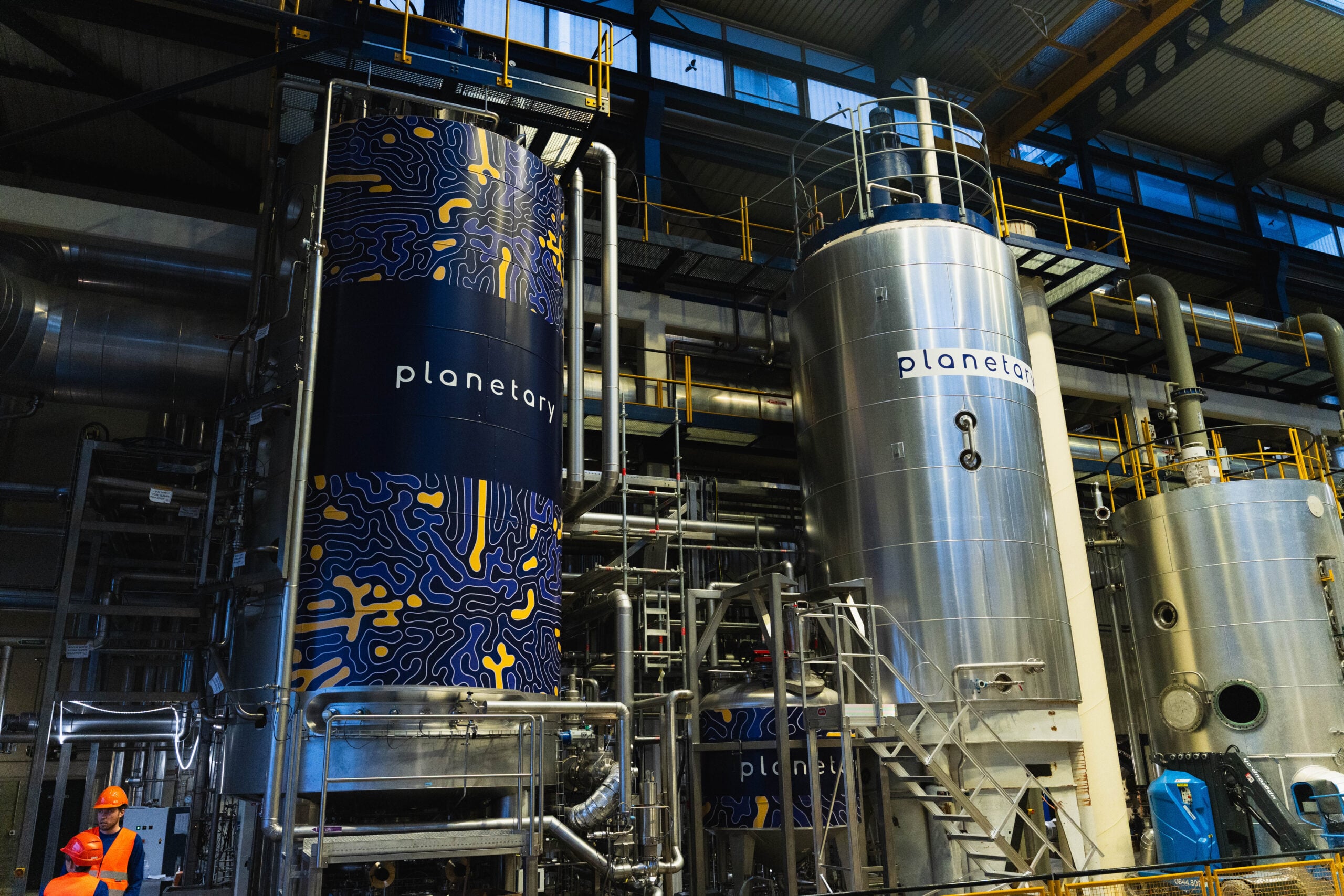
Planetary operates a full-scale fermentation platform encompassing bioprocess design, scale-up, and industrial manufacturing, which is built to support the development and industrialisation of future-facing food and material solutions using a wide array of feedstocks.
The company’s initial focus is on biomass-fermented mycoprotein, but the bioprocess competency of its Bioblocks platform has also enabled it to help blue-chip CPG and startups bring precision-fermented products to life, including proteins, fats, colouring agents, enzymes, and biomaterials.
The company is expanding this sugar-to-protein upcycling tech globally, including plans to enable ultra-low-cost mycoprotein production (under $1 per kg) via partnerships with industrial players in sucrose-rich and protein-deficient geographies.
Tech licensing to agro-industrial partners (particularly sugar companies) is at the heart of its IP-rich strategy, enabling the conversion of low-value byproducts into high-value proteins, fibre and enzymes. This, the company says, unlocks a “new circular bioeconomy”.
Some of these partners include Swiss firm Schweizer Zucker, Dutch cooperative Royal Cosun, and DBO. Planetary has been in talks with the latter since January, as part of a biomanufacturing boom in India.
In 2024, Bengaluru saw the launch of the Centre for Smart Protein and Sustainable Material Innovation (an incubation hub) and the Alternative Proteins Innovation Center (a scale-up facility). And last year, the government opened an animal stem cell biobank, in Hyderabad, followed by the launch of an incubation centre for R&D on technologies like precision fermentation and CRISPR this March.
And this week alone, Israeli startup Brevel teamed up with The Wave Group to build a joint venture factory in Uttar Pradesh that uses illuminated fermentation to create microalgae-based ingredients.
Sugar partnership and licensing model ‘no longer a concept’
As part of the licensing agreement, DBO will pay Planetary a royalty worth 10% of after-tax revenue each quarter. The latter will also receive a one-time fee covering engineering, project launch, installation, commissioning, process training and handover support, and an IT setup fee for the configuration of the Swiss firm’s data platform.
According to a filing on the Bombay Stock Exchange, Planetary’s key obligations in the partnership will be to provide licensed IP and technical services, support launch, installation and training, maintain and enforce the licensed IP, and offer ongoing technical assistance.
Meanwhile, DBO’s role includes the payment of fees and royalties, compliance with confidentiality and audits, protection of the IP licence, and obtaining the required regulatory approvals.
“The technology to be used for production of mycoprotein products has synergy with the existing business of the company and forward integration step, wherein sugar and molasses will act as feedstock for production of mycoprotein,” DBO noted in its filing.
Planetary, which raised $28M earlier this year to expand its technology and product portfolio, suggested that its collaborations prove that its “sugar partnership and licensing model is no longer a concept; it’s a global footprint”. “We’re turning sugar mills into […] ingredient producers and protein factories, that’s the circular bioeconomy,” it said in a LinkedIn post.
The DBO partnership aligns with India’s BioE3 strategy, which focuses on accelerating tech development and commercialisation by setting up biomanufacturing hubs and biofoundries across the country.
The government has also published a roadmap to boost the national bioeconomy sector, with a target value of $2.6T by 2047. Within this, it plans to more than triple the value of the biotech sector, from $195B today to $691B in 2035, underlining bioindustrials – which include alternative proteins, enzymes, and food-grade media – as the segment with the largest potential.