

Planetary Announces India Fermentation Licensing Deal For Cheaper Blended Meat

Planetary’s new strategic partnership in India could take its decentralized fermentation model global, opening the door to cheaper blended meat and nutritionally superior dairy alternatives.
Switzerland-based Planetary has signed a partnership framework with DCM Shriram Bioseeds (DBO), a publicly listed Indian agro-industrial player, to bring mycoprotein production to one of DBO’s sugar mills in India.
The company isn’t disclosing timelines for the tie-up, citing legal and disclosure obligations tied to its listed counterparty. David Brandes, founder and CEO of Planetary, told Green Queen Media: “At this stage, we cannot comment on the timing of the partnership due to legal and disclosure obligations connected to our public-listed counterparty.”
Instead of investing in standalone greenfield plants, Planetary is pursuing what it calls a decentralized, multi-location network of production sites, each co-located with agro-industrial partners and powered by agricultural side streams.
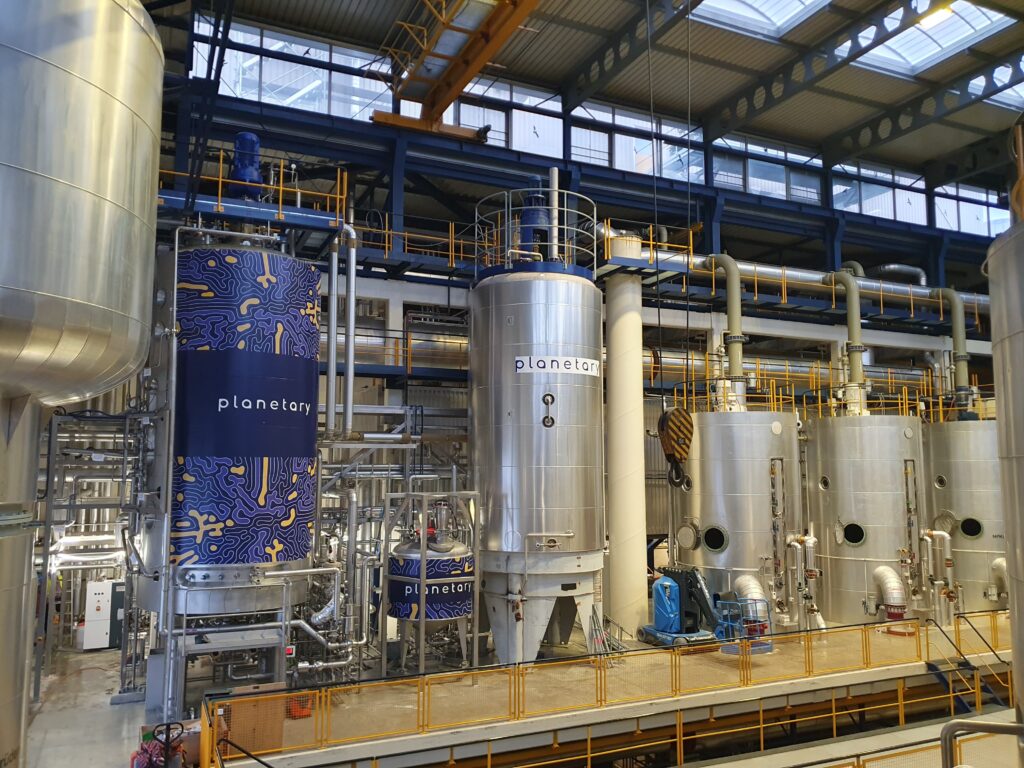
Brandes told Green Queen that a first operational facility is already running in Aarberg, Switzerland; India is one of several future hubs planned under this model, which aims to deliver “industrial volumes” of mycoprotein suitable for large-scale alternative protein applications.
Inside Planetary’s BioBlocks model
At the heart of this strategy is BioBlocks™, Planetary’s proprietary fermentation platform, which it licenses to partners rather than owning and operating every facility itself.
“The technology allows for strategically co-located production of Mycoprotein [sic] using the existing auxiliary industrial infrastructure of our partners. DBO intends to license Planetary’s BioBlocks™ fermentation platform and install Mycoprotein [sic] production capacity co-located at one of their sugar mills in India,” says Brandes.
Planetary says this strategy means it can keep production economics lean while shrinking the footprint of its facilities.
Aldi, pricing power, and the blended meat thesis
Planetary has already shown that its mycoprotein can compete head-on with conventional meat on price in Europe. Its Aldi Gourmet Filet launch came in below conventional chicken breast on a per-kilo basis at the time of launch, undercutting a staple animal protein in one of the continent’s most price-sensitive retail environments. “At current operations, planetary is targeting gross-margin positive with a view to further reduce COGS when entering global markets,” adds Brandes.
That price point feeds directly into Planetary’s conviction that blended meat is one of the strongest near-term bets for mycoprotein. Meat is a 1.3 trillion dollar market in 2026 and projected to reach 2 trillion dollars by 2032, but prices have been rising by as much as 20% year-on-year, putting pressure on consumers and retailers alike.
Mycoprotein’s neutral taste, fibrous texture, and nutritional profile make it an attractive filler and functional ingredient in such blends, especially in chicken and beef formats.
How Planetary is positioning blended meat
| Dimension | Conventional meat | Mycoprotein-blended meat (Planetary) |
|---|---|---|
| Price | Rising, up to 20% YoY | Can be >20% cheaper for equivalent chicken products |
| Nutrition | Higher fat and sodium | Less fat and sodium, higher Nutri-Score (A vs C) |
| Sustainability | High CO2 footprint | Drastically lower CO2 footprint |
| Adoption signal | Conventional mince dominant | Over 30% of mince at Lidl Belgium is blended |
By anchoring itself in the blended segment, also known as balanced proteins, rather than chasing a fully plant-based disruption narrative, Planetary is aligning with where European consumer behaviour is already shifting: incremental, cost-driven change on the meat shelf rather than wholesale protein replacement.
“Today, over 30% of all meat mince sold at LIDL Belgium are hybrid, says Brandes. “Mycoprotein, given its neutral taste, excellent texture and nutritional profile is an ideal ingredient to complement chicken and beef. Blended meat with Mycoprotein [sic] has less fat and sodium, a higher Nutriscore (A vs. C), and a drastically lower CO2 footprint than conventional meat. Importantly, especially when paired with low-cost produced Mycoprotein [sic], an equivalent chicken product can be offered at over 20% discount without having to make concessions on taste.’”

Moving into dairy with “real” protein
Beyond meat, Planetary is lining up a push into dairy alternatives built around its mycoprotein technology. Brandes told Green Queen that Planetary holds a granted patent on milk production from mycoprotein, at last adding real protein and fibre to milk alternative drinks.
“Planetary was selected as a winner among 55 participating companies in the cheese alternative competition organized by LIDL Germany and ProVeg, which opened up further avenues for the placement of dairy alternatives on the market,” he adds.
While the company has not disclosed the exact formats, geographies, or launch timelines for its dairy portfolio, it says is positioning mycoprotein-based milk and cheese alternatives as a way to close the nutrition gap in the category rather than just mimicking taste and texture.
Financing industrial-scale fermentation
Scaling fermentation-heavy infrastructure is capital-intensive, but Planetary says it has assembled a mix of equity, grants, and non-dilutive debt to bring its first industrial installations online. Public records show a 7.5 million Swiss franc seed round, a 3 million franc strategic investment from Dutch agri-industrial cooperative Cosun, and a 1.8 million franc grant from Swiss innovation agency Innosuisse, on top of undisclosed funding. According to Brandes, Planetary “managed to finance the entirety of its current industrial production installations, accessing non-dilutive debt instruments.”