

Adamo Foods Gets €10M EU Grant to Bring Whole-Cut Mycelium Steak to UK in 2027


UK startup Adamo Foods has won a €10M ($11.7M) grant from the EU’s Horizon Europe programme for a project to use industry sidestreams to scale up and launch its whole-cut mycelium meat.
The EU is backing a three-year project to convert food industry byproducts into healthy and sustainable protein via mycelium fermentation.
As part of the Horizon Europe programme, it has awarded €10M ($11.7M) in grant funding to a project led by London-based Adamo Foods, which will scale and commercialise clean-label whole-cut meat alternatives in the region, starting with steak.
The funding comes from the Circular Bio-Based Europe Joint Undertaking (CBE JU), a €2B partnership between the EU and the Bio-Based Industries Consortium that funds projects advancing the circular bioeconomy in Europe.
The project, titled MycoStruct, involves a dozen companies and research institutes from across the region, which will help Adamo Foods valorise sidestreams and turn them into mycelium protein products for the world’s largest market for meat analogues.
Adamo Foods has secured around €5M ($5.8M) from investors since its establishment in 2021, and was also part of the 2025 edition of EIT Food’s RisingFoodStars programme for agrifood tech scale-up.
The latest funding will help it accelerate its expansion towards industrial scale with some of Europe’s leading food and fermentation players, according to founder and CEO Pierre Dupuis.
“We are running a submerged fermentation technology, currently in the process of scaling to our demo plant (>5,000 litres), and will reach 50,000 litres within the next three years,” he told Green Queen.
A five-ingredient mycelium steak with higher protein quality than beef
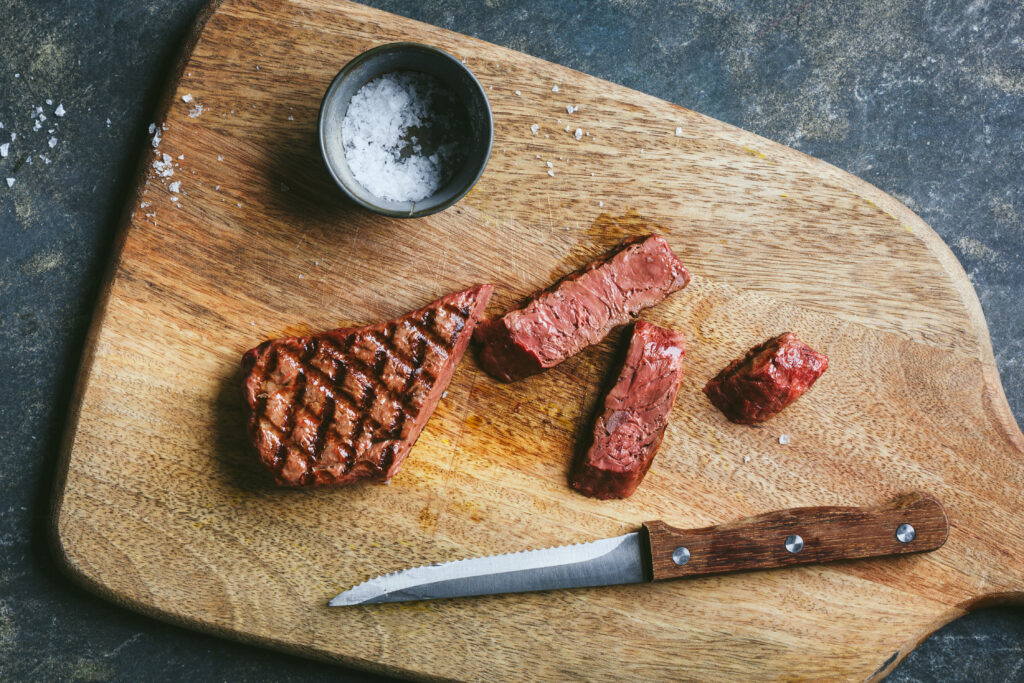
Adamo Foods is aiming to address the shortcomings of existing meat alternatives with products that can hold their own with animal protein in terms of taste, texture, nutrition and cost.
The company uses long and densely grouped mycelium fibres to recreate the muscle structure of animal protein without any binders, playing into the demand for clean-label food in Europe.
Mycelium is the root-like structure of filamentous fungi, and is widely used as a base ingredient for meat analogues – think Quorn‘s steak or Matr Foods‘s burger, both of which use mycoprotein.
It has developed a triple-patented fungal fermentation process to produce nutritious whole-cut alternatives that require little else. Its steak, for instance, is made up of only five ingredients, contains all essential amino acids, and has a protein digestibility score of 0.99 out of 1 (higher than pea, soy, wheat and even beef protein).
Aside from the sensorial and nutritional advantages, Adamo Foods’s steak delivers a win for the climate. Since mycelium doubles in size every 4 hours, the startup can grow an entire batch of its protein in a day, compared to 3 months for a plant-based steak or 3 years for beef. In fact, the fermentation-derived steak requires a fraction of the land and is 93% lower in carbon emissions than its beef counterpart.
“We’ve built a technology with cost considerations at the top of our mind. This means we can launch at price parity from day one, and reduce our costs considerably as we scale,” said Dupuis.
Adamo Foods working with 11 partners to turn waste into protein
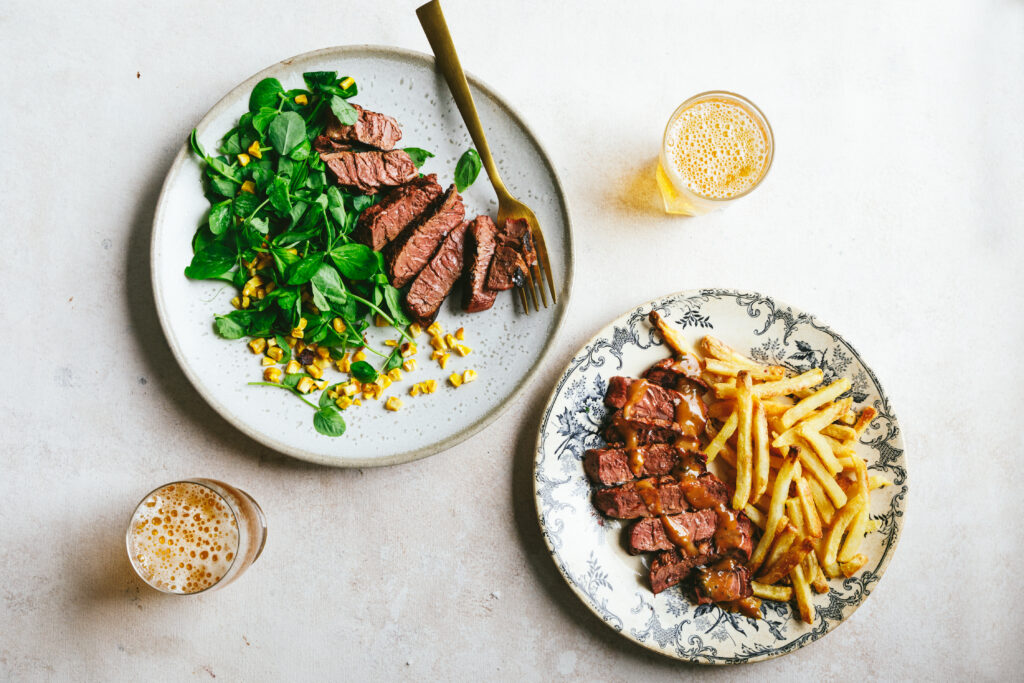
The EU funding will accelerate the commercial-scale deployment of Adamo Foods’ fermentation technology. It’s working with Bühler, Bidfood Group, Bio Base Europe, Niras, TU Delft, the University of Applied Sciences and Arts of Western Switzerland (HES-SO), Celabor, TBW Research, TFTAK, Holoss, and Fenix TNT on the project.
By using sustainable feedstocks and advanced biotech innovation, Adamo Foods and its partners will scale production from pilot production to commercial volumes.
MycoStruct has already received a STEP Seal award from the European Commission, a rare honour for biotech projects that recognises high-quality innovation aligned with the EU’s economic and climate goals.
“We are currently producing in-house, but we are focused on remaining capex-efficient [in] the long term, so are already in discussions with multiple partners for commercial production,” Dupuis noted, adding that the company plans to “launch next year in UK foodservice”, with the EU set to follow shortly.
“We’re not just creating another meat alternative; we’re building a scalable, circular bioeconomy that proves delicious, whole-cut steaks can be produced without the animal and affordably,” he said.
“This is a transformative milestone for Adamo and a powerful validation of our potential to reshape the global food system,” Dupuis said of the new €10M grant. “We are looking forward to working with the consortium partners and other interested parties to scale even faster.”